• TalkBass has been independent since 1998. Add your voice.
    Create a free account to reply to discussions, view embedded media, and browse with fewer display ads.
    Join freeLog in
    Want zero display ads or expanded classifieds tools? Compare plans.

rescuing a bass neck with maxed truss rod

So i just picked up a Y2K Squier Standard Series Precision bass (P/J config sometimes known as the Precision Bass Special Edition) that has the Jazz spec neck. The ad said the neck would not straighten but the bass was $50 so I decided to take a chance on it.

The neck is bowed pretty good but the truss rod seems to be working but maxed out and I want to try adding some washers to the end of the TR to try and salvage the neck. I got the nut off the end of the TR last night and will be stopping to get some washers on the way home tonight.

My question for those that have done this, how many washers did you use and how effective was it?

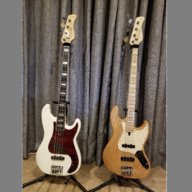
The bass in question...
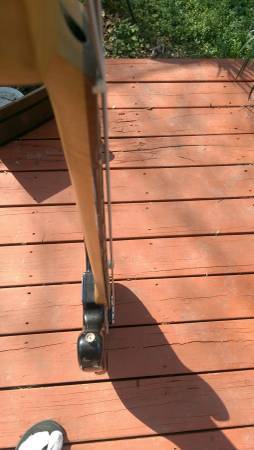
pbs2_zpsftgcakly.jpg

pbs1_zpshavsj6vg.jpg
 
You might get a better response posting this to "Hardware, Setup & Repair" forum.

I haven't done it but from what I've seen here, it works. Seems folks normally 2 ~ 4 washers depending on how bowed the neck is.

All the best, Bob
 
So, a few years ago I picked up an MIM 5er from CL - the action was high but I figured I'd just adjust the trussrod and be good to go. Turns out it was maxed so I tried the washer method. First off I couldn't find any washers in the correct size so I had to drill a bunch down to get in there. After that I tried adding a bunch but never got more movement out of the neck. YMMV folks have reported success with this method here before but it didn't really work for me.
 
As long as the truss rod itself is functioning, the washers will give you more adjustment room. I've used as many as 6 in a Fender vintage bass without a problem, and it's always worked for me. Just be careful not to get them hung up in there. It's difficult to find the right sized washers, and difficult to get them seated correctly.
 
I have done this to at least 3 basses and it worked every time. The hardest part is finding washers...
But I believe I found a sweet solution for that:

Short background, I'm a bicycle mechanic and I try to use things from the shop to fix basses all the time. It's fun!

The last bass neck I fixed, I found a washer amongst our stash that was kinda thick, but it worked fantastically. It fit in the hole, went around the truss rod, and was secure and sturdy once I adjusted the neck.
It wasn't really a washer, though... it was the roller from a chain link.

Screen Shot 2016-02-29 at 12.25.31 AM.png

They are tiny, but hardened and a LOT stronger than brass. The inner diameter is big, the outer is small, which makes them ideal for this type of fix.
They are also essentially free, as most chains need to be shortened, leaving scrap sections for cannibalizing.
So if you are near a bike shop, see if they have some scrap to spare. If you have a chain tool (or pry the mechanics with beer), you can have as many of these as you could ever want.
 
Always straighten the neck by clamps or bracing between knees, and only use the truss rod nut to hold the position,
not using the nut to force the neck straight ("said he had some truss rod ends snap off doing this").
If the wood has already compressed, you still need the washers to take up the slack between the wood and the nut, giving the nut something solid to hold against.