
That would probably be the all maple construction.But a RIC sounds like a RIC....unplugged!

TalkBass has been independent since 1998. Add your voice.
Create a free account to reply to discussions, view embedded media, and browse with fewer display ads.
Join free Log in
Want zero display ads or expanded classifieds tools? Compare plans.
That would probably be the all maple construction.But a RIC sounds like a RIC....unplugged!
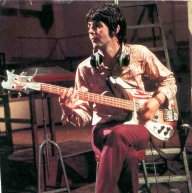
Having heard cover bands play "SOTW" probably a thousand times over the last 40 years, I can still count on one hand the number of bassists who play this part correctly. On the signature riff, most climb from G Through Bb to C and back again, just like the guitar. Always refreshing to hear one who doesn't.When you listen to the isolated bass it may surprise some how much different it is from the guitar line.

I play it correctly.Having heard cover bands play "SOTW" probably a thousand times over the last 40 years, I can still count on one hand the number of bassists who play this part correctly. On the signature riff, most climb from G Through Bb to C and back again, just like the guitar. Always refreshing to hear one who doesn't.
 The ones who don't probably learned the song from the guitard.
You really believe that Gregorian Chant is synonymous with homophony? You are absolutely wrong! You are confusing monophony with homophony. The definition of homophony is melody over chordal accompaniment! Duh!! And a pedal point DOESN'T CHANGE ANYTHING! For Christ sake's I nearly enrolled at UC Berklee became a freakin' musicologist at one point.I dunno what they were teaching you upstairs in the composition department, but in the sub-basement where they kept the electronic music department we learned that homophony (from the Greek homos - the same - and phone - sound - i.e. making the same sound) is when all the voices in a phrase are articulating the same notes - the EXACT same notes (like the earliest examples of Gregorian chant), and polyphony is when the voices play different notes. Note that the terms purely describe characteristics of pitch and tonality - rhythmic emphasis, variation, or lack thereof has NOTHING to do with the classification.
I see little value in ranking polyphonic music in terms of its homophonic-"ness."
But you didn't.You really believe that Gregorian Chant is synonymous with homophony? You are absolutely wrong! You are confusing monophony with homophony. The definition of homophony is melody over chordal accompaniment! Duh!! And a pedal point DOESN'T CHANGE ANYTHING! For Christ sake's I nearly enrolled at UC Berklee became a freakin' musicologist at one point.
Where was this basement Musicology course? Berklee? A great place to learn Music History let me tell you (& you are a real expert). when I went there all the text books were mimeographed. Beyond shoddy. Berklee College of Music was a great place to go onky for precocious types who were 95% of the way to stardom (Like Al Demiola).
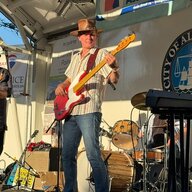
The secret of Rickenbacker tone ...
1 - pickup positions
2 - maple construction
3 - single coil pickups
4 - a finished bubinga fretboard
These and other factors give the Ric a distinctive high mid bark.

For Christ sake's I nearly enrolled at UC Berklee became a freakin' musicologist at one point.

Having heard cover bands play "SOTW" probably a thousand times over the last 40 years, I can still count on one hand the number of bassists who play this part correctly. On the signature riff, most climb from G Through Bb to C and back again, just like the guitar. Always refreshing to hear one who doesn't.

Sometimes ignorance is bliss......I'm glad I don't concern myself with all this polymonohomophobic stuff as it pertains to rock and roll.
I'm gonna drink a beer, grab my Rick, plug into my SVT, turn it up, and do my best Roger Glover impersonation.
C-Ya!
I disagree. Knowing a lot of theory, and applying it, doesn't mean one necessarily writes complex, inaccessible music. It just means knowing precise language to describe what certain things happening in the music will do to the sound.I love this!
Rock music is not about theory. Too much theory will kill the music.
Yeah... it was obvious from when I heard the song, after I had started playing bass, that the bass was doing something very different from what the guitar was doing. Same in Black Sabbath's "War Pigs" (though, in that case, I suspect much of the original started as improvisation).I gotta say, this blows my mind. While I have outed myself as a self taught musical ignoramus (see post above), I think anybody playing bass that cannot hear that doubling the guitar riff is the WRONG thing to do, should maybe think about putting the instrument down and trying something else. Like crochet.
SOTW was say.....the third song I ever learned, and I knew immediately what to play during the opening riff, how can someone not hear that?
A quick definition of Homophony is melody over chordal accompaniment. (Most popular music fits that description--rock, especially because of it's rigidity.) A quick definition of polyphony is contrapuntal. A pedal point held underneath bar chords isn't counterpoint. The pedal point changes NOTHING! Smoke on the water IS HOMOPHONIC! Look up the definition yourself. Furthermore, as you pointed out most people don't know that the bass isn't in unison with the guitars because it can't easily be heard (on most people's audio systems) because that Rick got buried. (No joking, a Fender might have been heard.)But you didn't.
The poster you're quoting didn't say that Gregorian Chant was synonymous with homophony, but early polyphony.
Dude, I know that nobody likes their errors pointed out, but it's happened to all of us. The example you used for homophony turned out to actually be polyphonic. It's not that big a deal, especially since it's "Smoke on the Water," which everybody knows the main riff of and hardly anyone knows the bass part of (which is why tons of bassists play it incorrectly when they cover it).
A quick definition of Homophony is melody over chordal accompaniment. (Most popular music fits that description--rock, especially because of it's rigidity.) A quick definition of polyphony is contrapuntal. A pedal point held underneath bar chords isn't counterpoint. The pedal point changes NOTHING! Smoke on the water IS HOMOPHONIC! Look up the definition yourself. Furthermore, as you pointed out most people don't know that the bass isn't in unison with the guitars because it can't easily be heard (on most people's audio systems) because that Rick got buried. (No joking, a Fender might have been heard.)
My original point was: 1) that an earlier Rickenbacker 4001 is going to get a little buried underneath a both E strings of the guitarists bar chords (regardless if they are in unison with the bass line or not, but usually they are.) 2) The problem is far less noticeable in jazz/swing (still often homophonic, but less so--more linear independence in the bass lines. 3) I relunctantly bought a P bass to give a stronger foundation.
Earlier in this post someone challenged me on my use of the terms polyphony & homophony, in a friendly sort of way accused me of making up terms. It took great restraint not to go totally off on him. Instead I clarified the use of those terms, using a very good Mahler/Brahm's analogy that was totally lost.
You say that no one wants to have their mistakes pointed out? What have you been trying to do to me? You're the ones (several of you) making inane apples to oranges comparisons, to try to conjure up a foundation for an internet pissing match over ABSOLUTELY NOTHING. The truth is all along, several if you have been confusing monody with homophony and still you won't concede that. BTW, Smoke on the Water IS homophony, with or with out pedal point.
I disagree. Knowing a lot of theory, and applying it, doesn't mean one necessarily writes complex, inaccessible music. It just means knowing precise language to describe what certain things happening in the music will do to the sound.
I generally prefer people I jam with to at least know enough theory to be able to tell me what key they're playing in, and what the chords are. I think it makes it way easier to jump in and figure out what I'm going to do.I totally get that. As blissfully ignorant as I am, I do from time to time wish I was able to "speak" the language better. Both in an effort to communicate with other players, write better parts, and just to be able to understand the nuts and bolts - I tend to want to know how things work. So knowing "how" music works is of some interest to me.
But...there are only so many hours in a day, so I revert to beer->Rick->SVT!
I generally prefer people I jam with to at least know enough theory to be able to tell me what key they're playing in, and what the chords are. I think it makes it way easier to jump in and figure out what I'm going to do.

But a RIC sounds like a RIC....unplugged!
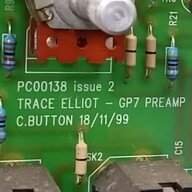
Playing unplugged lets you hear the results of the design, construction, and material obviously.
That's the main reason why I play a bass or guitar unplugged before trying it amplified.
You have to feel the basic tone, since pickups and electronics can be relatively easily changed or altered.
The base tone of the instrument will essentially be the same for the life of the instrument, and you have to be able to live with what it is.


