It's not long enough to be perceived as a single note or tone. But it creates the impression of the Genie being out of the bottle. Quite effectful.Thanks for pointing that out. I am pumped to give it a listen.
...

Enjoy the benefits of a premium membership!
Upgrade Account
-
TalkBass has been independent since 1998. Add your voice.
Create a free account to reply to discussions, view embedded media, and browse with fewer display ads.
Join free Log in
Want zero display ads or expanded classifieds tools? Compare plans.
You are using an out of date browser. It may not display this or other websites correctly.
You should upgrade or use an alternative browser.
You should upgrade or use an alternative browser.
Rig for ultra low notes around 20 hertz
- Thread starter SerfBassie
- Start date
More options
Who Replied?
I don't think this is accurate -- if a double contrabass flute is an octave below the contrabass, its lowest note would still only be C1, or 32 Hz. And of course, there wouldn't be much fundamental present.Tell that to people who play the double contra bass flute.
I'm with some of the others, that there isn't much useful musical information down at 20Hz -- it can be perceived, but it's hard to actually hear. I guess it could be useful as a sort of effect, much as it was used in the Earthquake systems, but it doesn't seem to me to serve much in the way of a musical function. But hey... knock yourself out; it's inspiring to have a quest. [Music cue: fade up "Impossible Dream" from The Man Of La Mancha under this.
 ]
]

I agree with you, so long as we discuss the details a bit.Thanks mic guy. Someone else mentioned he likes connecting with the audience with the fundamental as well. Makes me want to figure this out since on some level at some times it seems to be of use or benefit. In the guitar world there seems to be a good amount of success with modelers but I am concerned to try those with bass because if most of the amps cant do it how could the modelers.
Using an amp modeler isn’t necessarily a roadblock to good fundamentals - there are amps that do just fine. But… if the modeler is modeling a cab as well, that’s gonna be an issue - it’s the cab that’s the limiting factor for low frequency bandwidth.

AFAIK. The Kalium Sub is $1199 and the processor is $349. It's confusing because both images show the Sub.I don't get why one is 400 and one is 1200.
I think it would be informative to see some specs, to see how much output a single 15 can deliver at 20hz.
FYI Bag End INFRA subs are rated to +/-3dB to 8hz. INFRA subs are sealed cabs operated below system resonance (Fc), which is about 80hz. Sealed cabs roll off at 12dB/octave below Fc and the INFRA processor is used to provide a 12dB/octave boost so response remains flat. The processor also includes protective limiting and a dynamically controlled HPF that they call Concealment.
The sensitivity of INFRA cab is sort of medium and decreases at 12dB per octave below Fc. So the volume capabilities at the lowest frequencies are very limited. As the subs approach overload, the Concealment circuit moves the cutoff higher to prevent clipping and over excursion. In other words, INFRA plays low, but not low and loud.
Specs from S18E-R datasheet
Ref: https://bagend.com/wp-content/uploads/2024/04/S18E-R.pdf
Notice one of these cabs is rated to produce 124dB at 80hz but only 89dB at 10hz.
Years ago, I built a system that used four S18 Compacts. The Compacts were special order only. They were essentially half the depth of a regular S18, which raises Fc and makes them less efficient. I used the older ELF 1 processor, which allows you to adjust all system parameters.
I felt the system worked best with the subs cutoff at 40hz. If I let the subs run lower than this, the Concealment started becoming audibly obtrusive at a fairly low SPL. With the processor set to 40hz, the system got reasonably loud and Concealment rarely become audible with the type of music we played. Basically I set up the system so the Concealment became audible as the Mains hit their limiters.
Although it's a bit optimistic, we assume you get +6dB each time you double the number of subs. So to achieve 124dB calculated at 10hz you need:
# S18S for Target SPL at 10hz
1 = 89dB
2 = 95dB
4 = 101dB
8 = 107dB
16 = 113dB
32 = 119dB
64 = 125dB
If you are only concerned with response to 20hz
# S18S for Target SPL at 20hz
1 = 101dB
2 = 107dB
4 = 113dB
8 = 119dB
16 = 125dB
As I mentioned real-world SPL will likely be a bit lower.
If you want 20Hz, but find that the cab would be too big, what the greatest cab designers do is tune higher, until the cab is of marketable size and weight, and leave 20Hz hanging off the edge of the graph, below cab resonance. Leaving the fundamental below cab resonance sounds great according to many of the experts here!
Last edited:

- Feb 12, 2006
- 61,010
- 5
- 220,849
- Disclosures
- Development Engineer-Mesa Boogie, Development Engineer-Genzler (pedals), Product Support-Genz Benz
Driving a cabinet like that with any significant power at 20Hz will simply damage the driver, this is not a solution.If you want 20Hz, but find that the cab would be too big, what the greatest cab designers do is tune higher, until the cab is of marketable size and weight, and leave 20Hz hanging off the edge of the graph, below cab resonance. Leaving the fundamental below cab resonance sounds great according to many of the experts here!

If the 20 Hz fidelity is only for your own listening pleasure, just get a headphone amp and headphones capable of reproducing that frequency (there are 5 Hz capable ones) and pair it with a runble chair that gamers use
For reference, by the time you've taken into account baffle, grilles, speaker basket, a 15 cu ft box is of the order of 3 x 3 x 2 feet externally. Not small.Kilomax gets close in a big box (-3dB at 28hz)
View attachment 7023551
Our ears are not very sensitive at 20hz. So you will probably need several of these "big" boxes if you really want to hear and feel 28hz.
Phon is a measure of perceived loudness. Decibel is a measure of actual loudness. The Fletcher Munson curve shows how they compare. The point is to chart required decibel levels for equal perceived loudness at different frequencies.
120dB at 28hz (red circle) is equivalent to about 100 phons.
View attachment 7023558
At the blue circle (~1K) you only need 100dB for 100 phons. At the green circle (~3.8K) you only need about 88dB for 100 phons

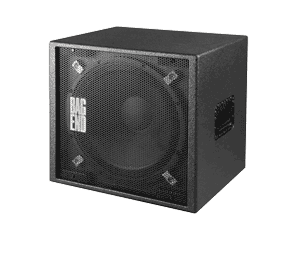
The active Bag End 18” infrasonic sub has served me well producing the fundamentals down to low A. Not sure about 20Hz though. That’s at the limit of our perception.
 bagend.com
IPS18E-BN Infra Processed self powered infra series subwoofer
IPS18E-BN Infra Processed and Self Powered Nebula Coated Single 18" Extended Low Bass Musical Instrument Speaker. Bag End Loudspeakers
bagend.com
Thanks for suggesting this. My next quest I guess is to find the sub woofer.The active Bag End 18” infrasonic sub has served me well producing the fundamentals down to low A. Not sure about 20Hz though. That’s at the limit of our perception.
IPS18E-BN Infra Processed self powered infra series subwoofer
IPS18E-BN Infra Processed and Self Powered Nebula Coated Single 18" Extended Low Bass Musical Instrument Speaker. Bag End Loudspeakers
Thanks for sharing the phon graph. That really helps to illustrate a dimension of the issue at hand I had never considered. I guess this is part of the reason why some of the posts were saying it is possible in PA systems but hard to do at home. I never realized it had to be that loud to be heard.For reference, by the time you've taken into account baffle, grilles, speaker basket, a 15 cu ft box is of the order of 3 x 3 x 2 feet externally. Not small.
Still learning but your point makes sense. Thanks for the important clarification.I agree with you, so long as we discuss the details a bit.
Using an amp modeler isn’t necessarily a roadblock to good fundamentals - there are amps that do just fine. But… if the modeler is modeling a cab as well, that’s gonna be an issue - it’s the cab that’s the limiting factor for low frequency bandwidth.
There are still some Bass Tech 7 Servo Drive sub-woofers to be had. They were advertised to be flat to below 32 Hz and definitely had significant output down to 20 Hz. Here's a link to someone trying to sell a package of 12: Great deal on some low end.
And here's some other info about them. As I say, they're still around. Any PA company that still has some would probably be glad to unload them on you, IMHO.
Link Removed
Edit: For folks who might not have been around back then, the Servo Drive Subs have two 15" cones and use a servo-driven rotary motor rather than conventional voice coil motors. They're only good up to 60Hz, so they're truly just subs. This is not exactly unexplored territory. The Servo Drive subs were used on a Michael Jackson tour (Thriller?), predictably, as a sort of effect, to add some emphasis to a couple of big crescendos. Note: no one seems to have continued the practice... just sayin'....
And here's some other info about them. As I say, they're still around. Any PA company that still has some would probably be glad to unload them on you, IMHO.
Link Removed
Edit: For folks who might not have been around back then, the Servo Drive Subs have two 15" cones and use a servo-driven rotary motor rather than conventional voice coil motors. They're only good up to 60Hz, so they're truly just subs. This is not exactly unexplored territory. The Servo Drive subs were used on a Michael Jackson tour (Thriller?), predictably, as a sort of effect, to add some emphasis to a couple of big crescendos. Note: no one seems to have continued the practice... just sayin'....
Last edited:
Good point thanks for making that more accurate.I agree with you, so long as we discuss the details a bit.
Using an amp modeler isn’t necessarily a roadblock to good fundamentals - there are amps that do just fine. But… if the modeler is modeling a cab as well, that’s gonna be an issue - it’s the cab that’s the limiting factor for low frequency bandwidth.
It depends on the kind of music. I think there are some spots in doom metal where it could add something. i like building guitars with low note capability but i am learning that there is an appreciable multifaceted wall of limitations to this. I don't want to make something that has no possibility of being heard. I am testing the waters before spending hours on a useless build. That being said I think more than anything I am enjoying learning about sound engineering theory. I am new to bass and find this a fun way to learn a bit more about what is involved in making bass sound work. I am surprised how different it is than guitar. Much louder amps are needed.I don't think this is accurate -- if a double contrabass flute is an octave below the contrabass, its lowest note would still only be C1, or 32 Hz. And of course, there wouldn't be much fundamental present.
I'm with some of the others, that there isn't much useful musical information down at 20Hz -- it can be perceived, but it's hard to actually hear. I guess it could be useful as a sort of effect, much as it was used in the Earthquake systems, but it doesn't seem to me to serve much in the way of a musical function. But hey... knock yourself out; it's inspiring to have a quest. [Music cue: fade up "Impossible Dream" from The Man Of La Mancha under this.
Thanks for going into depth. I feel like this is a different approach to explaining the phon graph someone posted. Looks like this is a tougher nut to crack than I first expected.AFAIK. The Kalium Sub is $1199 and the processor is $349. It's confusing because both images show the Sub.
I think it would be informative to see some specs, to see how much output a single 15 can deliver at 20hz.
FYI Bag End INFRA subs are rated to +/-3dB to 8hz. INFRA subs are sealed cabs operated below system resonance (Fc), which is about 80hz. Sealed cabs roll off at 12dB/octave below Fc and the INFRA processor is used to provide a 12dB/octave boost so response remains flat. The processor also includes protective limiting and a dynamically controlled HPF that they call Concealment.
The sensitivity of INFRA cab is sort of medium and decreases at 12dB per octave below Fc. So the volume capabilities at the lowest frequencies are very limited. As the subs approach overload, the Concealment circuit moves the cutoff higher to prevent clipping and over excursion. In other words, INFRA plays low, but not low and loud.
Specs from S18E-R datasheet
Ref: https://bagend.com/wp-content/uploads/2024/04/S18E-R.pdf
View attachment 7025264
Notice one of these cabs is rated to produce 124dB at 80hz but only 89dB at 10hz.
Years ago, I built a system that used four S18 Compacts. The Compacts were special order only. They were essentially half the depth of a regular S18, which raises Fc and makes them less efficient. I used the older ELF 1 processor, which allows you to adjust all system parameters.
I felt the system worked best with the subs cutoff at 40hz. If I let the subs run lower than this, the Concealment started becoming audibly obtrusive at a fairly low SPL. With the processor set to 40hz, the system got reasonably loud and Concealment rarely become audible with the type of music we played. Basically I set up the system so the Concealment became audible as the Mains hit their limiters.
Although it's a bit optimistic, we assume you get +6dB each time you double the number of subs. So to achieve 124dB calculated at 10hz you need:
# S18S for Target SPL at 10hz
1 = 89dB
2 = 95dB
4 = 101dB
8 = 107dB
16 = 113dB
32 = 119dB
64 = 125dB
If you are only concerned with response to 20hz
# S18S for Target SPL at 20hz
1 = 101dB
2 = 107dB
4 = 113dB
8 = 119dB
16 = 125dB
As I mentioned real-world SPL will likely be a bit lower.
Wow that is awesome. I love the closing comment. Just learned there is this thing called phon where for the deep notes to be heard they have to be very loud. I guess this is why the wash out happens to the rest of the mix.I was in the lucky situation to have enough stuff sitting around to try my hand at this whole thing. The mud is not only in the string of the bass. I used a multiscale five which was downtuned a full step. Played unamplified, the feel was solid.
My equipment were two subs with 18" woofers, about 3'x3'x2' in size and a two man carry each, powered by a 4,5kW power amp - in combination with two 2x12" regular bass cabinets powered by 500w. The subs were placed exactly spaced apart for proper coupling (it's sometimes handy to have an audio engineer to call a friend), and those went to 30Hz (-3dB). Using this rig to stay an octave below the guitar playing metal was plain old terrible. I did have enough power at my fingertips to EQ any tone I liked and make it loud enough to get through the mix. When I did so, It felt like I was overpowering everything else. The raw power was .. .fascinating ... but only for me.
I think this is like a thing unto itself. Would be awesome to have as an intro sound for a boxer entering the stadium. Just a heavy singular note that displays raw power.
It is a daunting frontier. I think I will start small and see if a woofer changes how I like the sound effect. Seems like to do it right takes a lot of cash and I don't know if I'm up for that. Would be happier I think if I learned to play better and band or something. Connecting with people...I've known Skip for many years and have enjoyed some great face to face conversations. If you have been able to talk to him on the phone at length you're already on a good track. @DukeLeJeune has some good knowledge on this stuff as well, maybe he'll chip in if he happens to catch my ping. Sadly a lot of the other former TB'ers who have or had a deep interest in this subject have moved on, for instance Greenboy was the one who put Skip, Duke, and me together in the first place.
Lots of other worthy input from some of the usual suspects here too, which is always nice to see.
Thanks for the suggestion. Looks like a good unit. I am always hoping for cheep miracles but I don't think these rare items.The active Bag End 18” infrasonic sub has served me well producing the fundamentals down to low A. Not sure about 20Hz though. That’s at the limit of our perception.
IPS18E-BN Infra Processed self powered infra series subwoofer
IPS18E-BN Infra Processed and Self Powered Nebula Coated Single 18" Extended Low Bass Musical Instrument Speaker. Bag End Loudspeakers
Latest posts
-
-

-

-
-
Would you play gigs with a band that doesn't have a great PA?
- Latest: buldog5151bass