I’ve always found rig rundowns to be such an eye opening way of learning about gear and how to better my own live setup. However, Ifind there isn’t as much to learn any more from players outside my genre (rock, punk, indie, alternative, emo, etc) anymore.
So I’d love to see/hear about the basses, pedals, amps, cabs, and/or cables you use on stage.
What bass is going in the coffin with you? What gear has helped your live rig the most? What pieces of gear could you not live without?
I have a number of different set-ups that I use as far as amps and cabs go. They are all David Nordschow designs. Some of it are Eden amps and cabs (founded Eden in 1976) and some are DNA (David Nordschow Amplification founded in 2009).
For small venues like brewpubs here in Washington state (over 400 of them) I'll use an Eden TN226 amp (225-watt class D, weighs 4.7-lbs) and one of my two Eden EX112 cabs (4Ω each, 300-watts rms power handling). Bought the first 112 in 4Ω just to get the most out of the small amp with one cab and it sounded so good the first night I used it that I ordered a second one the next day. If I had it to do over again, I would have ordered them both in 8Ω. Sound is clean, clear, full, and warm. I can carry it all in or out along with my bass in one trip and it all fits very nicely in a chair - Great for small clubs!

For Medium-Sized venues I used my big Eden amp, which is a WT500/800 weighing in at 37½-lbs in its rack. This was a WT500 that was upgraded by David from 500-watts bridged into 8Ω up to 800-watts bridged into 8Ω. It will put out 400-watts per channel into 4Ω. It has more sound shaping control than any amp I've ever used but the only tweak I use on it is to boost the low-mids at 250Hz up to 1:30. I leave everything else flat and my 1982 Jazz sounds amazing through it. This was actually the amp that David used to design all the Eden cabs from 1999, when it was made, to 2009 when he left Eden. I bought it directly from him in 2010.
For about 2-years I used two Eden EX-112 cabs with that amp. It was lighter to bring the two 112's (30-lbs. ea.) than to roll in my 410 cab (79-lbs.) and my WT500/800 can produce up to 400-watts per channel into 4Ω. So I just plug one into each power channel and play. Technically, I could blow the 112's if I cranked it but I've never had to move the master above 10:30 in a medium-sized venue. I got a lot compliments on my sound with this rig.
In 2019 I was accepted into the DNA Endorsing Artist group and used my artist discount to buy a DNS-210 by DNA. It handles 700-watts rms and weighs 52-lbs. It shares the same sonic characteristics that my 410 cab does and can reproduce the fundamentals down to 34Hz. I wasn't prepared for how loud this cab is. I'll run the master on my big Eden amp between 9 and 9:30 for small venues and for large indoor venues I may push it up to 10:30. Buying this cab meant that my DNS-410 cab was relegated to outdoor venues and music festivals.
In May of 2021 I bought a DNA-800 amp (800-watts into either 4Ω or 2Ω, 400-watts into 8Ω) This is a class D amp that is dead quiet because it does not use a fan and it weighs all of 4.8-lbs. Since my big Eden amp weighs 37½-lbs in its rack and my DNA-800 weighs just 4.8-lbs, I actually use it with all my indoor venues now because it gets loud enough with a max of 400-watts using this cab for just about any large room too. About the only possible exception to that would a large venue with a very long room. Distance eats db's, but if I run into that, I can just use my big Eden amp with the cab because it will put out up to 800-watts rms bridged into 8Ω.
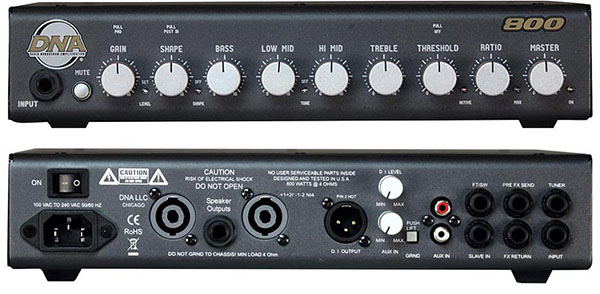
Unlike most of David's previous designs the DNA-800 uses a simplified EQ system with a bass EQ shelving at 35Hz, low-mids centered at 500Hz, high-mids centered at 2KHz, and a treble shelving control for all frequencies above 2Khz. I adjust the low-mids to 1:30 on this amp too and with that little boost at 500Hz it sound just as good as my big Eden amp. I do have to boost the bass EQ slightly up to 1 o'clock because the Eden amps shelve at 30Hz and the DNA amps shelve at 35Hz. Just that little touch of bass boost makes it sound like the Eden amps with the bass at flat. One of the cool things it has is an input on the bottom right of the back, so you can plug in either front or back. You can't plug into both at once though. I use a wireless and I typically plug that into the rear input and set it next tot he amp because it has a nice clean look that way - no cords hanging down in front.
It also has an onboard compressor with adjustable threshold and ratio controls that will do everything from adding a little sustain to your sound to squashing the note to the point there are no dynamics at all in it, the notes sound like they are played on a Farfisa organ. One of the few songs I've every used that compressor on was Cyndi Lauper's song, "Time after Time". Keys were used for the bass on the original and I can duplicate that sound with the compressor. Other than that I don't really use the compressor because my '82 jazz with it's all-maple neck has excellent sustain, far more than my '65 Jazz did that I bought in 1966.
When it comes to playing outdoor venues, I'll use my DNS-410 cab that I bought back in 2015. It was the first piece of DNA gear I bought. This cab handles 1400-watts rms. It can duplicate fundamental frequencies down to 37Hz. Depending upon where we are playing outdoors, I'll run it with either my DNA-800 amp, which will put out 400-watts into 8Ω but it puts out 3db more than my 210 does. For most enclosed outdoor venues, that's my go-to because it sounds great and my DNS-800 is 32.7-lbs lighter than my big Eden amp. When playing wide open outdoors and/or music festivals, I typically will use the big Eden amp with my DNS-410. This cab also gets loud with very little power. When playing in music festivals, the sound crew will ask me to turn down if turn the master on my Eden WT500/800 amp up to 10:30. So I've learned to run it at 10:15 and they don't hassle me about that. Good news is that I will never have to haul around an 810 cab because my 410 already gets too loud!
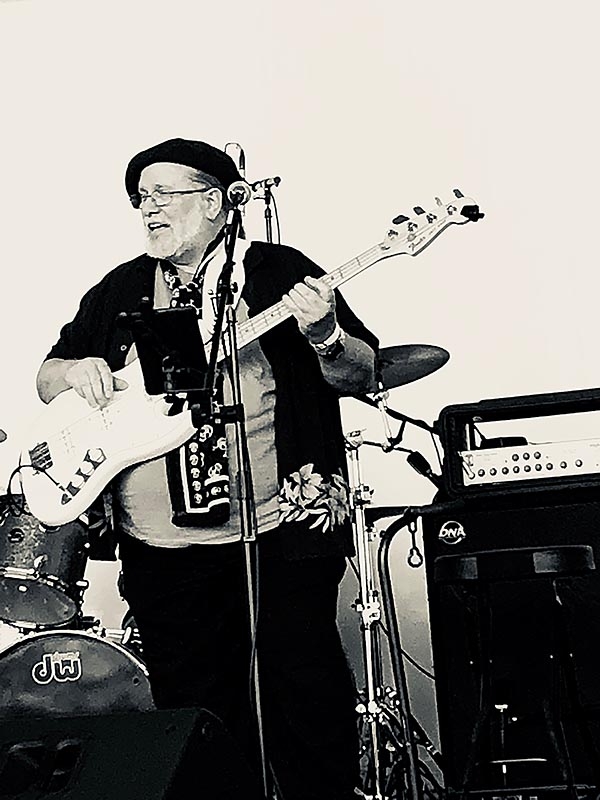

Of course, I could use my DNA-800 amp and split that 800-watts into both cabs, but it all seems to come down to weight. The sound is virtually the same between my Eden amp and my DNA amp because they were all designed by the same guy, David Nordschow. Bringing my 37½-lb big Eden amp is easier that bringing my 52-lb. DNS-210 cab and easier to load in and out both. HOWEVER, the first gig I played with my DNS-210, I wasn't sure if the 210 would be enough rig for the gig because it was a big room. So I brought my 410 cab with me too and stacked my 210 on top. If the 210 was not enough for the gig, I knew the 410 easily was, and I could unplug my 210 and plug in my 410 in just a few seconds. Ended up that the DNS-210 was more than enough and my 410 just ended up being a $1,000 amp stand that night. It does look really good with both of them stacked up though and maybe one of these times I'll bring both and run them with my DNA-800.
Here's a shot of the only time I actually had them stacked up. The DNS cabs by DNA are remarkably clear. If you play bass chords you can distinctly hear each of the notes. Compared to other cabs I've used, a DNS cab makes it sound like you just removed a blanket that was covering up and deadening your sound because it is just so clear. Add to that a tightly focused and full bottom end and they are an absolute winner.
Now, if you can only find them. DNA went out of business in 2023 because of lack of parts and one supplier who made a proprietary part for their amps went out of business too. Unlike Eden, DNA was really a small boutique operation. David designed great leading edge gear like he always has but didn't have the reserves to go years without parts as we did during Covid, and still stay in business. He would have needed to redesign his amps too because that one supplier went out of business.
It was a gig with our Blues/Rock Trio. Although it was a big room it had a stage in the corner. Was plenty deep enough for the drummer but I had to move my over behind the PA mains because the volume coming out of my 210 was killing my ears, actually painful because it was so close to me. I had to move it three times before I got it far enough away to quit killing my ears.
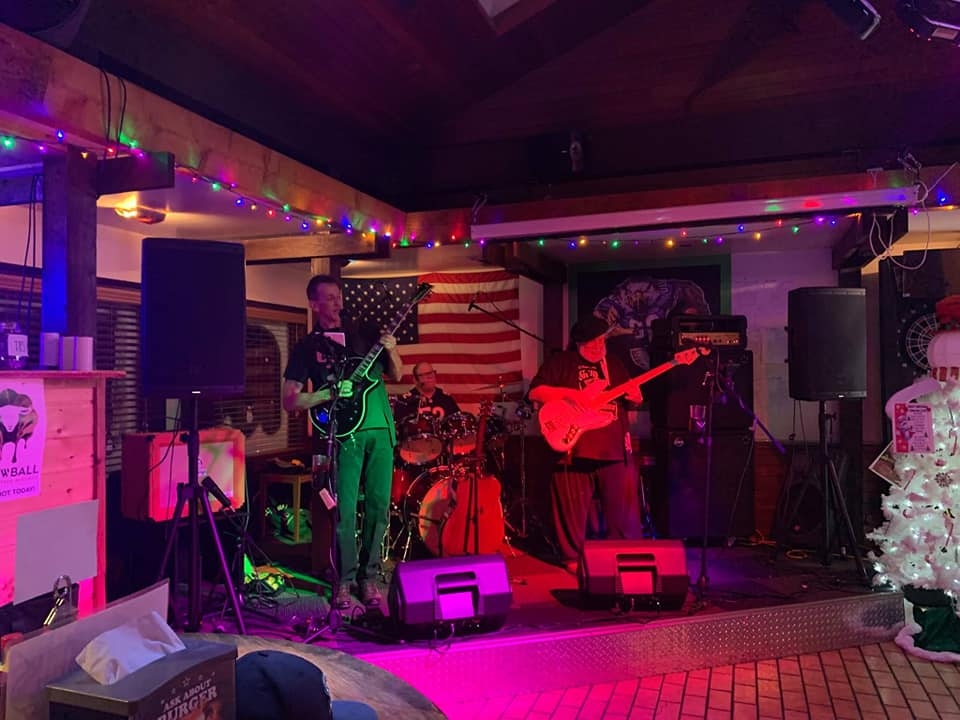
And then, here is my 1982 Jazz Bass. It's Olympic white with a white-bound all-maple neck and 1970's era pickup spacing. That pickup spacing sets the bridge pickup just under 1/2" closer to the bridge and gives it a bit brighter sound than my 1965 Jazz had. It also has far more sustain than my '65 had and I attribute that to the all-maple neck, whereas my '65 Jazz had a maple neck with rosewood fingerboard. My '65 Jazz was stolen in 1976 along with all my touring gear and I'd love to have it back. I toured with a nightclub group for 3 years in the early 70's and that was about 750 performances. We played 5-nights a week 50-weeks a year for 3-years before the group split up.
I really got to know the feel of the neck on that '65 over that period of time and in '76 when I first started looking all the necks on the Jazz basses were obese. Same width, but anything but slim. After it was stolen, it took me almost 10-years to find another Jazz with that neck shape and profile. I believe it is what is known as a '60's Slim C-shape neck with a 7.25" radius". However, even if I did get it back, my '82 would still be my primary bass because it just sounds better than my '65 did and the neck feels just like my '65 did. I just call her my white lady - beautiful shape with all the curves in all the right places.