Just for profit? No. Largely for profit? I think so. I think he believes the things he says. I don't think he's lying. I remain unconvinced.So then, you're not pursuing your contention that he's just recommending expensive woods for profit?

TalkBass has been independent since 1998. Add your voice.
Create a free account to reply to discussions, view embedded media, and browse with fewer display ads.
Join free Log in
Want zero display ads or expanded classifieds tools? Compare plans.
Just for profit? No. Largely for profit? I think so. I think he believes the things he says. I don't think he's lying. I remain unconvinced.So then, you're not pursuing your contention that he's just recommending expensive woods for profit?

Roger’s last point is one that is, I think, too rarely discussed. I often hear people say things like, “The audience can’t hear the difference between x and y basses” and I always think, “Probably not, but I can hear the difference - and that affects how I interact with my bass (and how much enjoyment I get from playing it)”.
I think that confirmation bias plays a large factor in how people perceive the sound of one wood or the other. It will always be impossible to determine what makes an instrument sound the way it does and how much of it is due to certain parts of it.Excellent suggestion. I actually watched it before you assumed I didn't. I'm still unconvinced.
He charges more for some "tonewoods" right? And he's been a successful businessman for many decades? Kinda makes me think his opinion could only go one way on the matter.


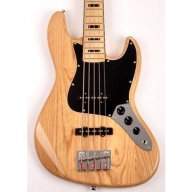
It is interesting that for his UV70 and Slapmaster Jazz Basses, he uses heavy ash.
The UV70 is supposed to be “ultra vintage”, so it should be heavy ash/maple like 70s Fenders.
I wish more basses were made with ebony boards. They are actually my favorite, although I don't have any right now. Not as bright as maple, but brighter than rosewood.
Just for profit? No. Largely for profit? I think so. I think he believes the things he says. I don't think he's lying. I remain unconvinced.
Yes! I miss that crust! Not sure what they do, but like you said, the difference is night and day!There is much truth to this. Here in Seattle, the difference in crust between Tutta Bella (best in town, imho, a Neopolitan style), and everywhere else is night and day.
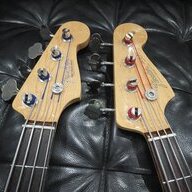
You don't think that maple and rosewood fretboards sound different? It's 100% fact. I've owned at least 3 identical models over the years, one maple one rosewood. Rosewood sounds much different than maple, it's not subtle.Excellent suggestion. I actually watched it before you assumed I didn't. I'm still unconvinced.
Predictably and consistently? I'm not convinced that they do.you don't think that maple and rosewood fretboards sound different?
Yes! I miss that crust! Not sure what they do, but like you said, the difference is night and day!
I can't even get neopolitan pizza around here ..
But I digress.

IOW, you're challenging Roger's character on a board where he has shown the highest levels of character multiple times. Have fun with that.You are of course free, as we all are to disagree or remain unconvinced. Ad hominum arguments concerning his motivations, on the other hand, don't sit so well, given the lack of evidence for that.
I can't stand that train of thought. That is such a logical fallacy. If that's the way that they really think, then that person should be playing the absolute cheapest bass, the absolute cheapest strings, the absolute cheapest strap, no amp, and so on. Otherwise, they are a hypocrite. Heck, follow that logic a little further, and you start making a case for backing tracks! Also, what about the small percentage of the audience that DOES care? What if I'm playing in a room full of bass players? Or drummers? What if the only thing the audience cares about is the way that i look?Roger’s last point is one that is, I think, too rarely discussed. I often hear people say things like, “The audience can’t hear the difference between x and y basses” and I always think, “Probably not, but I can hear the difference - and that affects how I interact with my bass (and how much enjoyment I get from playing it)”.
Nice! Thanks for the recommendation, I'm gonna check it out!ANCORA? I've not eaten there but from what I can tell it looks pretty legit..

Agreed. Dismissing Roger's observations about wood and how it affects tone because he sells basses is pretty cynical. I've spoken with Roger on several occasions, including when I visited his shop twice. He comes across as being totally down to earth and no-BS in his approach. No hard-sell tactics whatsoever."Largely for profit" - How so? Again, listening to his actual words, Sadowsky is saying very clearly that the fingerboard wood makes the biggest difference. Maple or rosewood, for the most part. Not a lot of difference in profit either way. You may have listened to his video, but you don't seem to have really heard it.
You are of course free, as we all are to disagree or remain unconvinced. Ad hominum arguments concerning his motivations, on the other hand, don't sit so well, given the lack of evidence for that.
are you sure that was flour?It's all in the flour.
This is the second time that i got to use this pic in the past few days on here. Sweet!!Just for profit? No. Largely for profit? I think so. I think he believes the things he says. I don't think he's lying. I remain unconvinced.
Yes, that is an issue. I do think certain woods have certain tendencies (I observed these where maple was concerned before I heard anyone talking about how maple was "supposed" to sound). But predicting with any degree of certainty isn't, I don't think, possible. But if I am going to order a bass without being able to play it first then I'll go with the "theory" and keep my fingers crossed. That, to me, is a better approach than just choosing wood randomly.Predictably and consistently? I'm not convinced that they do.