• TalkBass has been independent since 1998. Add your voice.
    Create a free account to reply to discussions, view embedded media, and browse with fewer display ads.
    Join freeLog in
    Want zero display ads or expanded classifieds tools? Compare plans.

ROLAND GR-20...Wow

realdeal

Inactive
Dec 10, 2004
1,025
7
Has anyone hooked up/played the ROLAND GR-20??

It's listed as a "guitar synethesizer" but it can default to track for bass guitar.

Well Ihave!

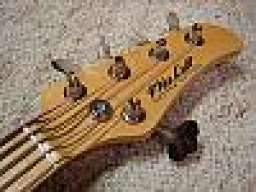
I had been thinking about buying the Godin A4 fretted for some time; pulled the trigger about a week ago.
The Model # is now SA-4, for synth access, allowing it to be plugged into the Roland synths with a 13-pin GK cable; without having to install the divided pick-up.

The instrument by itself deserves posting about in "Basses" indeed it has been. Equal in tone to a Rob Allen; equal to a Turner Renaissance which I have owned.

But the SA-
Nice.
Amazing.

Just started fiddling with it; got it to track well (sensitivity is a major factor) and the banks and patches are...well, you have to hear it. Thousands of combinations especially since you can mix the levels of pure bass guitar with synth sounds and get the overtones of each.

I've only begun to scratch the surface, let alone develop how the many possibilitues can lay in the mix and lay in appropriately for the project.

The patches that create horn-like tones in particular are a great aid in developing more melodic lines- again, you gotta hear this thing to get a handle on what the possibilities are...

Well worth the price, and BIG FUN! too...
 
Has anyone hooked up/played the ROLAND GR-20??

It's listed as a "guitar synethesizer" but it can default to track for bass guitar.

Well Ihave!

I had been thinking about buying the Godin A4 fretted for some time; pulled the trigger about a week ago.
The Model # is now SA-4, for synth access, allowing it to be plugged into the Roland synths with a 13-pin GK cable; without having to install the divided pick-up.

The instrument by itself deserves posting about in "Basses" indeed it has been. Equal in tone to a Rob Allen; equal to a Turner Renaissance which I have owned.

But the SA-
Nice.
Amazing.

Just started fiddling with it; got it to track well (sensitivity is a major factor) and the banks and patches are...well, you have to hear it. Thousands of combinations especially since you can mix the levels of pure bass guitar with synth sounds and get the overtones of each.

I've only begun to scratch the surface, let alone develop how the many possibilitues can lay in the mix and lay in appropriately for the project.

The patches that create horn-like tones in particular are a great aid in developing more melodic lines- again, you gotta hear this thing to get a handle on what the possibilities are...

Well worth the price, and BIG FUN! too...

Well cool man, I've wanted to try it on bass but can't swing the money now. Glad to know you like it :)
 
I'm surprised that I haven't heard more buzz about the GR-20 here, considering what it can do, and I'm just starting to get the hang of it.-Haven't edited patches, or created my own either, but some of the patches- OMG!
You can play a line or run and get sounds ranging from Fender Rhodes Piano to alto sax to scat vocals!! And that's just the beginning, there's over 400+ preset patches.

I imagine the cost is a factor,(it's close to $600 without the pick-up); maybe it's because it's primarily listed as being for guitar- But it formats to tracking bass, and does it well too.
Also, unless you have something like the Godin, which is synth ready, I'm sure a lot of players don't want the hassle of installing the divided pup on their bass.
Not sure just how many builders, if any, have a synth-ready model, besides Godin- I thought Fender might have, not sure though.

The V-Bass, which was discontinued was more of a modeling platform than a synth.

I've used pedals with success, always found them interesting but not essential-

This synth-with some practice- can really take certain roles of the bass to an extreme (not to mention entertaining) level.

My first project with it involves a singer-songwriter whose compositions are simple, but fun. She has very sparse backing (piano, drums, her on very basic guitar parts,) and now me -and my synth bass.

The fact that the A4 had such an awesome flavor as an Acoustic Bass guitar on it's own, especially with the TI-phosphor bronze strings I threw on, made me want to drop the cash in order to use the 13-pin socket.

The eq on the bass, besides the standard 3-band cut/boost, includes the ability to switch patches from the synth as well as mix in the bass sounds with the synth patches. Pretty wild stuff.

Big-time potential to lay in an amazing sound from the bass guitar. First gig is the 27th, so I have some time to figure out what to do.......
 
The GR-20 is indeed very nice. Easy to use, too.

I used one up until recently, used it together with the V-Bass.
The combination of these two gives me pretty much anything I could want.

Here's Richard Bona using one (before going into an amazingly nice solo):
 
Wow, thanks for posting that. I know the Roland site listed Richard as being a user of the GR-20.

He does a perfect job (of course!) of utilizing the synth patch for strings/orchestra; not sure which there are so many, especially with his chording and tapping.

And his solo..Well, Richard is one of the players who, whenever I start to think that I'm getting my playing in gear after tons of practice, much hard work, etc--
Only makes me feel I haven't scratched the surface. What chops. Sorry I missed him when he performed live not too long ago in my 'hood. Jaws dropped, I understand.

The biggest challenge to me in using something as expressive (and potentially overkill) as the GR-20 is to make it blend in with what I'd normally create as a bassline, rather than overwhelm the track with in-your-face synthesized sounds.

Oh...it can be done, and so far, I've found that using just a tad of, say, trumpet e.g. mixed back with the ABG sound in the case of the Godin---Interesting to say the least.

Biggest benefit perhaps is that the incredible array of possibilities drives one to play the Bass, and that's where it happens.
 
When I was looking for the Akai DeepImpact, I thought that another chance to get a very good bass synth could be the Roland GR-20 (II software version) + midi pick-up GK3B.

A part from the total price (about 800 USD), reading carefully various thread on the web and user's manual, I've realized that the tracking on low notes is not good (and this is clearly remarked in the user's manual at the FAQ chapter).

So, as I would have used it for moog-bass sound on low notes, I left the project and looked ahead.
 
This appeals to me. I want a relatively plug & play kinda gizmo that doesn't require someone to get into editing to get some musical and fun sounds going. Looks small and easy to use too, which I also like.

Realdeal, what do you mean when you say modeller vs. syth? And any idea how this device stacks up to the new V-Bass? Would the tracking be better on that, or is tracking a function of the GK3 pickup vs. an actual MIDI out on the bass?

Anyone know at what point on the low end the tracking falls apart?

Great Bona video !

Check out this lady playing a sax solo with hers -
 
Good friend of mine is buying one this month, he'll use it with guitar for filling synth parts in our cover band. I'm looking forward to hearing what it can do. Personally I'd rather have a pedal based version, like the Roland PK-5 controller and a synth module.
 
Hey Guys-
I just posted a thread in "Amps" describing the set-up I use to power up the GR-20, stressing the "synergy" between amp/cab/bass and now- Synth!

First off, let me address the tracking question-
I happen to use this rig with and for the Godin A4SA, an awesome product by Godin (which is waaay under the radar IMO- all props to Canada for this one...)

Perhaps the ground-up design of the SA, along with the L.R. Baggs, etc. produces a better track than an "aftermarket" installation of the GK-3 divided pick-up- I don't know that, but-
It's important to know that the first step either way is adjusting the sensitivity for EACH string on the GR-20, and it's easy to do so- "When all else fails, read the Manual":D

Initially my G string was not tracking well, I could not get the number "2" designation to appear on LED; I read the manual, it told me how-to: Depress the "Glide" pedal until the correct digit appears.

Voila-
Bottom line-

THE UNIT TRACKS VERY WELL! Yes, it is not to perfection, some patches and banks track faster/slower than others (the manual states that this is a resultant of bass overtones, etc). but I will repeat, and I mean this-

The Unit tracks very well. I have been totally enjoying it, and the sonic possibilites-
Jeesh-
1) Balance between Effect/and Bass; and with the TONE of my Godin, with TI Bronze phosphors- Wonderful.

Full-on trumpet, or 1/2 trumpet; 1/2 bass guitar, See?!

2) The variances available within a patch- Difference in "Hold" and "Glide" tonalities...
Up a half-tone? Down a perfect fifth? Jeesh!

3) EQ the 3-band bass with, well, in my case, the Neo-Pak, add chorus level from the synth, adjust attack/delay levels, reverb.

Whoa.

Synopsis-
The GR-20 is a very well-built amazing sounding...."Guitar" synthesizer that can be (and SHOULD BE!) defaulted to "bG" mode... for you-know what!

It will make you a better player because to really get beyond just wailing away with a sustained string section, you can and should phrase lines like a sax, or trumpet, or play in a linear fashion like a pianist-
It can expand the dimensions of one's playing, and the applications within a rhythm section and a Project-

Un-believable.

Godin hit a winner with designing a model dedicated to Synth Access, from the woods used in the build on in.
It's a great bass on it's own, but with the Roland...

And I don't know about the new version V-Bass; I explored the history of the older one, and the current V-guitar- I understand it's priority is COSM modeling rather than banks and patches of synth sounds, with a number of effects as well, but without personal experience, I can't compare how the GR-20 and V-Models stack up and vary or offer similar function.

Guys, I HIGHLY recommend the GR-20, but then again, maybe I don't want everybody having as much fun as me!:D
 
is tracking a function of the GK3 pickup vs. an actual MIDI out on the bass?

FYI there are no basses which have a MIDI out on the bass itself. Tracking is a function of how quickly and accurately the internal computer can read, process, and transmit the "data" of the string vibrations to the sound generating module, regardless of the system used.
 
I've had virtually no problems with tracking from the GR-20.

Perfection? No, but about as good as it should be. The videos posted demonstrate the tracking I think.

From the manual-
"in some of the preset patches, this setting causes the actual pitch produced by the synthesizer to be one or more octaves above or below the pitch that is input...."

"Bass Guitar Operation: The synth will sound at the same pitch as the input."

With sensitivity adjustments made, and the pup installed as designed, I don't feel that tracking would be an issue.
Sensitivity can also be set for a particular string attack.

Been playing the &(*&^ outta this for 3 full days, exploring, experimenting...digging it....

No problems staying "on track".....
 
I'm glad you like yours. I've had one for a couple years now and it can do some great stuff.

One thing is, I've never liked a lot of the sounds that much, so I pretty much only use the user bank (tweaking and saving patches) and occasionally add new sounds after some exploration.

Also, no matter what you do, the tracking isn't all that. I have a GK-3B pickup as well as a Spalt Magma 601x fretless w/13-pin piezo. It tracks well with tight playing, but I can't get it consistent enough for my tastes. Which is fine for slower triggering sounds, but quick attack sounds like piano sometimes trigger a little after I hit the note, and sometimes double triggers.

The coolest part of the GR-20 takes some work with the hold function, but you can simulate two instruments playing different (if intersecting) lines at once.
 
I certainly would not claim that tracking is 100%, but a couple of factors-

Not sure exactly how much difference there is between the "SA" inherent design of the Godin, eg. and installing the GK3, there must be some I'm sure.

Another factor, besides tweaking in general, including attacks-both the GR-20 and your own, would be a balance between Guitar and Synth- again an inherent feature of the SA- (2) Volume sliders in the eq of the instrument, not quite sure if the aftermarket pup offers this-

But if it does-it's a definite factor. Full-on synth may as stated cause an "aftershock" of sorts, but some of that can be, if not eliminated, ameliorated wow..big word! That is to say, fixed, or improved, by laying in some "natural bass" -into the synth patch.

This will retain the synth effect, and audibly improve the track-

And bottom line-
Still sounds way cool.

Still a fan of the GR-20 and still finding some astonishing ways to use it in my approach, especially with the Acoustic Bass element added in.
Fun.:cool:
 
Yah, did the MIDI thing way back when, using keyboards, various woodwinds into an IVL Pitchrider pitch-to-midi convertor, Yamaha WX-11 Wind Driver, and Roland G-707 guitar controller and various synths and samplers. Only the WX-11 was glitch-free under any circumstances since it was the only one that didn't need to use pitch-to-midi conversion.

The others benefited from two things:

1) manicuring one's technique so that false-triggering wasn't such an issue at the onset of each note's/phrase's envelope. This can be largely intuitive - just listen and adjust playing style accordingly. It can be a little like losing some of the best things about an alternative controller instrument however. Less nuance means less expressivity, and a lot of those gestures one uses make up a big part of one's style on an instrument. But still, the tradeoff is that you can access other sonic landscapes...

2) suitable sounds often were those with medium or slower attacks in the amplitude and/or filter envelopes (ADSR - ATTACK Decay Sustain Release - or whatever envelope type the particular sound module had). That would hide the attack transient glitching pitch-to-midi often produced as it tried to zero in on what note was being played.

In keeping with the suitable sounds issue, I preferred patches that were dynamic. At first, just having some fresh new sounds to access on my instrument of choice was enough, but after awhile the static nature of them began to wear and just didn't seem musical enough except in limited circumstances. Not only did I want the sounds to react to how hard I hit a note, but I wanted them to react tonally and/or in volume to any other gestures I might apply during the note, as well as having parameters mapped to footswitches/footpedals that would also do cool and useful things.

So this meant my best sounds were usually factory sounds that I tweaked, or fresh creations. Usually there are some good starting points for the tyro that need very little experimentation to yield more than satisfactory results, and some pride in having made them immensely more musical comes with the turf : } ...A lot of newer stuff like the GR-20 also has some architectural shortcuts to allow this to happen without much learning curve/time invested.
 
FYI there are no basses which have a MIDI out on the bass itself. Tracking is a function of how quickly and accurately the internal computer can read, process, and transmit the "data" of the string vibrations to the sound generating module, regardless of the system used.

Thanks. I actually knew that. What I should have more precisely asked is :

"Does the unit necessarily track better if given output from a bass' onboard 13-pin vs. from a surface-mounted GK3b pickup."?

It sounds to me like you're saying the tracking issues, if any, are all in the gizmo itself and not at all caused by any lack of resolution or speed in the data coming from the different output signal methods on the bass?
 
Well no I did include "quickly and accurately... ...transmit the data to the module" in my description. I was just trying to indicate that no one of those factors was more important or relevant than the others, meaning a surface-mt. pickup isn't inherently better or worse than a built-in processor with 13-pin output.

That said, MIDI can be terribly slow over regular MIDI cables, so my personal preference given today's technology would be a system that did most of its processing with either no MIDI at all, or some sort of broadband conveyance of the MIDI data.
 
Does the unit necessarily track better if given output from a bass' onboard 13-pin vs. from a surface-mounted GK3b pickup?

Tried to PM ya but box full. Anyway, on the right bass with a good GK set-up guys who have tried both and posted on the V-Bass forum I used to admin seem to be about evenly split. My own experience has been only with GK setups, and I'd venture to say that a bass that's got troublesome neck resonances and any other acoustic issues would do a little less well than either ; }


It sounds to me like you're saying the tracking issues, if any, are all in the gizmo itself and not at all caused by any lack of resolution or speed in the data coming from the different output signal methods on the bass?

No, the audio stream from either a piezo or a GK is audio directly from the pickup and has not yet been converted to a data stream. As I posted above, pitch-to-midi recognition/conversion in any converting hardware (and not the GK or piezos that feed the 13-pin cable) is the culprit and there are a couple workarounds/solutions to alleviate/minimize but not eradicate that.