I get the attraction of a 1/2" router, but my "main" router for planing jigs only has a 1/4" collet, so I use the 1/4" version of that bit. I've used it enough that I've worn two of them out and I've had zero signs of issues related to the shaft size in all that cutting. I really just don't think it's as much of an issue as it's made out to be, at least for this style of routing. These bits are wide but they are also relatively short, and it's easy to "choke up" so the bit is tight to the collet and there's effectively zero shaft exposed outside the collet.

Enjoy the benefits of a premium membership!
Upgrade Account
-
TalkBass has been independent since 1998. Add your voice.
Create a free account to reply to discussions, view embedded media, and browse with fewer display ads.
Join free Log in
Want zero display ads or expanded classifieds tools? Compare plans.
You are using an out of date browser. It may not display this or other websites correctly.
You should upgrade or use an alternative browser.
You should upgrade or use an alternative browser.
Router Planing Fixtures
- Thread starter Bruce Johnson
- Start date
More options
Who Replied?

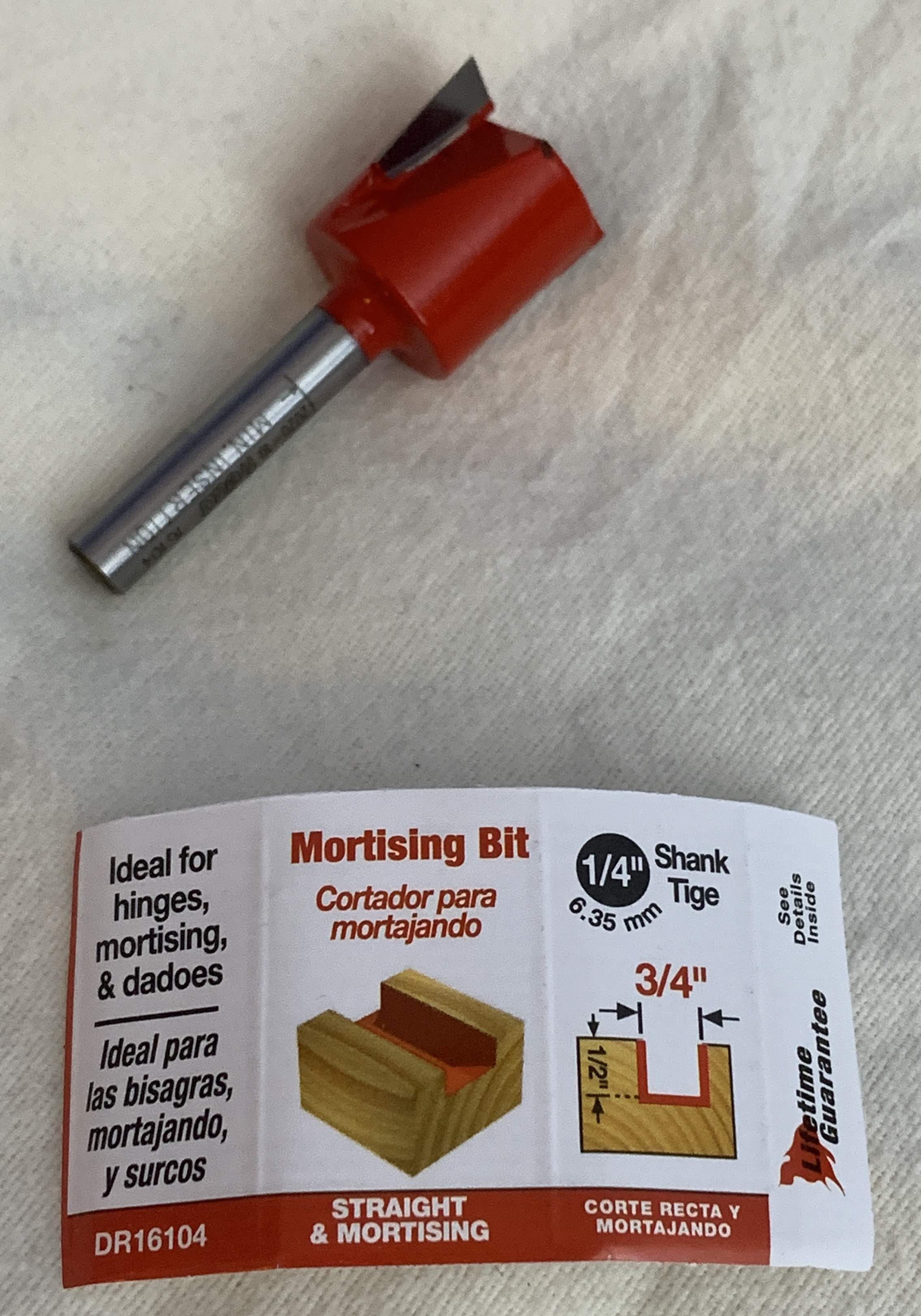
I grabbed a Freud bit while at Home Depot, it only had a 1/4 inch shaft but its a 3/4inch mortise bit...
The question is, going to the wider bits (over 1 inch) does the horsepower of the router have any relevance??
I was checking out the spoil-board bits 1 1/2" plus... but was concerned about the router...
The question is, going to the wider bits (over 1 inch) does the horsepower of the router have any relevance??
I was checking out the spoil-board bits 1 1/2" plus... but was concerned about the router...

I grabbed a Freud bit while at Home Depot, it only had a 1/4 inch shaft but its a 3/4inch mortise bit...
The question is, going to the wider bits (over 1 inch) does the horsepower of the router have any relevance??
I was checking out the spoil-board bits 1 1/2" plus... but was concerned about the router...
View attachment 4143151
It can matter... at the same time it also depends on how much you are trying to take off in a single pass...
Last edited:
I think you'd be hard pressed to be limited by router power in the sense that most medium to large routers will have enough power for how router planing is typically done, but I think you'll hit other practical limitations more quickly when going for a much larger spoilboard style bit.
The way we use these bits, we are basically taking off a very very narrow shaving along the bottom corner of each blade. In that way it's similar to how a spoilboard bit is meant to work.
To an extent, bigger size is nice because it means a wider swath per pass. So you have to take fewer passes back and forth. Even if the overall operation takes the same amount of time (your passes will likely be slower with a bigger bit) it's just convenient to take fewer passes.
Bigger size also means the speed at the blade is higher for a given rpm. That can become limiting sooner or later in materials that don't like to be cut at high speeds. And, the torque is greater (there's a longer "lever" from the center of the bit to where the cutting is happening). That's an important consideration not just in terms of the power needed, but practically - since more torque means the router is harder to control - it'll want to climb and run from you much more easily. However, since we take off such a small bite, and routers are generally very well guided on a planing jig, it's less of a concern than when doing other freehand routing operations where spinning a big bit is scary. Though, if you're not careful, a router in a sled can still try to pull on you, and personally I wouldn't want to go huge with the bit even if I had the power.
A spoilboard bit meant for use on a CNC machine is a bit of a different animal since you're running it in a machine that doesn't have the same constraints as a freehand router, i.e. you're not guiding it by hand and having to control the "feedback" from the cutting operation by hand. Also, an actual spoilboard, which those bits are meant to cut, is usually a material that's very easy to cut and doesn't fight the way hardwoods can. So a bigger blade isn't really a problem.
A bigger bit is more likely to flex, not because it's more flexible but because of the "lever" effect mentioned above. But as I indicated in my prior post I don't think flex is really an issue with how we use these.
That's a bit of a brain dump on my part. I haven't actually used a bit bigger than the commonly used Freud for router planing, but just having used that bit so extensively, I don't have any desire to use anything bigger. It cuts great and is wide enough to be useful but not so big that it's unwieldy or hard to control. There have been a small number of times where it's size has been close to making me uncomfortable, so I have no interest in a larger bit.
The way we use these bits, we are basically taking off a very very narrow shaving along the bottom corner of each blade. In that way it's similar to how a spoilboard bit is meant to work.
To an extent, bigger size is nice because it means a wider swath per pass. So you have to take fewer passes back and forth. Even if the overall operation takes the same amount of time (your passes will likely be slower with a bigger bit) it's just convenient to take fewer passes.
Bigger size also means the speed at the blade is higher for a given rpm. That can become limiting sooner or later in materials that don't like to be cut at high speeds. And, the torque is greater (there's a longer "lever" from the center of the bit to where the cutting is happening). That's an important consideration not just in terms of the power needed, but practically - since more torque means the router is harder to control - it'll want to climb and run from you much more easily. However, since we take off such a small bite, and routers are generally very well guided on a planing jig, it's less of a concern than when doing other freehand routing operations where spinning a big bit is scary. Though, if you're not careful, a router in a sled can still try to pull on you, and personally I wouldn't want to go huge with the bit even if I had the power.
A spoilboard bit meant for use on a CNC machine is a bit of a different animal since you're running it in a machine that doesn't have the same constraints as a freehand router, i.e. you're not guiding it by hand and having to control the "feedback" from the cutting operation by hand. Also, an actual spoilboard, which those bits are meant to cut, is usually a material that's very easy to cut and doesn't fight the way hardwoods can. So a bigger blade isn't really a problem.
A bigger bit is more likely to flex, not because it's more flexible but because of the "lever" effect mentioned above. But as I indicated in my prior post I don't think flex is really an issue with how we use these.
That's a bit of a brain dump on my part. I haven't actually used a bit bigger than the commonly used Freud for router planing, but just having used that bit so extensively, I don't have any desire to use anything bigger. It cuts great and is wide enough to be useful but not so big that it's unwieldy or hard to control. There have been a small number of times where it's size has been close to making me uncomfortable, so I have no interest in a larger bit.

The racecar fabricator in me says "slot your holes a tiny bit".... I have actually used this planer jig to put a 4 deg slope on a les paul for the neck join. that's about as far as one can tweak it w/o messing up the bolts....

I won't disagree with all the things people posted above. However, having only used an inexpensive 1/2" shaft 2" diameter spoilboard bit for planing, I can add a couple of things:
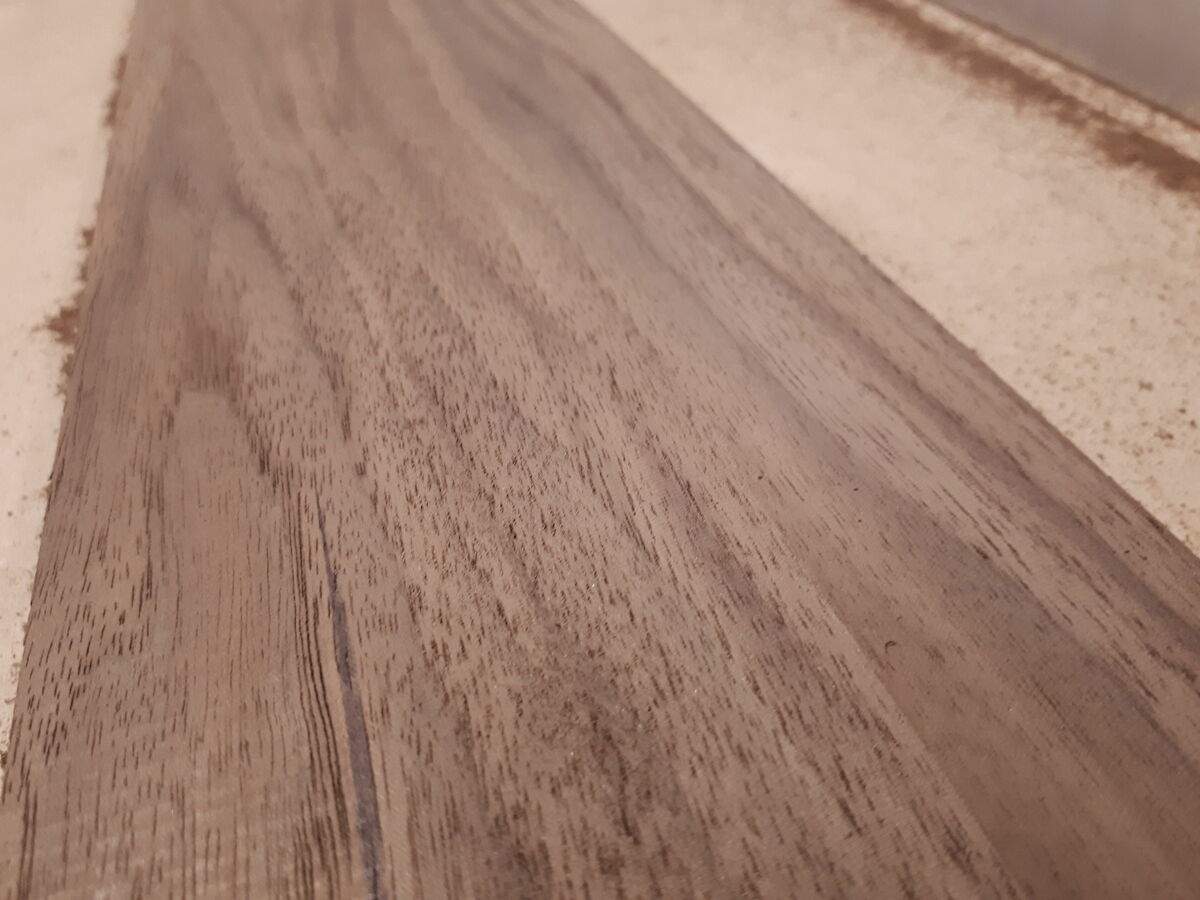
The board had a line of sharpee on, visible on the lower left corner, that the router plane did not take off. You can see how gradually that line was removed. You can also see how much smoother the router planed portion is compared the the mill surface planed portion on the bottom left corner where the blade marks are clearly visible.
- The bit doesn't pull as hard as you might think. I guess the jig limits the movement somewhat, and I have never tried removing more than about 1/8" on a pass.
- Power is absolutely a limiting factor when using a bit that big. My router is rated at 2.5 HP, which really means limited by the power you can pull out of a 15 A circuit, and I can definitely get it to bog if I move too quickly. By quickly I mean really quickly, like up to a foot per second.
The board had a line of sharpee on, visible on the lower left corner, that the router plane did not take off. You can see how gradually that line was removed. You can also see how much smoother the router planed portion is compared the the mill surface planed portion on the bottom left corner where the blade marks are clearly visible.

With the smaller aluminum angles the router slides on in that jig, is there any "flex" in the rails just by the weight of the router, or if you apply and downward pressure inadvertently? I can get aluminum angle stock at my local hardware store or Big Box, but it's not cheap. Is all that aluminum stock pretty much dead flat and straight right off the shelf, or did you "cherry pick" pieces using a known good straightedge?Funny, that's nearly exactly what I built, and I can confirm it works very well. Doing a quick search, I guess I never posted these in this thread, so if anyone is interested, here you go:
View attachment 4142609
View attachment 4142612
With the smaller aluminum angles the router slides on in that jig, is there any "flex" in the rails just by the weight of the router, or if you apply and downward pressure inadvertently? I can get aluminum angle stock at my local hardware store or Big Box, but it's not cheap. Is all that aluminum stock pretty much dead flat and straight right off the shelf, or did you "cherry pick" pieces using a known good straightedge?
I found the 2" stock to be flat and straight right off the shelf. The 3/4" used for the moving part of the sled are considerably more bendy. I checked that mine were straight before using and have not had issues with deflection. However, if you were concerned you could use 3/16" thick stock, or maybe 1" or bigger angle instead. It's pretty rigid stuff though so that might be overkill.
Last edited:
Not sure there is such a thing as overkill hereI found the 2" stock to be flat and straight right off the shelf. The 3/4" used for the moving part of the sled are considerably more bendy. I checked that mine were straight before using and have not had issues with deflection. However, if you were concerned you could use 3/32" thick stock, or maybe 1" or bigger angle instead. It's pretty rigid stuff though so that might be overkill.

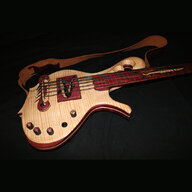
right on. they actually are slotted just a tiny bit... just didn't want to open them up more because at 4 deg I'm at the end of a 6" bolt. Can't imagine going more than 4 deg anyway... but nowadays I'm doing all via cnc so... kind of a moot point but good call none the less.The racecar fabricator in me says "slot your holes a tiny bit".
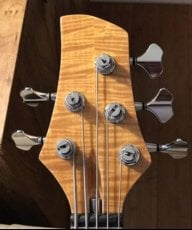
Great chat going on!
I’m wondering for those using the Freud 1/2” shank, 1 1/4” bit, about what rpm are you optimally running them for various woods? Now that I’ve got variable speeds on my new Bosch router it’s more versatile, but that bears some responsibility on my part
I’m wondering for those using the Freud 1/2” shank, 1 1/4” bit, about what rpm are you optimally running them for various woods? Now that I’ve got variable speeds on my new Bosch router it’s more versatile, but that bears some responsibility on my part

For some of the reasons mentioned above, I'm using a dish carving bit; my first few attempts with a bit that has corners left undesirable features. Not sure if that's something people have tried and dismissed here. I'm left with a flat surface with no tear out as the rake angle is very high on these bits and the cutting edge entry to the cut is 'gentle'.
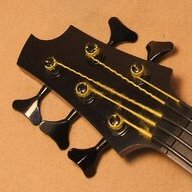
Show us the bit!For some of the reasons mentioned above, I'm using a dish carving bit; my first few attempts with a bit that has corners left undesirable features. Not sure if that's something people have tried and dismissed here. I'm left with a flat surface with no tear out as the rake angle is very high on these bits and the cutting edge entry to the cut is 'gentle'.
Show us the bit!
Many manufacturers make them. I use this one:
https://www.leevalley.com/en-ca/sho...cessories/router-bits/30171-dish-carving-bits
Many manufacturers make them. I use this one:
https://www.leevalley.com/en-ca/sho...cessories/router-bits/30171-dish-carving-bits
I can see how that would be a "gentle" touch. May have to give 'em a whirl!
I bought this one a while back, in anticipation....
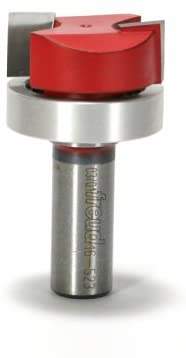
https://www.amazon.com/gp/product/B0002TUACC/
Have yet to build a sled to use it with, but I have it!
https://www.amazon.com/gp/product/B0002TUACC/
Have yet to build a sled to use it with, but I have it!
As an Amazon Associate, TalkBass may receive commissions from qualifying purchases made via links on this site.

Huh. That's a nice one... and I'm already planning to go to Lee Valley this weekend...Many manufacturers make them. I use this one:
https://www.leevalley.com/en-ca/sho...cessories/router-bits/30171-dish-carving-bits

I just bought a Whiteside dish-carving bit, looking at firing up the sled this weekend on some cherry.
i assume that's the sm as the bowl bit? have been using that for a long time for any planing as the soft edge seems to leave less to clean up with sandpaper. really surprising how long that thing has stayed sharp.I just bought a Whiteside dish-carving bit, looking at firing up the sled this weekend on some cherry.
This one: https://www.amazon.com/gp/product/B000K2G1WE/ref=ppx_yo_dt_b_asin_title_o00_s00?ie=UTF8&psc=1i assume that's the sm as the bowl bit? have been using that for a long time for any planing as the soft edge seems to leave less to clean up with sandpaper. really surprising how long that thing has stayed sharp.
Looking forward to trying it.
As an Amazon Associate, TalkBass may receive commissions from qualifying purchases made via links on this site.


