Apologies if it's been asked before, but are the pickups in this short scale bass the same dimensions as in regular Stingrays? What about pole spacing?

TalkBass has been independent since 1998. Add your voice.
Create a free account to reply to discussions, view embedded media, and browse with fewer display ads.
Join free Log in
Want zero display ads or expanded classifieds tools? Compare plans.

Yes. Something like a Seymour Duncan MM pickup is a drop-in replacement. You may have to file your pickguard though, but not much.Apologies if it's been asked before, but are the pickups in this short scale bass the same dimensions as in regular Stingrays? What about pole spacing?

1000% BETTER. I can’t understand why they don’t do this at the factory.Did a neck swap between the Fiesta Red and Toluca Lake Blue.
What does everyone think?
View attachment 7425036View attachment 7425037
As you wait for an answer to your question, I’m curious if you did what others suggested to me when I was lamenting the unfortunate fretboard decision Sterling made with these. I would have loved the blue but only with the roasted maple fretboard. It looks so much better (as does the darker rosewood with the red version). Did you buy both colors with the intention of swapping the necks and selling the unwanted combo?
Yeah, it’s not even close. Just a poor decision by Sterling. They were this |——| close.I'm also very surprised with how much better the red looks with the rosewood board. The contrast between light body and darker neck just works so much better. Same for the lighter neck on the darker blue body.
Me again! As my shorty stingray didn't come with any documentation, and I can't find the info on the Sterling website, can anyone tell me which position on the selector knob is for which pickup mode? Thanks!
Agreed! If anyone with a toluca blue wants to swap bodies I'd be down!1000% BETTER. I can’t understand why they don’t do this at the factory.
Thanks very much!Definitely like the maple fretboard better on both the red and blue basses. I have a red one that I switched all the hardware to black rather than chrome. With the maple board, red paint and all black hardware, it looks great. Wouldn't have even bought it if it had a rosewood fretboard.
Counterclockwise all the way is parallel, center is single coil, and full clockwise is series.
I like the green, but not enough to make it worth the price hike.Yeah, it’s not even close. Just a poor decision by Sterling. They were this |——| close.
I’m avoiding the dilemma entirely now by waiting for the new green color. Fortunately they made the correct fretboard color decision on that one.
Agreed. I’ve never seen a rosewood fretboard I really liked. Give me maple (roasted or not) or ebony.(not a fan of rosewood fretboards for the most part, although sound and playability are the first things I consider).
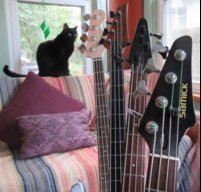
We have opposite fretboard tastes. I like dark wood fretboards, and have only really found one maple board appealing. I swapped my maple fretboard for a darkwood one and I think it's 1000% better.Agreed. I’ve never seen a rosewood fretboard I really liked. Give me maple (roasted or not) or ebony.
I don’t know if I’ll ever buy into the notion that fretboard wood has any notable impact on the tone of an electric instrument with magnetic pickups.
I agree. I think the dark fretboard looks great on Sonic Blue.We have opposite fretboard tastes. I like dark wood fretboards, and have only really found one maple board appealing. I swapped my maple fretboard for a darkwood one and I think it's 1000% better.
View attachment 7425757
The maple one on white looks better to me than the original fretboard. My friend and I both made out well with our swaps!I agree. I think the dark fretboard looks great on Sonic Blue.

Here's a picture to amplify @Christcr's answer. My passive shorty TC EBMM (#23 of 50) is the same, but I don't know if the Sterling has the volume and bass boost circuit.Me again! As my shorty stingray didn't come with any documentation, and I can't find the info on the Sterling website, can anyone tell me which position on the selector knob is for which pickup mode? Thanks!
Thanks! The Sterling has the volume boost on the volume knob. I haven't seen anything about a simultaneous bass boost in any of the descriptions, though.Here's a picture to amplify @Christcr's answer. My passive shorty TC EBMM (#23 of 50) is the same, but I don't know if the Sterling has the volume and bass boost circuit.
View attachment 7426608
Thanks! The Sterling has the volume boost on the volume knob. I haven't seen anything about a simultaneous bass boost in any of the descriptions, though.
Is it possible to remove the capacitor so that the tone doesn't get affected when changing from normal to boost, or is it necessary to work?The "boost" circuit is really just a cut via a resistor and capacitor for treble bleed. I'm assuming that Musicman decided to do this because the neo pickup is really hot high-output, so with the cut, it still has about the same output as a typical passive bass pickup. Then they just decided to call it a "boost circuit" that is activated when the resistor and capacitor is bypassed.
I have two Tim Commerford (passives) Stingrays with this same circuitry. For both the Commerfords and the short scale stingray, I find the
"normal" position to sound slightly thinner and less bass-y than the "boosted" position (full output), along with the output difference of course. I generally run the basses in "boost" (resistor/capacitor bypassed) on the single coil and parallel mode, and "normal" (cut mode with resistor/capacitor activated) on the series. It evens the output fairly closely, then I don't have to turn the amp or volume down in series mode. BUT... as I said, I do prefer the tone of the "boost" position (full output). In fact, I just took that switch out of my short scale and put a regular pot/wiring. So I get full output on that bass at all time.