• TalkBass has been independent since 1998. Add your voice.
    Create a free account to reply to discussions, view embedded media, and browse with fewer display ads.
    Join freeLog in
    Want zero display ads or expanded classifieds tools? Compare plans.

Scott Whitley SWB-1

I will say that this bass needs more tuning over all than other basses I've owned (all long scale though). Other basses I could pick up after a week and they would be perfectly in tune. The SWB-1 seems to need slight adjustment every day.
Same here on both basses (fretted and fretless). A somewhat instable neck. I always have very low action and with this bass I have to regularly adjust neck and/or bridge saddles. I also hope this will go away after a while.
 
Same here on both basses (fretted and fretless). A somewhat instable neck. I always have very low action and with this bass I have to regularly adjust neck and/or bridge saddles. I also hope this will go away after a while.
I have had that happen with other basses and found that strings can be the culprit.
Even on my first cheap bass the neck settled after a few months of use.
Try some new strings.
 
Thanks for the reply. In my case it is not the strings. Have new and different strings. Roundwounds, flatwounds, black nylon etcetera. All do the same. I just wait some months and deal with it. Or buy a pro. It has a 5-piece neck. Hmm... don't need a pro
if the neck is bad maybe you can contact Stephen and see if he will help you out. I cannot imagine he wouldn't fix it.
 
I don't think he can or want fix this. Well, I can deal with this little problem. I have a much bigger problem, especially on the fretless neck (on the fretted neck it is only a little bit present). It has a huge and very very annoying dead spot on the G-string around the E-flat position. I try to play around it but sometimes I can't or forget and then hear the dead notes :( This problem occurs more often on single-piece necks.
I mentioned this a few times to Stephen. His answer was something like: what is a dead spot?
No solution available I guess.
Now I'm looking for an affordable short-scale fretless bass but they are hard to find.
 
I don't think he can or want fix this. Well, I can deal with this little problem. I have a much bigger problem, especially on the fretless neck (on the fretted neck it is only a little bit present). It has a huge and very very annoying dead spot on the G-string around the E-flat position. I try to play around it but sometimes I can't or forget and then hear the dead notes :( This problem occurs more often on single-piece necks.
I mentioned this a few times to Stephen. His answer was something like: what is a dead spot?
No solution available I guess.
Now I'm looking for an affordable short-scale fretless bass but they are hard to find.

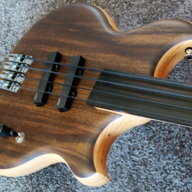
Sorry Johan. It just slipped through the cracks as I have so much happening at once.

If you're really concerned about the dead spot - there are a few actions you can take.

It could be a setup issue - first thing to do is get it checked by a luthier.

Failing that - when our new fretless necks arrive - get your bass sent over and we'll check it out.

It could be a setup issue or it could be an issue with the neck. We can't tell via email of course. If you get the bass to us we can tell for sure.

If it turns out to be a manufacturing issue with the neck we will change it under the warranty. And refund all the shipping costs.

Anybody else reading this ... if there are things that you think are defects due to manufacturing or faulty parts. ALWAYS get a luthier to have a look. If repairs or replacements are needed - contact us.

Take it easy.
 
Stephen, thanks for the reply. I know you are good willing and you're very busy. No problem. Good for business I think.
Yes, I'm really concerned about the dead spot but I know it's not a setup issue. I am very capable to do the setup and experiment with it myself. I don't need a luthier for that but If you want I can contact a luthier.
It is a problem more basses suffer from. It has to do with the resonance of the neck and the body toghether. Even some basses from Fender (and also other brands) have this problem.
Fender even made a tool for this, the FatFinger (it's a C-clamp mounted on the headstock). Sometimes it helps, sometimes not, sometimes the dead spot moves to a lower position. In my case it helps for about 50% and a little movement of the dead spot.
If you get a bass with a dead spot you have bad luck. It's simple like that.
Sometimes another neck helps but not always. 3-piece or 5-piece necks seldom or never has this problem. That's why I asked you earlier if you make 5-piece fretless necks and I am willing to pay for that.

I did some modifications to the bass which avoids warranty I guess. If not, sending the bass back and forth to you is, in my opinion, waste of time and money. It is very expensive to send the bass. It costs more than a new neck. Besides that, I can't miss the bass for several weeks as long I have no fretless spare bass.

When you have new fretless necks available I can buy one and assemble it myself and hope it helps. I really hope you soon decide to sell 5-piece fretless necks (for your SWB Pro basses?) and then I certainly will buy one from you.

We keep in touch.
 
  • Like
Reactions: 4$$
Stephen, thanks for the reply. I know you are good willing and you're very busy. No problem. Good for business I think.
Yes, I'm really concerned about the dead spot but I know it's not a setup issue. I am very capable to do the setup and experiment with it myself. I don't need a luthier for that but If you want I can contact a luthier.
It is a problem more basses suffer from. It has to do with the resonance of the neck and the body toghether. Even some basses from Fender (and also other brands) have this problem.
Fender even made a tool for this, the FatFinger (it's a C-clamp mounted on the headstock). Sometimes it helps, sometimes not, sometimes the dead spot moves to a lower position. In my case it helps for about 50% and a little movement of the dead spot.
If you get a bass with a dead spot you have bad luck. It's simple like that.
Sometimes another neck helps but not always. 3-piece or 5-piece necks seldom or never has this problem. That's why I asked you earlier if you make 5-piece fretless necks and I am willing to pay for that.

I did some modifications to the bass which avoids warranty I guess. If not, sending the bass back and forth to you is, in my opinion, waste of time and money. It is very expensive to send the bass. It costs more than a new neck. Besides that, I can't miss the bass for several weeks as long I have no fretless spare bass.

When you have new fretless necks available I can buy one and assemble it myself and hope it helps. I really hope you soon decide to sell 5-piece fretless necks (for your SWB Pro basses?) and then I certainly will buy one from you.

We keep in touch.
Well,
at least you know he wants to help and is willing
 
  • Like
Reactions: 4$$
I put new pickups, Dimarzio Model Js, into my SWB-1 on the weekend, along with a new VVT wiring harness from TBer Gord_oh. I had a balky soldering iron so that aspect is not too neat but it'll do for now. These pickups sound great. I probably should have gotten some accurate measure, a recording or something, in order to compare them to the stock pickups (not that I'd let you hear it) but I know for sure how loud the bass was at the volume I left the amp at, and it's got a lot more now. Beyond that they are full and round on the neck, punchy on the bridge, and of course much much quieter.

I do have some residual hum/buzz when the tone is dialed up though. So I hope to improve that. I assume it's grounding because it goes away (90%) when I touch any of the controls or even the shielding paint in the rear cavity. Does change as I move around the room though. The old setup had no ground to the bridges (I posted about this a while ago), but had a wire from the master volume to the inside wall of the (shielded) cavity, and I haven't done that yet. But I put in a query to Dimarzio and they replied that wouldn't do anything, only grounding the bridges will; the guy (?) was pretty adamant that that's the only way to go. I'll try that with a jumper wire to test the concept, but I did that with the old pickups (sloppily I admit) and it didn't seem to do much then.

Anyone else got this and if so how are you dealing with it...besides dialing down all that annoying treble I mean. :laugh:
 
Last edited:
  • Like
Reactions: Jazz77m
Yes, the DiMarzio's do a lot. Doubles the output and give al lot more depth and punch. I am very happy with the new sound.
I did extra shielding (special copper tape, very cheap at AliExpress) in the cavities of the pickups. Also added an extra wire from that copper tape to the grounding in the big cavity. Shielded the inside of the cavity lid with copper tape. I don't know if this all was necessary but I had it open and I thought, if it does not work, it does not harm. I think grounding the bridge doesn't do something extra to all this but please let us know the results if you tested this.
In some circumstances I still have some electrical interference. But that is in a practice room with very bad electrical conditions and bad fluorescent tubes. I move around the place and find myself a good spot. In normal conditions nobody will notice some buzz if it's still there.
 
Chicago and JJ, I have nothing really new to add. Wanted to let you know same setup to include shielding and DiM pickups, same results. Thought about asking Stephen if one of the original SWB-1 bridges are available to try a traditional ground. But, ny experience has only been a few weeks and am noticing no pattern in the slight hum. Sometimes not an issue at all. Plus I rarely want my treble above 50%. Love the sounds, so I’m not eager to do anything now. Cheers.
 
  • Like
Reactions: Chicago Al
I am happy with the setup as I have right now but I also will test a wire to the bridge soon. If that results in more silence than I will ground the bridge somehow. I think You need a special tool to drill from the cavity to the bridge. I don't have.

It wouldn't be hard to put a thin strip of copper tape under the four mini-bridges, then continue it on across the top to make contact with the sleeve of the output jack. But that would be ugly, and could easily get dislodged.

Trying to get even one hole drilled from under a mini-bridge to the control cavity would be tricky but could be done. I'm imagining connecting the bridges to each other with the copper tape then drilling two holes, one down from the G bridge and the other sideways from that control cavity, that meet, and running a wire through that. Dremel with a 90º attachment should handle the latter...not that I'm anxious to drill into my bass.

There must be a reason Chowny skipped grounding the bridge on these basses. Would be interested if you have any suggestions, Stephen!
 
Last edited:
I just got mine delivered.
I love the neck. It's fast and tight.
Not loving the intonation adjustment. It would seem you have to loosen the string all the way to adjust the single bridge. Unless I am wrong. I haven't done it yet. I gotta make a slight adjustment on the D string.
If anyone has directions to do this without removing the string let me know.
 
I just got mine delivered.
I love the neck. It's fast and tight.
Not loving the intonation adjustment. It would seem you have to loosen the string all the way to adjust the single bridge. Unless I am wrong. I haven't done it yet. I gotta make a slight adjustment on the D string.
If anyone has directions to do this without removing the string let me know.

Have you loosened the lock down screw?
 
Basically there's a grub screw in the saddle. The saddle floats, with the grub screw loosened you just move it manually back and forth where you like, then tighten the screw. String bears down on the saddle, keeping it down on the deck, and the grub screw stops any movement back and forth.

Be careful when tightening the screw again as the act of tightening causes the saddle to move slightly. You’ll see this when you do it. Just make sure to adjust to compensate for this.

It occurs to me we should add a video to our YouTube channel on how to adjust these.
 
Basically there's a grub screw in the saddle. The saddle floats, with the grub screw loosened you just move it manually back and forth where you like, then tighten the screw. String bears down on the saddle, keeping it down on the deck, and the grub screw stops any movement back and forth.

Be careful when tightening the screw again as the act of tightening causes the saddle to move slightly. You’ll see this when you do it. Just make sure to adjust to compensate for this.

It occurs to me we should add a video to our YouTube channel on how to adjust these.
A video would be awesome!
Otherwise I love the bass. I plan to order the pro version too.
 
Basically there's a grub screw in the saddle. The saddle floats, with the grub screw loosened you just move it manually back and forth where you like, then tighten the screw. String bears down on the saddle, keeping it down on the deck, and the grub screw stops any movement back and forth.

Be careful when tightening the screw again as the act of tightening causes the saddle to move slightly. You’ll see this when you do it. Just make sure to adjust to compensate for this.

It occurs to me we should add a video to our YouTube channel on how to adjust these.
not sure where this grub screw is. I see a screw on the front toward the headstock.
Could you please clarify which screw this is?
 
There must be a reason Chowny skipped grounding the bridge on these basses. Would be interested if you have any suggestions, Stephen!
Don’t know which EMGs Chowny put on the SWBs but many moons ago when I put EMGs on a long gone Jazz the installation instructions specifically said NOT to connect the bridge ground wire. Their website still says this...

This wire is usually soldered to a volume or tone control casing and goes to the bridge. This wire grounds the strings and uses them and your body as a shield against hum and buzz. It also creates a shock hazard. EMG Pickups are shielded internally and DO NOT require string grounding.