Well actually the neck-through vs bolt-on debate has always been based on the premise that wood is better sounding when glued to wood, and that one single piece of wood must sound better than two bolted together. In fact this only works when the two pieces of wood are of the same species and contain a similar grain pattern, moisture content, and are genetically within 12 centimorgans of each other. That in turn assumes that there is a corresponding recombination frequency of 12%, and then the only discerning factor is the moisture content, which must be between 6% and 9%, unless the wood has been roasted and in that case it is between 3% and 5%. However, if the wood has been roasted and the genetic distance is similar then we must take into account the chemical composition of the glue used along with of course the grit of the sandpaper used to finish the wood, which generally starts at 150 grit and proceeds through 180, 240, 320, and potentially higher if the wood has an oil finish, or alternatively if the wood has a clear finish the then the finish may be sanded/polished through 12000 grit using a wet sander. This generally affects the tone in terms of "smoothness" of sound. Of course you can't leave out the nature of the screws/bolts (in the case of a bolt on) and whether the bolts are simple wood screws or machine screws that are connected through threaded inserts, and whether those threaded inserts are brass, stainless steel, or some other material. Then there may be the potential of galvanic corrosion between the screw/bolt and the threaded insert, which may cause a varying degree of alteration in the tone over time. This results in tone that is described as "sticky" or "hard" and may result in the use of curse words. If graphite rods are inserted in addition to the standard truss rod there is "less" wood to resonate and this can in turn be mitigated through the use of a "high mass bridge" which may interact with a single cut bass in ways that are different from double-cut basses. The country of origin most definitely affects the tone, as does the year of manufacture and whether a brass nut is involved in the manufacturing process. Finally strings are a huge factor, and "flat wound", "round wound", "pressure wound", or "un wound" strings can drastically affect tone and sustain.

Enjoy the benefits of a premium membership!
Upgrade Account
-
TalkBass has been independent since 1998. Add your voice.
Create a free account to reply to discussions, view embedded media, and browse with fewer display ads.
Join free Log in
Want zero display ads or expanded classifieds tools? Compare plans.
You are using an out of date browser. It may not display this or other websites correctly.
You should upgrade or use an alternative browser.
You should upgrade or use an alternative browser.
screw-on (bolt-on) neck vs. neck-through, can you hear the difference?
- Thread starter Killed_by_Death
- Start date
More options
Who Replied?
IN CONTEXT, when I hear “bolt on”, I think machine (screw) threads vs a wood screw.
All of my previously owned Modulus basses were “bolt on”. Approximately
10-32 thread.
My Univox bass neck was held on with wood screws.
I can tell the difference between an attached neck vs neck through when I play a bass of similar build quality.
Probably can’t tell from a recording.
All of my previously owned Modulus basses were “bolt on”. Approximately
10-32 thread.
My Univox bass neck was held on with wood screws.
I can tell the difference between an attached neck vs neck through when I play a bass of similar build quality.
Probably can’t tell from a recording.

Never thought much about it, despite having heard about it frequently. When I try out a bass, if it doesn't sustain well, back on the rack it goes, despite how it's built. All my basses sustain well, or I wouldn't own them.

Ummmm.Came across this quote from Glenn Letsch in Stuff Good Bass Players Should Know:
"Cut to the chase. Basses with bolt-on necks sound better than neck-thru basses. They are punchier, the notes sound thicker, there is more definition, and the tone is better. The main reason for this is the coupling effect that occurs when a bolt-on neck is wedged into the heel pocket of the bass body. Sound generated from the neck transfers to the heel pocket. If you combine the thickness of the end of the neck with the thickness of the heel pocket, there is approximately 2 to 2 1/2 inches of wood mass through which to transfer the note vibrations."
Then he tells an anecdote ending with Robin Trower telling him to dump the neck-thru with the "paper thin" tone lacking "punch and definition".
He mentions the NT's ergonomic advantage and ends by damning it with faint praise..."If you need to solo in the upper register, and you play in a band where there is not much sonic competition in the overall mix (like a lighter jazz combo), the neck-thru bass might work for you."
Wow, Letsch doesn't like them and pulls no punches. I'd never heard this so definitely ststed before with such assurance. I've never picked up a NT bass so I have no opinion.
"Since we are being specific, a neck with threaded inserts accepts machine screws, not bolts. Machine screws are not tapered as most other screws are."
So that settles it, Killed by death is right, no such thing as a bolt-on neck. Even the axes with threaded inserts use screws, not bolts. You'd snag your hand on the bolt head if you built one with bolts.

There are a few exceptions to my rule considering I have a neck through Epiphone Thunderbird, Rickenbacker and 2 headless Hohners. But I just downright like the ability to replace the neck if I need it want it. There has been twice where bolt on has saved a bass I otherwise loved. Once because the truss rod snapped and the other I wasn't jiving with the neck so I swapped it out! Neck through the bass is what it is unless you shave the neck down, which on a painted neck is a whole ordeal.


Bassist4Eris
Frat-Pack Sympathizer
I would have liked a poll option "I think so, but I'm not sure". It's tough to make an apples-to-apples comparison here. In my experience, I tend to like the slap tones I get from bolt necks the best. Whether that's coincidence or not I can't really say.
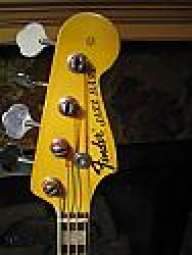
If if does matter I would think contact area between the neck and body would have an impact. I've wondered about this topic myself because a Warwick Streamer LX bolt on is cheaper than a Stage 1 neck through. If there is no difference then why spend the $$. However, there maybe other differences such as type of wood so how do you compare?

Unless the manufacture made the identical Bass in both a neck thru and bolt on version, i can't see how a true comparison can be made.
It would also take a blindfold test by a listener, not the player to see if much or any difference can be noticed.
It does seem to me that a neck thru might have a bit thicker tone.
It would also take a blindfold test by a listener, not the player to see if much or any difference can be noticed.
It does seem to me that a neck thru might have a bit thicker tone.
Unless the manufacture made the identical Bass in both a neck thru and bolt on version, i can't see how a true comparison can be made.
It would also take a blindfold test by a listener, not the player to see if much or any difference can be noticed.
It does seem to me that a neck thru might have a bit thicker tone.
It would also take a blindfold test by a listener, not the player to see if much or any difference can be noticed.
It does seem to me that a neck thru might have a bit thicker tone.

First of all, they're screwed on, not bolted
Yes, there is a difference.
Secondly, can you hear the difference?
A while back I was comparing two very similar basses & the thought never occurred to me, at the time, that part of their difference in timbre was due to the neck-through vs. screw-on designs.
Now I'm rethinking every time I tried a neck-through Ibanez BTB & wish I'd taken that into account.
I'm also wishing I could get a SR505E (screw-on) & BTB740 (neck-through), both with Bartolini BH2 pickups, side-by-side for a comparison.
Yes, I know there's been much discussion in the past, I'm reading those threads now.
However, I don't think there was a poll.

Some have bolts and threaded inserts.
Unless the manufacture made the identical Bass in both a neck thru and bolt on version, i can't see how a true comparison can be made.
It would also take a blindfold test by a listener, not the player to see if much or any difference can be noticed.
It does seem to me that a neck thru might have a bit thicker tone.
I wouldn't expect a listener to automatically be more attuned than a bassist. Not that all bassists are either.
I've noticed a difference in attack with different neck joints. It can get pretty obvious when I play more percussively. At this point I prefer bolt-ons.
Probably I think that there can be a measurable (in a scientific test) difference in notes sustain...
...but I never play notes that have a lenght of, just to say, three or five seconds.
I play notes of milliseconds lenght. So I would never have any benefit from it.
(a compressor/sustainer probably would mitigate this difference also)
Natural sustain typically doesn't sound the same as using a compressor.

<snip>I play notes of milliseconds lenght.<snip>
Play a lot of hemidemisemiquavers, do ya?

First of all, they're screwed on, not bolted
Yes, there is a difference.
Good point. That's why, for the past 20 years, I've converted every screw-on neck that I own to a bolt-on neck.
I drill out the neck and install threaded inserts, then replace the screws with bolts. This simple modification, allows much more clamping pressure without risk of stripping the threads in the neck. Basically, it transforms the bass into a "virtual" neck-through instrument.
I expect there is a difference, for sure, but there's no way I could specifically tell which is which by way of a blind test. Maybe if you produced two identical basses other than their neck joints, but I don't know of any basses you could really use for that test.
Right, and so many miss this point entirely. Without doing as you suggest any comparison is simply apples-to-oranges.
If if does matter I would think contact area between the neck and body would have an impact. I've wondered about this topic myself because a Warwick Streamer LX bolt on is cheaper than a Stage 1 neck through. If there is no difference then why spend the $$. However, there maybe other differences such as type of wood so how do you compare?
For years "conventional wisdom" was that neck through should cost more and as such should sound "better". It took a while but many figured out the gaping holes in that mindset. Many haven't. Conventional wisdom is basically groupthink.
You can find a $5k bolt-on... and a $300 neckthrough.
IME the type of neck joint can have an effect on attack. "Better" is clearly in the ear of the beholder. None of the types have a lock on that. Neither does the price. Many are baffled when they try a supposedly better bass and they don't like it. It's because it's not better... it's just different. Of course if their skills are suspect that can factor in too but who wants to hear that?


I haven't been able to hear a difference but I have definitely felt one. Neck-throughs have without exception been more comfortable for me and better suited to my playing style.
I meant to say the listener being another Bass player.I wouldn't expect a listener to automatically be more attuned than a bassist. Not that all bassists are either.
I've noticed a difference in attack with different neck joints. It can get pretty obvious when I play more percussively. At this point I prefer bolt-ons.
The one playing could tell which bass is the bolt on by the neck heel and might have a preconceived bias towards one or the other.
I still stand behind my previous post.
I meant to say the listener being another Bass player.
The one playing could tell which bass is the bolt on by the neck heel and might have a preconceived bias towards one or the other.
I still stand behind my previous post.
That's cool. In my case my perception is the only one that matters. Either I like what I hear and feel or I don't.


