• TalkBass has been independent since 1998. Add your voice.
    Create a free account to reply to discussions, view embedded media, and browse with fewer display ads.
    Join freeLog in
    Want zero display ads or expanded classifieds tools? Compare plans.

screw-on (bolt-on) neck vs. neck-through, can you hear the difference?

can you hear the difference?

  • absolutely

  • not at all

  • sometimes

  • undecided, carrot-thru for me, thanks!


Results are only viewable after voting.
Bolt on...
20191001_203429_2.jpg
 
I have experience with Rics and Warwicks with neck through construction. Warwick offers some of their models with each type and it seems to me that would be the way to compare the two configurations.

In my experience, I prefer neck through construction because I like basses built that way better.
 
A highly subjective topic however my personal experience is this; neck through construction basses have more fundamental and more sustain but sound a little more compressed.
Bolt on or screw on has more punch at the attack and slightly less sustain.
Now I'm basing this on instruments that I've owned for a long time and it is personal opinion which doesn't make it fact. I have no bias for either type, they all play well.
I've got a set neck bass on order, I've been told this has a little more punch like the bolt on, I'll report back when it arrives and let you know what I think.
 
Semi off topic and jumping into the screw/bolt on discussion i offer this. My Steinberger, Status, Zon and Modulus detachable neck basses all have Allen Head grade 8 size 10-32 or 3 or 4mm bolts holding them on. They are not machine screws, they are technically bolts and are listed as so in our system and the vendor catalogs at my employment. If they have a slotted or phillips head they are machine screws. The threaded inserts in the necks of the Steinberger and Modulus are super glued in. I do not know about the Zon or Status basses since I have never removed the necks. My wood detachable neck basses all use wood screws. So my composites to me are bolted on, and the wood ones are screwed on. Let us agree that they are mechanically mounted/attached to the body. Concerning the poll I don't see much difference between neck through, set/glued neck or mechanical mounting, and I possess several of all three types. I ended up choosing my bolt on Steinbergers over the neckthrough XL models due to the influence of the wood bodies on the tone. Plus the strap plates on the XL basses irritate my colon surgery scar. Even fully composite basses of the same model and construction end up sounding a little different between them. So, I buy basses by how they feel and sound, and now that I'm older weight plus balance factor in quite a bit.
Cheers,
Mike
 
Actually all my SX basses are "bolt-on" because I have changed them all using threaded inserts to use allen head machine screws to hold the neck on. And tests right here in our own TB labs (There is a thread somewhere where one of the TBers mad recordings of the original screw-on necks and then of the modded bolt-on necks and the recordings CLEARLY sounded different plus the difference could be seen in the oscillograms of tones). If there is that much difference between bolts and screws that you can actually hear and SEE it, I presume that there is likewise a difference between bolt-on and neck-through although I presume the fact that in the latter case the differences are hidden because the rest of the bass is rarely identical as in the mounting change case. Usually I just judge basses in their totality as to like or dislike and the effect of necks is not big enough for me to go around proclaiming that all my basses need to be this way or that way. In fact they aren't. I own both kinds.
 
I was skeptical about the difference, but the kicker for me was my first Ken Smith. I could definitely tell the difference with that particular bass. I don't claim to be able to hear the difference on a recording, but neck-through basses can sound different than bolt-ons because of the neck attachment. I think you could build a neck-through that sounds like a bolt-on, but I don't think you could build a bolt-on that sounds and plays like that Ken Smith with all of the laminates.
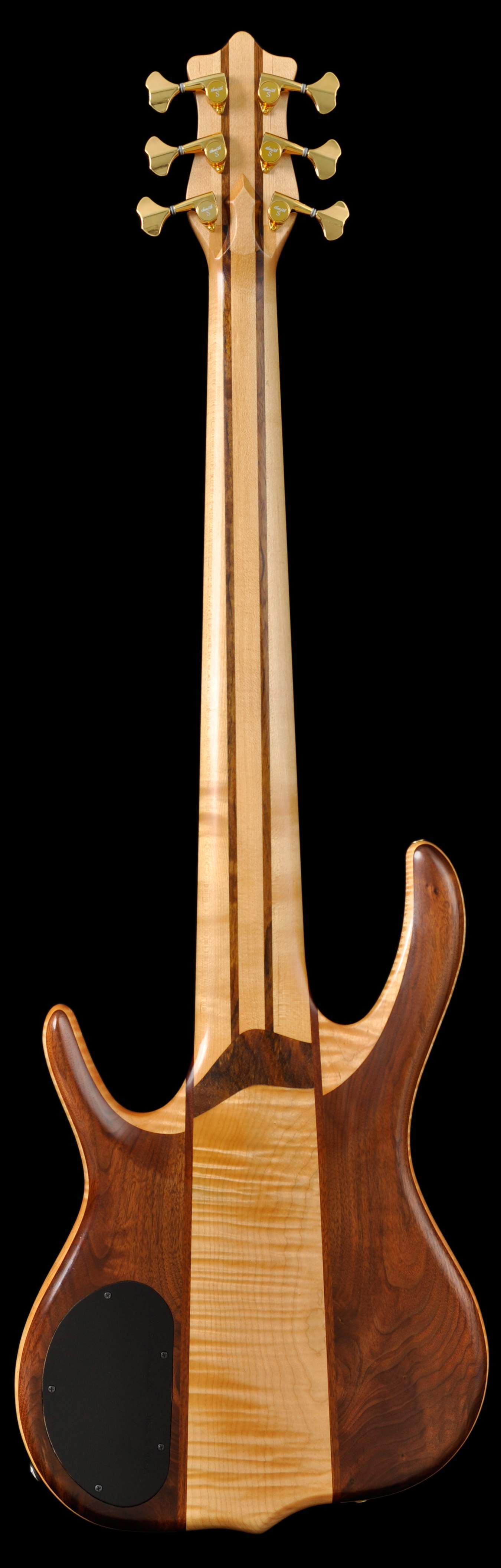
smith_bsr6tn_back-jpg.1169091
You heard the difference between b.o and n.t on ONE bass?
How did you do that?
 
  • Like
Reactions: DrewinHouston
I've never been able to tell the difference--even with just a bass comparison and no other instruments. Surely, no one will be able to tell in a band setting. That includes the audience. I think it simply comes down to personal preference on how one likes his/her bass built.
 
Never had the opportunity to A/B identical or even similar models of a bass in both screw-on and neck-through construction, so I can't really contribute to the thread or poll very much. The only difference in sound that I can usually appreciate is sustain - Neck-through's tend to sustain better as many have already mentioned.

I DO feel like a difference would be more obvious in a recording situation. On a stage, I think I'd prefer a screw-on neck, but for recording, the neck-through would maybe have the fuller, purer sound I'd prefer.

Just some assumptions on my part. I'll have to make it a point to try more neck-through's in the near future for reference.
 
First of all, they're screwed on, not bolted :smug:
Yes, there is a difference.

Secondly, can you hear the difference?

A while back I was comparing two very similar basses & the thought never occurred to me, at the time, that part of their difference in timbre was due to the neck-through vs. screw-on designs.

Now I'm rethinking every time I tried a neck-through Ibanez BTB & wish I'd taken that into account.
I'm also wishing I could get a SR505E (screw-on) & BTB740 (neck-through), both with Bartolini BH2 pickups, side-by-side for a comparison.

Yes, I know there's been much discussion in the past, I'm reading those threads now.
However, I don't think there was a poll.

I can't - and I suspect that most other people can't either, IMHO, there are simply too many variables from instrument to instrument to reliably ascribe any apparent difference in tone to a neck-through design or lack thereof.

More importantly, though - even if it were true, I wouldn't really care one way or the other. What I care about is whether the bass sounds good or not. Even if I had decided that I only wanted to buy neck-through basses from now on, there would be enough other variables to affect the tone from brand to brand, model to model, or even instrument to instrument to make such a decision of no practical use to me whatsoever.

If it sounds good it is good, no matter what the design or construction.
 
wut we lookin’ at?
Ibanez SR500T (IIRC this was a limited run of neck thru SR500's) and an SR600. Same electronics, hardware, body style and fretboard. Someone else might very well feel and hear the differences but I used them interchangeably without noticing anything.

I can really tell a difference on the same bass as the strings age or new ones are put on. Or when I pan between pickups or play near the bridge vs near the neck.
 
You know how I know you’ve never seen a bass whose neck was secured with threaded inserts? :)

btw does anyone remember the experiment Fodera did a few years ago where they built three “identical” [sic] Basses whose only difference was the neck mounting method? Same woods, same body & neck construction, same hardware and electronics... only difference was one was bolt-on, one was glue-on, and one was thru-body.

And then they posted sound samples on line and asked listeners to try identifying which was which. A week or so later they published the correct answers. iirc some folks even got it right...but many at least agreed there was an audible difference between sound samples.

Not sure how much of that can be attributed to Expectation Bias...

Even with identical instruments there are still infinite variables, each with enough difference in them to induce doubt and certainty to whoever might look for them. I wouldn't be surprised if somebody said "usually neck through basses have more sustain but clearly in these recordings the session player didn't have his usual medium roast and had to settle for the dark."

I also wouldn't be surprised if some people got it right because maybe there is actually a difference big enough for those with highly tuned ears to attribute solely to the neck joint. Others were just statistically inevitable, but may be congratulating themselves anyways (or just admitting they got lucky). To either one I'd honestly just ask whether it matters, some people say that ducks quacking doesn't make an echo. Both statements, whether right or wrong, are kind of inconsequential, the only difference is that I don't know many people financially or emotionally invested in saying that quacks don't echo but some people get a neck-through bass because it sustains more. At any rate I tend to, at this point, attribute inconsequential energy to inconsequential things. Is there a difference? Neither answer would surprise me all that much, I'm not about ready to trash either of my fenders if somebody said something about sustain, it's less about "which is better than the other" than it is about "which slightly different flavour of good do you maybe prefer if you can (and care enough to) actually tell the difference."

At any rate I also like to check up on this guy's website every so often, but this page should lead to some small data on the subject:
Liutaio Mottola Lutherie Information Website
 
I’m with the “too many other variables” camp here. Another thing beyond the variation between all the bass guitar aspects that will affect how a bass sounds is the rig it’s going through. I have a Samsamp BDDI that can make my bass sound really different to the sounds I generally use if I need to (which currently mostly I don’t).

That said, I play a screw-on but I reckon some neck-throughs are just look beautiful and to my eye “more sculptured” than a bass with a neck pocket. Do I love the tone of what I reckon is a really good looking bass more? Sure do. Don’t you?