Please do not take the below as the final word on the subject. Just sharing my thoughts as someone who's been following SG basses in general for a number of years but not as someone who has been following the used market. I bought mine new 10 years ago.
As far as I know, there are no magical nor dud years for the SG bass.
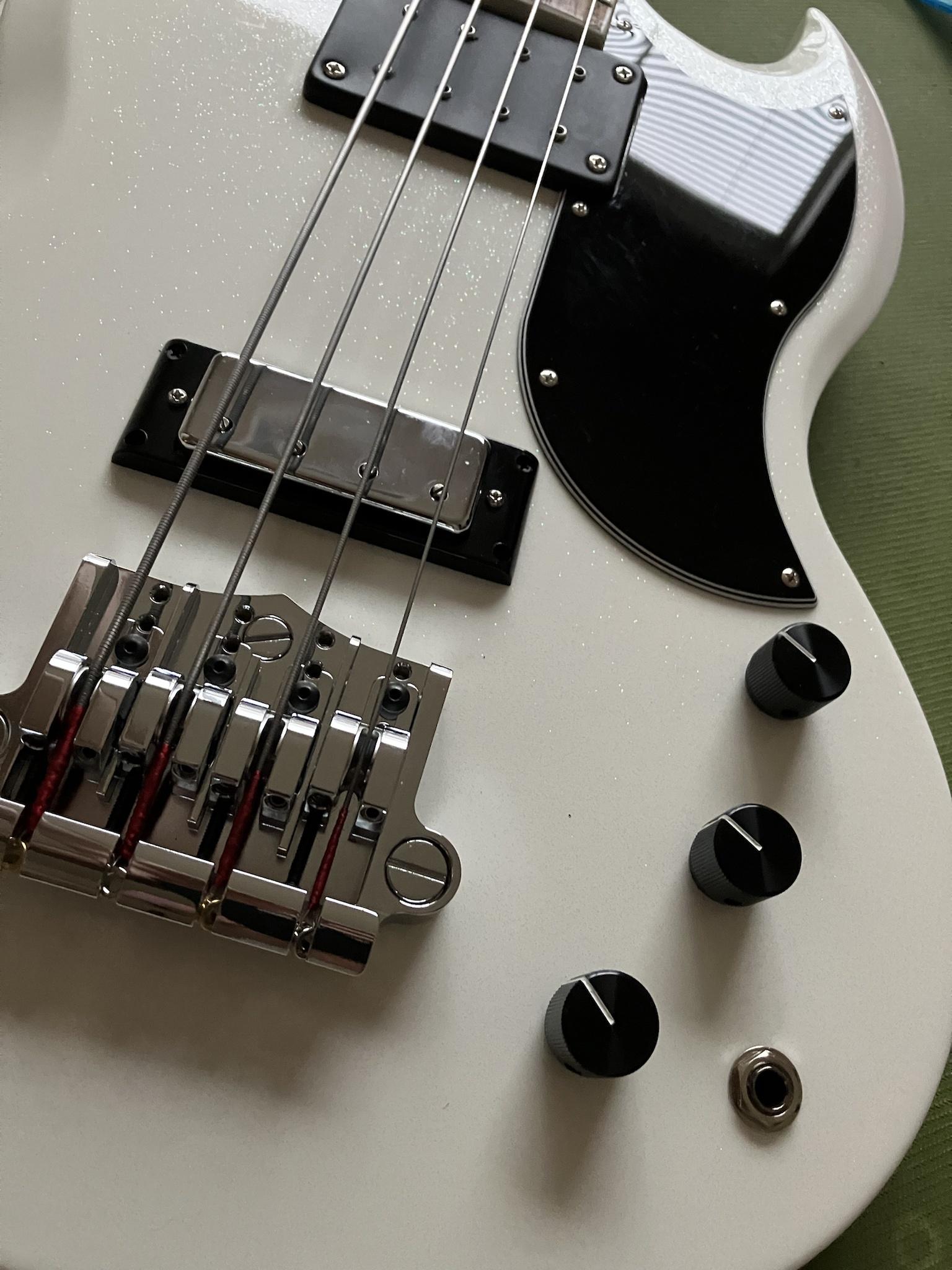
For a few years in the 2010s they switched bridges to the Babicz "full contact" bridge, about which opinions were mixed (as with the long-standing 3-point "oil rig" bridge, some like them, some don't). I'm with the "I'm replacing the stock bridge with a Hipshot anyway" crowd, so I wouldn't care which of the two possible stock bridges a used SG bass I was looking at would come with.
I believe that the stock pickups have been the same through the SG bass run (modern Thunderbird pickups under EB-3 like covers). Electronics are all simple VVT. Tuners have stayed the same. There's no big wood controversy with these that I know of…
I'd simply judge each instrument on its individual merits (if you can't try it in person, you have to just go by the seller's report of issues and the instrument's appearance in the photos the seller posts, along with the seller's reputation). If you have questions or requests such as a better photo of an area you're wondering about, ask before sending money. Send money in a format where you have some chance of getting your money back in the case that there are undisclosed issues and the seller doesn't do right by you. If you can play the instrument in person, besides physical problems (worn frets, cracks [esp. neck or headstock], major bridge bushing issues, poorly set neck angle, etc.), hardware issues (ex. a tuner doesn't work smoothly) and/or electronics issues (ex. silence, crackling or loud hum), check for how the neck feels in your hand, instrument weight on your shoulder and how much it neck dives and the extent that might bother you and/or whether you think it could be mitigated by measures such as, for example, simply using a rough leather strap (so, be sure to bring an instrument strap with you and play the bass standing up if checking it out in person). Check the condition of the case too, if any. Truss rod should still have adjustment range, not that I've read about that being a big issue with SG basses. Check the paint job of course and be sure you're happy enough with it. Like any bass, check the amount of belt buckle scratches on the back of the body and be sure that that is accounted for in the price and/or if you'll be happy with that. Etc.
Sounds like a lot of stuff, but in general it's just checking to see if it is working as is, plays nice, feels nice in the hand and looks nice, and if not, that you can live with whatever is wrong and that the price is appropriate to the condition. They're cool if somewhat non-standard basses (compared to Fender Ps and Js), so if one of these is what you're looking for, you should be able to easily get one that will make you happy
As far as I know, there are no magical nor dud years for the SG bass.
For a few years in the 2010s they switched bridges to the Babicz "full contact" bridge, about which opinions were mixed (as with the long-standing 3-point "oil rig" bridge, some like them, some don't). I'm with the "I'm replacing the stock bridge with a Hipshot anyway" crowd, so I wouldn't care which of the two possible stock bridges a used SG bass I was looking at would come with.
I believe that the stock pickups have been the same through the SG bass run (modern Thunderbird pickups under EB-3 like covers). Electronics are all simple VVT. Tuners have stayed the same. There's no big wood controversy with these that I know of…
I'd simply judge each instrument on its individual merits (if you can't try it in person, you have to just go by the seller's report of issues and the instrument's appearance in the photos the seller posts, along with the seller's reputation). If you have questions or requests such as a better photo of an area you're wondering about, ask before sending money. Send money in a format where you have some chance of getting your money back in the case that there are undisclosed issues and the seller doesn't do right by you. If you can play the instrument in person, besides physical problems (worn frets, cracks [esp. neck or headstock], major bridge bushing issues, poorly set neck angle, etc.), hardware issues (ex. a tuner doesn't work smoothly) and/or electronics issues (ex. silence, crackling or loud hum), check for how the neck feels in your hand, instrument weight on your shoulder and how much it neck dives and the extent that might bother you and/or whether you think it could be mitigated by measures such as, for example, simply using a rough leather strap (so, be sure to bring an instrument strap with you and play the bass standing up if checking it out in person). Check the condition of the case too, if any. Truss rod should still have adjustment range, not that I've read about that being a big issue with SG basses. Check the paint job of course and be sure you're happy enough with it. Like any bass, check the amount of belt buckle scratches on the back of the body and be sure that that is accounted for in the price and/or if you'll be happy with that. Etc.
Sounds like a lot of stuff, but in general it's just checking to see if it is working as is, plays nice, feels nice in the hand and looks nice, and if not, that you can live with whatever is wrong and that the price is appropriate to the condition. They're cool if somewhat non-standard basses (compared to Fender Ps and Js), so if one of these is what you're looking for, you should be able to easily get one that will make you happy