
I had the MIC Fender Starcaster bass for a couple of years. 30” scale. Would swap between that and my PJ regularly. Never even noticed the difference in scale length. Guess I’m just not sensitive to aspect of playing bass.

TalkBass has been independent since 1998. Add your voice.
Create a free account to reply to discussions, view embedded media, and browse with fewer display ads.
Join free Log in
Want zero display ads or expanded classifieds tools? Compare plans.
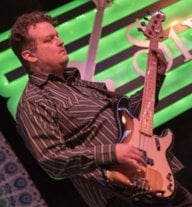
Sharing this to see if anyone else had a journey similar to my "love the one you're with" story.
In my head, I wanted a short-scale for long gigs. Never had one. Easy to play, light weight; what's not to love, right? Went to the music store to pick up a repair and, concerned about neck dive, decided to try on each short-scale bass with a strap. Results:
My conclusion was, I'm simply not going to find anything that feels as ergonomically comfortable as my current standard-scale basses. And I think I'm very happy with that and just saved myself some dough. Both my current basses are pretty light, but in the last hour of 4-hour gigs, they begged the question, could I go even lighter? I found my answer - yes, but only with tradeoffs that I'm too stubborn to make.
- 2 Gibson SG basses - horrible neck dive
- 2 Gibson LP2-style basses - horrible neck dive
- Epiphone Allen Woody and Violin basses - good balance, but the bodies are thicker than I'm used to, so it would take some re-learning for my right arm/hand/wrist
- 2 Fender Mustang PJ basses - horrible neck dive
- 2 American Fender Mustang basses - neck goes to about parallel with the floor. I guess I could live with that. But as I'm jamming on the first 7 frets, I notice my left elbow touching my ribs. Never felt "cramped" before while playing bass standing up. This would require some re-learning for my left arm, plus the re-learning of the shorter scale with my left hand. I wouldn't call it annoying, but...
Anyone else follow this path when considering (or trying/buying) shorties?

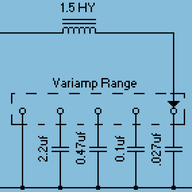

check this one out
and the configurator is here Elwood C - Type | Public Peace
you can literally create whatever comes to your mind
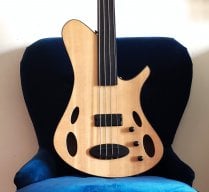


Sharing this to see if anyone else had a journey similar to my "love the one you're with" story.
In my head, I wanted a short-scale for long gigs. Never had one. Easy to play, light weight; what's not to love, right? Went to the music store to pick up a repair and, concerned about neck dive, decided to try on each short-scale bass with a strap. Results:
My conclusion was, I'm simply not going to find anything that feels as ergonomically comfortable as my current standard-scale basses. And I think I'm very happy with that and just saved myself some dough. Both my current basses are pretty light, but in the last hour of 4-hour gigs, they begged the question, could I go even lighter? I found my answer - yes, but only with tradeoffs that I'm too stubborn to make.
- 2 Gibson SG basses - horrible neck dive
- 2 Gibson LP2-style basses - horrible neck dive
- Epiphone Allen Woody and Violin basses - good balance, but the bodies are thicker than I'm used to, so it would take some re-learning for my right arm/hand/wrist
- 2 Fender Mustang PJ basses - horrible neck dive
- 2 American Fender Mustang basses - neck goes to about parallel with the floor. I guess I could live with that. But as I'm jamming on the first 7 frets, I notice my left elbow touching my ribs. Never felt "cramped" before while playing bass standing up. This would require some re-learning for my left arm, plus the re-learning of the shorter scale with my left hand. I wouldn't call it annoying, but...
Anyone else follow this path when considering (or trying/buying) shorties?
My desire to try a short scale stems from an injury and subsequent surgery to my left wrist and elbow. Prior to that i always covered four frets with my left hand. Now, my pinky finger is non functional as a fretting finger so i’m down to three fingers. I want a particular bass but i refuse to participate in the current fiasco that saw that imported bass jump from $750 brand new with case to around $1200 for the same bass and case, so i decided to just relearn with three fingers. If we ever return to some sense of sanity i’ll buy that short scale, but until then i’ll keep relearning my left hand.Sharing this to see if anyone else had a journey similar to my "love the one you're with" story.
In my head, I wanted a short-scale for long gigs. Never had one. Easy to play, light weight; what's not to love, right? Went to the music store to pick up a repair and, concerned about neck dive, decided to try on each short-scale bass with a strap. Results:
My conclusion was, I'm simply not going to find anything that feels as ergonomically comfortable as my current standard-scale basses. And I think I'm very happy with that and just saved myself some dough. Both my current basses are pretty light, but in the last hour of 4-hour gigs, they begged the question, could I go even lighter? I found my answer - yes, but only with tradeoffs that I'm too stubborn to make.
- 2 Gibson SG basses - horrible neck dive
- 2 Gibson LP2-style basses - horrible neck dive
- Epiphone Allen Woody and Violin basses - good balance, but the bodies are thicker than I'm used to, so it would take some re-learning for my right arm/hand/wrist
- 2 Fender Mustang PJ basses - horrible neck dive
- 2 American Fender Mustang basses - neck goes to about parallel with the floor. I guess I could live with that. But as I'm jamming on the first 7 frets, I notice my left elbow touching my ribs. Never felt "cramped" before while playing bass standing up. This would require some re-learning for my left arm, plus the re-learning of the shorter scale with my left hand. I wouldn't call it annoying, but...
Anyone else follow this path when considering (or trying/buying) shorties?
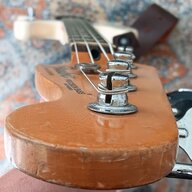


I'm simply not going to find anything that feels as ergonomically comfortable as my current standard-scale basses. And I think I'm very happy with that and just saved myself some dough.
 ---
--- 
i'd qualify as a "consider-er" but i've never owned one. i'm not including the ashbory instrument that i had briefly, years ago --- it was 'too different'. when i had severe shoulder issues i thought a lot about SS axes and whether they would be better/easier to play. but i've stuck it out with the 34" scale and modified them when necessary. since that process keeps working i'll stay with it until it doesn't.Anyone else follow this path when considering (or trying/buying) shorties?

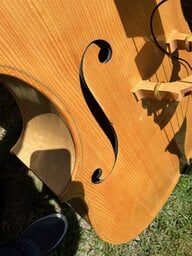

You really should try a Danelectro bass, new/current, not the vintage ones. They have their own personality, and "easy to live with" is an understatement. Light, no neck dive on my MIK Longhorn Pro, super stable necks, responds well to different strings and playing styles.
By the way, I have a current Fender MIM Mustang P/J, and I do not feel any neck dive problems with it. It is not the lightest short scale, so maybe mine has a heavier body.


