• TalkBass has been independent since 1998. Add your voice.
    Create a free account to reply to discussions, view embedded media, and browse with fewer display ads.
    Join freeLog in
    Want zero display ads or expanded classifieds tools? Compare plans.

SHOW YOUR DISTRESSED FINISHES!

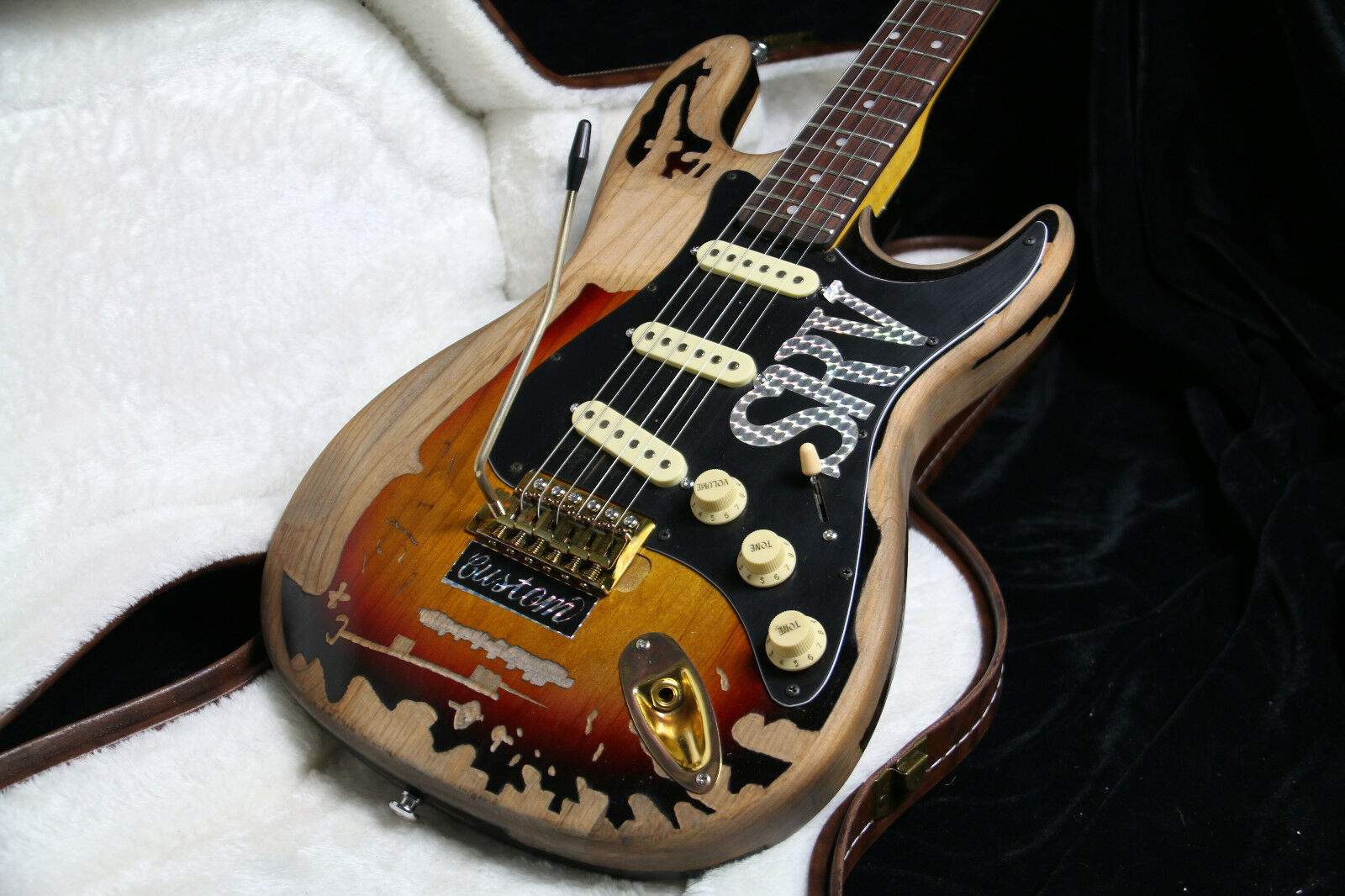
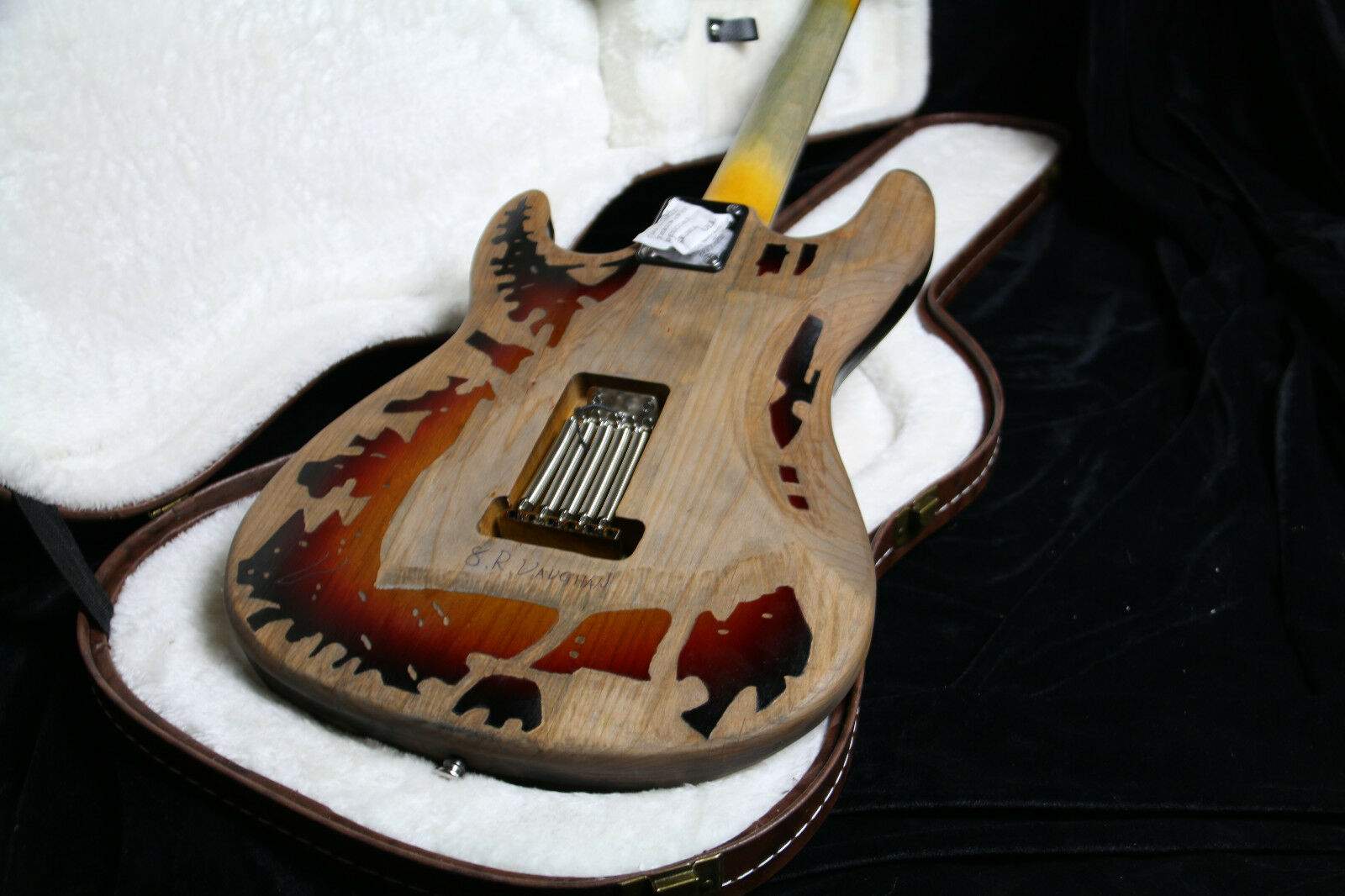
This one (from China) is a bit more curious - really club-footed distressing (location/patterns) similar to the above example - but if you look closely, there are signs of scratching/scraping. Makes me wonder if these finishes started out as normal, and worker bees (to put it nicely) at tables individually scraped and scratched them following a 'guide example'. I wouldn't put it past some Chinese sweat-shop factories. Although Fenders version of the SRV strait is more like the one above - it also is not convincing at all.
s-l1600-4.jpg

You can see the darker scraped wood compared to the lighter clean wood. Maybe it was partially masked before spraying the finish.
s-l1600-3.jpg

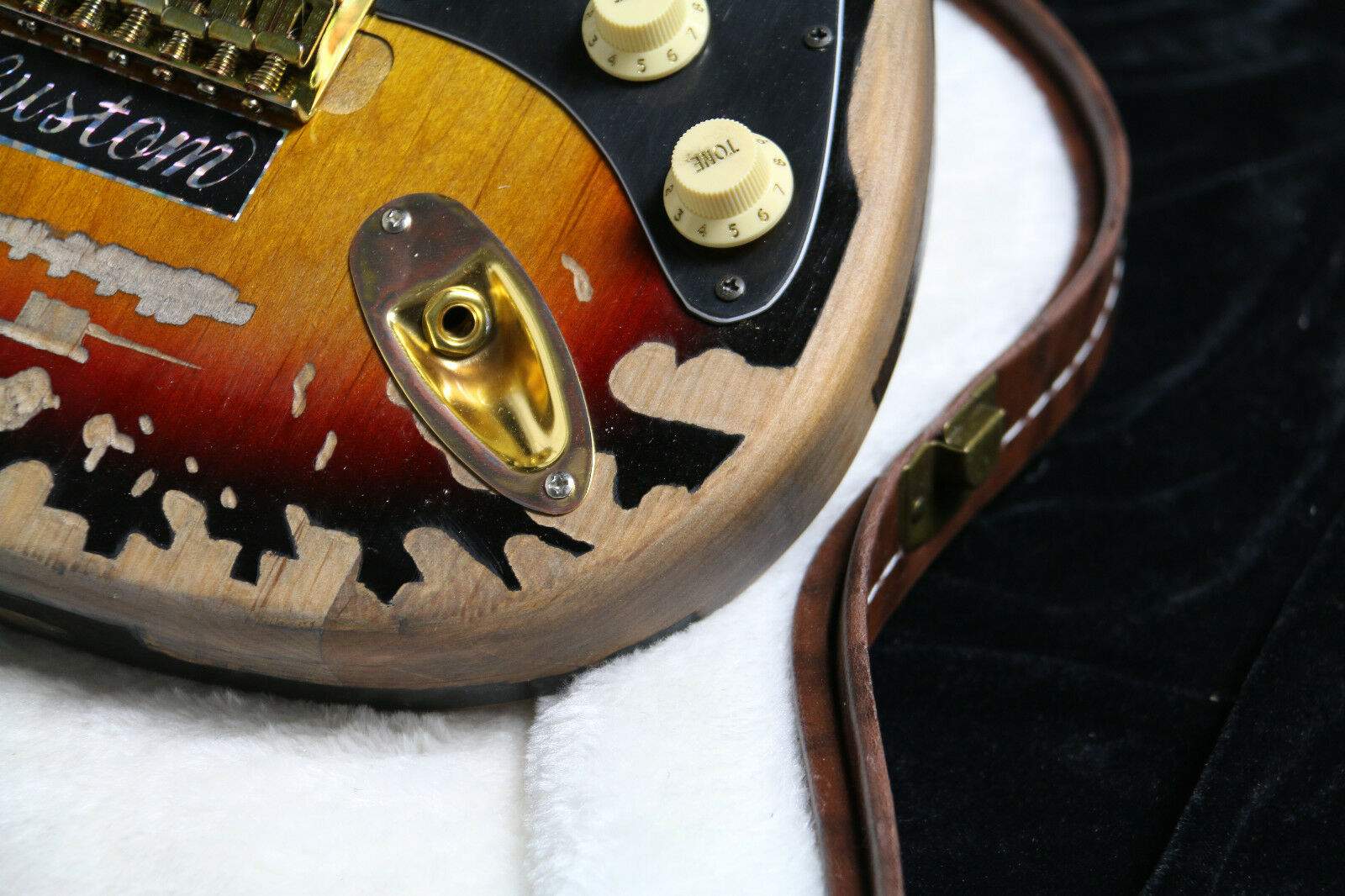
This is where you can see scrape marks around the paint (below the jack) - looks hands-on to me.
s-l1600-2.jpg
 
This one (from China) is a bit more curious - really club-footed distressing (location/patterns) similar to the above example - but if you look closely, there are signs of scratching/scraping. Makes me wonder if these finishes started out as normal, and worker bees (to put it nicely) at tables individually scraped and scratched them following a 'guide example'. I wouldn't put it past some Chinese sweat-shop factories. Although Fenders version of the SRV strait is more like the one above - it also is not convincing at all.

View attachment 3686054
You can see the darker scraped wood compared to the lighter clean wood. Maybe it was partially masked before spraying the finish.
View attachment 3686055
This is where you can see scrape marks around the paint (below the jack) - looks hands-on to me.

View attachment 3686061
I will acknowledge the last two posts presence but I shan't give them likes. It would be like condoning their makers behavior. :rollno:
 
I will acknowledge the last two posts presence but I shan't give them likes. It would be like condoning their makers behavior. :rollno:

And I have 'liked' your post. :) In this case, to investigate what makes a (faux) relic/distressed finish believable, you need to see/be aware of the opposite for reference. Not 'you' as in GFB, but that DIY'r who wants to try their hand at it. It's partially why I started this thread - to accumulate a library of real player-distressed examples for reference. As much as I do not like these manufactured versions, I find it interesting when something so individual/unique is attempted to be mass produced. I collect vintage sock-monkeys. They are wonderful, lovingly made folkloric icons hand-made for their children by mothers, aunts and their grandmothers. Then there's a Paul Frank sock monkey, mass produced in Chinese factories. Needless to say - one is very special from inception and the other is more eventual landfill.
 
And I have 'liked' your post. :) In this case, to investigate what makes a (faux) relic/distressed finish believable, you need to see/be aware of the opposite for reference. Not 'you' as in GFB, but that DIY'r who wants to try their hand at it. It's partially why I started this thread - to accumulate a library of real player-distressed examples for reference. As much as I do not like these manufactured versions, I find it interesting when something so individual/unique is attempted to be mass produced. I collect vintage sock-monkeys. They are wonderful, lovingly made folkloric icons hand-made for their children by mothers, aunts and their grandmothers. Then there's a Paul Frank sock monkey, mass produced in Chinese factories. Needless to say - one is very special from inception and the other is more eventual landfill.
Mass producing relic finishes would seem problematic. Either they all look the same [which defeats the individuality], to save $$, or, they have individual wear, and when done correctly, would really increase the price.

My only experience is w/ MJT doing [3] individual relics. I think they are masters at it.
 
Mass producing relic finishes would seem problematic. Either they all look the same [which defeats the individuality], to save $$, or, they have individual wear, and when done correctly, would really increase the price.

My only experience is w/ MJT doing [3] individual relics. I think they are masters at it.

These grind-house factory companies see a faux distressed/relic finish purely as a selling point, a way they can sell more product as cheaply as possible. They only care to allude to the look. Even Fender is coming from the same tact - but the fact that they are the original company who started doing relic finishes in the early '90s - their version is more sophisticated and studied. (but still generic/machine mass produced)

Well done faux relic finishes are and should be in the elite 'custom' category. Being so indicates a higher level of hand-made articulation which deserves justified financial compensation. It's no different than a Zemaitis guitar with their metal engraving. At least the hand engraved originals, as engraving has become digitally automated now and can be machine mass produced. MJT is one of a few out there in that high-end custom category of elite finishers.
 
Last edited:
Another entry in the "faux distressed finishes that give faux distressed finishes a bad name" category... a (new) Vintage ICON V74MRJP (vaguely a Jaco "Bass of Doom" tribute, sorta, kinda) I'm posting such examples as a guide on what to avoid if attempting your own DIY 'relic'd/distressed" finish. This one makes Fenders Road Worn finishes look believable...

View attachment 3686012
My guess is that they print a 'mask' (resist) on the body, (where the exposed wood is) shoot the finish over it, let it cure, and rub away the masked parts. The 'mask'/resist is a milky clear coating that only partially hardens, but blocks the finish coating. Sorta like rubber cement, it rubs off into a ball of goo that cleanly exposes what was shielded. It's how they can reproduce the exact same 'wear' on multiple bodies. The removing of the mask is probably done by hand and really wouldn't take too long for each.
View attachment 3686013

Just want to say I'm not liking the post because I like the relic job, but because I agree with your comments and example to support it.
 
Just want to say I'm not liking the post because I like the relic job, but because I agree with your comments and example to support it.

I totally understand - the "like" thing is a flawed device because it can also mean "agree", or "acknowledge". Seems like there should be a number of different ways to casually respond.
 
That sure is a good clean ‘burst.
Thanks, it is a good example color wise I think or at least what I like myself that way. The grain is uniform too and while the pic angle is off a little, that knot on the face is dead center of A and D like a belly button. Cool thing is the finish is really thin and is shrinking into the grain really well. Someday it will be mojo-y sort of.
 
  • Like
Reactions: JIO
I just put this together as a spare for my 58 AVRI, but I'm not taking a sander to the body;) it's a nice 'burst and I'm just going to let it do its thing. It needs a proper bridge and some good old funk on the neck. But no sanders...it's has enough fake going on.View attachment 3687051

My '66 J has a neck made for me by Dan Ransom/SF to early '66 dot & bound specs and at the time was finished in an amber tint by Pat Wilkins. I eventually sanded off the amber on the neck but it still has a clear-cut on top of the maple. I used those thin blue foam sanding pads which are very fine grit. The neck gets buffed to a gloss when played and so every once and a while I go over it with those pads back to satin.

I've done pretty much all the different neck treatments (tung-oil, gun-stock oil, lacquer, hand-rubbed light coats of satin poly and opaque enamel w/lacquer clear-coat. The goal is always to get a protective seal (mostly against moisture/humidity) for the wood that is as thin as possible, feels good, and by default - looks good.
 
My '66 J has a neck made for me by Dan Ransom/SF to early '66 dot & bound specs and at the time was finished in an amber tint by Pat Wilkins. I eventually sanded off the amber on the neck but it still has a clear-cut on top of the maple. I used those thin blue foam sanding pads which are very fine grit. The neck gets buffed to a gloss when played and so every once and a while I go over it with those pads back to satin.

I've done pretty much all the different neck treatments (tung-oil, gun-stock oil, lacquer, hand-rubbed light coats of satin poly and opaque enamel w/lacquer clear-coat. The goal is always to get a protective seal (mostly against moisture/humidity) for the wood that is as thin as possible, feels good, and by default - looks good.
I would have done the neck (RW 50s) a little differently myself, but overall I'm happy with it "feel" wise. The shape is a little thinner than expected, much like the 58 profile, not super chunky, very comfortable. Set up really low and straight, smooth truss rod, etc so a really nice neck but my niggles would be, as pointed out previously, the treatment is a bit forced visually and decal is on the wrong side of the lacquer;) and what is supposed to be a cig burn is more like a soldering pencil burn that I could do without. Not as baked Cheeto and dirt like say, a Nash, but just like the other thousands like it. I went with the neck after hearing how nice they felt and I will say it is well constructed and feels nice and worn in, but a visual clone. I really enjoy spraying but dont have a heated garage so the paint guns sit idle now. I might bother with it come spring.
 
  • Like
Reactions: JIO
I would have done the neck (RW 50s) a little differently myself, but overall I'm happy with it "feel" wise. The shape is a little thinner than expected, much like the 58 profile, not super chunky, very comfortable. Set up really low and straight, smooth truss rod, etc so a really nice neck but my niggles would be, as pointed out previously, the treatment is a bit forced visually and decal is on the wrong side of the lacquer;) and what is supposed to be a cig burn is more like a soldering pencil burn that I could do without. Not as baked Cheeto and dirt like say, a Nash, but just like the other thousands like it. I went with the neck after hearing how nice they felt and I will say it is well constructed and feels nice and worn in, but a visual clone. I really enjoy spraying but dont have a heated garage so the paint guns sit idle now. I might bother with it come spring.


This is an interesting point. I have never done that 'look' but being in the non-production category I would put an actual lit cig there. :)
 
  • Like
Reactions: God's Favorite Bass
As someone who has, both intentionally and accidently I can with confidence say they really missed the mark on their attempt. Oh well. Since I don't anymore it will just have to be as is.

On a humorous note, imagine passing a "smoking room" at the Fender factory where employees added the cig detail to RW necks while smoking. Well, funny as a 2D cartoon anyway... :)
 
One of those old B&W cartoons where everyone moved all rubbery like. But see? While I like this bass a lot (from another thread) this necks owner played the exact same notes repeatedly and smoked the exact same cig a my necks donor :laugh: uncanny coincidence? No.View attachment 3687985

Well... this actually could be the case for someone who regularly plays cruise-ship/Las Vegas gigs... :bassist: ;)
 
  • Like
Reactions: God's Favorite Bass

Latest posts