I just got my LMB-3 back from Invalid Link Removed today! 
I wanted to share my first impressions of the mod.
First off, let me just say that Steve modded and returned my pedal to me in less than a week. I had to work the last 2 days so I couldn't get my mail until today but the pedal had been here waiting for me for 2 days already.
OK...first look he attached an understated, not-too-large, non-obnoxious logo sticker. Tasteful and cool...And it's almost centered. LOL!
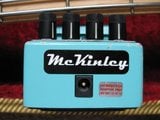
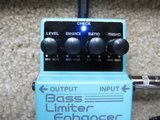
Most pics of the LMB-3 make it look similar to the CEB-3 chorus pedal; sort of light blue. The LMB-3 is more of a teal color; kind of light greenish-blue. Very 1980's. I've always thought color coded LEDs that match the pedal color would be cool in a pedal. Well, Steve gets as close as you can with a nice blue LED to replace Boss's stock red LED.
OK so how's it sound?!
Well, first thing I noticed was that while the pedal is significantly quieter than the stock version, there is a very subtle high freq hiss when the pedal is actuated. The hiss is there in the stock pedal (it's a Boss pedal) but Steve has significantly lowered this and made the pedal MUCH quieter than it was. I noticed it because I was examining the pedal is a completely silent area so that I could find every change. This might cause some issues if you wanted to record with this pedal; however, for gigging purposes, you'll likely never hear any noise from this pedal...it's very quiet.
Next, I noticed he adjusted the Level pot to be at Unity at 12 o'clock if the Ratio=1:1 and the Threshold=Max (essentially no compression). So basically, you can use the pedal as a clean boost or attenuator (if you have a reason you'd want to reduce your volume). The range of the Level dial is wide enough to be very useful. It's has a smooth sweep and doesn't jump from quiet to loud or vice-versa. I found the Level easy to control and easy to hear. In fairness, the Level on the stock pedal also has an even sweep.
Enhance. This one knob has probably been the biggest black eye for the LMB-3 of all complaints against this pedal. The stock version is VERY noisy to the point that this feature is nearly useless. In the stock version, turning Enhance past about 9:00 on the dial brings in so much hiss that no one wants to use the Enhance and it's usually left at minimum. Steve definitely addressed this issue in the SME Thunder mod. Noticeable hiss doesn't begin in this knob until around 12:00 now and the annoying level of hiss in the stock pedal doesn't appear until around 3:00. The Enhance knob finally has a usable range. So what's it do? (for those who aren't familiar) It's essentially an aural exciter that adds some high frequencies back into the signal to counteract the potential loss of highs that you get when you compress your signal. I don't have the equipment necessary to detect what the frequency range of the dial is; however, I can tell you that it's "very high" freqs as bass goes. Comparing it to the boost that I get in the 10k range on my Boss GEB-7 EQ, my guess is it's near and possibly just below the 10kHz range but what the Q and bandwidth is, I don't know. It's not a parametric feature so it doesn't change the frequency range as you turn the knob up. As far as my ears can tell, it's set at a specific range and turning the dial up simply turns up the level on that effect. The effect is noticeable and if you're into a hi-fi/modern jazz/slap tone and/or otherwise need those really high freqs, the Enhance can help (after the Thunder mod). The Enhance knob is reputed to effect the EQ of the tone (by scooping mids as you turn it up to boost highs). Does it still do this? I suppose. Honestly, I haven't yet fully assessed this characteristic to be able to comment on how much the mod changes this.
Overall, the sound of the modified pedal is much more "transparent" (to use an over-used cliche). Before the mod, my tone sounded muffled and a bit "fake". I guess I'd describe the stock sound as a bit muffled and electronic; not clear and natural. After the mod, the pedal sounds like it has more "air". Maybe a better description is that the stock pedal sounded as if it was compressing the signal TOO much so that with high settings of Ratio and/or Threshold, the tone was noticeably squashed in a way that you could hear that some frequencies were lost and the signal SOUNDED processed. I hope that makes sense. It sounded unnaturally thick and was lacking whatever frequencies had been there in the natural world before it was squashed. The SME Thunder mod cleans that up completely (to my ears anyway). I'm guessing the stock pedal used cheaper components that either couldn't handle the signal properly or would get overdriven easily. In any case, the stock pedal, to me, sounded overly compressed and processed. Thick? yes, but at the expense of sounding like it was artificially thickened. We all want to control the super high volume spikes that lead to unwanted distortion and we all want a thicker tone. We don't always want to cut off all the high freqs. The stock pedal had a tendency to do this with high settings. The SME Thunder mod, of course, uses some better components and now the pedal sounds more natural. More subtle. More like you can't tell it's even compressing at all until you kick it OFF then you hear what it was fixing when it was ON. Now the tone is thickened but with a much more subtle touch and it doesn't impart that electronic, 1980's radio DJ sound that says, "Listen! I'm being processed to death by some groovy electronic gizmo". After the mod, the pedal retains more of the "airy" high freqs in the signal. It doesn't make the signal hissy; it just seems to allow more of the complete range of harmonics of a note through--with no real change other than controlling the volume. One consequence of this is that the Ratio knob seems to have a wider sweep. Maybe I should say that you need to crank it up higher to get more of that fake, processed, crushed signal sound. The Threshold also has a wider sweep so that throughout it's range (and using a passive bass) you can't get it to "pop", "tick", or distort.
Speaking of that, after the mod, pedal doesn't get overdriven anymore. At high Ratio and/or Threshold settings--or--with very aggressive playing and/or loud input, the stock pedal would clip with an audible "pop" or "tick" sound. That's GONE! I cranked the settings to the max on this and slapped the nonsense out of my bass and there was no popping, ticking, sound dropout, distortion or anything other than the sound of the bass. For the record, I used a passive bass. I have not tested this pedal (stock or modded) with an active bass.
I want to mention (before I forget) that this pedal does NOT give the "dip & swell" effect. In fact, IIRC it didn't even do that stock. This pedal is marketed as a peak limiter and it does that very well. After the SME Thunder mod, it just seems to do it better.
The range of the Ratio and Threshold were very useful in the stock pedal and they are just as useful if not more so after the mod. The range of this pedal goes from no effect at all to making everything equal. What I've noticed is that the mod retains more of the high frequencies throughout the sweep off the Ratio. Things don't get smothered like they did in the stock pedal.
Some improvements in tone that I have noticed with this pedal are more sustain and more punch. People say, "punch can mean a lot of different things." Punch means one thing to me...the hard attack of a kick drum. This pedal can add that to my tone (if I want to dial that in). Overall, I'm very pleased with this mod mostly because I can control my peaks and add a little punchy thump and some sustain without sounding like I'm running through an electronic processor. I like the fact that the mod allows enough of the natural harmonics of the notes through so that it has an "airy, natural" tone. Just to clarify, I think with the mod this pedal is more transparent than the stock version. In the grand scheme of things, the Boss LMB-3 is not really considered a "transparent" pedal in the general sense. The effect that the Enhance knob has on EQ prevents this pedal from processing your signal through "untouched". Also, it's a Boss pedal so it's not true bypass. If you're one of those True Bypass freaks, then you probably don't want to use any Boss pedals. Personally, I find the FET switch Boss uses to be very quiet. On the plus side, the FET makes actuating the pedal quiet. On the minus side, not being true bypass means the pedal will do some processing to your signal even when the pedal is off (granted, it should not be a noticeable amount of processing...it's should be nearly invisible).
The SME Thunder mod was a bit expensive. At the time of this writing, the mod costs $59 +shipping but I'm pleased with it and I'm glad I got the mod. If you have an LMB-3 and really WANT to like it but can't get past the issues the stock pedal has (in regard to tone crushing, popping/ticking, and that noisy Enhance knob), I think you'd like the improvements the SME Thunder mod gives.
I wanted to share my first impressions of the mod.
First off, let me just say that Steve modded and returned my pedal to me in less than a week. I had to work the last 2 days so I couldn't get my mail until today but the pedal had been here waiting for me for 2 days already.
OK...first look he attached an understated, not-too-large, non-obnoxious logo sticker. Tasteful and cool...And it's almost centered. LOL!
Most pics of the LMB-3 make it look similar to the CEB-3 chorus pedal; sort of light blue. The LMB-3 is more of a teal color; kind of light greenish-blue. Very 1980's. I've always thought color coded LEDs that match the pedal color would be cool in a pedal. Well, Steve gets as close as you can with a nice blue LED to replace Boss's stock red LED.
OK so how's it sound?!
Well, first thing I noticed was that while the pedal is significantly quieter than the stock version, there is a very subtle high freq hiss when the pedal is actuated. The hiss is there in the stock pedal (it's a Boss pedal) but Steve has significantly lowered this and made the pedal MUCH quieter than it was. I noticed it because I was examining the pedal is a completely silent area so that I could find every change. This might cause some issues if you wanted to record with this pedal; however, for gigging purposes, you'll likely never hear any noise from this pedal...it's very quiet.
Next, I noticed he adjusted the Level pot to be at Unity at 12 o'clock if the Ratio=1:1 and the Threshold=Max (essentially no compression). So basically, you can use the pedal as a clean boost or attenuator (if you have a reason you'd want to reduce your volume). The range of the Level dial is wide enough to be very useful. It's has a smooth sweep and doesn't jump from quiet to loud or vice-versa. I found the Level easy to control and easy to hear. In fairness, the Level on the stock pedal also has an even sweep.
Enhance. This one knob has probably been the biggest black eye for the LMB-3 of all complaints against this pedal. The stock version is VERY noisy to the point that this feature is nearly useless. In the stock version, turning Enhance past about 9:00 on the dial brings in so much hiss that no one wants to use the Enhance and it's usually left at minimum. Steve definitely addressed this issue in the SME Thunder mod. Noticeable hiss doesn't begin in this knob until around 12:00 now and the annoying level of hiss in the stock pedal doesn't appear until around 3:00. The Enhance knob finally has a usable range. So what's it do? (for those who aren't familiar) It's essentially an aural exciter that adds some high frequencies back into the signal to counteract the potential loss of highs that you get when you compress your signal. I don't have the equipment necessary to detect what the frequency range of the dial is; however, I can tell you that it's "very high" freqs as bass goes. Comparing it to the boost that I get in the 10k range on my Boss GEB-7 EQ, my guess is it's near and possibly just below the 10kHz range but what the Q and bandwidth is, I don't know. It's not a parametric feature so it doesn't change the frequency range as you turn the knob up. As far as my ears can tell, it's set at a specific range and turning the dial up simply turns up the level on that effect. The effect is noticeable and if you're into a hi-fi/modern jazz/slap tone and/or otherwise need those really high freqs, the Enhance can help (after the Thunder mod). The Enhance knob is reputed to effect the EQ of the tone (by scooping mids as you turn it up to boost highs). Does it still do this? I suppose. Honestly, I haven't yet fully assessed this characteristic to be able to comment on how much the mod changes this.
Overall, the sound of the modified pedal is much more "transparent" (to use an over-used cliche). Before the mod, my tone sounded muffled and a bit "fake". I guess I'd describe the stock sound as a bit muffled and electronic; not clear and natural. After the mod, the pedal sounds like it has more "air". Maybe a better description is that the stock pedal sounded as if it was compressing the signal TOO much so that with high settings of Ratio and/or Threshold, the tone was noticeably squashed in a way that you could hear that some frequencies were lost and the signal SOUNDED processed. I hope that makes sense. It sounded unnaturally thick and was lacking whatever frequencies had been there in the natural world before it was squashed. The SME Thunder mod cleans that up completely (to my ears anyway). I'm guessing the stock pedal used cheaper components that either couldn't handle the signal properly or would get overdriven easily. In any case, the stock pedal, to me, sounded overly compressed and processed. Thick? yes, but at the expense of sounding like it was artificially thickened. We all want to control the super high volume spikes that lead to unwanted distortion and we all want a thicker tone. We don't always want to cut off all the high freqs. The stock pedal had a tendency to do this with high settings. The SME Thunder mod, of course, uses some better components and now the pedal sounds more natural. More subtle. More like you can't tell it's even compressing at all until you kick it OFF then you hear what it was fixing when it was ON. Now the tone is thickened but with a much more subtle touch and it doesn't impart that electronic, 1980's radio DJ sound that says, "Listen! I'm being processed to death by some groovy electronic gizmo". After the mod, the pedal retains more of the "airy" high freqs in the signal. It doesn't make the signal hissy; it just seems to allow more of the complete range of harmonics of a note through--with no real change other than controlling the volume. One consequence of this is that the Ratio knob seems to have a wider sweep. Maybe I should say that you need to crank it up higher to get more of that fake, processed, crushed signal sound. The Threshold also has a wider sweep so that throughout it's range (and using a passive bass) you can't get it to "pop", "tick", or distort.
Speaking of that, after the mod, pedal doesn't get overdriven anymore. At high Ratio and/or Threshold settings--or--with very aggressive playing and/or loud input, the stock pedal would clip with an audible "pop" or "tick" sound. That's GONE! I cranked the settings to the max on this and slapped the nonsense out of my bass and there was no popping, ticking, sound dropout, distortion or anything other than the sound of the bass. For the record, I used a passive bass. I have not tested this pedal (stock or modded) with an active bass.
I want to mention (before I forget) that this pedal does NOT give the "dip & swell" effect. In fact, IIRC it didn't even do that stock. This pedal is marketed as a peak limiter and it does that very well. After the SME Thunder mod, it just seems to do it better.
The range of the Ratio and Threshold were very useful in the stock pedal and they are just as useful if not more so after the mod. The range of this pedal goes from no effect at all to making everything equal. What I've noticed is that the mod retains more of the high frequencies throughout the sweep off the Ratio. Things don't get smothered like they did in the stock pedal.
Some improvements in tone that I have noticed with this pedal are more sustain and more punch. People say, "punch can mean a lot of different things." Punch means one thing to me...the hard attack of a kick drum. This pedal can add that to my tone (if I want to dial that in). Overall, I'm very pleased with this mod mostly because I can control my peaks and add a little punchy thump and some sustain without sounding like I'm running through an electronic processor. I like the fact that the mod allows enough of the natural harmonics of the notes through so that it has an "airy, natural" tone. Just to clarify, I think with the mod this pedal is more transparent than the stock version. In the grand scheme of things, the Boss LMB-3 is not really considered a "transparent" pedal in the general sense. The effect that the Enhance knob has on EQ prevents this pedal from processing your signal through "untouched". Also, it's a Boss pedal so it's not true bypass. If you're one of those True Bypass freaks, then you probably don't want to use any Boss pedals. Personally, I find the FET switch Boss uses to be very quiet. On the plus side, the FET makes actuating the pedal quiet. On the minus side, not being true bypass means the pedal will do some processing to your signal even when the pedal is off (granted, it should not be a noticeable amount of processing...it's should be nearly invisible).
The SME Thunder mod was a bit expensive. At the time of this writing, the mod costs $59 +shipping but I'm pleased with it and I'm glad I got the mod. If you have an LMB-3 and really WANT to like it but can't get past the issues the stock pedal has (in regard to tone crushing, popping/ticking, and that noisy Enhance knob), I think you'd like the improvements the SME Thunder mod gives.