

Enjoy the benefits of a premium membership!
Upgrade Account
-
TalkBass has been independent since 1998. Add your voice.
Create a free account to reply to discussions, view embedded media, and browse with fewer display ads.
Join free Log in
Want zero display ads or expanded classifieds tools? Compare plans.
You are using an out of date browser. It may not display this or other websites correctly.
You should upgrade or use an alternative browser.
You should upgrade or use an alternative browser.
Smith or Fodera or Alembic?
- Thread starter Jeff Lee
- Start date
More options
Who Replied?
If I had to rank three brands at the top of the bass world based on my experience and desires it would be Alembic, Fodera and Ritter in that order.
Right or wrong I've always put Smith in the same category as Jerzy Drozd or if I were going for a more traditional look Alleva Coppolo and Sadowsky basses. All great basses but in a slightly different league from Alembic, Fodera and Ritter.
Of course if your giving one for free I'll take any of the above.
I like your thoughts, but my take on this is slightly different. I would have to put Ritter in line with Jerzy Drozd and Roscoe. I think Alembic and Smith have been around for so long that they are the "granddaddies" of boutique instruments. Basses like Jerzy Drozd, Roscoe and Ritter (and probably many others) seem to have "their own thing" going on, but IMO, they are descendents of Alembic and Smith. Fodera falls somewhere in between the two. F basses, Mike Lull, Alleva Coppolo, Lakland, Sadowsky, and the like trace their lineage from Fender rather than from Alembic and Smith. IMO.
True. I've come to the conclusion that if you want an instrument to do a lot of things, you need a lot of instruments.
I have a lot of instruments because I'm fickle. What sounds good to me one day might not work quite as well the next. And more importantly, different basses have different personalities. Some days, certain instruments just don't "do it" for me. It is purely psychological, but when one quits working for me, I pack it up and rotate to the next one. Interestingly enough, though, a P bass is almost always the right answer.
I have an Alembic, a Dingwall, a Lakland, and a Kubicki at the higher end of my stable. I have played several Dingwalls, a couple Smiths, and a Roscoe or two. I have never seen a Fodera that I can recall. I remember the Roscoes and the Smiths as having really chunky necks, a quality I like. My Alembic also has a substantial neck, and personality-wise is probably as close to a blank slate as any instrument I own. My Kubicki is a race car - playing it is fast and effortless. The Lakland has a very slender neck profile that makes it feel like the best Fender ever. But Dingwall...if you don't object to fanned frets, Dingwall is really in a class by itself in terms of workmanship, tone and playability. I have other basses that I like equally well, but my plain-Jane ABI is easily the best bass I have ever owned or played. The ABZ I had in my hands at Jive Sound was just as good, but I suspect the finish is less durable.
So to answer the OP's question, out of Alembic, Smith and Fodera, I guess I would have to say Dingwall.
Although, the Alembic will get the call for the next few shows.
I like your thoughts, but my take on this is slightly different. I would have to put Ritter in line with Jerzy Drozd and Roscoe. I think Alembic and Smith have been around for so long that they are the "granddaddies" of boutique instruments. Basses like Jerzy Drozd, Roscoe and Ritter (and probably many others) seem to have "their own thing" going on, but IMO, they are descendents of Alembic and Smith. Fodera falls somewhere in between the two. F basses, Mike Lull, Alleva Coppolo, Lakland, Sadowsky, and the like trace their lineage from Fender rather than from Alembic and Smith. IMO.
FWIW, Keith Roscoe (disclaimer: I work for him) was building guitars and basses as a contemporary of Smith, and we do nothing at all similar to Alembic. Both fantastic instruments, neither would be seriously considered an "ancestor" of our work.
As a player, I would characterize our basses as descendants from Fender with a few influences from some of the boutique cats - they play and feel like REALLY GOOD Fender basses, and sound like...well, Roscoes.
Maybe we would be some sort of "missing link" between the Fender and Alembic lineages (I consider Smith to be more of an Alembic descendant than an originator - he started building significantly post-Alembic, and even post-Tobias).


Have owned a Smith BT6 and Alembic Spoiler- of those two I would opt for the Smith for playability and versatility.
My Alembic had VERY tight string spacing and a floppy B (short scale) but a RICH tone.
Ken Smith basses do have a certain timbre but I wouldn't compare them to a Warwick/MusicMan in that regard.
Have never owned a Fodera and cannot envision paying that much for a bass- I play Warmoth Gecko 6 strings to get a "poor man's MTD" sound. If money were no object- I would be honored to own such a well crafted instrument and am certain wood/electronics choices can create any tone desired.
Personal Taste:
1. Smith- I WILL own a Black Tiger 5 and BSR 6 fretless someday
2. Fodera- Hey, you never know!
3. Alembic- would probably opt for a simple spoiler 4 string for that "Kool & The Gang Sound"
My Alembic had VERY tight string spacing and a floppy B (short scale) but a RICH tone.
Ken Smith basses do have a certain timbre but I wouldn't compare them to a Warwick/MusicMan in that regard.
Have never owned a Fodera and cannot envision paying that much for a bass- I play Warmoth Gecko 6 strings to get a "poor man's MTD" sound. If money were no object- I would be honored to own such a well crafted instrument and am certain wood/electronics choices can create any tone desired.
Personal Taste:
1. Smith- I WILL own a Black Tiger 5 and BSR 6 fretless someday
2. Fodera- Hey, you never know!
3. Alembic- would probably opt for a simple spoiler 4 string for that "Kool & The Gang Sound"
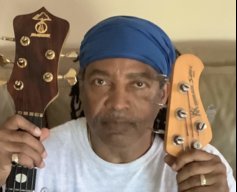
FWIW, Keith Roscoe (disclaimer: I work for him) was building guitars and basses as a contemporary of Smith, and we do nothing at all similar to Alembic. Both fantastic instruments, neither would be seriously considered an "ancestor" of our work.....
I have to agree with Gard here. I have had Alembic and Roscoe living together in sin and they are wildly different beasts. The two things they do share in common, though are
- Superior craftsmanship and attention to detail
- Excellent quality of materials
One question I would have for Gard, though..... Do you see Roscoe and MTD as a more similar branch of the bass tree? If Fender & Fender clones are one branch, Alembic / Ken Smith / Fodera another branch, would Roscoe / early Tobias / MTD be another branch? I would also suggest, having owned a couple, that Hanewinckel would wind up in that same branch. They are not Fender clones with slightly different bodies. They have several different models, wood choices, electronics packages. They allow a high degree of customization, but not to the degree that Alembic and Fodera customize. Just my observations.
One question I would have for Gard, though..... Do you see Roscoe and MTD as a more similar branch of the bass tree? If Fender & Fender clones are one branch, Alembic / Ken Smith / Fodera another branch, would Roscoe / early Tobias / MTD be another branch? I would also suggest, having owned a couple, that Hanewinckel would wind up in that same branch. They are not Fender clones with slightly different bodies. They have several different models, wood choices, electronics packages. They allow a high degree of customization, but not to the degree that Alembic and Fodera customize. Just my observations.
Hmm...."early" or "original" Tobias, no, to me (and again, nothing but admiration for the work Mike & crew did, and still do), they were more from the Alembic branch of the tree of bass. Neck through construction, "hippie sammich" wood choices and usage. The more "modern era" MTD basses are on a similar branch, maybe like branches off the same limb, so to speak.
Interesting conversation, lot of GREAT stuff out there, and I think it all influences each other to some degree or another. The beauty of it all is that there are so many great choices, and all of them are valid.

- Aug 21, 2003
- 11,598
- 18,627
- Disclosures
- A-Designs Mike Lull GK Tsunami Cables GHS Strings RMI Basswitch Nordstrand Pickups Darkglass
+1if you're giving them away i'll take the Fodera (so i can sell it later).

songwriter21
I have an obsession for wood. The musical kind.
I don't agree with needing more than one bass, unless it's a fretless, and/or you have multiple tunings. My last bass, and '02 Ibanez Prestige BTB 5'er, could get just about every damned tone you could imagine, so I had no need for another fretted axe. I just felt like climbing to a 6'er later.
songwriter21
I have an obsession for wood. The musical kind.
I don't agree with needing more than one bass, unless it's a fretless, and/or you have multiple tunings. My last bass, and '02 Ibanez Prestige BTB 5'er, could get just about every damned tone you could imagine, so I had no need for another fretted axe. I just felt like climbing to a 6'er later.
hasbeen
Commercial User
- Sep 23, 2004
- 4,806
- 2,668
- Disclosures
- Executive Vice President, The Adam Hall Group
I own two Ken Smiths: 1986 BT Custom 4 string and a 6 string Elite G. Having said that, at this point I'd prefer a Fodera.
I think Alembics are beautifu, but I have a tough time getting on with the ergonomics.
I think Alembics are beautifu, but I have a tough time getting on with the ergonomics.
I would probably go for the Fodera. I have played an Alembec once in (?) Manny's NYC, and it was the most Beautiful thing I've ever experienced; it sounded amazing and played like butter, it made me feel like I was a better player because it just felt ...Right. I like the Fodera's though.
For those concerned about Alembic ergonomics, my Alembic Essence 5 string has about the best ergonomics of any 5 string I've ever played. No balance issues not any heavier than a Fender Jazz 5, fantastic slab ebony neck and ultra low action. Just put La Bella Tapes on it and its soooo sweet to play. When I have to play out and want that distinctive Alembic hifi sound this is my go to bass.
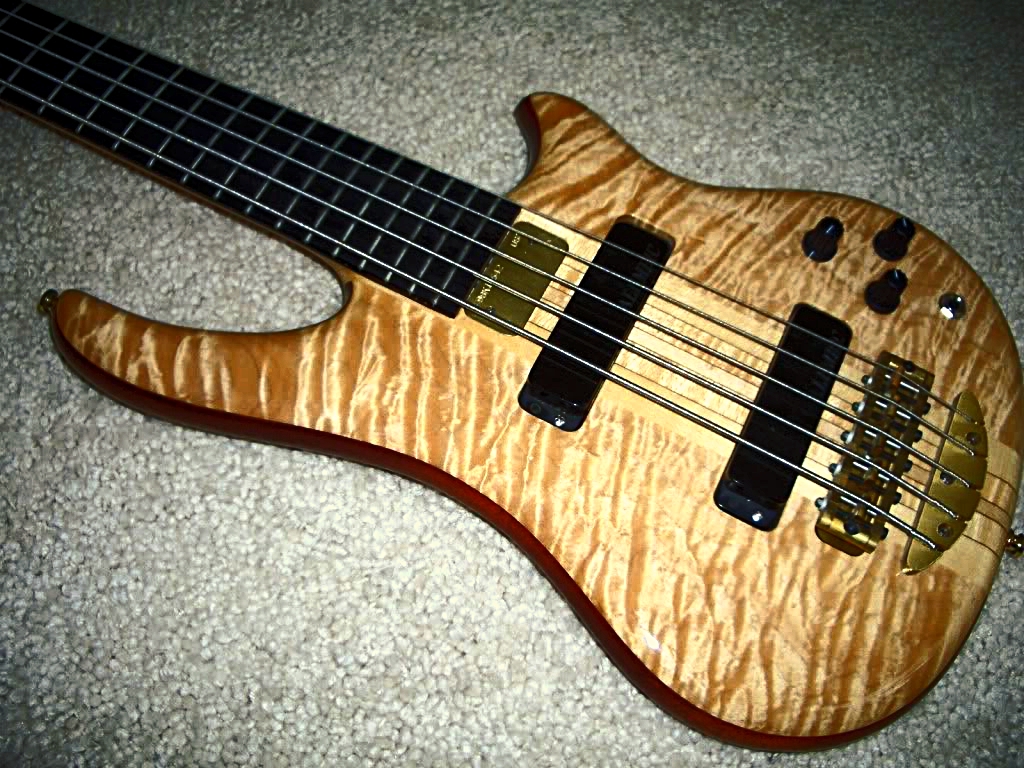
But from a melt in your hand buttery smooth deep talkin, nearly plays its self standpoint my number one bass is my Alembic Dragon Wing. It gets nearly all the studio time and again has that distinctive Alembic hifi sound.
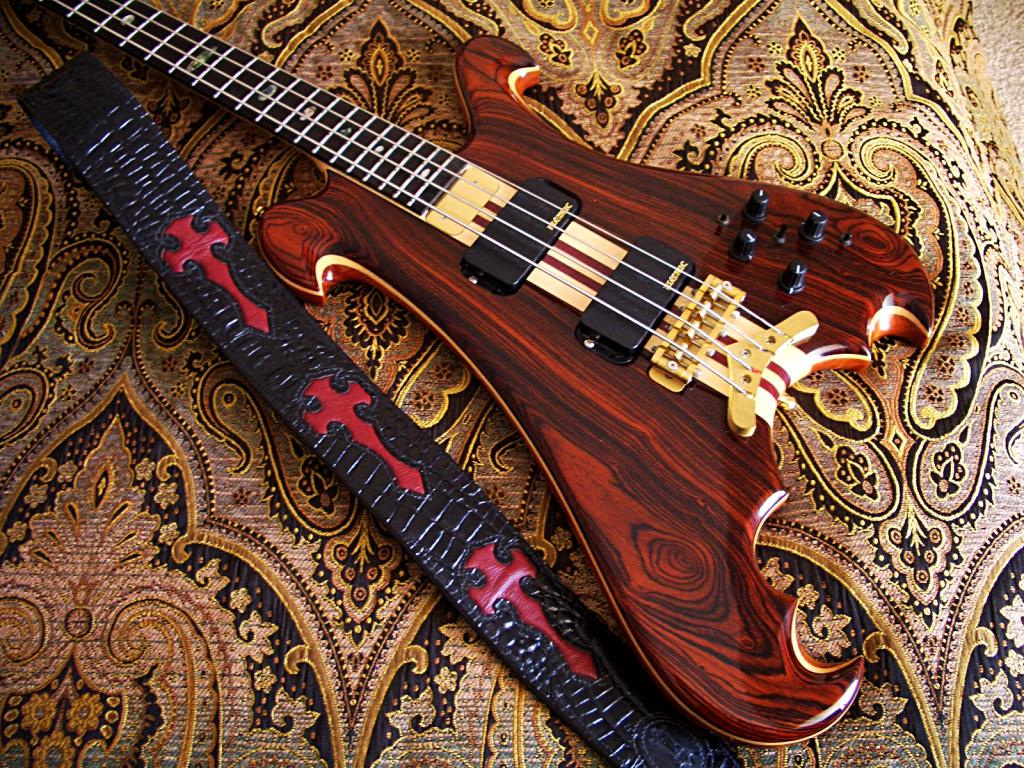
Again, wouldn't mind a Fodera or a Smith but in no way would I ever trade one of my Alembics for one.
But from a melt in your hand buttery smooth deep talkin, nearly plays its self standpoint my number one bass is my Alembic Dragon Wing. It gets nearly all the studio time and again has that distinctive Alembic hifi sound.
Again, wouldn't mind a Fodera or a Smith but in no way would I ever trade one of my Alembics for one.

I have owned/played basically everything and prefer the feel and versatility of Fodera.
Are they expensive? Absolutely. $4700-10k+ for a bass is super expensive compared to most other brands.
But one big consideration for me was resale. Fodera has incredibly high resale value almost across the board. I can buy a new Fodera (one of the best basses made IMO) and if I decide to sell it in a few years, I will likely lose 0-10% unless the bass is loaded with crazy options. Not many other manufacturers' basses offer this level of "investment protection".
YMMV of course.
Are they expensive? Absolutely. $4700-10k+ for a bass is super expensive compared to most other brands.
But one big consideration for me was resale. Fodera has incredibly high resale value almost across the board. I can buy a new Fodera (one of the best basses made IMO) and if I decide to sell it in a few years, I will likely lose 0-10% unless the bass is loaded with crazy options. Not many other manufacturers' basses offer this level of "investment protection".
YMMV of course.

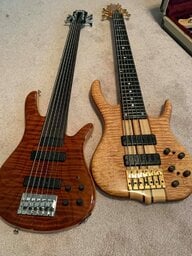
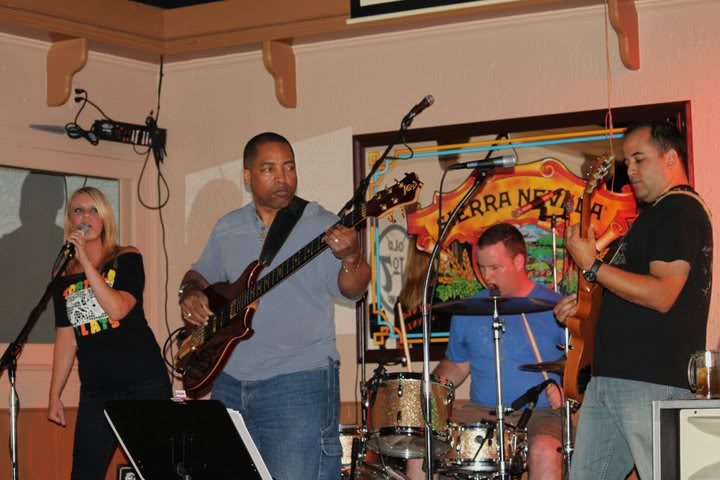
I'm pretty short....5'7" but the reach hasn't been a major obstacle. This pic shows me reaching second position pretty easily. You can also see that the headstock is a few inches foreword of my body instead of just going straight right to left.
And just to give you an idea how long this bass is, here's what happened when I tried to clothe it in a stock Reunion Blues gig bag.....
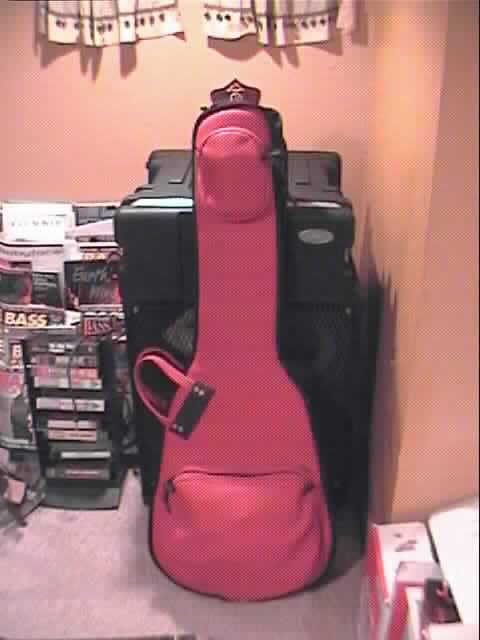
It's the point on the bridge end that causes the size issue. And the humongous headstock.
Beautiful bass BTW. I guess how you position it is the key. The Smith I had before was murder on the fretting hand after a couple of hours. My faves right now are Fbass and Fodera as I find the balance and reach to be real comfy. But hopefully I'll get a chance to try an Alembic one day.

You can get a very custom bass from Alembic and Fodera. Not from Smith. It's going to be a Smith, where as the other two could be highly customized or kind of standard. The new Fodera standards are a good thing as it does showcase the basic 'Fodera sound', but in no way limits what you could do with a customized Fodera.
Interesting. I honestly don't have a lot of time with a Roscoe in my hands, and no time with them on stage. The didn't feel very Fender-ish to me, though. I think Roscoe is a descendent, though, in that Alembic really established the "boutique bass" concept. I can't argue that they aren't their own distinct thing when compared to the big three of this thread - I really don't have enough time on one to have more than an initial impression.FWIW, Keith Roscoe (disclaimer: I work for him) was building guitars and basses as a contemporary of Smith, and we do nothing at all similar to Alembic. Both fantastic instruments, neither would be seriously considered an "ancestor" of our work.
As a player, I would characterize our basses as descendants from Fender with a few influences from some of the boutique cats - they play and feel like REALLY GOOD Fender basses, and sound like...well, Roscoes.
Maybe we would be some sort of "missing link" between the Fender and Alembic lineages (I consider Smith to be more of an Alembic descendant than an originator - he started building significantly post-Alembic, and even post-Tobias).
I can say this about Roscoe. A while back, there was a used one at a GC and the price was right; I really should have come home with it. Also, I think that even the most plain-looking Roscoe is among the most beautiful of boutique basses out there. The fancy-top ones are simply amazing. (The is something that strikes me about Alembic and Smith; while there are many beautiful ones out there, there are many Alembics and Smiths with lackluster woods, IMO. No insult intended to Smith and Alembic fans; just a casual observation.)

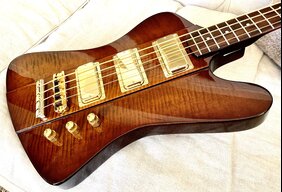
all together now.... a bass that all three builders contributed to.View attachment 440798View attachment 440808
Story, please....
Assuming Fodera was working at Ken Smith when this bass was made. But when did the pickups and headstock emblem happen? At the KS factory or aftermarket?
The pickups etc. were installed by Alembic, through Ron, when the bass was brand new.
The bass was built in the Brooklyn shop and then sent to California. To my memory this was 1982/83.
It is a very cool instrument.
The bass was built in the Brooklyn shop and then sent to California. To my memory this was 1982/83.
It is a very cool instrument.

Very unique. I wouldn't mind the story in a little more detail, though.


