Do you guys understand the difference between the Shipping & Handling model vs the Free Shipping model?
For at least 100 years companies that do mail-order business have always used the Shipping & Handling model. From Sears Roebuck to McMasters to
Stew-Mac, they've always traditionally used the Shipping & Handling model.
The Shipping & Handling charge is the entire cost of processing the order by mail. It includes logging in the order, printing the receipt and shipping label, the cost of the box and packing material, the labor to pack it, and...the shipping charge to USPS or UPS. It's the complete cost to them, of logging, packing and shipping your order.
The cost of the part, in their mail-order catalog, is the same as the cost of the same part over the counter in their brick & mortar store. And that's why they use the Shipping & Handling model. So the customer knows that the part is the same price in the store or by mail. But ordering by mail has the additional charge for the cost of packing and shipping it.
The important thing is that the Shipping & Handling charge is a single charge
per order. It's not added per part or multiplied for multiple items. The charge only increases if the total weight or physical size of the box increases significantly.
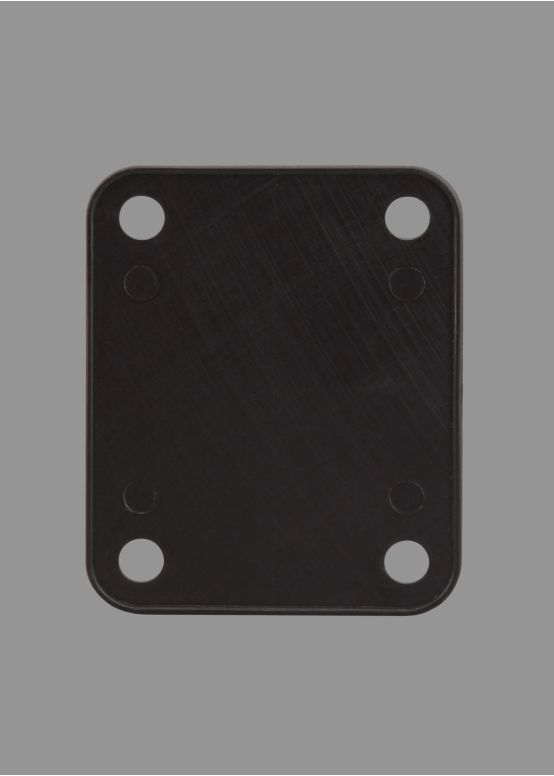
So, yeah, if you order a single neck plate gasket for $5, the S & H charge may be $11. Which seems excessive, but that's what it actually costs them to process, pack and ship your order. But if you order 10 gaskets, the S & H charge will still be $11. If you order 100 it will probably still be $11. If you place an order for a bunch of different larger items, including the one gasket, the total S & H charge may be $13.
The Shipping & Handling charge is based on the size and weight of the box, not the number of items inside. Because that's how the shipping companies charge. For a small package, a S & H charge of $11 breaks down approximately as $4 for the shipping cost, $1 for the box & packing materials, and $6 for the labor to process the order, pick the stock, print the label & receipt, and pack the box. About 10 minutes labor. Which is what most small businesses will spend processing a mail order. That's fair and reasonable.
Then there's Free Shipping! I don't remember when it started, but Ebay went into it big back in the mid-'90's. Ebay started out as an auction site, basically doing the selling for tens of thousands of individuals and small businesses. Ebay was brokering the sale, but the individuals were doing their own shipping & handling of the stuff they sold. And, in the early days, most of the auctions listed the winning bid and the shipping & handling charge. And, yeah, you could win an auction for $5 and have to pay a $25 Shipping & Handling fee on it. The S & H fee depended on how big and heavy the item was and how far away it was. And it was understood that the S & H fee included the seller's cost to box it up, too.
Then Ebay suggested that the Sellers set their auction prices to include the Shipping & Handling. Then advertise the price as Free Shipping!!! And it worked. People tended to go for the auctions with Free Shipping!!! It wasn't really dishonest, but it was a marketing trick. You obviously were paying for the shipping in the auction price.
Then along came Amazon.....who took the idea several steps farther. Instead of brokering auctions of junk by individuals, they were listing and selling quantities of new products from tens of thousands of small businesses. Some of those businesses used the Shipping & Handling model, listing the Shipping cost separate from the product price. But Amazon convinced many of them to do Free Shipping!!!; that is, set their product price to include the Shipping & Handling cost. Because advertising Free Shipping!!! brought in more sales.
But this is where it starts getting shady. Because the S & H cost is built into the price of
every single item, if you buy 10 things from one company, you are paying the S & H charge 10 times. Even if they ship them in one box.
The companies play around with their pricing, often barely making any profit on a single item sale, and betting on making big profits on bigger orders to a single customer. Because of that multiplication of the built-in S & H cost.
Amazon collects their money as a percentage of the selling price. That percentage varies by factors like quantity sold, price range, etc.
Amazon also offers their own Warehousing, Order Picking, and Shipping service. Companies can, if they choose, ship their pre-packaged products to Amazon, in bulk. Amazon then acts as the whole retail operation, storing the products, taking the orders, processing the money, packing the boxes, and shipping them in their own trucks. For providing this service, Amazon keeps a percentage of the money before sending it to the company.
It's a huge scale operation, so there's some efficiency in size. Their cost to Ship & Handle an order is lower than what a small business can do at home. But they are still applying that S & H fee to every single item. Even multiple of the same item in one box.
Is that more "fair" than the classic Shipping & Handling fee?
And then they introduced Prime with Free Shipping!!! You pay an annual fee for a license to be charged an averaged-out S & H fee on every item.
This all gets very confusing for a company like
Stew-Mac. They sell their products over the counter in a store, online through their own web site, online through Amazon (with Stew-Mac doing the S & H) and also with some products stocked in Amazon's warehouse. All those have different pricing structures, but they try to line up their product prices to make sense. I don't see anything that Stew-Mac does as being outrageous or a rip-off. They are an old-fashioned company who sets their prices on what things cost and what they need to stay in business.
So many companies, particularly on Amazon, get into price wars trying to squeeze out market share. And then they go broke.
With all that said, I love Amazon, and I do about 70% of my annual purchasing on there. Mostly because it's just so convenient.