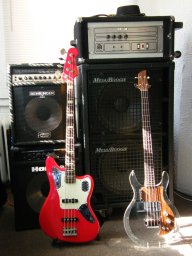
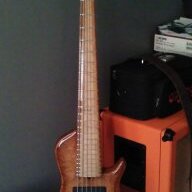
I have been into the audiophile audio stuff along with being a bassist and musician for over 50 years. Tubes are fantastic, but need proper biasing, and matching to sound superb. No tube can last 10 years without some degradation, no matter what anyone says, period. An audiophile Tube amp (one for audio reproduction, not just playing a bass through) usually requires tube change outs somewhat frequently. And Re-Biasing of each tube (whether manual or self biasing circuits) in it's output stage. Believe me I know, Conrad Johnson, Audio Research, McIntosh, even Dynaco Modified equip.
I used to even have a studio rack mount modified Dynaco amp a Mark VI amp as a Bass Power Amp using several different Preamps, (including a Demeter HBP1). All a real killer sound, but a pain to carry around and also maintain. Replacement Tube sets (in matched pairs, quads, or sextets) are now very expensive. And sometimes harder to obtain. Especially Mil Spec numbers like the 8417s in the Dyna. Plus the cost to manufacture has risen dramatically. After all, higher voltages on tube circuits (300 to 500 volts), make prices go up. So the higher quality components like Caps and Resistors are more expensive. Especially the high voltage Polyester and metal films that are audiophile quality verses stand industry components, are harder to get.
Enter Mos-Fets and also Class D equipment. They too have better performance than the old bi-polar transistors. And in fact distort in the same way a tube runs in triode operation. Only allowing even order harmonics during distortion. (Older Bi-Polars allow odd order harmonics). Plus there is an advantage of lower operating voltages that allows for higher quality components at a more affordable cost structure. In fact a tube front end and class D output is quite affordable, and can have extremely high quality sound reproduction. But the entire solid state amps, do well because they now use Mos-Fet frontends.
Then there is the addition of size, weight, and current draw. I used to worry about current draw in some location, starving the tubes for power. Now no problem, Class D Genzler 800 (or even the Crown XLS 1500) pulls hardly any AC current. It is all light weight, so I don't need a crew to move my stuff, and the footprint is minimal. Plus they can put out transients easily due to the extremely higher wattage capability.
And I no longer get my old tube tester out checking tubes and trying to match them.
Bass players need 10 times the output compared to guitarists, in order to compensate for the transients and perceived volume levels. So your guitar player may have a 30 watt Tube amp (somewhat easier to deal with and construct), while you may need 300 watts or more. In a tube amp, that is much more to afford and deal with, just saying.