At one venue my band plays at on a monthly basis, one of the sound guy never puts the bass through the monitors. I've asked him about it and he said it's just not what he does. It's causing me to have to turn up the volume on my amp which causes its own set of stage volume problems.
Is this common?
In my opinion....

When I was regularly sound teching for multi-band events, I gave anybody who asked for bass in monitors a little bass. I typically only ran 2 mon mixes on smaller stages - so I could get them, say, in a drum monitor, but spare the lead vocalist. Sometimes I'd send a 3rd mon signal straight to a smaller amp/spot mon or keyboard sub-mixer so they could blend in the requested monitor item themselves.
My monitor philosophy is in favor of the non-amplified voices and instruments, first and foremost, as any onstage amp for keys, guitars, bass, can be line-of-sight redirected toward the person that wants to hear more (and they're often DI'd for PA anyway). -- For example, if you're having trouble hearing your own rig, be sure that the speakers aren't just hitting your knees, raise it up, closer to ear level if you can, and aim it toward yourself and toward band mates that want it, more or less. If it's DI'd or mic'd to the PA, then the room doesn't need your amp for getting bass blended in. That's mostly the PA's job.
That said, when I do add any requested instruments into monitors, bass included, I go for a defused/balanced definition, as opposed to a more volume effect.
The ideas that bass can damage monitor speakers or that they aren't freq friendly to bass, as well as feedback into other stage mics, is only a problem at too high of volume levels. If it's creating speaker damage or mic bleed, it's the tech's fault that IT'S TOO LOUD in the monitors. if he's paying attention at all, he (or she) will take a moment to be sure it's not at damaging levels. That's just careless, not to mention irreparably abusive to ears.
The definition/diffused/balanced philosophy is all about defining the sound and spreading it around at comfortable, and typically low monitor levels - only where and when needed. It's always worked great for me and never been problematic with sounding bad in a monitor (2-way 10"/12" or 15" + HF horn) due to not handling bass freqs. You don't need it there since the amp, the room and the PA are pushing lows. All that's needed is some definition - which results from upper mid, not lower frequencies. Also, with it being defused at low level to a monitor, or a side fill on the other side of the stage, (again, not loud, just for balanced presence and definition to those in line of sight to discern the rhythmic edge and basic harmonic content of the bass) it's only to help anchor what's what and what's where in the song, not to add volume.
imho - any sound tech that won't try to serve the musicians in order to enhance their performance experience shouldn't be doing sound and should instead be in a lab somewhere keeping all the audio in neat and tidy parameters toward getting optimum, pristine audio - for nobody but their ears alone.
Live sound mixing is about the bridge between the artists and the audience, and to do that with proper audio techniques to serve that purpose, as well as to be creative in the art and craft of beautiful sound (NOT just volume and "hey man, dig how heavy my sub bins are on that kick drum"). [btw, I'm not an extremely technical person about it, I just want balanced sound]
I've heard it said by some sound techs that musicians never make good audio techs :-(p I, of course, disagree. Nothing in audio technology means anything unless it well serves the reason it was designed for - and that is: to translate the art of music and other human expression to people - of course, without damage to the gear, but more so, without damage to the players or listeners. It's more about the art than about the science. Make your musicians/performers happy, whatever it takes, and they'll play better and make a better impact on the audience.






 .
.

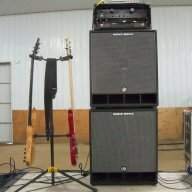
 If You are the only one using an amp then maybe you are too loud already.