I think you have discovered the reality that what sounds good on a record does not necessarily sound good live. In a life setting, the bass lives in the mids.

Enjoy the benefits of a premium membership!
Upgrade Account
-
TalkBass has been independent since 1998. Add your voice.
Create a free account to reply to discussions, view embedded media, and browse with fewer display ads.
Join free Log in
Want zero display ads or expanded classifieds tools? Compare plans.
You are using an out of date browser. It may not display this or other websites correctly.
You should upgrade or use an alternative browser.
You should upgrade or use an alternative browser.
Sound too low in mix, no definition
- Thread starter Corn Pop
- Start date
More options
Who Replied?

I propose a variant on what's been said. Start with flat eq (yeah, amps aren't flat, but it's a starting spot). Turn your bass eq down just a scoch on your amp. Put your tone halfway on your bass. In your case I'd suggest pointing your amp at your feet so you get the thump and your band and the crowd get the definition. Get a little back in the monitors for them if you can. Then let someone else play it again and listen from the crowd. As has been said, that smiley face is your enemy. Oh, also consider plucking a little harder with a little less gain. The blocky sound of flats should punch through the mix, not cut. Oh, one more thing: check your neck relief. Too much relief can make your sound too thick.
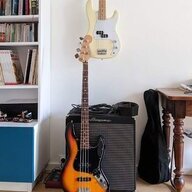
Playing with a band I have almost abandonned my loved P with flats because of lack of definition, and I love the sound of two pickups basses more and more, J or PJ, still with flats and flatish EQ
D
Like others have already mentioned:
Adjust the tone controls on your bass and on your amp for more mids and less lows. Maybe a high pass filter could help too (of you're not already using one) to get rid of sub-bass rumble.
Of course mids can mean anything from 300 Hz to 3 kHz (ish). To simply say "boost your mids" isn't very helpful at all. Unfortunately it's impossible to narrow it down to a specific frequency range without actually being there, and hearing you bass in the mix. You will need to use your ears and listen to input from the other band members. I would probably start with a little bit of boost around 900-1000 Hz, or maybe slightly higher if things get too "nasal" sounding. This can often make the bass cut through the mix with better definition. But any eq decisions on bass guitar will always depend massively on the genre, the other instruments, the arrangement of the songs, and where you want the bass to "sit" on the mix. Sometimes the tone that works best in the mix will sound HORRIBLE when playing the bass alone. And sometimes a poor tone on-stage is a compromise you have to make. The important thing is that the tone coming out of the PA is great.
Tweaking the lows/low mids can also help, to make sure the bass and the kick isn't fighting for the same frequencies, but this is something that should be left to the FOH engineer. You can't make good, surgial mixing decisions like that on stage. But slightly cutting the low mids (maybe around 2-300 Hz) may get rid of some mud with LaBellas. A little goes a long way though, you don't want to end up with too much mid-scoop, that's definitely a way to get completely lost in the mix.
If tweaking the eq/tone controls doesn't help you may need to take a look at the rest of your signal chain, from strings to amp/cab.
I would start with the strings (LaBella DTFs are as dark as it gets and can sound muddy with some setups) or maybe the pickups. You definitely don't want dark sounding pickups with DTFs. Avoid overwound, dark sounding pickups. The Fender PV63 is one example of a pickup that works exceptionally poor with LaBella flats in my opinion. Especially with the tone rolled off. Personally I like bright, aggressive sounding P-bass pickups with LaBellas. Pickups that I might find too bright and "clanky" with roundwounds.
Adjust the tone controls on your bass and on your amp for more mids and less lows. Maybe a high pass filter could help too (of you're not already using one) to get rid of sub-bass rumble.
Of course mids can mean anything from 300 Hz to 3 kHz (ish). To simply say "boost your mids" isn't very helpful at all. Unfortunately it's impossible to narrow it down to a specific frequency range without actually being there, and hearing you bass in the mix. You will need to use your ears and listen to input from the other band members. I would probably start with a little bit of boost around 900-1000 Hz, or maybe slightly higher if things get too "nasal" sounding. This can often make the bass cut through the mix with better definition. But any eq decisions on bass guitar will always depend massively on the genre, the other instruments, the arrangement of the songs, and where you want the bass to "sit" on the mix. Sometimes the tone that works best in the mix will sound HORRIBLE when playing the bass alone. And sometimes a poor tone on-stage is a compromise you have to make. The important thing is that the tone coming out of the PA is great.
Tweaking the lows/low mids can also help, to make sure the bass and the kick isn't fighting for the same frequencies, but this is something that should be left to the FOH engineer. You can't make good, surgial mixing decisions like that on stage. But slightly cutting the low mids (maybe around 2-300 Hz) may get rid of some mud with LaBellas. A little goes a long way though, you don't want to end up with too much mid-scoop, that's definitely a way to get completely lost in the mix.
If tweaking the eq/tone controls doesn't help you may need to take a look at the rest of your signal chain, from strings to amp/cab.
I would start with the strings (LaBella DTFs are as dark as it gets and can sound muddy with some setups) or maybe the pickups. You definitely don't want dark sounding pickups with DTFs. Avoid overwound, dark sounding pickups. The Fender PV63 is one example of a pickup that works exceptionally poor with LaBella flats in my opinion. Especially with the tone rolled off. Personally I like bright, aggressive sounding P-bass pickups with LaBellas. Pickups that I might find too bright and "clanky" with roundwounds.
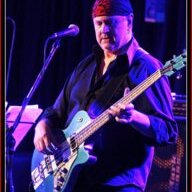
I am a hired gun playing classic country on a P-bass.
I am playing La Bella Deep Talking FS flats.
My settings are, I turn mids down low, and my tone knob is almost off
Issues:
Questions:
- I recently received 3 complaints: Steel guitar stated he couldn't hear the changes, that the I and IV sounded the same to him on stage. In another band, the lead guitar said he likes to hear the high on the bass and I have too much bass
- On 2 separate occasions, another bassist sat in and played my bass, and in the crowd I could finally hear my sound, and I hated it. It sounded so muddy and down in the mix.
- Settings: I understand how my settings could be causing the problem. I assume the answer is to turn my tone knob up and turn up the middle. I just don't like the sound and feel like it doesn't fit with classic country music. Is this just a settings issue and not a strings issue? If so, suggestions?
- Strings: I've tried a lot of strings, rounds and flats...should I get off the La Bellas? Is turning up tone and mids not going to get me there with a string that sits so slow in the mix? I really like the beautiful full sound of La Bellas...
I would describe what you're reporting as the perfect storm of how to not cut through.
You mention that you like the sound of the La Bellas (so do I). Some things I've learned is that the sound you like when playing at home or by yourself is sometimes not the best sound for cutting through a crowded mix. Likewise the sound you like when recording might not work live.
In any case, almost any situation where you have having trouble cutting through or with note definition, I would definitely start with boosting those mids. Even to the point where it sounds honky and a bit nasal when solo'd. If that's what it takes to "get through" then that's what you do.
If you're still having trouble then I'd try some nickel wound roundwounds. Of if you're totally devoted to flats, Thomastik Infelf Jazz Flats which usually punch right through any mix.
If you're *still* having trouble, well there's nothing for it, you're going to need a Stingray

I'll be the one hiding with my head below the parapet now


My experience in a blues band -
GHS P flats (la bellas are to dark and scooped IME) , tone knob wide open, qmp is usually flat.
And the setup is important too - medium action and pickup height (far from the strings). You could always lower your bass on the amp, don't be afraid of that .
GHS P flats (la bellas are to dark and scooped IME) , tone knob wide open, qmp is usually flat.
And the setup is important too - medium action and pickup height (far from the strings). You could always lower your bass on the amp, don't be afraid of that .

DR Fatbeams are worth a try.I would describe what you're reporting as the perfect storm of how to not cut through.
You mention that you like the sound of the La Bellas (so do I). Some things I've learned is that the sound you like when playing at home or by yourself is sometimes not the best sound for cutting through a crowded mix. Likewise the sound you like when recording might not work live.
In any case, almost any situation where you have having trouble cutting through or with note definition, I would definitely start with boosting those mids. Even to the point where it sounds honky and a bit nasal when solo'd. If that's what it takes to "get through" then that's what you do.
If you're still having trouble then I'd try some nickel wound roundwounds. Of if you're totally devoted to flats, Thomastik Infelf Jazz Flats which usually punch right through any mix.
If you're *still* having trouble, well there's nothing for it, you're going to need a Stingray
I'll be the one hiding with my head below the parapet now
Is your sound out to PA or only your amp?
If out to PA, then bass -> DI -> amp, then do want you want with your sound as other musicians have monitors.
If only your amp then as already said, don't cut mids and don't turn your tone knob to much. Maybe cut a bit off bass on your amp also.
You can also try this, sometimes it works for me. On your amp: cut some bass, leave the mid at 12 o'clock, cut some treble, boost the volume.
If out to PA, then bass -> DI -> amp, then do want you want with your sound as other musicians have monitors.
If only your amp then as already said, don't cut mids and don't turn your tone knob to much. Maybe cut a bit off bass on your amp also.
You can also try this, sometimes it works for me. On your amp: cut some bass, leave the mid at 12 o'clock, cut some treble, boost the volume.
I don't play with an amp for a decade. At home I have a small PA with a sub and that's when I discover that we don't need that much bass or it's getting muddy pretty fast. When you are using an amp, those low frequencies are usually attenuated by your cab but there are still there. The sub can reproduce those low frequencies, even at low volume.
Since I have no amp to flatten my sound, my PA is helping dial it at home. But I still cut more bass live, to not interfere with the kick drum.
Since I have no amp to flatten my sound, my PA is helping dial it at home. But I still cut more bass live, to not interfere with the kick drum.
One thing that has not been talk.
Is the guitar player cutting bass on its live sound? If you are playing with bedroom players, they tend to want the full spectrum and leave nothing for the bass and vocals.
Last, is the keyboard player left hand heavy? They are the worst to make you sound muddy. If so, brake him a finger or two
Is the guitar player cutting bass on its live sound? If you are playing with bedroom players, they tend to want the full spectrum and leave nothing for the bass and vocals.
Last, is the keyboard player left hand heavy? They are the worst to make you sound muddy. If so, brake him a finger or two
My bass is mixed flat on my amp always. I have a Tonestyler for a tone control in the bass and it give me 10 different settings so I'm always able to cut through when needed.One thing that has not been talk.
Is the guitar player cutting bass on its live sound? If you are playing with bedroom players, they tend to want the full spectrum and leave nothing for the bass and vocals.
Last, is the keyboard player left hand heavy? They are the worst to make you sound muddy. If so, brake him a finger or two
That is the exact pickup I am using-- the Vintage 63s....Ouch. Do you have a recommendation for a pick up and also a type of string?Like others have already mentioned:
Adjust the tone controls on your bass and on your amp for more mids and less lows. Maybe a high pass filter could help too (of you're not already using one) to get rid of sub-bass rumble.
Of course mids can mean anything from 300 Hz to 3 kHz (ish). To simply say "boost your mids" isn't very helpful at all. Unfortunately it's impossible to narrow it down to a specific frequency range without actually being there, and hearing you bass in the mix. You will need to use your ears and listen to input from the other band members. I would probably start with a little bit of boost around 900-1000 Hz, or maybe slightly higher if things get too "nasal" sounding. This can often make the bass cut through the mix with better definition. But any eq decisions on bass guitar will always depend massively on the genre, the other instruments, the arrangement of the songs, and where you want the bass to "sit" on the mix. Sometimes the tone that works best in the mix will sound HORRIBLE when playing the bass alone. And sometimes a poor tone on-stage is a compromise you have to make. The important thing is that the tone coming out of the PA is great.
Tweaking the lows/low mids can also help, to make sure the bass and the kick isn't fighting for the same frequencies, but this is something that should be left to the FOH engineer. You can't make good, surgial mixing decisions like that on stage. But slightly cutting the low mids (maybe around 2-300 Hz) may get rid of some mud with LaBellas. A little goes a long way though, you don't want to end up with too much mid-scoop, that's definitely a way to get completely lost in the mix.
If tweaking the eq/tone controls doesn't help you may need to take a look at the rest of your signal chain, from strings to amp/cab.
I would start with the strings (LaBella DTFs are as dark as it gets and can sound muddy with some setups) or maybe the pickups. You definitely don't want dark sounding pickups with DTFs. Avoid overwound, dark sounding pickups. The Fender PV63 is one example of a pickup that works exceptionally poor with LaBella flats in my opinion. Especially with the tone rolled off. Personally I like bright, aggressive sounding P-bass pickups with LaBellas. Pickups that I might find too bright and "clanky" with roundwounds.
D
That is the exact pickup I am using-- the Vintage 63s....Ouch. Do you have a recommendation for a pick up and also a type of string?
Pretty much ANY decent P-bass alnico pickup will open up the tone and give you better definition than the PV63. Especially with "old school" flats like LaBellas. I've been saying this for YEARS. The PV63 does NOT sound like any real vintage P-bass pickup I've ever tested. Tone wise the PV63 is WAY into overwound territory. Too bloated in the lows, muddy in the low mids and lacking in the upper mids/highs for flats (for MY taste anyway).
If you replace the pickup you may not need to change the strings.
Lollar standard winds are one of my favorites. They are very much in the "vintage voiced" category but with a nice bite in the upper mids, which can be great with dark sounding flats.
One question though:
Is your bass by any chance a stock Fender Original or Vintage Reissue? Or did you buy the PV63 separately? I ask because every Fender basses I've tested that used the PV63 also used a .100 uF tone cap, which means the tone gets EXTREMELY dark/muddy when rolling off the highs. If your bass has a .100 uF tone cap you can open up the tone significantly by simply changing the tone cap to .047 uF. This will only have a significant effect on the tone when you're rolling off the tone below 60% (ish) but from your description it seems like that's exactly what you do.
The PV63 is simply not a great choice if you want to use old school flats and roll off the tone (in my opinion) and if the tone cap is .100 uF it gets even worse.
Of course you can take a different route and replace the strings with brighter ones instead, but if you like the feel of the LaBellas you might not be as happy with other strings.
But dark sounding strings + dark sounding pickup + rolling off the tone will nearly always be a recipe for a muddy tone (and even more so if the tone cap is .100 uF).
Of course the problem MIGHT be somewhere else in your rig/signal chain too, but that's impossible to answer without actually being there.

It's not the pickup. It's your EQ. Add treble and mids, and get the bass out of the muddy basement. The pickup will be fine.That is the exact pickup I am using-- the Vintage 63s....Ouch. Do you have a recommendation for a pick up and also a type of string?

Sounds like you need to try all the things you mentioned, find a sweet spot with your tone knob. We all fall into this, myself included, but we EQ and dial with our eyes and not our ears. We assume the sound we want. Listen first. I play in a loud rock band and use flats but have my treble turned up way higher than I would think I'd want it but it sounds right for what I need.
One trick I've seen is Colin Greenwood (Radiohead) would turn the treble all the way up on his amp but played with flats and the tone knob all the way off, you get some sheen but none of the string noise and artifacts.
One trick I've seen is Colin Greenwood (Radiohead) would turn the treble all the way up on his amp but played with flats and the tone knob all the way off, you get some sheen but none of the string noise and artifacts.

Flats have very little high end.
They aren't as bright as most rounds, but with relatively fresh (i.e. not 20 years old) flats and the tone wide open on a P or J there's still plenty of high end.
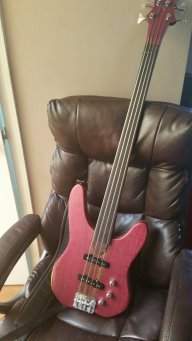
Yeah, bring back the mids to lose the muds. In a full country band at gig volume, the highs and mids that you don't like will mostly get eaten by the mix and your DTFs will still sound plenty bassy. Counterintuitively, cutting lows with a high pass filter will get rid of some of that mushy subsonic sludge and make the bass frequencies you actually want cut through. I play country on a P with pressurewounds with the tone up and a flat eq and I still need a HPF to keep the bass from dominating the mix on stage.