• TalkBass has been independent since 1998. Add your voice.
    Create a free account to reply to discussions, view embedded media, and browse with fewer display ads.
    Join freeLog in
    Want zero display ads or expanded classifieds tools? Compare plans.

Double Bass Soundmen Frustration

This may be at best a rhetorical question, or at worst preaching to the choir, but perhaps one of you can enlighten, or at least commiserate with me ....

How can some soundmen, given a perfectly good feed from my bass, screw it up so badly? When I do the input setting and EQ tweaking myself, all is well. When I give the same line to sound guys with who I work regularly, all is well. And then there's the occasional nightmare. "No signal" followed by Roaring Feedback.

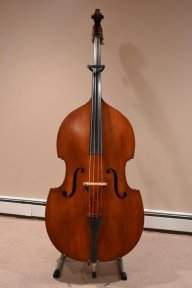
Nice '30s Juzek. AMT S25B mic. Walter Woods stereo. Euphonic VL-108(s). I take the mic straight to the board often. Great sound! Sometimes better to use the Woods. Great Sound!

Then some doofus says he can't get gain before feedback in FOH. Or can't get a signal from the direct out of the Woods.

Is it simply incompetence?

Phew, now I feel better. Thanks TB!

 
Yeah, everybody feels your pain on this. My attitude is never fight with the spund guy, you don't know what he's hearing, you're at his mercy.

My attitude is if people are liking it, it's good, even if the sound guy has totally destroyed the beautifully crafted and totally effective signal I sent his way.
 
Yeah, everybody feels your pain on this. My attitude is never fight with the spund guy, you don't know what he's hearing, you're at his mercy.

My attitude is if people are liking it, it's good, even if the sound guy has totally destroyed the beautifully crafted and totally effective signal I sent his way.

Yes, you are at their mercy and you have very little time for the soundcheck. Best to be really patient and overly nice as you gently ask for changes. I usually introduce myself right away to the soundguy and find a way to tell him I also do production and sound so he might view me as a peer. Then, if I think I know why things are going wrong and I've been really nice, the soundman just might be open to my suggestions or at least brainstorming a solution together.
 
How can some soundmen, given a perfectly good feed from my bass, screw it up so badly? When I do the input setting and EQ tweaking myself, all is well. When I give the same line to sound guys with who I work regularly, all is well. And then there's the occasional nightmare. "No signal" followed by Roaring Feedback.

This would naturally bring you to the conclusion that since they know your system, then they are better able to get your sound. Your EQ through your system is what you want to hear on stage, and hopefully what the audience hears out in the house. Getting that to happen, FOH, is something of a acquired skill, because how you set your Woods onstage, has very little to do with how your sound guys EQ the mains. They are two very different beasts. What a really good engineer does is listen to your onstage sound critically, and try to replicate it for the audience.


Nice '30s Juzek. AMT S25B mic. Walter Woods stereo. Euphonic VL-108(s). I take the mic straight to the board often. Great sound! Sometimes better to use the Woods. Great Sound!

Since I own virtually the same rig, here are some suggestions for you. I assume that when you use the Walter Woods, you are also using the Realist Pickup that’s listed in your user profile? If that’s the case, then there are a couple of weird interactions that happen with that combination. Walter’s send/return loops are noisy, so to get a decent sound from them, you have to use a good quality DI, and even then they can produce noise. As wonderful as the AMT S25B is, it suffers, when placed in proximity to other instruments. So, if you are on a stage where you have horns, keyboards, or a drum kit close by, it is indeed difficult for the sound engineer, to get enough gain before the AMT feeds back. Realist pickups are great for medium volume gigs, but if you have to push them hard, they just don’t sound as good IME.

Then some doofus says he can't get gain before feedback in FOH. Or can't get a signal from the direct out of the Woods.Is it simply incompetence?

I’ve had very good experiences with soundmen for the most part, however, I’ve had horrifying ones as well. So in a word, yes, it can be incompetence, on those occasions, weird as it may sound, I usually just try to get the best sound on stage for my band mates. There have been a few occasions where I just ask the engineer to mute the line to the board.

Phew, now I feel better. Thanks TB!
Glad to help.
 
All,
Thanks for your responses; I've assumed that I'm not alone in this experience and you have validated that. I have also had a career as a recording engineer, and try to bring that knowledge and diplomacy to these situations (nod to lowEndRick).

Ric,
Thanks for your detailed response. Yes, I have used the Realist teamed with the AMT, but go with only mic whenever I can. The instances I've referred to have been mic only, with adding the Realist as a fallback when we can't get acceptable gain before feedback. My frustration stems from the wide range of results in different venues, and sometimes in the same venue but different operators.

Regarding the DI, I have been considering acquiring my own (rather than relying on that provided by the venue). Do you have any recommendations?
 
Radial DI's.
There are some who also prefer the higher dollar stuff.

PS: ALL the FOH gets from me is a dry DI and a wet(Line 6'ed) DI to with as he pleases. For venues where I KNOW the board operator is a rookie or has wooden ears, I bring a biamped rig with an 18 on 0~160 Hz and a 4x8(or PA top) in case I walk out with wireless and here NO bass in the mains or in the audience area(been there, done that). The 18 is a front-loaded PA sub in case they don't let me use their FOH sub(i.e. cut me out of mains).

In the olden days(daze?), I'd send a DI(I brought) and then a Sennheiser MD 421(I brought) in front of a screaming SVT 10" speaker to let them use the DI for low/fullness and the mike to color my tone more to what stage sounded like.
 
Ric,
Thanks for your detailed response. Yes, I have used the Realist teamed with the AMT, but go with only mic whenever I can. The instances I've referred to have been mic only, with adding the Realist as a fallback when we can't get acceptable gain before feedback. My frustration stems from the wide range of results in different venues, and sometimes in the same venue but different operators.

I think that's one of the essential difficulties with using the AMT S25B. It's a warm and detailed sounding microphone that unfortunately, tends to pickup surrounding instruments to well. I almost think it works better into an amplifier then it does FOH. So many of us have moved to the DPA 4099B, because it has such improved off axis rejection. Mind you, I'm not telling you to run out and get a DPA 4099B, because you'll still have some of the same issues you that you're experiencing with the AMT.


Regarding the DI, I have been considering acquiring my own (rather than relying on that provided by the venue). Do you have any recommendations?

The industry standard for a long time has been the Countryman DT 85, most reliable sound technicians carry them in their kits. It's a simple box that always works. There are a host of other new ones as well. I just know that the Countryman plays well with Walter's amplifiers.

Ric
 

Attachments

  • 41A3A0WF1TL.jpg
    41A3A0WF1TL.jpg
    11.1 KB · Views: 134
I've always been partial to the Radial DI's, but the Countryman is good too. The Radial JDI is an industry standard for a passive direct box(Jensen transformer). There is also the Radial Pro DI which is about half the price and to be honest is as high quality as anyone could need in a passive DI.

My biggest concern with sound men is that they tend to EQ the Double Bass as if its an electric. Too much bottom end etc. I always bring my high pass filter now.
 
...My biggest concern with sound men is that they tend to EQ the Double Bass as if its an electric. Too much bottom end etc. I always bring my high pass filter now.

I've found that providing accurate but general information is the best... Keep in mind the SG might be trying to keep track of a ton of other info. He/she probably does have not the bandwidth (pun intended) keep track of the details of your signal chain. My current standard is "xlr in with phantom, it's a mic and it's kinda hot." If they want more details they'll ask. If the mix is crappy my first suggestion is always the high pass filter on the channel and we go from there.

Some people know how to mix double bass, some are figuring it out and some will just never learn. :hmm:
 
...My biggest concern with sound men is that they tend to EQ the Double Bass as if its an electric. Too much bottom end etc. I always bring my high pass filter now.

Some love compressors too. Nothing like too much compression to ruin the characteristic attack/decay profile of the DB, making it sound like a giant EB.
 
All,
Thanks for the input and validating the experience. Regarding the DIs, I haven't owned either but am familiar with the Countryman from stage and studio and have gone through a Radial at a few points. I'll probably pick one up so I'm not at the mercy of the venue.

SO, a high pass filter before sending? Currently I can send either mic only or the output of the Woods. For the latter, I usually cut bass (10:00) and boost Treble and Middle (2:00) with the Middle Vari at 10:00. This is the most realistic sound out of my VL-108s, and I tweak to the room. SO, in essence I'm creating a high pass filter. But is there some radical slope or brickwall filter used, like nothing under 60 Hz? I haven't seen this as bass gear. Please enlighten me.

Alternately, are any of you using a pre-amp only to send to board(s)?
 
I play mostly rockabilly-style stuff, and my personal most cringe-worthy sound guy sentence is "Sounds great guys, just hold on while I try and get that clicking sound out of the mix."
 
...SO, a high pass filter before sending?

Yes, but let the sound guy do his thing an then dial in the HPF. If you do it first, then the sound guy is likely to undo it!

But is there some radical slope or brickwall filter used, like nothing under 60 Hz? I haven't seen this as bass gear. Please enlighten me.

Click here. The fdeck units are the Swiss Army knives of DB amplification. Consider yourself enlightened. :)
 
There are some who also prefer the higher dollar stuff.
And there are some who prefer the low-dollar stuff for exactly this reason.

I use an SM-57 and four rubber bands as detailed here. To my ear, and to the engineers I work with, it sounds really nice. A bunch of people from TB/DB have heard it over the years and don't seem to disagree.

It's also a little piece of attitude for FOH operators. All by itself it makes the statement I never, ever need to utter aloud: "This is an SM-57. You, ah, may be familiar with it. Go ahead -- go be The Guy Who Gets A Bad Sound With An SM-57."
 
It's also a little piece of attitude for FOH operators. All by itself it makes the statement I never, ever need to utter aloud: "This is an SM-57. You, ah, may be familiar with it. Go ahead -- go be The Guy Who Gets A Bad Sound With An SM-57."

+1
As bass players, many of us, me included, always seem to be looking for the "next great thing", not that it's always bad thing, but in many cases, we will tend to have a new piece of gear, before it's been on the market long enough for the sound engineers, to have had any experience with it. There's always a learning curve, that exists between the introduction of a product and it's circulation around the sound community. The DPA 4099B has been out for around 3 years now, so most engineers have had experience mixing with that mic. However the SM 57 has been around forever, so everyone in live sound has used them for quite some time.

Ric
 
I'm thinking aloud here (yeah, on the internet :eyebrow:). Just wondering why a well-known microphone makes it meaningfully easier for a sound engineer. After all, the placement of the mic and the individual instrument will, in each circumstance, determine the tonal shaping required. It's not as if the engineer can set things in advance knowing it's an SM-57 and have things be right. The engineer gets a feed. Whether it's from a DPA, an SM-57, and AMT, or whatever, the balance must be achieved based on what's he/she hears. Sure, if the transducer produces some really "off" sound, then it would be harder to correct. Yes, the familiar dynamics of a well-known mic may give the engineer a leg up. Think of it this way. Suppose you gave the engineer a feed but didn't reveal what was the source. Would he/she do anything substantially different if the source were known? Perhaps I'm missing something important here. Ric? Sam?
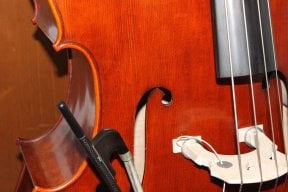
 
Just wondering why a well-known microphone makes it meaningfully easier for a sound engineer. . . Suppose you gave the engineer a feed but didn't reveal what was the source. Would he/she do anything substantially different if the source were known?
Les, you're right: People generally DO NOT set out to do a bad job on purpose.

On the other hand, sticking with a known quantity says precisely, "You know this can be done -- better do it." Here's a chance for the guy to take a bow: 'Check what a great sound I got out of a mere 57.'
 
It's also a little piece of attitude for FOH operators. All by itself it makes the statement I never, ever need to utter aloud: "This is an SM-57. You, ah, may be familiar with it. Go ahead -- go be The Guy Who Gets A Bad Sound With An SM-57."

Yeah, I agree with DrUrb on this.. the attitude does not translate well, nor help much if it does translate. SM57 is the go-to mic for a lot of purposes, but not all purposes. Using an SM57 on a kick drum for instance will raise an :eyebrow: . If it is all one has, then fine.. but there are other options. While SM57 is a standard for guitar cabs, it is not so much for bass cabs, nor for bass register instruments. However, if you are getting great results from it, that is excellent.

We should be able to just say "give me an XLR cable with Phantom power", or "Give me an XLR cable, phantom power not needed". After that, it is all ears.

Well ears and a mounting system using 4 rubber bands. ;-) (or a side-address mic in a fitting mount)