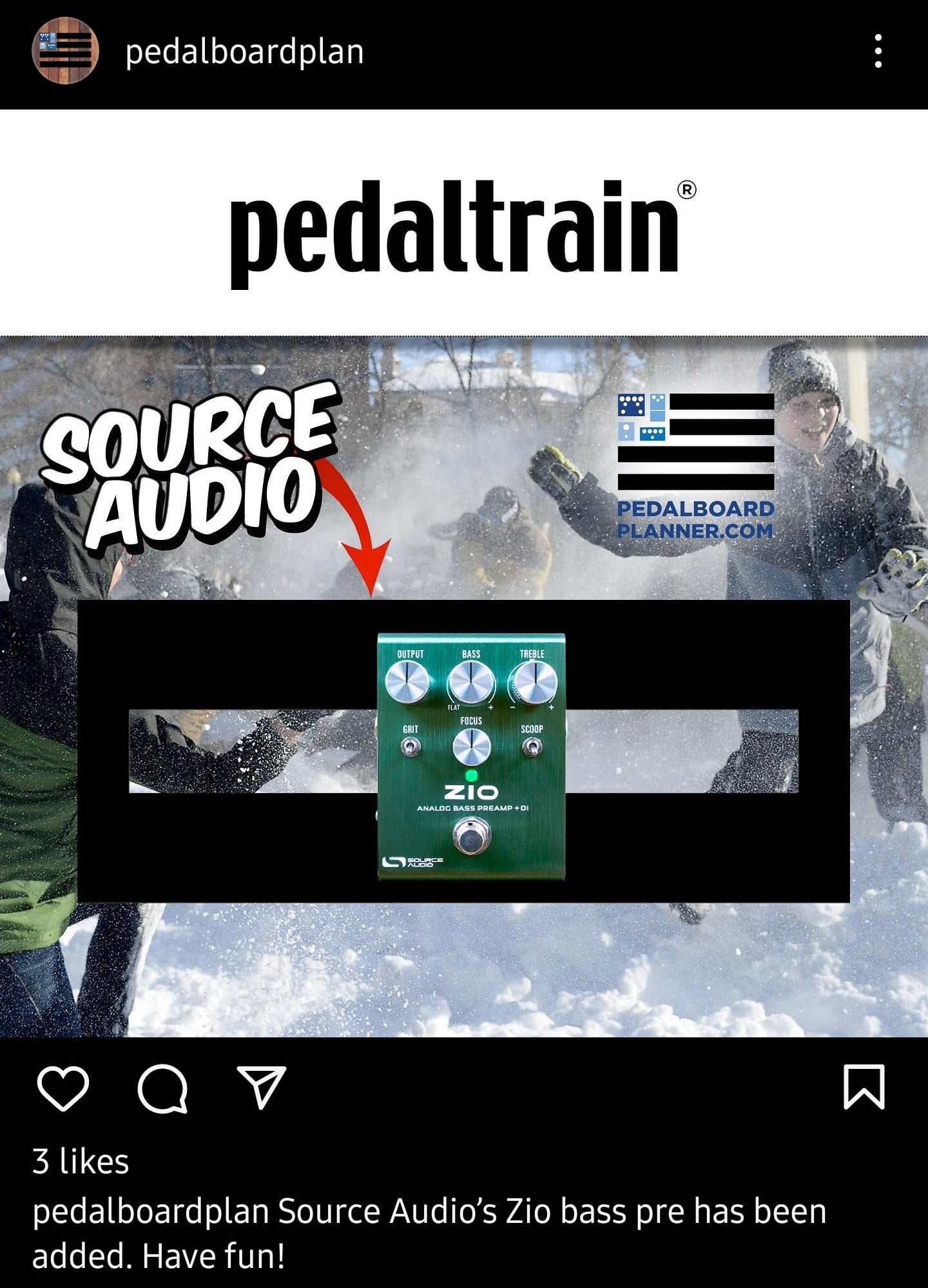
I'm in love already.....just by looking at this sweet heart!

TalkBass has been independent since 1998. Add your voice.
Create a free account to reply to discussions, view embedded media, and browse with fewer display ads.
Join free Log in
Want zero display ads or expanded classifieds tools? Compare plans.



I figure it's designed to be at the end of the signal chain, so the xlr would likely be sitting wide open. I think if someone were using it earlier in their pedalboard chain, they probably aren't as likely to be using the DI feature.I question the placement of the XLR output placement.
I have seen other pedals with the same placement and still wonder what the designers are thinking.
It's not very pedal board friendly due to the size of the XLR connectors, unless someone have invented an extremely small type that I'm not aware of.
A 90 degree connector that directs the cable downwards would work.





The switch is there to turn it on and off, right.I figure it's designed to be at the end of the signal chain, so the xlr would likely be sitting wide open. I think if someone were using it earlier in their pedalboard chain, they probably aren't as likely to be using the DI feature.
To me the XLR placement doesn't present a problem, but could you fill in what I'm missing?

Amazon U.K. sell right angle adapters - for most users the di out would go somewhere else rather than being routed internally on a pedal board.I question the placement of the XLR output placement.
I have seen other pedals with the same placement and still wonder what the designers are thinking.
It's not very pedal board friendly due to the size of the XLR connectors, unless someone have invented an extremely small type that I'm not aware of.
A 90 degree connector that directs the cable downwards would work.
I question the placement of the XLR output placement.
I have seen other pedals with the same placement and still wonder what the designers are thinking.
It's not very pedal board friendly due to the size of the XLR connectors, unless someone have invented an extremely small type that I'm not aware of.
A 90 degree connector that directs the cable downwards would work.
I figure it's designed to be at the end of the signal chain, so the xlr would likely be sitting wide open. I think if someone were using it earlier in their pedalboard chain, they probably aren't as likely to be using the DI feature.
To me the XLR placement doesn't present a problem, but could you fill in what I'm missing?




Wonder how long it’ll be before someone 3D prints a knob assembly for that gain potentiometer.A few of those clips were really nice- both the Bass and Treble seem to be voiced really well, and even the Scoop switch which I would normally avoid completely. I do wish the Gain were a normal knob though (and that the clip would have run through different Gain settings)

Initially there was no trim at all. Then we planned for an internal POT. But, we thought you all would like to have some easier access. As Christopher notes in the other thread, this is not a traditional drive circuit.A few of those clips were really nice- both the Bass and Treble seem to be voiced really well, and even the Scoop switch which I would normally avoid completely. I do wish the Gain were a normal knob though (and that the clip would have run through different Gain settings)
*midi controlled.. (jk)Wonder how long it’ll be before someone 3D prints a knob assembly for that gain potentiometer.
Not really. A friend of mine made a MIDI device that physically turned analogue pots.*midi controlled.. (jk)

Funny enough I did try to make a knob-turner, and while it worked it was too large to realistically use/fit on any pedalpaging Pedalnetics...