
Enjoy the benefits of a premium membership!
Upgrade Account
-
TalkBass has been independent since 1998. Add your voice.
Create a free account to reply to discussions, view embedded media, and browse with fewer display ads.
Join free Log in
Want zero display ads or expanded classifieds tools? Compare plans.
You are using an out of date browser. It may not display this or other websites correctly.
You should upgrade or use an alternative browser.
You should upgrade or use an alternative browser.
- Status
- Not open for further replies.
More options
Who Replied?
Getting to the 24th fret is a little difficult on my new Rex, but I think NS body type basses have the best 24th fret reached I've ever played. I can get up to the 22nd or so on the Rex, but honestly I don't mind because the only time I ever play that high I'm usually tapping with my right hand so access isn't an issue. I'll try and get pics of the Rex up soon, still loving it. I get to try it out at practice tomorrow!

shwashwa said:i have a spector and love it, but i always wonder, why cant he make these things so you can actually reach the 24th fret? and, if he doesnt want us to use it, why is it there?
Because its a BASS . Your not supposed to play up there any way or use your right hand for that.
lol grendle 

putting inlay decals on the NS20005! made a ridiculous frankenstein decal for the 12th for the wide dots...
If the weather holds up family picture will be tomorrow!
putting inlay decals on the NS20005! made a ridiculous frankenstein decal for the 12th for the wide dots...
If the weather holds up family picture will be tomorrow!
Basstovsky said:lol grendle
putting inlay decals on the NS20005! made a ridiculous frankenstein decal for the 12th for the wide dots...
If the weather holds up family picture will be tomorrow!
Lol. Just color in the dots with brown and black sharpie (make it look like wood grain, there's a vid on you tube). Can't tell unless your looking right at it from a foot or 2 away, seriously.
Oh it is far too late for that haha I already made it and put it on when I posted, I kinda like making something myself makes it a bit more unique...
or maybe it will look awful we will see!
or maybe it will look awful we will see!

John Montagna talks about this in his my Spector Story video.
No. I've never seen, played or hear of a Spector having dead notes on the G-string or any other string.
The reason is sympathetic frequencies.
When the string vibrates at the same frequency that the wood of the bass neck (or fingerboard) vibrates at there's a cancellation of energy resulting in a "dead note" or a note that instantly has no sustain.
Because Stuart uses Rock Maple and either the deep pocket insert or the neck-thru construction, and he uses stainless steel truss rods and in the later models, carbon fiber supports, this has shifted the frequencies of the neck into an area where dead notes will not occur because the frequencies of the string are never in the same range.
At least that's the theory. It seems to work.
This was something Ned Steinberger spent a lot of time on when he was deciding to use Carbon/Graphite for the construction of his famous headless Steinberger bass. Rigid necks don't have dead notes.
It's also notable that Spector necks move less than more vintage or older type 4-bolt type necks. So less issues with tuning/intonation as you move from one environment to another. Typically.
I agree 100%!
gig in Moscow. I seem to be sleeping while playing
NICE!!...where is the Moscow mosh pit?
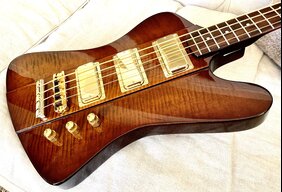
Of course no pics, no bass so here ya go...
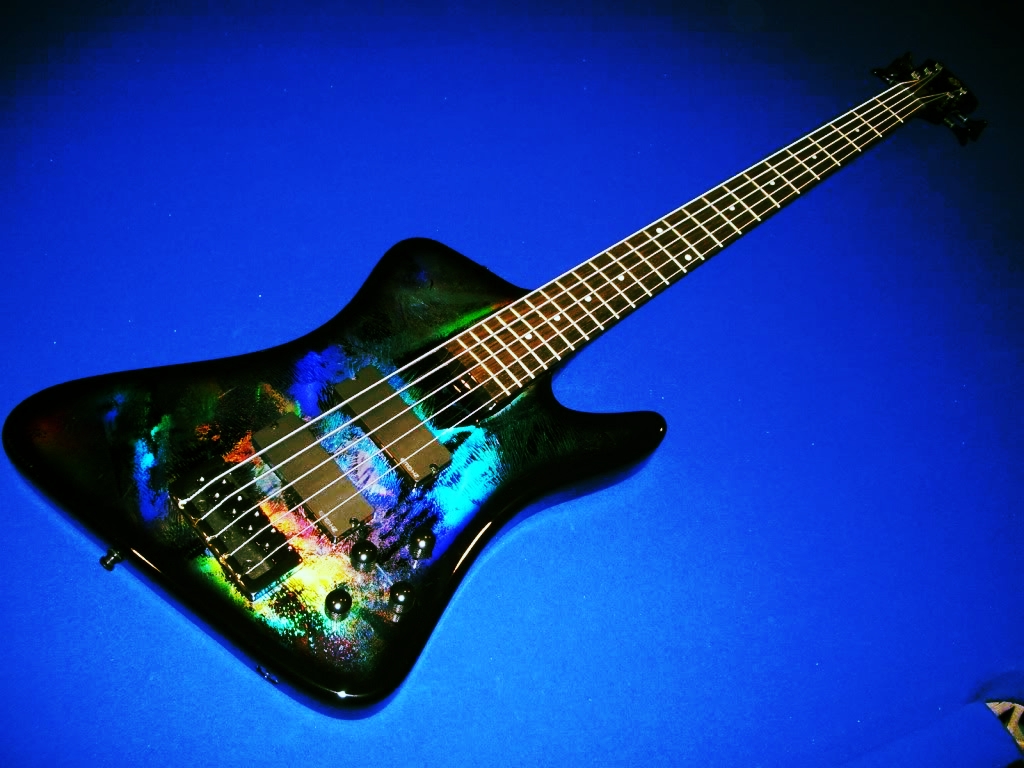
Must look killer on stage!
 [/QUOTE]
I can't wait to find out. I've always been a pocket kinda guy when it comes to stage presence so maybe this will put a little "flash" in my performance.

JeffplaysBass said:Of course no pics, no bass so here ya go...
Must look killer on stage!
[/QUOTE]Very Very cool bass. I'm loving it!!

worshiprocker
Tonepump Junkie
- Aug 12, 2011
- 4,683
- 1,782
- Disclosures
- Endorsing Artist: Spector Basses
I'm soo pumped my band is being mentioned in a radio ad tomorrow for our show tomorrow night, we are opening for another Spector artists band, Chemicals of Democracy!
go to Link Removed to hear the ad.... it sounds like the guy who does the Monster Jam ads.. lol
go to Link Removed to hear the ad.... it sounds like the guy who does the Monster Jam ads.. lol

- Apr 15, 2010
- 3,914
- 7,324
- Disclosures
- Spector Artist
Bass face!!! Those are some crazy jeans....
yes they are, old Guess jeans. I bought them 8 years ago and just keep them for such occasions 'cause the print on them matches the wood grain on my Spector)
- Apr 15, 2010
- 3,914
- 7,324
- Disclosures
- Spector Artist
That party was not crowded, it was a presentation or new musical production company so not many "real rock'n'roll guys" were invited unfortunally...NICE!!...where is the Moscow mosh pit?
- Apr 15, 2010
- 3,914
- 7,324
- Disclosures
- Spector Artist
yeah you actually see a picture but as the party was dedicated to art-fetish-glamour-bla-bla-bla photo exibition all these girls were around! And these three on the picture above my head were wearing some VERY open wear to display their beauties... I love playing at such events)))I see boobies.
worshiprocker said:I'm soo pumped my band is being mentioned in a radio ad tomorrow for our show tomorrow night, we are opening for another Spector artists band, Chemicals of Democracy!
go to Link Removed to hear the ad.... it sounds like the guy who does the Monster Jam ads.. lol
Awesome!!!
anton72 said:yeah you actually see a picture but as the party was dedicated to art-fetish-glamour-bla-bla-bla photo exibition all these girls were around! And these three on the picture above my head were wearing some VERY open wear to display their beauties... I love playing at such events)))
Gotta love those gigs!

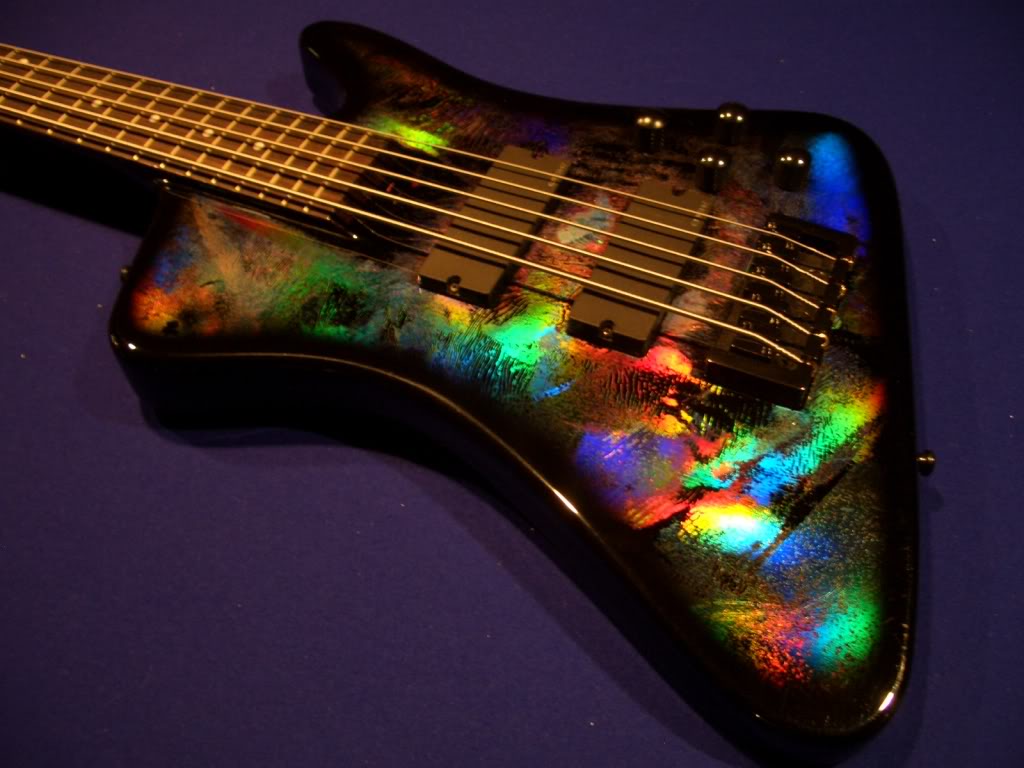
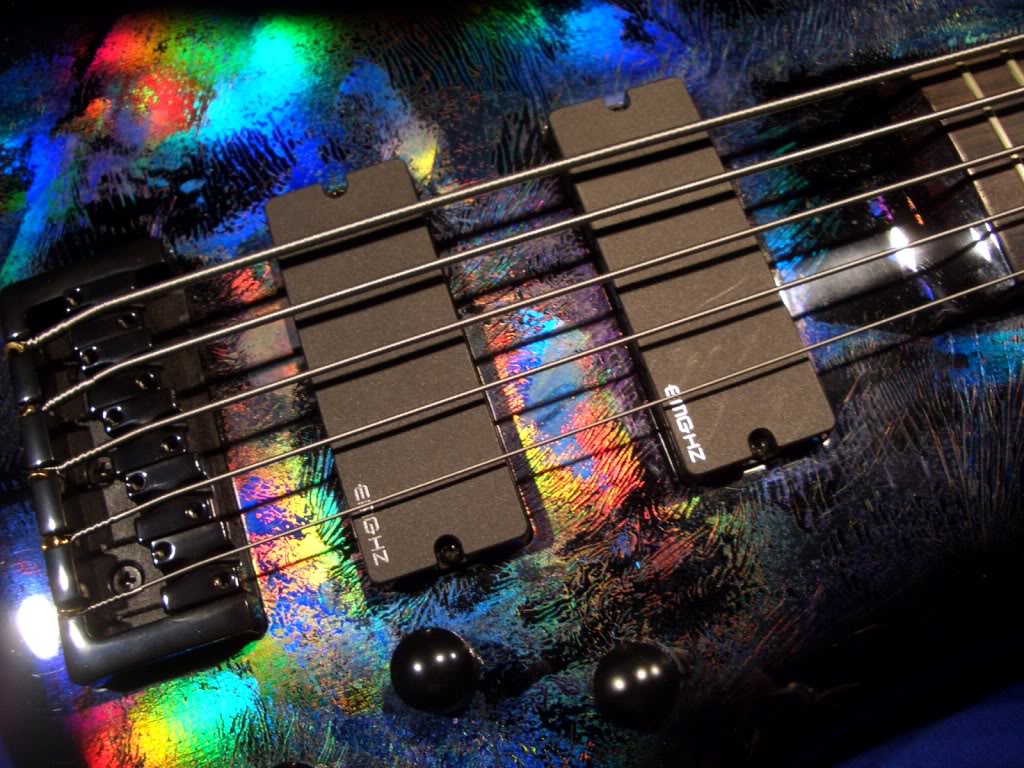
This baby arrived today for photos.
It's not mine, but is going to a Spector Artist in the LA area and since I don't have any photos of a Rex or Holoflash... they decided to send it to me first.
OK. I didn't think I'd like it at first.
But I can't put it down!
The neck is so perfect. It's like an old Brooklyn NS-2 neck. Really skinny front to back, and has such a nice profile/shape.
I'm really surprised by the HZ pups. They're better than I remember.
The action is a little high for my taste, but that's something you can adjust (I won't because it's not my bass).
In all, I'm going to make detailed fret-by-fret neck measurements of this bad boy! I want an NS-2 with this neck!
And the Holoflash is actually really cool looking. My wife, who usually puts energy into ignoring any "new bass infatuation" I get, which is any time Spector sends me basses to photograph (The Bahama Blue NS-2 from BPL and the ARC6-B with Bigsby from NAMM have been other recent fixations), she actually wanted to inspect the bass and "check that finish out". LOL.
Without question, I'd own one of these. This bass is killer! And I know I've got long monkey fingers, but I have no trouble with the 21st -24th frets. The single cutaway works just fine.
Link Removed
It's not mine, but is going to a Spector Artist in the LA area and since I don't have any photos of a Rex or Holoflash... they decided to send it to me first.
OK. I didn't think I'd like it at first.
But I can't put it down!
The neck is so perfect. It's like an old Brooklyn NS-2 neck. Really skinny front to back, and has such a nice profile/shape.
I'm really surprised by the HZ pups. They're better than I remember.
The action is a little high for my taste, but that's something you can adjust (I won't because it's not my bass).
In all, I'm going to make detailed fret-by-fret neck measurements of this bad boy! I want an NS-2 with this neck!
And the Holoflash is actually really cool looking. My wife, who usually puts energy into ignoring any "new bass infatuation" I get, which is any time Spector sends me basses to photograph (The Bahama Blue NS-2 from BPL and the ARC6-B with Bigsby from NAMM have been other recent fixations), she actually wanted to inspect the bass and "check that finish out". LOL.
Without question, I'd own one of these. This bass is killer! And I know I've got long monkey fingers, but I have no trouble with the 21st -24th frets. The single cutaway works just fine.
Link Removed
- Apr 15, 2010
- 3,914
- 7,324
- Disclosures
- Spector Artist
- Apr 15, 2010
- 3,914
- 7,324
- Disclosures
- Spector Artist
- Status
- Not open for further replies.


