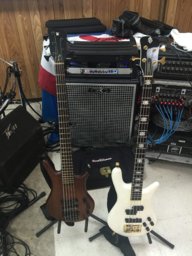
Update: Been playing with the Spalt all weekend and I am in love with this Bass
Going to make a quick video this week too
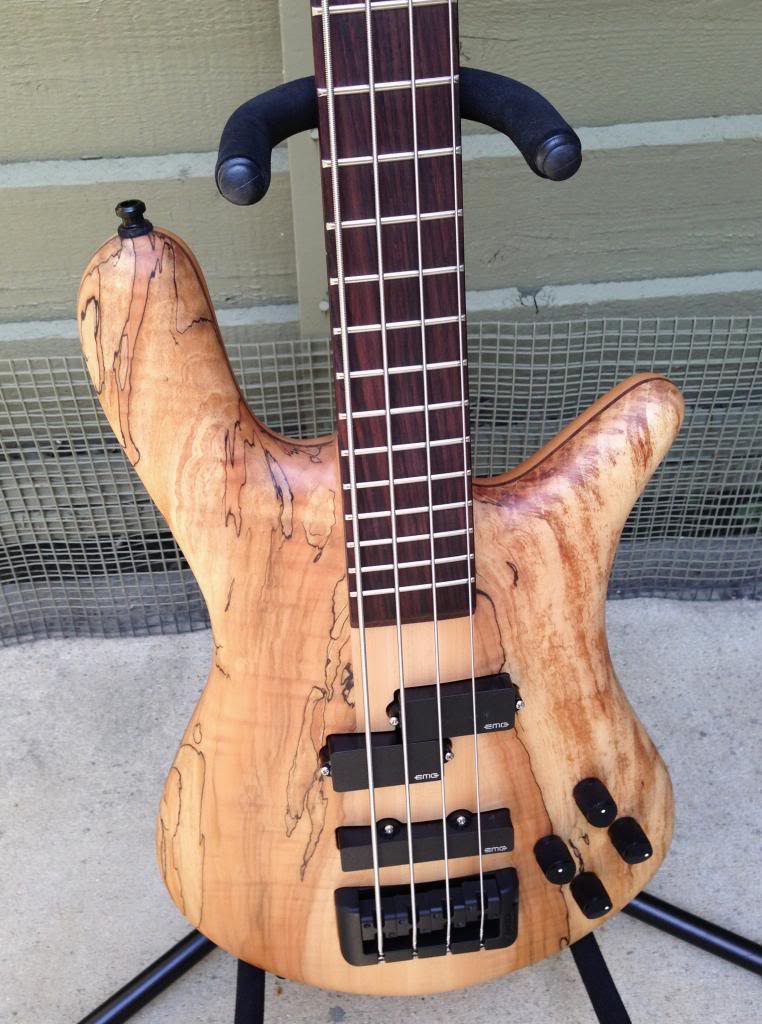

I just never get tired of looking at that beaut.


TalkBass has been independent since 1998. Add your voice.
Create a free account to reply to discussions, view embedded media, and browse with fewer display ads.
Join free Log in
Want zero display ads or expanded classifieds tools? Compare plans.
Update: Been playing with the Spalt all weekend and I am in love with this Bass
Going to make a quick video this week too


I've always had good results using Dr. Stringfellow's Lem-Oil to clean grungy fingerboards. It is (purported to be) pure lemon oil, and I use it lightly & sparingly - about 1 or 2 times a year at most, and I follow with a very light application of Dunlop conditioner.
[Invalid or Expired Link Removed]
I've always had good results using Dr. Stringfellow's Lem-Oil to clean grungy fingerboards. It is (purported to be) pure lemon oil, and I use it lightly & sparingly - about 1 or 2 times a year at most, and I follow with a very light application of Dunlop conditioner.
[Invalid or Expired Link Removed]

Don't put the lemon oil on it.
There are three things I can recommend.
First, you can use the two Dunlop 65 products.
01 is a cleaner and prep
02 is a deep conditioner
For deeper conditioning I use a luthier product from Germany by a company called Behlen.
The product is Behlen B710-0001 Fingerboard Oil.
It's great stuff too.
I recommend the Dunlop stuff first. Then if after cleaning and treating you find you need additional conditioning, the Behlen stuff is available at Woodcraft stores and online.
I think you can get it at Amazon.com
That's the other thing. The more humid the climate you live in, the less conditioning (the more cleaning) you'll have to do.
If I still lived in Savannah, Georgia with the 80-90% humidity that place has, I'd have to make sure the fingerboards didn't sweat and stayed dry.
Here in the desert called Southern California, I have to run a cool-air humidifier to keep my office at 50% humidity because often it's 20-40% here. And optimal humidity for guitar storage is 50%



to properly humidify a bass, take a toddler size diaper or adult size depends and fill it with a 50/50 mixture of distilled water and propolyne glycol. place the bass in 200 gallon aquarium with the moistened diaper suspended above the bass. this is the only way I recommend maintaining constant moisture as the propolyne glycol acts as a humectant.

So im standing in my local music shop with fellow TBr Sethro and who walks in the door,, RVA no less.... Eddie Jackson..
you are kidding right? 200 g aquarium?

So im standing in my local music shop with fellow TBr Sethro and who walks in the door,, RVA no less.... Eddie Jackson..
to properly humidify a bass, take a toddler size diaper or adult size depends and fill it with a 50/50 mixture of distilled water and propolyne glycol. place the bass in 200 gallon aquarium with the moistened diaper suspended above the bass. this is the only way I recommend maintaining constant moisture as the propolyne glycol acts as a humectant.
So im standing in my local music shop with fellow TBr Sethro and who walks in the door,, RVA no less.... Eddie Jackson..
 j/k. i wouldve nerded out and said it. bwahahahaha!!!
Does the diaper need to be suspended at any particular angle?
Also, do you mix both the distilled water in with the propolyne glycol at the same time or one after the other?
If one after the other, which first?
I assume there doesn't need to be any specific substrate in the 200 gallon aquarium? Or is a Terrarium better?
Can you draw a diagram for us please. This is good stuff.
Oh. And will this method help preserve freshly taxidermied small predatory animals such as badgers and wolverines?

So im standing in my local music shop with fellow TBr Sethro and who walks in the door,, RVA no less.... Eddie Jackson..

So im standing in my local music shop with fellow TBr Sethro and who walks in the door,, RVA no less.... Eddie Jackson..
I should have specified. terrarium. you don't want to submerge, that's just asking for damage.
if you're looking for substrate, I recommend granite with a high proportion of pink feldspar. other varieties can be gneiss, but you really want to spend the extra money and get the good schist.