• TalkBass has been independent since 1998. Add your voice.
    Create a free account to reply to discussions, view embedded media, and browse with fewer display ads.
    Join freeLog in
    Want zero display ads or expanded classifieds tools? Compare plans.

SPECTOR® Club - Part 62

Status
Not open for further replies.
Hey everyone!

I've been working on a series of short videos that show EXACTLY how Spector Basses & Guitars are made.

I want to clear up a myth that has grown because of some videos that other people had shot in the past.

Spector has a CNC machine, a retired, previously owned machine Stuart got a great deal on. But it came with no instructions. It's honestly a big toy for Stuart.

And the goal is to have it do more of the simple cutting work to save valuable time in the build process. But to date other than a few very rough applications of the machine, it stills turned off and quiet the majority of the time.

Even if brought-online for the few things Stuart wants to use it for... the VAST MAJORITY of each Spector build would remain done by hand, as Spector builds have been done since the very earliest days of the company.

Anyway... after seeing what goes on there first-hand, I left the Spector Workshop with a mission to correct the myth that those couple of videos had created, for I feel that if you don't see how these are made first-hand, you'll never really understand how special they are.

Just a quick note... and this was the JAW DROPPER moment for me. I can remember standing there shaking my head, eyes wide... and PJ and Stuart standing next to me laughing. Obviously I'm not the first person to have this reaction... Each upper and lower horn on EACH neck-thru Spector is ALWAYS shaped BY HAND. No machine template... nothing. One slip and the whole wing is ruined. ONE SLIP.

There is footage of this AMAZING step in the birth of a Spector Neck-Thru in this video:

Oh! And such serious props and thank you to Spector Artist John Montagna. What a simply awesome guy.

http://youtu.be/PJY3rfhiT5s

Very cool!
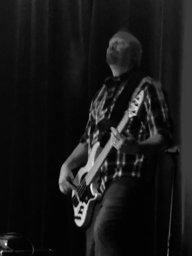
 
Would you have any suggestions Husky?

Well, on mine, to get a relatively "flat" response I boost the low mids (400 hz) a tad and cut high mids (800-1000 hz) and treble a touch.

Lately I've just been letting the bass do what it does in the mix and that is crash and cut like a mutha. Gig tonight with it and I'm bringing my new Euro for backup/set 3. Gonna be fun.:hyper:
 
The aggie OBP preamps are all about letting the tone "shine through" in my experience, really good when you want tonewoods and pickups to speak for themselves, but with Spector (IMO) the tonepump/USA9v/18v are more of an element of the Spector tone. If you want the natural sound, the OBP is great (I use the OBP-3 in other basses) but for the best Spector growl its gotta be tonepump/usa9v/korean usa9v copy/usa18v

That's what I like about my Euro now. I can hear the tone of the bass itself. Especially when I practice with my headphones on. It sounds great! In retrospect I only needed to install the OBP-2. I also replaced the TW's with DC's. I then sold the pre & pups to another Spector owner for an upgrade.

Your observation is why I've taken the plunge into the USA's because I want to enjoy the full Spector experience with a NS-5XL (18v) and a NS-2 (9v). Not to mention that for the over 40 years I've been playing bass I've never owned a bass with the kind of workmanship and high end wood that the USA's offer. I am very thankful that I'm in a place now where I can make this happen.

I often think back to the 80's and 90's when I was making a living playing/touring and ask myself, "Why weren't you playing Spectors?" :D
 
Well today is a sad day for my band Momz Attic . I found out this morning that our Lead guitarist was hit by a car yesterday evening while on a bicycle waiting for traffic to clear. Two cars crashed in the intersection and one was thrown into him. He sustained serious injuries including the loss of two fingers on his fretting hand. I'm heading to the hospital from work to see him, I was told he needs a lot of support right now he is devastated with the loss of his fingers. Just thought I would share, None of us can ever imagine not being able to play our Spector basses, so I can't imagine what he's going through right now.

I KNOW YOU GUY'S DON'T KNOW HIM BUT PLEASE KEEP HIM IN YOUR THOUGHTS AND PRAYERS.

Momzattic.com Jody

Man that sucks big time. I can't imagine. I have a few friends who are road cyclist. I used to race downhill moutainbikes a few years ago and they thought I was the crazy one. Truth be told it scares the sh@# out of me to ride a bike on the road. Thoughts and prayers are with you and your friend.......
 
Congrats on the new basses guys!

With all of the preamp talk, I have to say the the tone pump has really grown on me. Definitely a different animal than the OBPs, but serves me well when trying for the US9V sound. I like having the variety of both along with the BQC. :-)
 
Well, on mine, to get a relatively "flat" response I boost the low mids (400 hz) a tad and cut high mids (800-1000 hz) and treble a touch.

Lately I've just been letting the bass do what it does in the mix and that is crash and cut like a mutha. Gig tonight with it and I'm bringing my new Euro for backup/set 3. Gonna be fun.:hyper:

I set up the bass with a little more P-pickup and boosted the bass a little past center. I pulled some of the highs/ mid highs out of the amp and its sounding great but I'm going to next add that low mid. I'm also going up a step from the 105/85/65/45 strings that are on the bass before I lift up the action in hopes to play the string a little more and not so much on the neck....this bass is amazing!
 
Hey everyone!

I've been working on a series of short videos that show EXACTLY how Spector Basses & Guitars are made.

I want to clear up a myth that has grown because of some videos that other people had shot in the past.

Spector has a CNC machine, a retired, previously owned machine Stuart got a great deal on. But it came with no instructions. It's honestly a big toy for Stuart.

And the goal is to have it do more of the simple cutting work to save valuable time in the build process. But to date other than a few very rough applications of the machine, it stills turned off and quiet the majority of the time.

Even if brought-online for the few things Stuart wants to use it for... the VAST MAJORITY of each Spector build would remain done by hand, as Spector builds have been done since the very earliest days of the company.

Anyway... after seeing what goes on there first-hand, I left the Spector Workshop with a mission to correct the myth that those couple of videos had created, for I feel that if you don't see how these are made first-hand, you'll never really understand how special they are.

Just a quick note... and this was the JAW DROPPER moment for me. I can remember standing there shaking my head, eyes wide... and PJ and Stuart standing next to me laughing. Obviously I'm not the first person to have this reaction... Each upper and lower horn on EACH neck-thru Spector is ALWAYS shaped BY HAND. No machine template... nothing. One slip and the whole wing is ruined. ONE SLIP.

There is footage of this AMAZING step in the birth of a Spector Neck-Thru in this video:

Oh! And such serious props and thank you to Spector Artist John Montagna. What a simply awesome guy.

http://youtu.be/PJY3rfhiT5s
Hmm....
Although I'm not sure if the videos I saw were the same ones you speak of, I was always under the impression it was done basically the way you describe it.

I definately knew the horns were done by hand as, although not wildly inconsistent or anything, you can definately see some subtle differences from time to time (mostly the upper horn) where it might be a little more or less bulbous near the end or sometimes branch a little more or less out than the "norm".

Todd and I were just speaking of this as, one of the pre trade identifiers we used for the Tim Gaines bass was that the lower horn was a little "fatter" than normal. Not sure if Kramer did it the same way, but it is an '86 and Stuart was still there, correct?
 
Hey everyone!

I've been working on a series of short videos that show EXACTLY how Spector Basses & Guitars are made.

I want to clear up a myth that has grown because of some videos that other people had shot in the past.

Spector has a CNC machine, a retired, previously owned machine Stuart got a great deal on. But it came with no instructions. It's honestly a big toy for Stuart.

And the goal is to have it do more of the simple cutting work to save valuable time in the build process. But to date other than a few very rough applications of the machine, it stills turned off and quiet the majority of the time.

Even if brought-online for the few things Stuart wants to use it for... the VAST MAJORITY of each Spector build would remain done by hand, as Spector builds have been done since the very earliest days of the company.

Anyway... after seeing what goes on there first-hand, I left the Spector Workshop with a mission to correct the myth that those couple of videos had created, for I feel that if you don't see how these are made first-hand, you'll never really understand how special they are.

Just a quick note... and this was the JAW DROPPER moment for me. I can remember standing there shaking my head, eyes wide... and PJ and Stuart standing next to me laughing. Obviously I'm not the first person to have this reaction... Each upper and lower horn on EACH neck-thru Spector is ALWAYS shaped BY HAND. No machine template... nothing. One slip and the whole wing is ruined. ONE SLIP.

There is footage of this AMAZING step in the birth of a Spector Neck-Thru in this video:

Oh! And such serious props and thank you to Spector Artist John Montagna. What a simply awesome guy.

http://youtu.be/PJY3rfhiT5s

Thanks for sharing this, Patrick. So cool to see these masterpieces being made, in pieces. Just curious, if we were to see a video from the Czech shop, would it look the same or would there be differences in how they build the basses there?
 
Hmm....
Although I'm not sure if the videos I saw were the same ones you speak of, I was always under the impression it was done basically the way you describe it.

The Videos I'm talking about were the Musician Network Tour.
Stuart had just gotten the CNC and was rather excited about it. So he talked about it a lot.

I guess the thing for me is that I have seen factory tour videos where there's 4 or 5 CNC machines set up and the tech presses the button for the program and they just punch guitar/bass bodies out with little human finishing.

You get consistent results... but there's no artistry in the build in my opinion.

I definately knew the horns were done by hand as, although not wildly inconsistent or anything, you can definately see some subtle differences from time to time (mostly the upper horn) where it might be a little more or less bulbous near the end or sometimes branch a little more or less out than the "norm".

Yes. And there's a "stumpy" NS-5XL that was in Europe, a friend of mine picked it up. The lower horn was almost 1/2 the size of the typical NS lower horn.

With the 3 USA NS-Body Spectors I have here right now, all of them have slight differences in the horn tip's shape. And I actually think that's cool.

Todd and I were just speaking of this as, one of the pre trade identifiers we used for the Tim Gaines bass was that the lower horn was a little "fatter" than normal. Not sure if Kramer did it the same way, but it is an '86 and Stuart was still there, correct?

From 1975 until 1985 Spector Guitar Company was two people... Stuart Spector and Alan Charney. By 1984 Stuart was doing a lot of admin and dealer and artist stuff... so Alan was handling a lot of the build process. Stuart still oversaw everything. But he wasn't standing at the machines all day. Perhaps 2 or 3. But then he'd have 2 or 3 in the office or out meeting with suppliers, or artists.

When Spector was sold to Kramer, Alan went to work in Neptune, full-time, doing what he'd been doing since he started working for Stuart.

And Stuart would come in (on average) 2-3 days a week and work side-by-side with Alan. He still inspected everything that left Kramer with his name on it.

And he was the one to do special artist basses like the 1.5" nut for Doug Wimbish.

So he was there, but not there every day.
 
I can honestly say this is a series where I would feel no shame losing to Boston. They might not be as flashy as some of the Hawks players but they just get the job done on defense. Game 2 and 3 made me understand what happened to the Penguins.

Just think how different these finals could have been if Detroit could have pulled one more win, or the Leafs hung on. We might have saw a rematch of 2008 and 2009.

Indeed. The are very evenly matched, which makes for some exciting games. Throw in an old-school hipcheck and I'm good. :D
 
Thanks for sharing this, Patrick. So cool to see these masterpieces being made, in pieces. Just curious, if we were to see a video from the Czech shop, would it look the same or would there be differences in how they build the basses there?

Actually! I'm GLAD YOU ASKED!!!!

It would look the same, but with more people and more machines.

The Czech "factory"... I still like to call it a workshop because factory infers that there's an assembly line process or perhaps automation. Or perhaps hundred of people.

The NY Workshop has 4 people in the woodshop with Stuart, and Jimmy Eppard does the hardware installs and setups in a different area up in the front near the office.

The Czech Shop has 35 employees.

But the build process is the same.

It should also be noted that the Czech Shop is shared between Stuart and Ned Steinberger.

Spector and NS-Design instruments are made there. Very close friends to this day... Ned and Stuart share that facility.
 
I see that in order to get the most out of my Rebop, I am going to have to upgrade my rig. I need at least 300 watts. Ideally, a power combo like my old Markbass CMP121P would do the trick although a true rig would be better. I played through an Ampeg stack at the Nadhville GC and people came out of everywhere to see what bass was sounding so good.
 
Man that sucks big time. I can't imagine. I have a few friends who are road cyclist. I used to race downhill moutainbikes a few years ago and they thought I was the crazy one. Truth be told it scares the sh@# out of me to ride a bike on the road. Thoughts and prayers are with you and your friend.......

Thank you
 
Status
Not open for further replies.

Latest posts