
Yea the newer CV60's also wear narrow-tall frets as well have a vintage-style bridge with threaded saddles, some people think narrow frets don't have as much sustain but I personally think that is more a guitar thing. The narrow frets may indeed require a re-fret sooner. I haven't noticed any additional fret wear on my basses with them, I also really prefer my basses with narrow-tall frets.Hello, I'm just playing my 2012 CV60P now and man I love these tiny vintage frets. I don't have them on my other basses.
I am just wondering a few things :
- do the current CV60P have them too ?
- do some people prefer the big frets ? or why is it something that changed (if we call them vintage)
- maybe because it wears faster ? or requires a better neck ? so will I have to do a fretjob sooner at a luthier ?
So many questions
HAve a nice day

Enjoy the benefits of a premium membership!
Upgrade Account
-
TalkBass has been independent since 1998. Add your voice.
Create a free account to reply to discussions, view embedded media, and browse with fewer display ads.
Join free Log in
Want zero display ads or expanded classifieds tools? Compare plans.
You are using an out of date browser. It may not display this or other websites correctly.
You should upgrade or use an alternative browser.
You should upgrade or use an alternative browser.
More options
Who Replied?

Hi,
Is there a Squier J Bass club?
I was only able to find: The Fender Jazz Bass Club Part Seven!!!
Is there a Squier J Bass club?
I was only able to find: The Fender Jazz Bass Club Part Seven!!!
https://www.talkbass.com/threads/squier-jazz-bass-club.1043108/Hi,
Is there a Squier J Bass club?
I was only able to find: The Fender Jazz Bass Club Part Seven!!!
Thanks dude, the thread seems dead, last message from May 3, 2022
Do you think it's OK to post here:
The Fender Jazz Bass Club Part Seven!!!
https://www.talkbass.com/threads/the-fender-jazz-bass-club-part-seven.1060573/page-546
Well TBH I have seen plenty of posts regarding Squier Jazz basses in there.Thanks dude, the thread seems dead, last message from May 3, 2022
Do you think it's OK to post here:
The Fender Jazz Bass Club Part Seven!!!
https://www.talkbass.com/threads/the-fender-jazz-bass-club-part-seven.1060573/page-546
This is my recent purchase:
Squier CV 60s Jazz Bass. I just changed the pickguard.
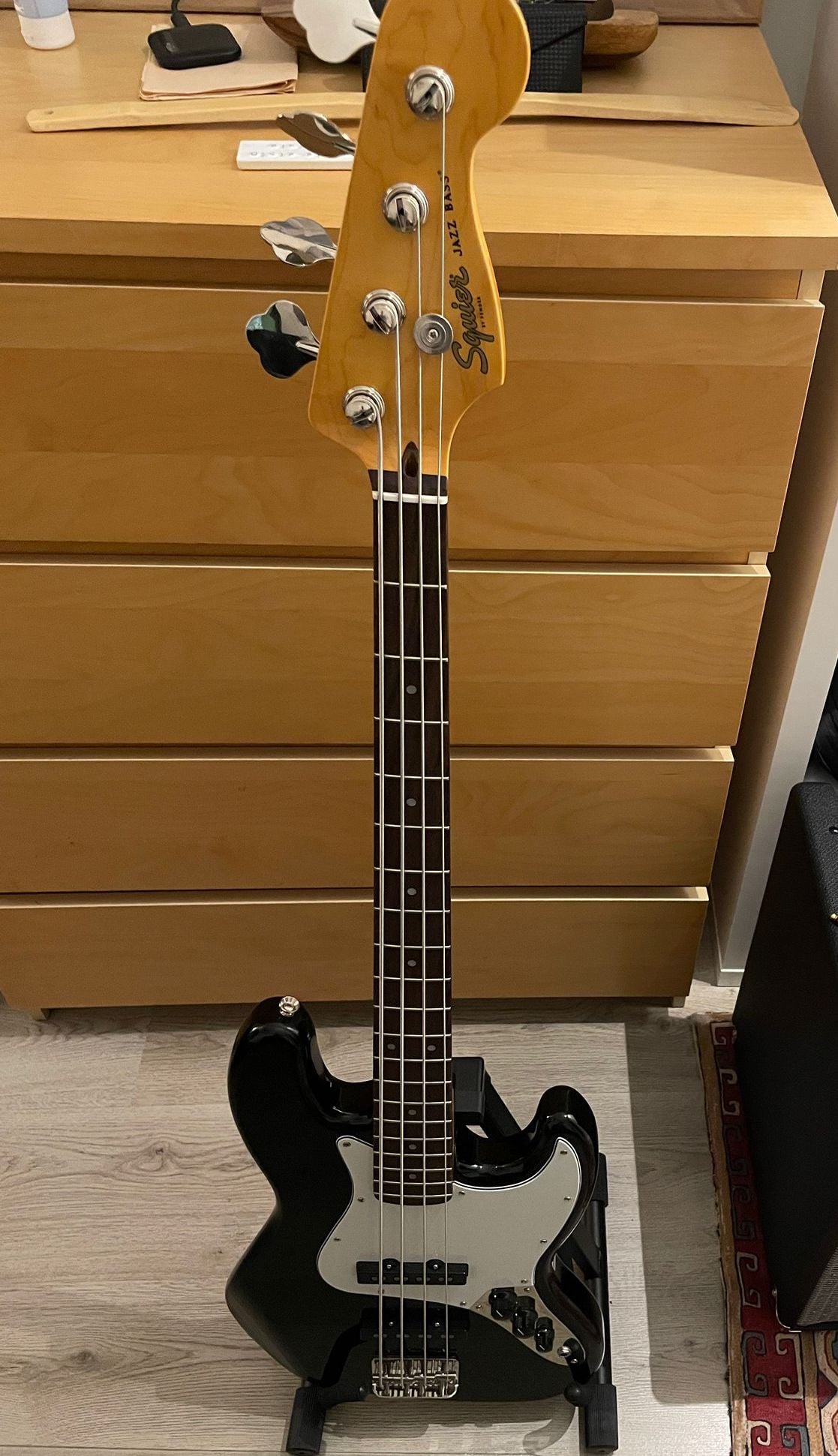
Squier CV 60s Jazz Bass. I just changed the pickguard.
Congratulations on your new acquisition!This is my recent purchase:
Squier CV 60s Jazz Bass. I just changed the pickguard.
View attachment 5227480
I own a bunch and "vibe" with 'em all…
How are you two getting along so far?
Thanks! very early days, I'm enjoying it. Doing. the course on the studybass website. Eventually I will get a teacher. Trying to figure out which exercises to practice first. I can't read music.

Thanks! very early days, I'm enjoying it. Doing. the course on the studybass website. Eventually I will get a teacher. Trying to figure out which exercises to practice first. I can't read music.
The nice thing is you don't need to read music to start. It becomes a useful skill. But two exercises to start with (and really to continue with) are the spider walk and the major scale in intervals.
You're best to google both because there's many great resources on both. Any questions however just ask me.
The nice thing is you don't need to read music to start. It becomes a useful skill. But two exercises to start with (and really to continue with) are the spider walk and the major scale in intervals.
You're best to google both because there's many great resources on both. Any questions however just ask me.
I will definitely check those. Cheers Dlew.
Squier Classic Vibe '70s Jazz
mods:
2013 MIM FSR Jazz Neck - Maple/Rosewood
DiMarzio Ultrajazz Pickups
920D Control Plate Assembly
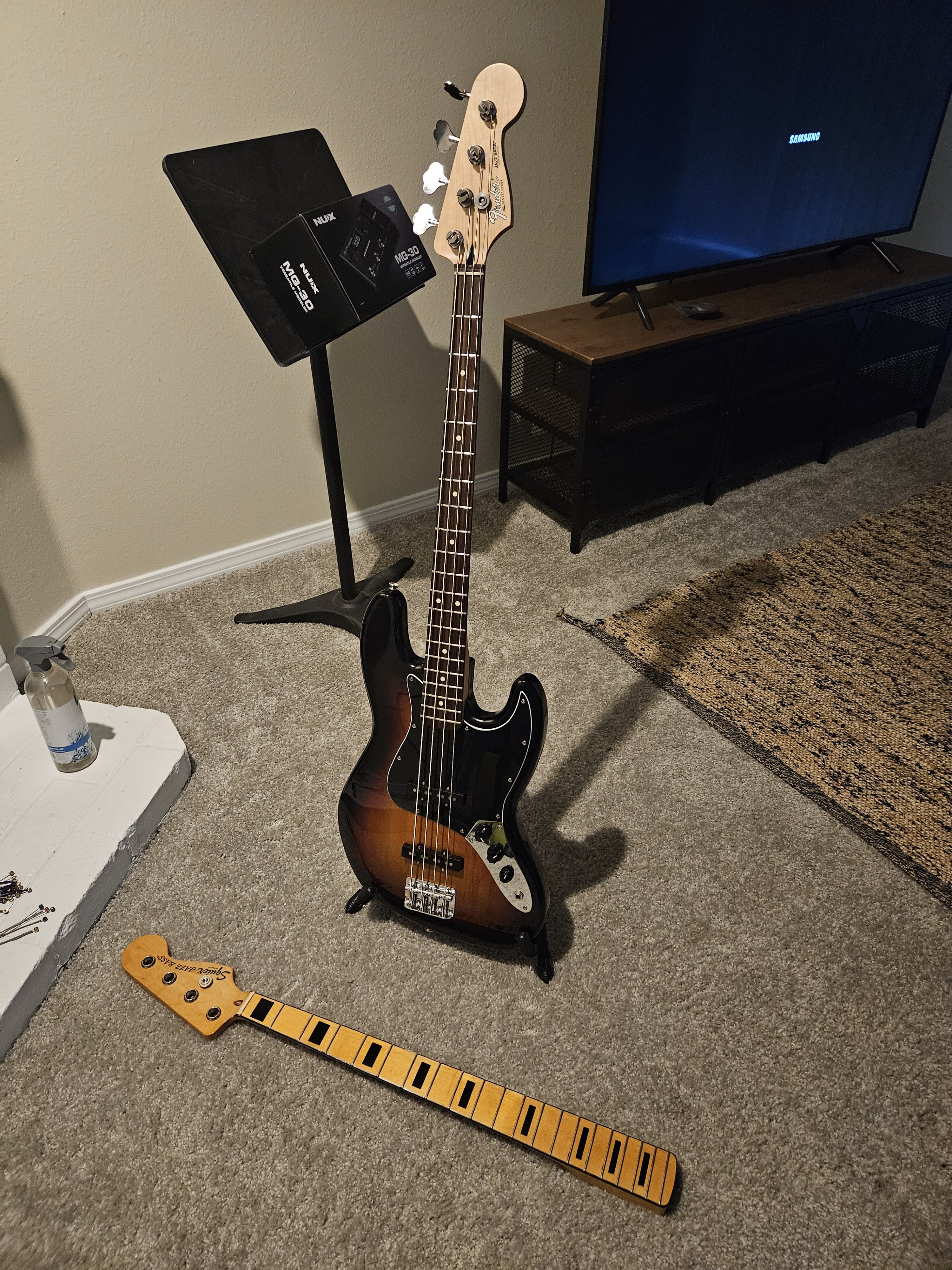
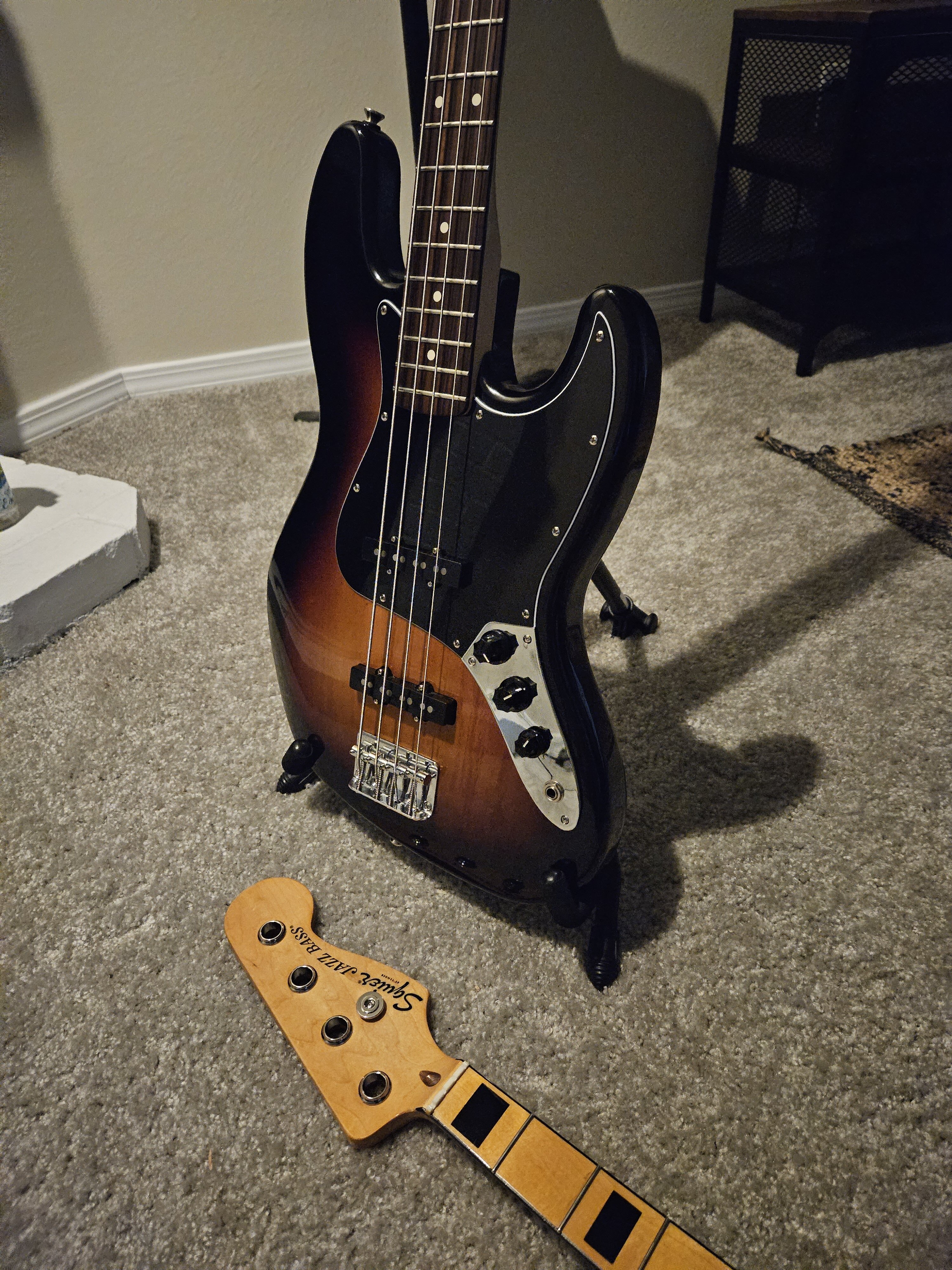
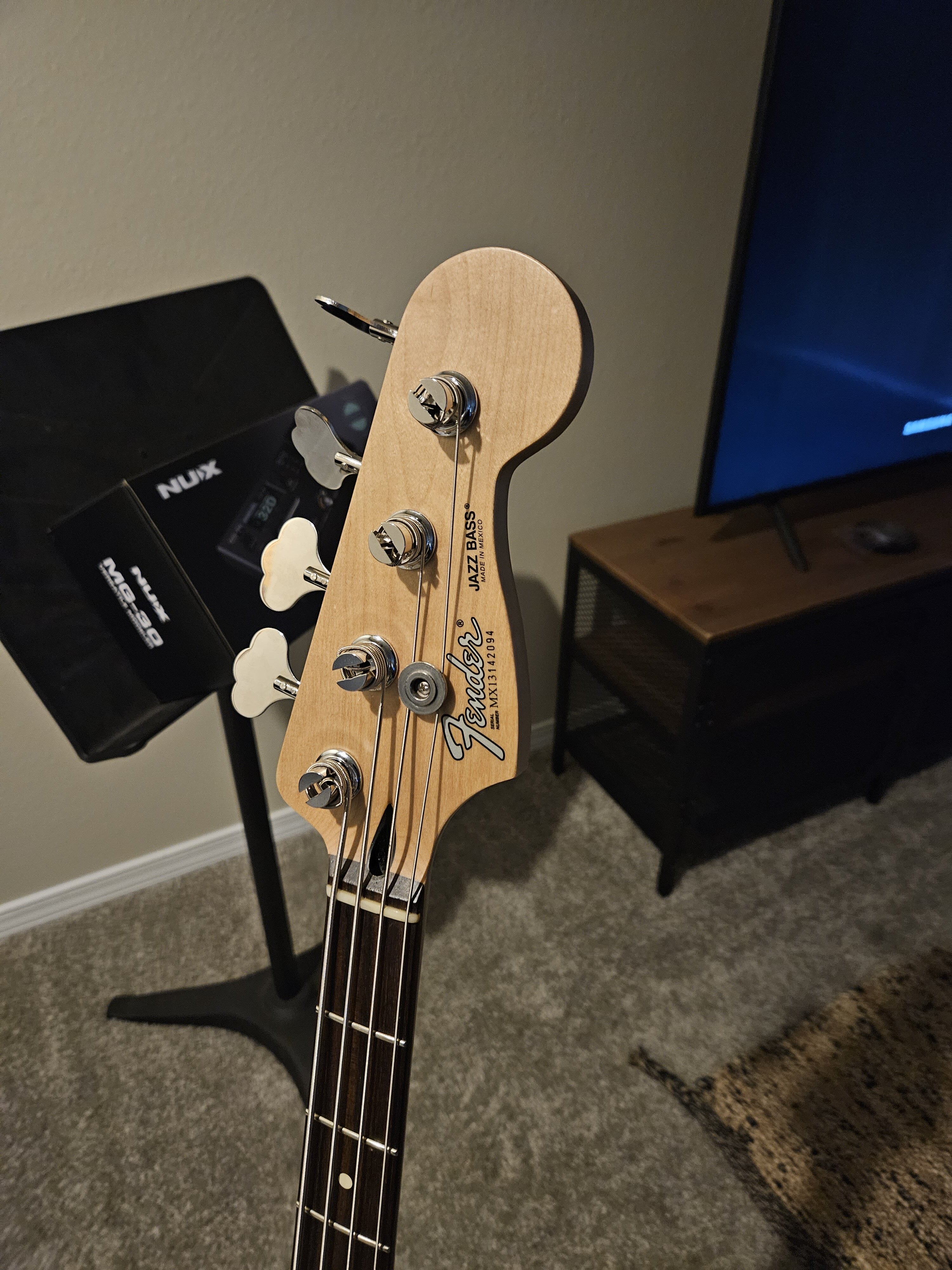
mods:
2013 MIM FSR Jazz Neck - Maple/Rosewood
DiMarzio Ultrajazz Pickups
920D Control Plate Assembly
Nice upgrades, especially the neck is much nicer with dotted inlays.Squier Classic Vibe '70s Jazz
mods:
2013 MIM FSR Jazz Neck - Maple/Rosewood
DiMarzio Ultrajazz Pickups
920D Control Plate Assembly
View attachment 5230345
View attachment 5230346
View attachment 5230347
Nice upgrades, especially the neck is much nicer with dotted inlays.
And Gotoh Res-O-Lite tuners
About 7.5 pounds
I like the neck swap very much. HowSquier Classic Vibe '70s Jazz
mods:
2013 MIM FSR Jazz Neck - Maple/Rosewood
DiMarzio Ultrajazz Pickups
920D Control Plate Assembly
View attachment 5230346
are you liking the DiMarzio's so far?
I like the neck swap very much. How
are you liking the DiMarzio's so far?
the DiMarzios UJs are excellent
I just installed Fralin Splits in my fretless Franken-Jazz Thinline
Horrors to say, i think i prefer the UltraJazz set over the Fralins
the DiMarzios UJs are excellent
I just installed Fralin Splits in my fretless Franken-Jazz Thinline
Horrors to say, i think i prefer the UltraJazz set over the Fralins
How would you describe their tone in comparison Fralin splits vs Dimarzio Ultra Jazz.
Have you tried Area Js?

Hello, I'm just playing my 2012 CV60P now and man I love these tiny vintage frets. I don't have them on my other basses.
I am just wondering a few things :
- do the current CV60P have them too ?
- do some people prefer the big frets ? or why is it something that changed (if we call them vintage)
- maybe because it wears faster ? or requires a better neck ? so will I have to do a fretjob sooner at a luthier ?
So many questions
HAve a nice day
Narrow tall fret wires on indo CV60P notable different fretting feel compare to real vintage fret if you setup your bass for low action. I own few CIC CV bass previously and own a indo CV50P currently. Vintage tall just like fret wire on Ibanez SR300e and Sterling Ray4/5 with just little thinner on width.
Compare to Vintera 50sP and matt freeman P fret wires, even the vintage fret wire are little wider on Matt freeman, the fretting feel on indo CV50P still lacking that comfort fretting feel from them.
The one thing i suspect are , I do believe FMIC using narrow tall on their current production bass (AM Pro, Vintera II , Squier CV/Av) because they knew there are high amount of factory fret work issue and poor leveling job happened , so, there are more room on narrow tall fret wire for plek or leveling after buyer bought them.
Regard the neck profile, the current indo CV60P ,even CV60J has same neck profile to discontinued Vintage Modified PJ and J neck. I been own few VM bass, and still keep one VM PJ myself.
Rebranded, the best word using on current indo CV line.
Edited.
Both CV70P and CV50P are from Samick company. That CV70P neck are slimmer than CIC CV70P and Mattfreeman P. The indo CV50P has less D profile compare to CIC CV50P too.
Last edited:
Thanks @Dlew919 for your answer.
That's funny I have the opposite feeling, it might be personal indeed. With jumbo frets I will press more "to the wood", with more bumps on my neck when I slide. With vintage frets I play with much lighter left hand.
Agree, lighter fretting hand action on me too.
the DiMarzios UJs are excellent
I just installed Fralin Splits in my fretless Franken-Jazz Thinline
Horrors to say, i think i prefer the UltraJazz set over the Fralins
I love the Ultra jazz too. With more pronounce MID rangy bass string match, she just sing and nice growl when dig in more !
Thanks! very early days, I'm enjoying it. Doing. the course on the studybass website. Eventually I will get a teacher. Trying to figure out which exercises to practice first. I can't read music.
Remain inspired. Many will dislike my comment, but it's possible to play by ear, as long as you build solid playing foundations. The CV basses are generally very nice.
I am a violinist trained classically, so of course I read music well-but play everything bass-related by ear. Perhaps makes me a "bad musician", but I do not care. I need not prove to anyone anything. Music reading becomes more important at a very busy, professional recording artist level. But we all know that many greats still manage without reading music. Do not let that get to you, though it's never bad to learn more music skills.


