

Enjoy the benefits of a premium membership!
Upgrade Account
-
TalkBass has been independent since 1998. Add your voice.
Create a free account to reply to discussions, view embedded media, and browse with fewer display ads.
Join free Log in
Want zero display ads or expanded classifieds tools? Compare plans.
You are using an out of date browser. It may not display this or other websites correctly.
You should upgrade or use an alternative browser.
You should upgrade or use an alternative browser.
More options
Who Replied?The signatures belong to SMV (Stanley Clarke, Marcus Miller & Victor Wooten). They were there when I bought the bass secondhand this year, the owner told me he had the bass signed during a concert in Groningen (a province of the Netherlands).

Thanks for the tips, Joe.
What do you use to measure the neck for flatness of the board and frets and to level the frets if needed?
What do you use to measure the neck for flatness of the board and frets and to level the frets if needed?

Thanks for the tips, Joe.
What do you use to measure the neck for flatness of the board and frets and to level the frets if needed?
I take the neck off - making sure to relax the truss rod and let it sit while I drink a beer. Beer as a universal timer
is about 5 minutes long depending on the outside temperature.
Then I take a straight edge I had as a mechanic - but seriously if you find a good steel ruler that is the type in a
QUALITY combination square, it will work just fine.
Better quality squares are very accurate - not the Harbor Freight ones though! Stanley is a good name.
I like to use a back light to spot any frets that are lower than the rest and at the same time if I find a majority of them
low, then that usually means one or two are really higher than they should be.
You've gotta decided which is which here: are they mostly low or mostly high?
Check to see if the wires are actually fully seated before you do anything - since getting them down to where they
oughta be is more important to do at first. It happens.
I own a long sanding block for automotive body work on flat panels - but a piece of metal: aluminum, steel or a
12-16" Stanley spirit level has a very good flat surface and can hold some sticky-back sanding paper. I start with
180# and after a few swipes, test for flat again.
Here's a sample of a good spirit level in aluminum and notice that it's not a torpedo type. They are usually
too short, not flat enough and just not stable.

Although these are hybrid - part wood and part metal, you can get them in metal only.
After things are getting close, switch to 320# or 400# or so to keep the marks to a minimum.
Use a good quality black oxide wet/dry paper if you can find it. It won't leave any grit embedded in the fret wires
and it stays together pretty good.
After I get all the frets level, then I put on my close-work glasses and look very carefully at the profile of the
wires themselves to see where any need to be reshaped now that I've cut some of them flat.
This is the job for my tri-cornered files that I've taken to a grinder and removed the sharp corners on all
three sides.
I like to use vinyl electrical tape here to protect the fingerboard from the files anyway. Some people like that
blue or green painter's tape - it;'s OK but rips pretty easy I feel.
Another thing some people use is a black marking felt tip pen to darken the fret crowns so they can see which
ones are low or to show any filing/shaping progress they are making with the file. This is a pretty good idea
too - but I've used the light method for a long time on surfaces other than guitar frets and am happiest with it -
but that's just me maybe.
All in all - this is an easy skill to learn - take your time and you'll find that there are no mysteries and the pride
and workmanship will be yours when it's done.
The learning curve isn't nearly as vertical as one might think.
Files don't cut very fast --- and really -- getting into trouble would take a fair amount of bad technique since
you'll see the final results take awhile to complete.
I don't really recommend beer as a tool though. I was just funnin' you there.

Thanks for the detailed info, Joe.
Its nice to hear someone recommending easily accessible tools for this type of work. The stuff at some of the specialty guitar tool sites are nice but I'm too broke to put that much into unitasking tools I wouldn't use often.
Its nice to hear someone recommending easily accessible tools for this type of work. The stuff at some of the specialty guitar tool sites are nice but I'm too broke to put that much into unitasking tools I wouldn't use often.
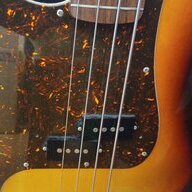
Hi, I have a VM Jazz 4 in natural.
It's all stock at the moment but I've wanted to set up the frets a bit better for the year and a half I've had it, maybe lower the nut slightly as well. I might have a go at it myself, wanna try it on a cheaper bass first though, thanks Joe!
The only other thing I'd change is the pickups, heard some good things from Dimarzio lately and I like the neck pickup is slightly narrow on their Model J's.
It's all stock at the moment but I've wanted to set up the frets a bit better for the year and a half I've had it, maybe lower the nut slightly as well. I might have a go at it myself, wanna try it on a cheaper bass first though, thanks Joe!
The only other thing I'd change is the pickups, heard some good things from Dimarzio lately and I like the neck pickup is slightly narrow on their Model J's.
Hi, I have a VM Jazz 4 in natural.
It's all stock at the moment but I've wanted to set up the frets a bit better for the year and a half I've had it, maybe lower the nut slightly as well. I might have a go at it myself, wanna try it on a cheaper bass first though, thanks Joe!
The only other thing I'd change is the pickups, heard some good things from Dimarzio lately and I like the neck pickup is slightly narrow on their Model J's.
See? I can live with this post since you are actually making the decision to change the p'ups after having played the bass for a bit at least.
I know it's not you job to make me happy - but so many times I see people say that as soon as they get their new "X"-Bass home, they're gonna rip out the factory parts and put "X"-on it.
Now - and here's a really good question: What's your musical choice for style and type?
If you are a background thumper, then you might be going the wrong way for p'ups. But if you are a lead-bass player and want to get into guitar-land for tone and stand-outness, then you might be fine with your choice.
I play the groove and try to not stand out any more than say: Paul McCartney or Nathan East, and don't want to add much more but backing and an occasional foray into the upper 12-20th frets.
I love hitting the higher octaves occasionally, but try to not be there too much. Therefor I am very happy with the OE p'ups. Your needs may be different.

SurferJoe46 said:See? I can live with this post since you are actually making the decision to change the p'ups after having played the bass for a bit at least.
I know it's not you job to make me happy - but so many times I see people say that as soon as they get their new "X"-Bass home, they're gonna rip out the factory parts and put "X"-on it.
Guilty...
For me modding is half the fun.

Besides, I don't have enough room yet to start building from scratch so this is a nice distraction until that opens up.

My new VM J5...
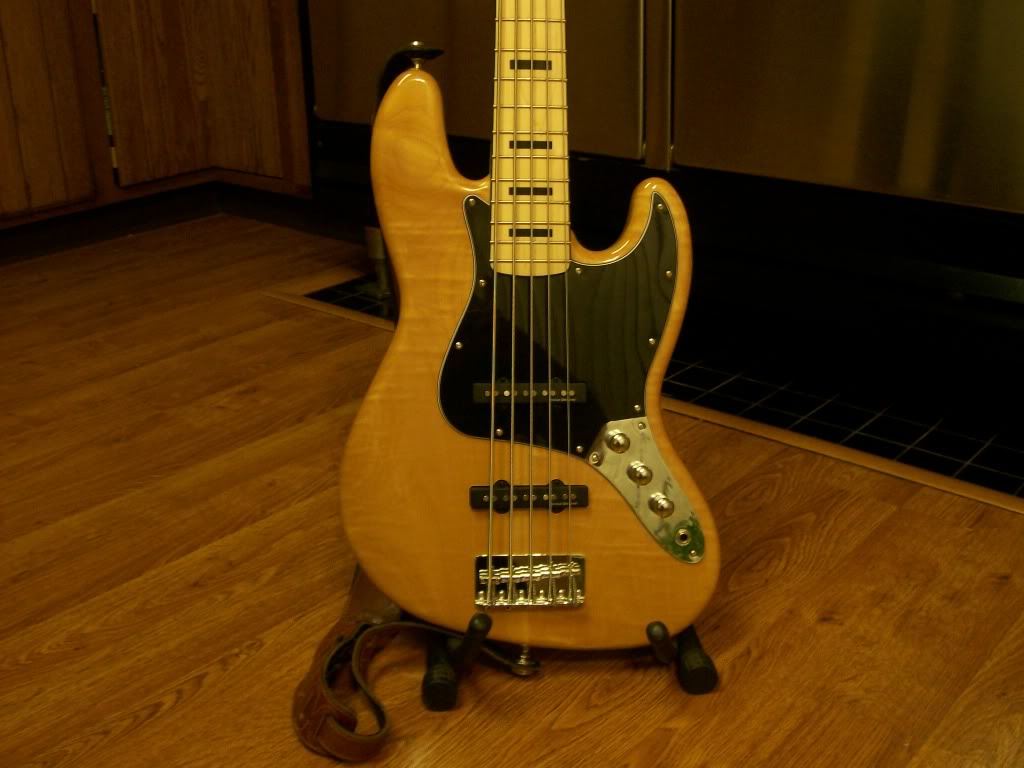
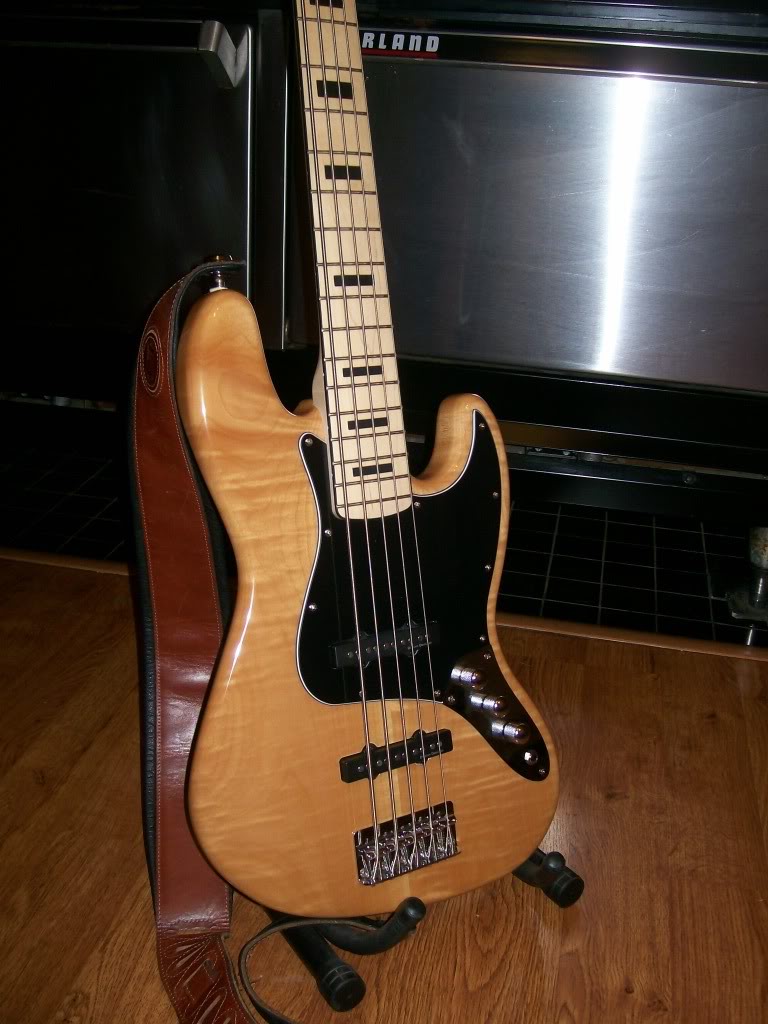
This is the most beautiful squier I have seen yet
That wood grain...
See? I can live with this post since you are actually making the decision to change the p'ups after having played the bass for a bit at least.
I know it's not you job to make me happy - but so many times I see people say that as soon as they get their new "X"-Bass home, they're gonna rip out the factory parts and put "X"-on it.
Now - and here's a really good question: What's your musical choice for style and type?
If you are a background thumper, then you might be going the wrong way for p'ups. But if you are a lead-bass player and want to get into guitar-land for tone and stand-outness, then you might be fine with your choice.
I play the groove and try to not stand out any more than say: Paul McCartney or Nathan East, and don't want to add much more but backing and an occasional foray into the upper 12-20th frets.
I love hitting the higher octaves occasionally, but try to not be there too much. Therefor I am very happy with the OE p'ups. Your needs may be different.
I want to do fingerstyle motown-y stuff but I also really like clanky pick style pop-punk stuff. When I'm on my own I do be noodling all over the place though. But yeah I'd like to cut through a bit anyway.
I haven't really looked into it, I just had noticed a particular player had great tone and he told me he was using dimarzios. It's a bit down the road yet, so at the moment it's just that I'm aware that these are cheap pickups and I probably won't be buying a new bass for a long time, so they'll probably be getting upgraded at some stage. I'm actually happy enough with them, or maybe I just don't know what I'm missing. I'd like to experiment though. Maybe Dimarzios would be too modern a sound... thoughts?
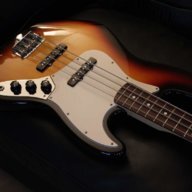
It's funny - I couldn't stand the Duncan Designed pickups on my VM Tele Thinline (switched 'em out to Fender Original Vintage), but I love the DD's on my VM Jazz... Go figure.. 


I firmly think that people should have their musical style under their Avatar - and that would keep a lot of 'this is best' and 'this sux' posts out of the way.
As an olde fart - I like the mellow side and try to stay away from the Wooten modelling. As good as Wooten is - and he's VERY good! - it wears out rapidly for me and I get tired of it in about two 'songs' by him.
Pulling the backside of the music together on a bass is something that can go on forever and just needs to be there to make the music actually work.
It takes listening to the music, anticipation of where it's going and how to hook it all together with introductions to the next musical phrase. Then after you hear where it's going - you play it.
Bass solos - meh.
As an olde fart - I like the mellow side and try to stay away from the Wooten modelling. As good as Wooten is - and he's VERY good! - it wears out rapidly for me and I get tired of it in about two 'songs' by him.
Pulling the backside of the music together on a bass is something that can go on forever and just needs to be there to make the music actually work.
It takes listening to the music, anticipation of where it's going and how to hook it all together with introductions to the next musical phrase. Then after you hear where it's going - you play it.
Bass solos - meh.


