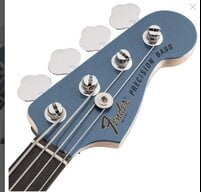
I spent an hour or so today on my Fender Tony Franklin fretless, then picked up my Squier CV 70s P for a fairly close comparison. Here are my thoughts.
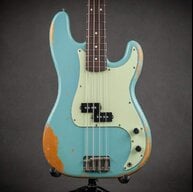
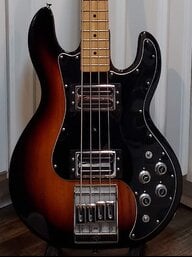
The Lake Placid blue nitro finish on the Fender is perfection. Real craftsmanship, beautiful. The walnut urethane finish on the Squier looks great, but it’s just plastic, after all. No real contest here.
Body wood - who can tell? Nyatoh, whatever that may be, and alder (a more traditional tone wood) are listed on the Squier and Fender websites, respectively. Both basses feel reasonably light. In other words, not “boat anchors”. There’s no obvious difference in body resonance when the basses are played unplugged. I don’t think anyone could reasonably say that either bass was “better” body wood than the other.
The ebony fingerboard on the Fender is another perfect feature and not something you’d ever see on an entry level bass. The fret job on the Squier is, incidentally, very good, by the way. As good as I’ve ever seen on any bass, really. And you have to love the look of the black block markers on the maple board.
The P pickups in each bass sound very similar in both tone and output, just doing a direct AB comparison of open strings.The DiMarzio J pickup on the Franklin sig bass is, however, terrific - really strong and biting. No bridge pickup on the CV70s Squier, of course. Bridges, tuners, pots, et cetera - all seem solid, reliable and functional; no obvious major differences, really, other than the Hipshot Extender on the fretless. The so-called “undebatable” quality differences between hardware often reported seem exaggerated at best to me, and are probably completely mythical. Strings as supplied also seemed similar. No case with the Squier, great hard case with the Fender.
So, better wood and hardware used for the American bass? No, not really - apart from the ebony fingerboard, as previously mentioned.
But one definitely real difference was in the setup as supplied - the Fender was A1 and needed no adjustment, but the Squier neck had some serious backbow, which was fairly easy to sort out by leaving it tuned about a minor third sharp for a couple of days (it had arrived with the strings slackened right off). Now the Squier bass is well set up and plays and sounds great, as does the Fender.
In summary - the Fender cost me about six times the price of the Squier. Was it worth it? I guess it was, because I really love the bass. But it has to be admitted that the differences are fairly subtle and relate to predominantly aesthetic rather than functional aspects. Moral of the story - you pay a lot more money for these little differences. But I think we all know that anyway.
Thanks for reading. @Freddels - worth waiting for?
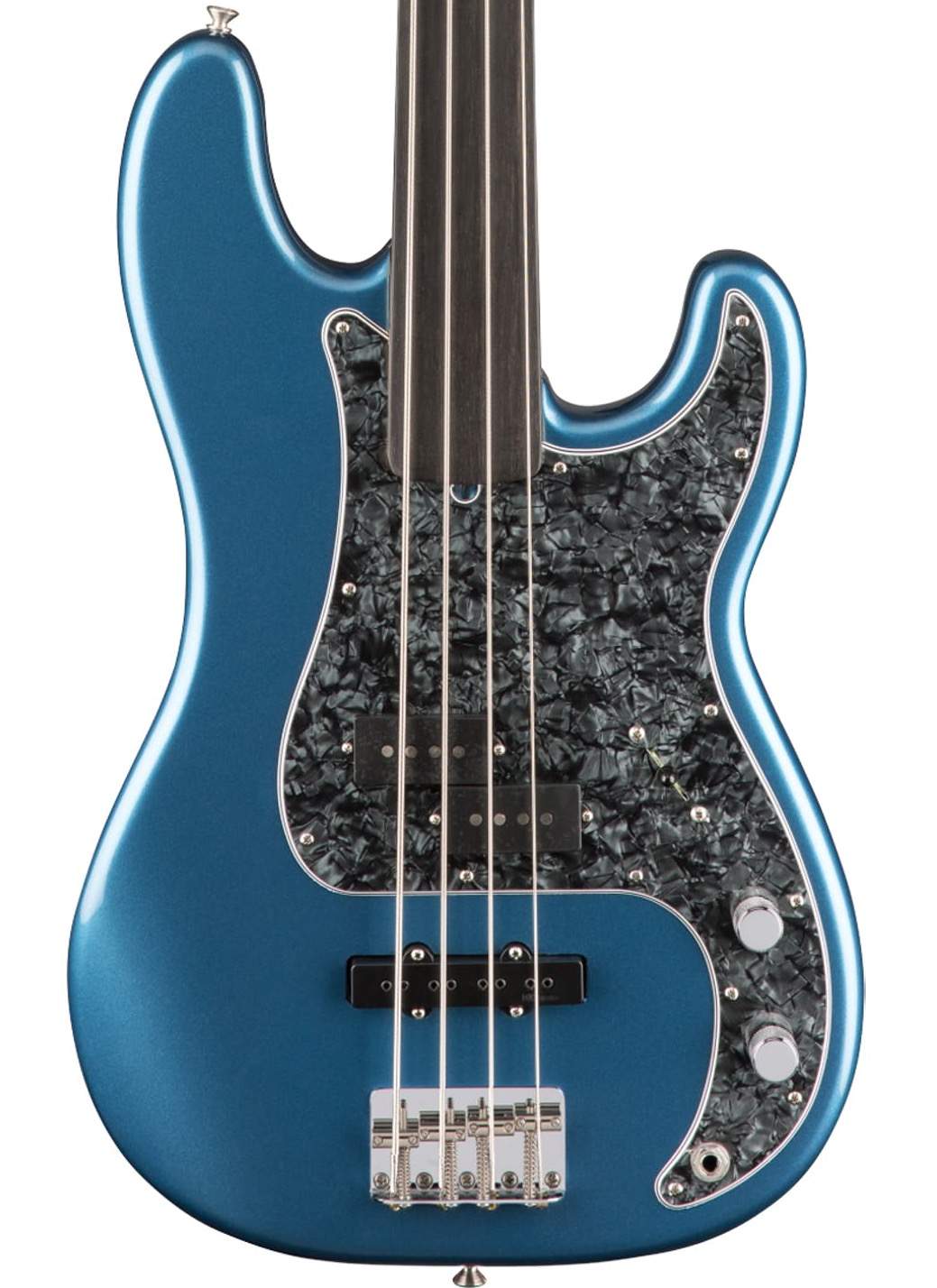
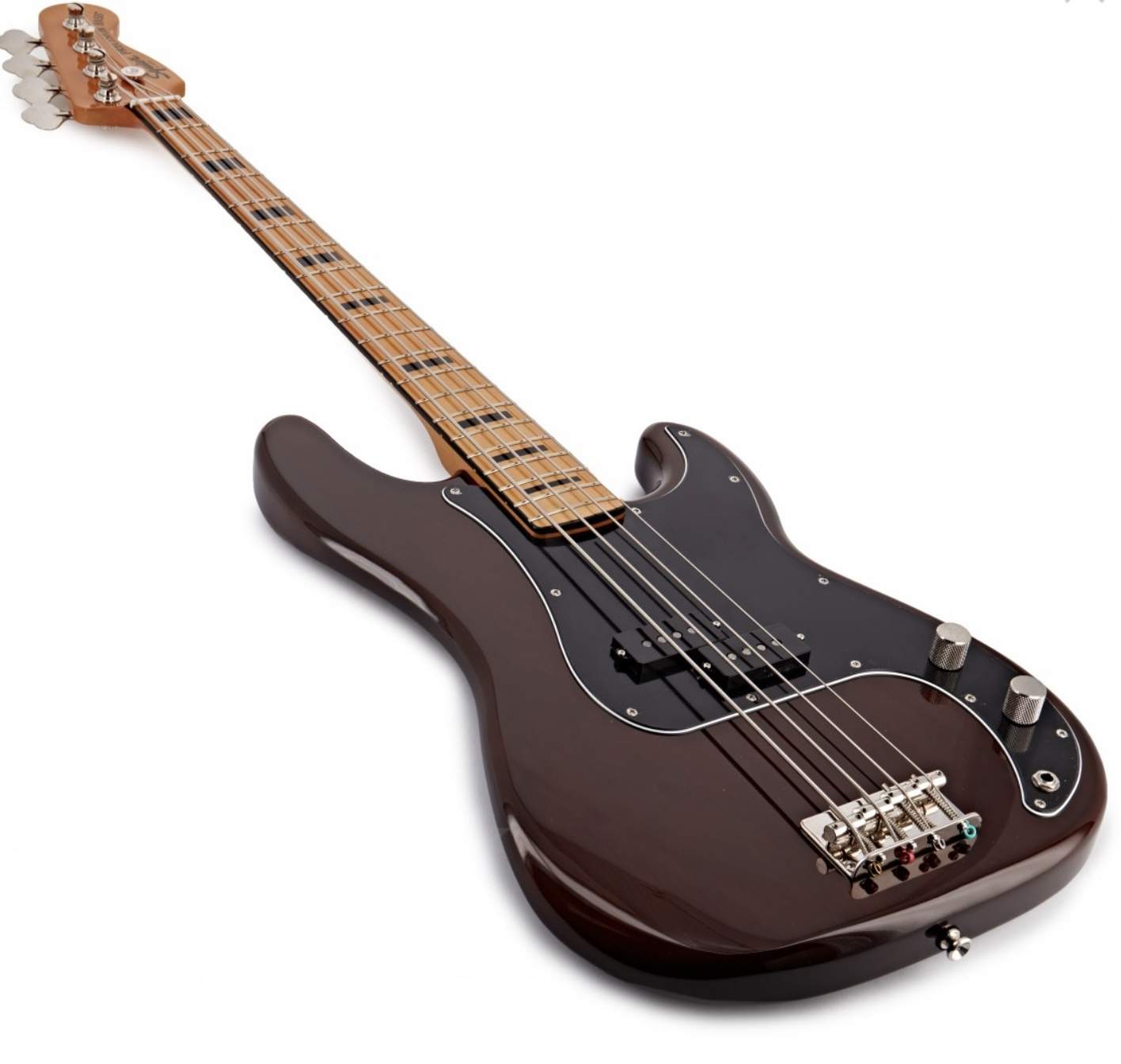
The Lake Placid blue nitro finish on the Fender is perfection. Real craftsmanship, beautiful. The walnut urethane finish on the Squier looks great, but it’s just plastic, after all. No real contest here.
Body wood - who can tell? Nyatoh, whatever that may be, and alder (a more traditional tone wood) are listed on the Squier and Fender websites, respectively. Both basses feel reasonably light. In other words, not “boat anchors”. There’s no obvious difference in body resonance when the basses are played unplugged. I don’t think anyone could reasonably say that either bass was “better” body wood than the other.
The ebony fingerboard on the Fender is another perfect feature and not something you’d ever see on an entry level bass. The fret job on the Squier is, incidentally, very good, by the way. As good as I’ve ever seen on any bass, really. And you have to love the look of the black block markers on the maple board.
The P pickups in each bass sound very similar in both tone and output, just doing a direct AB comparison of open strings.The DiMarzio J pickup on the Franklin sig bass is, however, terrific - really strong and biting. No bridge pickup on the CV70s Squier, of course. Bridges, tuners, pots, et cetera - all seem solid, reliable and functional; no obvious major differences, really, other than the Hipshot Extender on the fretless. The so-called “undebatable” quality differences between hardware often reported seem exaggerated at best to me, and are probably completely mythical. Strings as supplied also seemed similar. No case with the Squier, great hard case with the Fender.
So, better wood and hardware used for the American bass? No, not really - apart from the ebony fingerboard, as previously mentioned.
But one definitely real difference was in the setup as supplied - the Fender was A1 and needed no adjustment, but the Squier neck had some serious backbow, which was fairly easy to sort out by leaving it tuned about a minor third sharp for a couple of days (it had arrived with the strings slackened right off). Now the Squier bass is well set up and plays and sounds great, as does the Fender.
In summary - the Fender cost me about six times the price of the Squier. Was it worth it? I guess it was, because I really love the bass. But it has to be admitted that the differences are fairly subtle and relate to predominantly aesthetic rather than functional aspects. Moral of the story - you pay a lot more money for these little differences. But I think we all know that anyway.
Thanks for reading. @Freddels - worth waiting for?
Last edited: