
Don't sell it, mate!! Those UFs are as rare as hen's teeth!!
Yeah, collectors hit me up until they realize all the flippy stuff that's gone on with mine (I bought it that way, and enjoy its lefty flavor).

TalkBass has been independent since 1998. Add your voice.
Create a free account to reply to discussions, view embedded media, and browse with fewer display ads.
Join free Log in
Want zero display ads or expanded classifieds tools? Compare plans.
Don't sell it, mate!! Those UFs are as rare as hen's teeth!!


The Japanese sellers prices are presumably based on the restored Babicz listing prices. They are far removed from the reality of the completed listings. Typically they are double the price of what they should be asking.Just had a look on ebay and there's a few Japanese collectors trying to shift theirs at top prices!!
Interesting. Can you explain this Babicz process? What did he do?The Japanese sellers prices are presumably based on the restored Babicz listing prices. They are far removed from the reality of the completed listings. Typically they are double the price of what they should be asking.
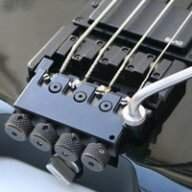
He actually introduces new material in liquid form to scratched or chipped basses. It looks a lot like patching a wall. And the results are basses that are as good as new.

I don't pretend to know the percentage of what kinds of work goes into these restorations. I simply was postulating that the Japanese sellers are pricing too high due to an apples to oranges comparison between their used Steinbergers (particularly the XL-2) and the refurbished/restored ones.Repairing gel coat or broken composite materials is something that may be part of a custom repair job, but this is the exception and not the rule. Such a repair job is usually not the reason for 95% of the high prices you may encounter on the purple pillow line of instruments
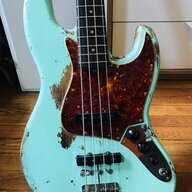


I have a good friend that has this amazing rare Steinberger bass Q5 model but for some reason we can't find a lot of information about it - how much it's worth, year of production and how rare it is really..

So $1200 for a second generation xq2 in good shape a good deal?
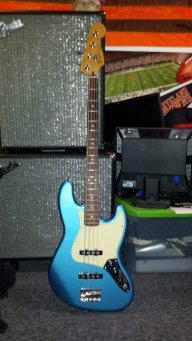
Made some trades, this is coming to me. XQ2A? With Truss rod, EMG and I believe the haz lab. Seems near mint.

Around $1500 is for a 4-stringer. 5-string XQs are somewhat rarer and pricier. The final price should also depend on how good the bridge condition is. In particular, on some (not all) XQ5s the tuners are made of some crappy soft alloy and may have the internal threads worn off. I had to replace at least 2 of them on my XQ5 v.2, while on my XQ5 v.1 they are all in an excellent shape.Cannot comment on "rarity", there were quite a number of XQ basses out there, but probably not many with that finish and Bartolini PUs. So this combination of course makes it somewhat rare. The bass was manufactured (respectively: invoiced) on July 29, 1994. The serial (and the date) say it was manufactured in Nashville (Gibson plant).
XQ basses usually sell in the same price range as the XM-2 bass, which means around $1,500. Here is a current example on Reverb. Don't even think about taking some other dealer prices as a "value", they aren't. They are just prices for something not yet sold, and sometimes (and especially nowadays) simply crazy. The quite rare finish on that bass may raise the price a little bit, but the damaged parts of the finish do the opposite. And the missing original HazLabs knob as well, however, you might be able to buy a replacement from Henry at HazLabs.com. Don't send an e-mail (never works), but give him a call.
Bernd

Andy Yakubic over at the Steiny forum rattles them up from time to time. I still need one after missing out on the last batch!Who has one of the "plug in " leg rests? i'm gonna cobble one up.Want see how it attaches