
Hmmmm this is a tough one, i was reserving the god spot for Iommi, as he is the true "father of the riff" IMO. Lemmy would be the god of rocking the fvck out, it is well known nobody rocks as hard as him.
The Son, The Father, and The Holy Smoke.

TalkBass has been independent since 1998. Add your voice.
Create a free account to reply to discussions, view embedded media, and browse with fewer display ads.
Join free Log in
Want zero display ads or expanded classifieds tools? Compare plans.
Hmmmm this is a tough one, i was reserving the god spot for Iommi, as he is the true "father of the riff" IMO. Lemmy would be the god of rocking the fvck out, it is well known nobody rocks as hard as him.
Wino, Saint of the Flatted Fifth
Mario Lalli, Saint of Reverb
Scott Reeder, Patron Saint of Safe Desert Travel.
Dixie Dave, Patron Saint of 15" speakers
I like this game!
The Son, The Father, and The Holy Smoke.


yes/no combination of both onboard pre and the active to passive stuffWouldnt the basses onboard preamp still affect the overall tone? Allowing you to compensate for any frequencies lost in the pedal? (presuming it doesnt cause like a 20db in the high end or something like that) Still allowing your normal tone to come through with some minor tweaking?
yes/no combination of both onboard pre and the active to passive stuff

father of fires said:

Imagine the volume control as a water hose, turning it down decreases the hose diameter. The impedance is the water pressure, your active has very high water pressure, while a passive has very low. The pedal would take your large diameter hose (which is too big for some pedals) and decrease its size to a manageable level, and then take your high water pressure and also turn it down as well (so that your active bass plays with fuzz pedals like a passive bass). A regular volume pedal would just decrease the hose size, which would not really effect how the bass and pedals interact. This is theoretical though.

A random thought, since this would go at the front of an effects chain, and with the rising popularity why not include an adjustable HPF in it as well? It would basically be a signal conditioner for active basses for those who use alot of pedals.
Skip, you forgot:
Lemmy- God.
actually, now what I need is someone to explain that to me....lol.
you all lost me.... I'll see you in church.
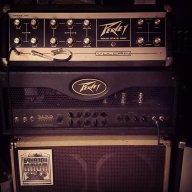
Mesa PH412 showed up locally. Anyone ever try one?
lowering the volume on an active bass wouldnt be bad in terms of the output swing but those pots are designed to remain fairly low impedance (maybe 50k pots) so that you wouldnt introduce much series impedance. The overall loading effects wouldnt be captured.
A FF circuit like oxfuzz would benefit from the pupsim on an active bass due to its fairly low impedance would loads down the circuit. Not sure if Ken designed it to keep this in or not. I know it has blend so it might avoid this whole problem but a normal FF sounds bad with buffering in front of it
lowering the volume on an active bass wouldnt be bad in terms of the output swing but those pots are designed to remain fairly low impedance (maybe 50k pots) so that you wouldnt introduce much series impedance. The overall loading effects wouldnt be captured.
A FF circuit like oxfuzz would benefit from the pupsim on an active bass due to its fairly low impedance would loads down the circuit. Not sure if Ken designed it to keep this in or not. I know it has blend so it might avoid this whole problem but a normal FF sounds bad with buffering in front of it
Agreed because there isn't that 5k roll off you get from passive pups when it meets the low input Z of the FF. I didn't realize he needed this for a FF type circuit. I missed that part of the conversation.


