
Enjoy the benefits of a premium membership!
Upgrade Account
-
TalkBass has been independent since 1998. Add your voice.
Create a free account to reply to discussions, view embedded media, and browse with fewer display ads.
Join free Log in
Want zero display ads or expanded classifieds tools? Compare plans.
You are using an out of date browser. It may not display this or other websites correctly.
You should upgrade or use an alternative browser.
You should upgrade or use an alternative browser.
Strat style shortscale bass build
- Thread starter FatStrings
- Start date
More options
Who Replied?
Fatstrings, thanks for sharing your design/build process; I missed this thread the first time around. You've got great skills, Fender could learn a thing or two from your project. They'd probably sell more Strat-inspired basses than MusicMaster/Bronco style, looks way cooler, imo.
Good luck with your health.
Good luck with your health.

Subbed... this is freakin awesome!
Hey thanks!
Fatstrings, thanks for sharing your design/build process; I missed this thread the first time around. You've got great skills, Fender could learn a thing or two from your project. They'd probably sell more Strat-inspired basses than MusicMaster/Bronco style, looks way cooler, imo.
Good luck with your health.
Thank you! And I agree, a Fender Strat bass would be very cool!
Amazing. Fender should mass produce your idea.
More thanks! And again, I agree. This design is not traditional, but I bet it'd be popular.
I wonder how well this would work with one of those new Warmoth medium scale necks.
I don't see why it wouldn't work well with just about any bolt on neck since the neck pocket can be modified to work during the design stage.
This pic jumps ahead just a little so I can show you my lathe turned into a pickup winder. At some point I'll build a dedicated winder, but for now this works very nicely! DIY turn counter made from a calculator and a magnetic contact switch (used for alarming windows and doors).
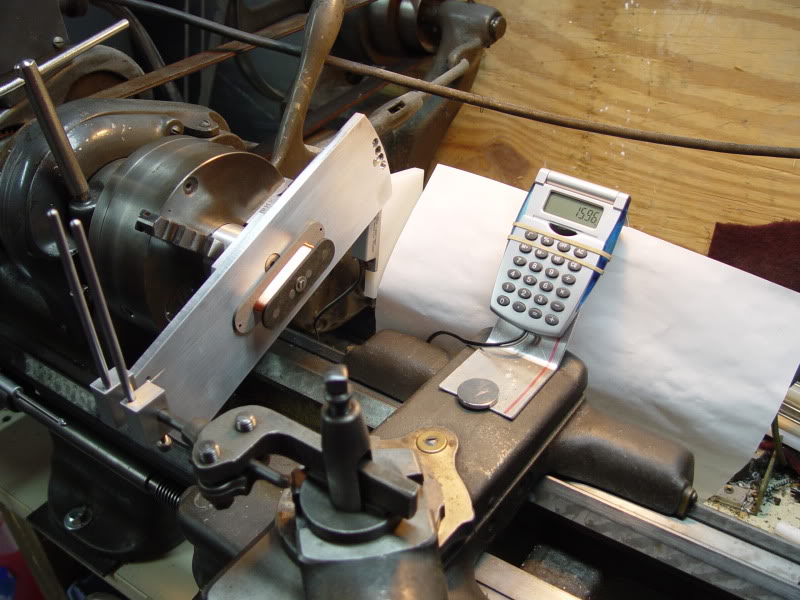
Here I have tied the 42 AWG wire to the metal ferrule. I lightly sand a few inches of the wire to remove the enamel coating then use very fine tweezers to help loop and knot. I have a lot more respect for people that make a living doing this. This wire is no thicker than the hair on your head and very difficult to see let alone tie off!!
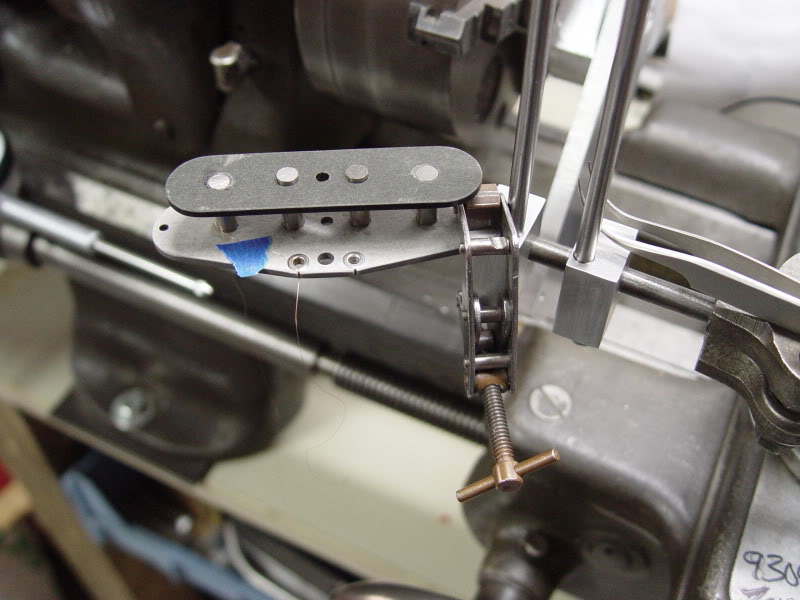
Here's a closer look. Here you can see I've tied 8 or so loops and a knot. You may also be able to see that I've recessed the metal ferrules to keep them from snagging the wire while turning.
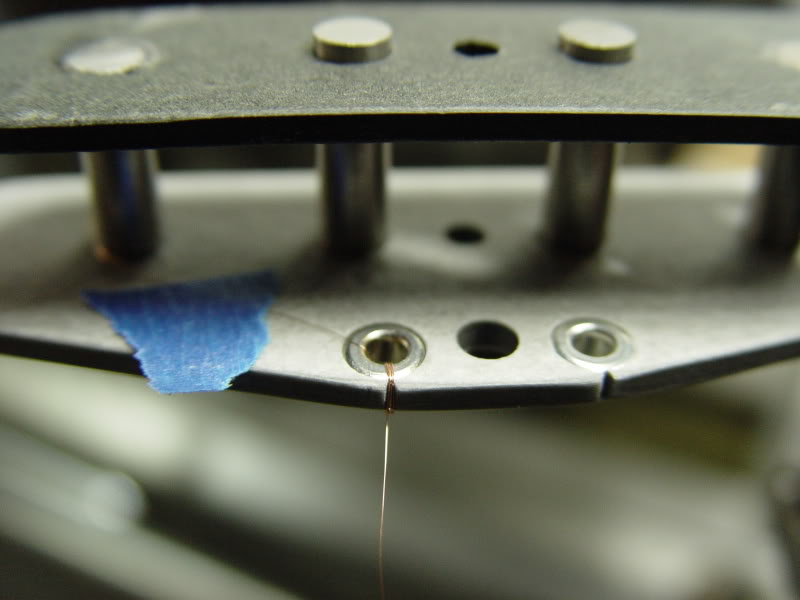
Here I have tied the 42 AWG wire to the metal ferrule. I lightly sand a few inches of the wire to remove the enamel coating then use very fine tweezers to help loop and knot. I have a lot more respect for people that make a living doing this. This wire is no thicker than the hair on your head and very difficult to see let alone tie off!!
Here's a closer look. Here you can see I've tied 8 or so loops and a knot. You may also be able to see that I've recessed the metal ferrules to keep them from snagging the wire while turning.
Pickup bobbin mounted to the backing plate and the first dozen or so turns done slowly by hand to check my travel limit bars adjustment.
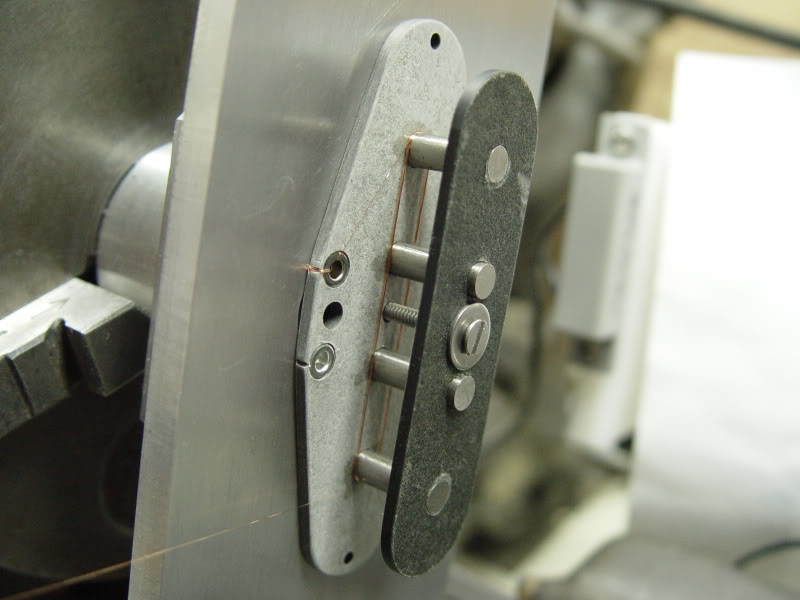
And off I go! I'm actually winding relatively slowly because my DIY counter can't keep up at a higher RPM. I have the lathe set at around 300 RPM, so it takes me about 30 minutes to do 9000 turns.
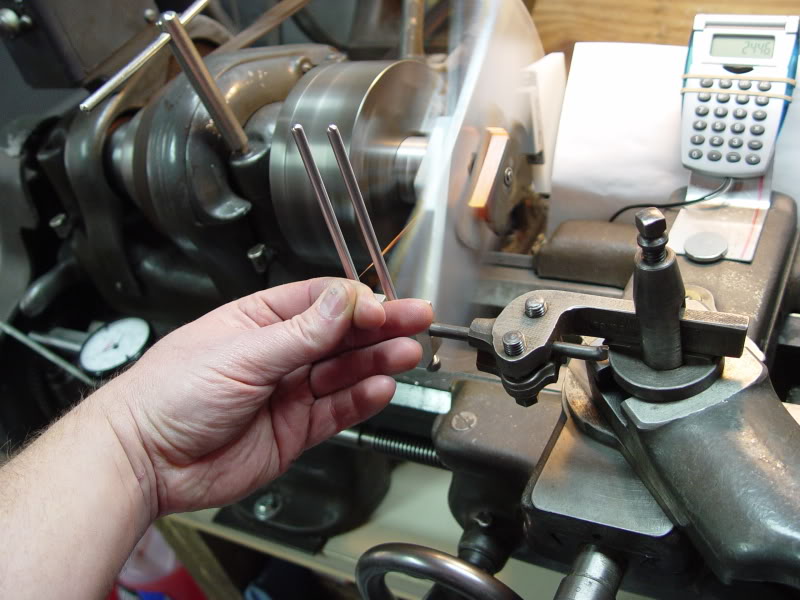
And off I go! I'm actually winding relatively slowly because my DIY counter can't keep up at a higher RPM. I have the lathe set at around 300 RPM, so it takes me about 30 minutes to do 9000 turns.
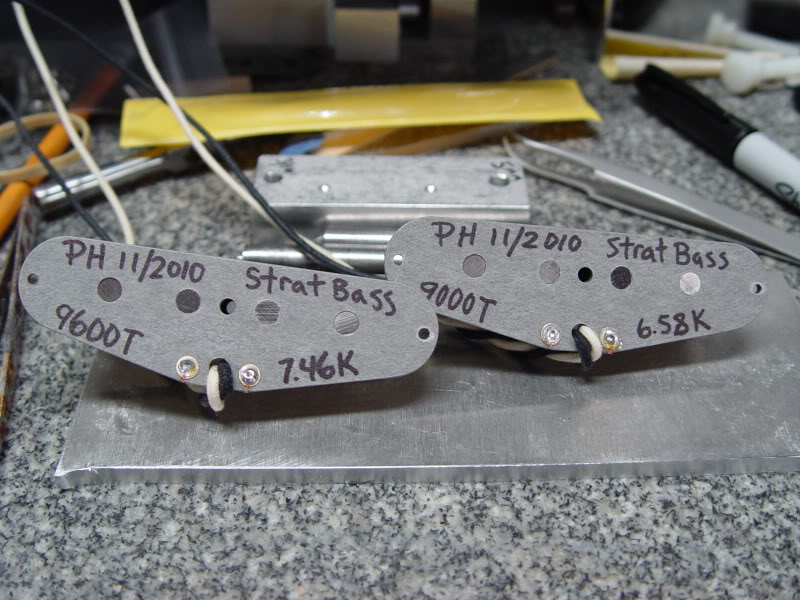
And here are the pups, all wound and wire leads soldered on. I like the white cotton string wrapping and the push back lead wires because it's old school.
Can't wait to hear these puppies!
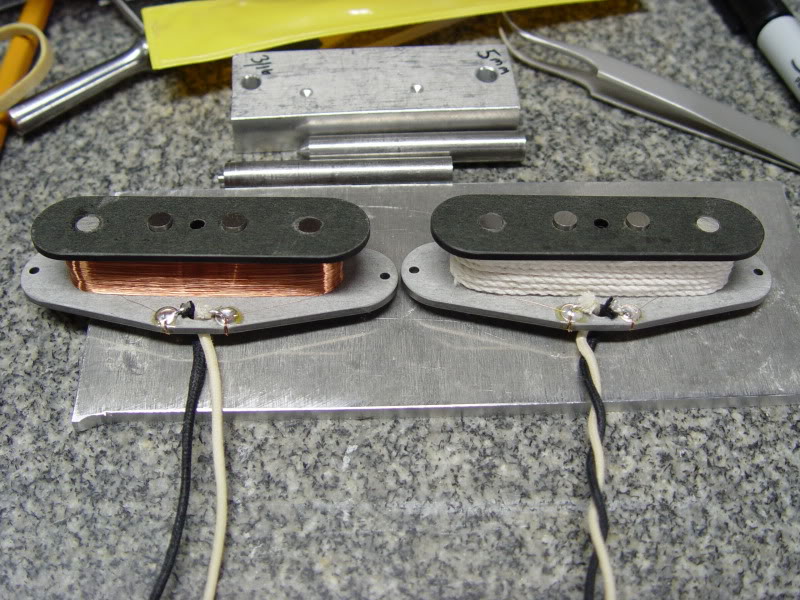
Can't wait to hear these puppies!
I wanted to wind one a little weaker than the other just to see what the difference would be. I suppose I could even switch them back and forth between the neck and mid position to which I like better. Next I have to wax pot these.

Taylor Livingston
Commercial User
This is one of the most interesting build threads I've seen in a while. Nice job, and cool documentation process.
I am absolutely loving your most recent additions on winding the pickups. Looking at your lathe setup, I realized that something similar could be worked up using a decent drill press set to its lowest speed, which I am fortunate enough to have, although I still hate you for having a nice lathe like that.
I'm curious about the effect of the gauge of wire selected. If you went to a slightly heavier wire it would take more turns to achieve the same impedance, which would mean a significantly increased mass of copper around the magnet structure. What effect, if any, would this have on the tone?
I'm curious about the effect of the gauge of wire selected. If you went to a slightly heavier wire it would take more turns to achieve the same impedance, which would mean a significantly increased mass of copper around the magnet structure. What effect, if any, would this have on the tone?

Have a look at this for a DIY setup for pickup winding. The pickup winding starts at about 2:40, but the whole article is interesting.
This is one of the most interesting build threads I've seen in a while. Nice job, and cool documentation process.
Thank you! I'm glad your enjoying it

I am absolutely loving your most recent additions on winding the pickups. Looking at your lathe setup, I realized that something similar could be worked up using a decent drill press set to its lowest speed, which I am fortunate enough to have, although I still hate you for having a nice lathe like that.
I'm curious about the effect of the gauge of wire selected. If you went to a slightly heavier wire it would take more turns to achieve the same impedance, which would mean a significantly increased mass of copper around the magnet structure. What effect, if any, would this have on the tone?
Awesome! I'm glad your digging it!
Yes, you definitely could use a drill press as a DIY winder, maybe even lay it on it's side to make it a bit easier?
The lathe I have is a 1948 8" Southbend. I got it from an estate sale where the owner had bought it brand new and just used it in his basement. This thing was never used hard and came with just about every available attachment. I told the family member that was selling, that it was worth much more than I could offer and he said just make me an offer. So I offered $500 and he accepted. I got a cool little lathe that is like new and accurate as can be!!
I'm not sure what effect using a larger gage would have. I'm guessing as long as the resistance was the same, then none at all. Just my guess though. Wind a couple up and let me know

Have a look at this for a DIY setup for pickup winding. The pickup winding starts at about 2:40, but the whole article is interesting.
That was VERY cool. Thanks for posting! I love getting a close up look at any pre CBS Fenders. Leo is my idol

I'm not sure what effect using a larger gage would have. I'm guessing as long as the resistance was the same, then none at all. Just my guess though. Wind a couple up and let me know
The number of turns gives you how much output (how 'hot') your pickup is, not the resistance. The output is actually determined by the number of turns and magnet strength (for a given string to magnet distance and string vibration).
Comparing the resistance of pickups is only 100% relevant if they are the same type (and construction) of pickups with the same sized coils, same gauge of wire and same magnet strength. It does give an indication for similar pickups as they tend to be wound with the same gauge wire. E.g. Strat single coils.
Increasing the wire gauge will drop the resistance for the same number of turns. The lower resistance may have an effect on the circuitry that the pickup feeds into. I have no direct experience of this.
Glad you liked the Tele restoration. I sing a couple of Dr Feelgood songs in the band. Pity our guitarist doesn't play like Wilko Johnson!
This is what I was getting at. The heavier gauge of wire would have less resistance per measured length, so it would require a longer total length to have the same measured resistance as one with a smaller gauge wire. This should result in more turns, and would certainly increase the sheer mass of copper. I expect that it would make them less susceptible to overload from playing "hard" because of the increased mass to be saturated by the magnetics.The number of turns gives you how much output (how 'hot') your pickup is, not the resistance. The output is actually determined by the number of turns and magnet strength (for a given string to magnet distance and string vibration).
Comparing the resistance of pickups is only 100% relevant if they are the same type (and construction) of pickups with the same sized coils, same gauge of wire and same magnet strength. It does give an indication for similar pickups as they tend to be wound with the same gauge wire. E.g. Strat single coils.
Increasing the wire gauge will drop the resistance for the same number of turns. The lower resistance may have an effect on the circuitry that the pickup feeds into. I have no direct experience of this.
Thinking of this makes me wonder if this is the secret to the "1/4 LBer".
Finally got around to wax potting the pups. My setup is an electric burner set to medium with a DIY double boiler made of steel coffee cans. Wax is a 80/20 mixture if paraffin and bees wax. Not in the pic is a candy thermometer to make sure temp doesn't go over 150F. It works perfectly and didn't cost me any additional cash other than the wax itself, I like that
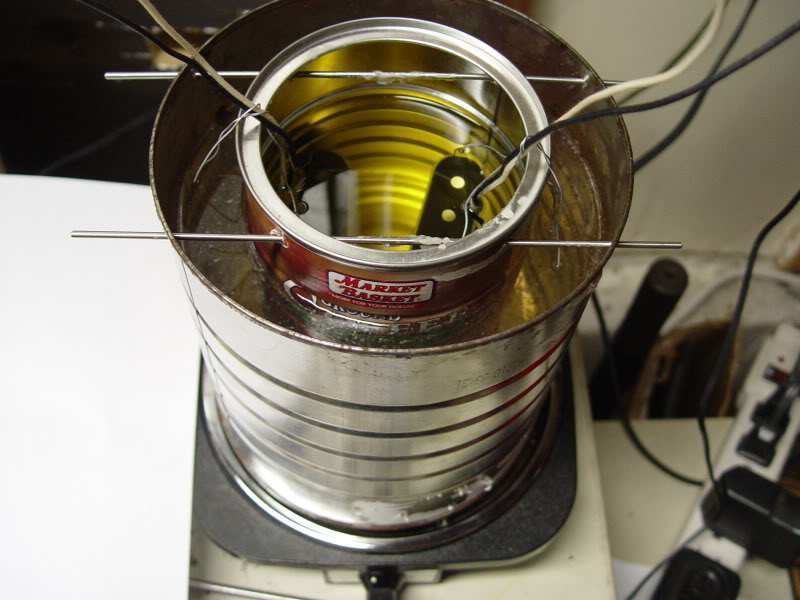
I wait about 20 minutes and make sure no more bubbles come out of the pups then pull them out and wipe the excess hot wax of the top. These are just about done.
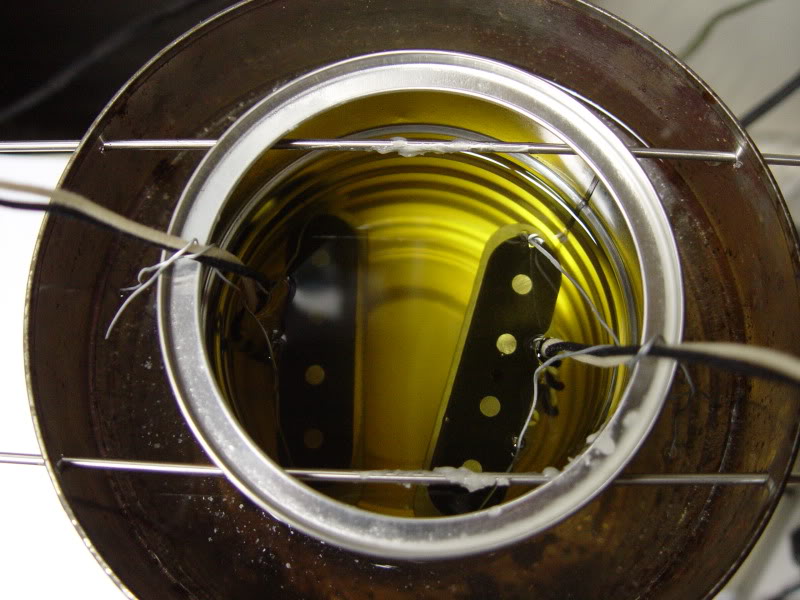
I wait about 20 minutes and make sure no more bubbles come out of the pups then pull them out and wipe the excess hot wax of the top. These are just about done.

Oh man. Strat-bass and custom pickups, and one of the most detailed pickup winding tutorials around. This is a thread made in heaven.
Subbed.
Subbed.

I made a "Stratocaster Bass" back in the early 80's. My keyboard player had an old Musicmaster bass that needed electronic work so I bought it for $50. I found a natural Strat body at a music store and used a Dremel tool to make the neck fit. Using the Musicmaster bridge, some kind of humbucking bass pickup and a blank Strat pickguard, I made a comfortable, lightweight, one-of-a-kind tone monster. After two years of roundwound string wear, a (now ex) friend who did fretwork offered to put new frets in it. I never saw the guitar or the friend again - It broke my heart. I just have memories of the tone, the fast neck and 4 hour gigs with no backache. I have no pictures of it but there are two YouTube videos that show me playing it:
It still hurts to see those videos...
It still hurts to see those videos...

I made a "Stratocaster Bass" back in the early 80's. My keyboard player had an old Musicmaster bass that needed electronic work so I bought it for $50. I found a natural Strat body at a music store and used a Dremel tool to make the neck fit. Using the Musicmaster bridge, some kind of humbucking bass pickup and a blank Strat pickguard, I made a comfortable, lightweight, one-of-a-kind tone monster. After two years of roundwound string wear, a (now ex) friend who did fretwork offered to put new frets in it. I never saw the guitar or the friend again - It broke my heart. I just have memories of the tone, the fast neck and 4 hour gigs with no backache. I have no pictures of it but there are two YouTube videos that show me playing it:
It still hurts to see those videos...
Man, that's a bummer
 Sorry to hear it was lost, sounds like a great bass. Me and my kids enjoyed the vids, thanks for posting. Do you remember what the pickup came from?
Oh man. Strat-bass and custom pickups, and one of the most detailed pickup winding tutorials around. This is a thread made in heaven.
Subbed.
Hey thanks for the compliment! I'm glad your digging it


