I use lighter string gauges because my index finger tends to become inflamed with heavier gauges. So in this case, yes, the lighter gauge makes a significant difference. I can now play 4 hour gigs with no issues. Insofar as tone goes, I'm satisfied with tone from lighter gauge strings, but then again, I'm not a tone snob. If I am sacrificing tone, it's well worth it.

Enjoy the benefits of a premium membership!
Upgrade Account
-
TalkBass has been independent since 1998. Add your voice.
Create a free account to reply to discussions, view embedded media, and browse with fewer display ads.
Join free Log in
Want zero display ads or expanded classifieds tools? Compare plans.
You are using an out of date browser. It may not display this or other websites correctly.
You should upgrade or use an alternative browser.
You should upgrade or use an alternative browser.
String Gauges... do they really matter?
- Thread starter tb-player
- Start date
More options
Who Replied?

Ric5
Inactive
- Jan 29, 2008
- 29,772
- 30,452
- Disclosures
- I like 5, 8, 10, and 12 string basses
On most of my basses I use D'Addario super light 125-95-75-60-40, but on my stingray basses I use 130-100-80-65-45, and sometimes jazz and p-basses need the 130 set, and sometimes on fender or stingray basses you need a heavier G string and the rest can be light. On fender basses a fat E and a fat B will make the bass boomy.
I find the 135 and heavier sets don't work for me
I find the 135 and heavier sets don't work for me

While I'm sure string gauge is important to playing comfort/tone for some , my only concern with string gauge is not having to rework the nut when I change strings.
I've been a 105~45 guy forever, but I also have a bass I bought that was set up for alternate tuning and stringed with a 115~55 DR DDT set. I tune it standard but I've been using the same strings to replace them when I restring it because if I string it with a 105~45 set I can't get the action I prefer without annoying non musical noise.
I've been a 105~45 guy forever, but I also have a bass I bought that was set up for alternate tuning and stringed with a 115~55 DR DDT set. I tune it standard but I've been using the same strings to replace them when I restring it because if I string it with a 105~45 set I can't get the action I prefer without annoying non musical noise.

I've used 45-105 on nearly everything since I started. I had 40-95 halfrounds on a jazz bass that I played at a church but I switched it over to 35-95 steels since I had it at home and just wanted to experiment and the D and G strings are way too light for me, the lower tension just doesn't feel right. The 95 E string feels a bit too light too, with fingers it's okay but with a pick it's just not enough resistance for me.

I have always tended toward nickel strings with lighter gauges. On a 5-string my preference has typically been 120|100|80|65|45. On a 4, I use the same, minus the 120. I usually play D'Addario XL Nickels.
Just recently, I got a deal on some Pure Blues, so I nabbed them. The gauges are 125|105|85|65|45. I had to (barely) adjust the neck on a couple of my basses, but I didn't really notice any relevant differences from a playing or tone perspective. So it got me thinking... do those minor gauge differences really affect my playing?
In another instance, my MTD 535-24 came with MTD-brand nickel strings. The gauges were 45-130. As an experiment, I left them on just to see if they made any significant difference. The feel of the strings was different (that's a brand-thing, I think) and the 130 definitely felt bigger than my normal 120. But after a few minutes of playing, it wasn't a big deal. And the tone sounded like my bass... with a little extra 'boom' on the B.
At the end of the day, I'm not entirely convinced that minor differences in string gauges matter all that much. What has been your experience?
With a good eq a lighter set can be beefed up a bit as far as sound goes. Attack is another matter...
You either need strings that work well with your playing style or adjust your technique to fit the string. That's a minor thing that anyone could do, but getting a string that fits you seemsthe better choice.
Two different brands of same guage strings can feel lighter or heavier. I had some Blues that I could never get a feel for, but swapped out for Nickel Dunlops of the sane gauge and they feel and sound great.
Much depends on feel, that's important. If they feel good, I play better. I don't like to fight the strings to get the sound and playability I want.

I agree 100%. On my electric guitar, I play 9s. 10s are way too thick and I don’t like how they feel. 8s feel like they’re gonna snap at any moment.Now for a derail, I play 9s on my guitars and I can definitely feel a difference if I try 8s or 10s.
So I guess my original argument is more for bass strings. On guitar, I’m extremely picky.

You either need strings that work well with your playing style or adjust your technique to fit the string. That's a minor thing that anyone could do, but getting a string that fits you seems the better choice.
Much depends on feel, that's important. If they feel good, I play better. I don't like to fight the strings to get the sound and playability I want.
+1
At age 64 and after four hand surgeries (two on each hand), I had no choice but to adjust my playing technique to be kinder and gentler to my battle-scarred hands. And that meant going lighter with the gauges.
Now I'm playing better because I'm not constantly fighting with the strings. And I don't feel like I've lost anything in overall tonal quality by going lighter.

I don’t like super floppy strings but other than that, I don't care too much about the tension or texture. I can hear and feel it, but I get used to it quickly. I play only 5 strings, and what I am picky about is the sound and feel of the B string compared to the other strings. I feel in general that 34” sounds a bit better than longer scales, and for most brands a B less than .130 is a bit too loose and buzzy compared to the other strings, and a .125 can sound kind of rubber bandy or hollow. I can make almost any string sound ok with technique, but I would prefer to not have to use a different touch on the B string than other strings.

i like lighter gauges, i'm used to those (round wounds) so i'm not really a fan of thick strings. that said: i think you're right = small differences don't matter much. but string compliance (what everyone calls "tension" and "stiffness") is more important to me...lighter gauges tend to be more compliant, IME. string choices (brands/models) have become a habit for me. but i can play anything for three or four hours. night-after-night i'd prefer to have my preferences.At the end of the day, I'm not entirely convinced that minor differences in string gauges matter all that much. What has been your experience?

I have always found that heavier gauge strings can boost your output quite a bit, if no other setup change is made. I went from 105s to 110s and these strings will clip preamp sections that are meant to be clean. on a passive p-bass.I have always tended toward nickel strings with lighter gauges. On a 5-string my preference has typically been 120|100|80|65|45. On a 4, I use the same, minus the 120. I usually play D'Addario XL Nickels.
Just recently, I got a deal on some Pure Blues, so I nabbed them. The gauges are 125|105|85|65|45. I had to (barely) adjust the neck on a couple of my basses, but I didn't really notice any relevant differences from a playing or tone perspective. So it got me thinking... do those minor gauge differences really affect my playing?
In another instance, my MTD 535-24 came with MTD-brand nickel strings. The gauges were 45-130. As an experiment, I left them on just to see if they made any significant difference. The feel of the strings was different (that's a brand-thing, I think) and the 130 definitely felt bigger than my normal 120. But after a few minutes of playing, it wasn't a big deal. And the tone sounded like my bass... with a little extra 'boom' on the B.
At the end of the day, I'm not entirely convinced that minor differences in string gauges matter all that much. What has been your experience?
On my Bass VI, gauge matters a lot for tone. The 0.26-.084 strings that come on these instruments are weak for bass-focused purposes. I went up to 0.26-.095 and 0.024-.100, which were improvements, but the 0.25-.105 set I have on there now is the best that the instrument has ever sounded.


It makes such a difference to me I play 9.5 gauges (ok on electric guitar)
When I buy bass strings, which can be less often than I buy basses, I don’t even really know what gauge I prefer I just take the lightest pack of daddarios in stock.
I recently bought a bass with really light gauge strings stock and love them, so I plan to order more of those next time I get around to buying bass strings.
When I buy bass strings, which can be less often than I buy basses, I don’t even really know what gauge I prefer I just take the lightest pack of daddarios in stock.
I recently bought a bass with really light gauge strings stock and love them, so I plan to order more of those next time I get around to buying bass strings.
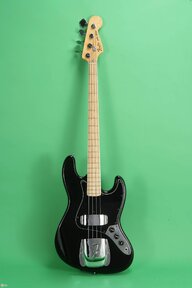
I will give 35-90 a try soon.
Given my experience with this gauge, you may not be sorry. You may find you like it a lot.
I use lighter string gauges because my index finger tends to become inflamed with heavier gauges. So in this case, yes, the lighter gauge makes a significant difference. I can now play 4 hour gigs with no issues. Insofar as tone goes, I'm satisfied with tone from lighter gauge strings, but then again, I'm not a tone snob. If I am sacrificing tone, it's well worth it.
It took me years to realize this. If your fingers hurt after the gig, you likely need to change your attack and maybe your string gauge.
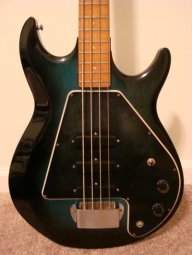
LowNloud1
Commercial User
- Jun 11, 2012
- 711
- 1,100
- Disclosures
- I am a hobbyist making stone picks that I sell but mostly give away. They made me do this anyways.
50-105 for deeper tone. I have settled on this gauge after years of testing and I got tired on having to intonate whenever I changed gauges.

I use lighter string gauges because my index finger tends to become inflamed with heavier gauges. So in this case, yes, the lighter gauge makes a significant difference. I can now play 4 hour gigs with no issues. Insofar as tone goes, I'm satisfied with tone from lighter gauge strings, but then again, I'm not a tone snob. If I am sacrificing tone, it's well worth it.
Where about does your index finger becomes inflamed, if I may ask? Looks like I have a similar condition on the outer side of the second joint (proximal interphalangeal) of my index finger of the fretting hand.
Where about does your index finger becomes inflamed, if I may ask? Looks like I have a similar condition on the outer side of the second joint (proximal interphalangeal) of my index finger of the fretting hand.
My index finger (plucking hand) becomes inflamed at the knuckle where it meets the hand. Lighter gauge strings have pretty much eliminated this problem. That, and a conscientious effort to play with a lighter touch, although I don't consistently adhere to this.

I always use Cobalt 50–105....whenever I get a new bass, they are inevitably strung with a .45 G string...I give them a shot , but it just doesn’t work for me....unlike many other posters, I actually feel as though I have to work harder with lighter gauge, particularly with rapid staccato passages.
I do enjoy the expressiveness of lighter strings, but unless I get a gig someday where a roadie is standing by with different basses for different types of songs, I’ll be sticking with the, as a friend called them, “suspension bridge cables” I’ve used for years.
I do enjoy the expressiveness of lighter strings, but unless I get a gig someday where a roadie is standing by with different basses for different types of songs, I’ll be sticking with the, as a friend called them, “suspension bridge cables” I’ve used for years.

I don't think my fingers have ever noticed the difference in the actual physical dimensions, but my ears and fingers really appreciate the slight change that comes with the extra tension going from 40-60-80-100 to 45-65-85-105. Perhaps it's because my very gentle touch needs that more nervy quality in the string to give something that doesn't come naturally from my fingers.I can feel a difference between a 40-100 set and a 45-105 set
I've only ever bought brands with generally high tension - perhaps with other brands I would have to use 50-110 strings to get that sensation. Don't feel inclined to find out!


For me, yes. I'm a pick player and I find there's more oomph with medium and higher gauges, the attack is faster and the sound has more projection.

It does to me, especially in terms on flexibility and ease of fretting, vibrato (which I use a fair share of), and bends, and to a lesser degree tone as well.
Personally I prefer light gauge, too thick with too much tension and you loose sustain, snap and bite, and since I play short scale the E string if too thick with too much tension it becomes too inflexible and have almost no sutain and becomes really thuddy.
What many don't realize, is that strings with the same tension and of the same thickness, if that was possible, will feel considerably stiffer the shorter the scale, as in being less flexible, which leads to the common misconception that short string basses needs higher gauge strings than you would use on a regular 34" scale bass.
This is basic physics, take a stick and extend it like a bridge between two raised points, the further apart the two points is the less force will be required to bend it on the middle, as in becoming more flexible, the closer distance between the two raised points the more force will be required to bend the same stick on the middle, as in becoming less flexible.
That's one of the main reasons why you typically will use strings with much much less tension on a guitar, the much shorter scale simply makes the strings still be sufficiently stiff to be playable, whereas the same tension on a 34" scale bass would become a flop fest.
In my opinion people generally will use too thick gauged strings on their short scales, resulting in a thuddy dead tone, for better tone they should use lighter gauged strings and instead adjust there picking technique to pick lighter.
I'd claim that a gauge .100 - .080 - .060 .045 string set would be just about ideal for a 30" scale bass, and actually I even personally prefer a .095 - .075 - .055 - .040 set, which, despite having less tension, in my experience still will feel less floppy than if put on a 34" scale bass, because of the increased relative stiffness that comes with the shorter string span of a 30" scale bass.
Personally I prefer light gauge, too thick with too much tension and you loose sustain, snap and bite, and since I play short scale the E string if too thick with too much tension it becomes too inflexible and have almost no sutain and becomes really thuddy.
What many don't realize, is that strings with the same tension and of the same thickness, if that was possible, will feel considerably stiffer the shorter the scale, as in being less flexible, which leads to the common misconception that short string basses needs higher gauge strings than you would use on a regular 34" scale bass.
This is basic physics, take a stick and extend it like a bridge between two raised points, the further apart the two points is the less force will be required to bend it on the middle, as in becoming more flexible, the closer distance between the two raised points the more force will be required to bend the same stick on the middle, as in becoming less flexible.
That's one of the main reasons why you typically will use strings with much much less tension on a guitar, the much shorter scale simply makes the strings still be sufficiently stiff to be playable, whereas the same tension on a 34" scale bass would become a flop fest.
In my opinion people generally will use too thick gauged strings on their short scales, resulting in a thuddy dead tone, for better tone they should use lighter gauged strings and instead adjust there picking technique to pick lighter.
I'd claim that a gauge .100 - .080 - .060 .045 string set would be just about ideal for a 30" scale bass, and actually I even personally prefer a .095 - .075 - .055 - .040 set, which, despite having less tension, in my experience still will feel less floppy than if put on a 34" scale bass, because of the increased relative stiffness that comes with the shorter string span of a 30" scale bass.
Last edited:


