I learned from method books in the 70’s too. Carol Kaye, Mel Bay had the G string as 1st string. Who wrote the method books you used?Way back when I learned from a live teacher and various bass method books in the late 70's, low E was the first string. However, messing around with guitar lessons a few years ago, the guitar books I used usually called the high E the first string.
Thinking about it more, it makes no difference to me as I know my fingerboards and reference everything by note, not string and fret position.

Enjoy the benefits of a premium membership!
Upgrade Account
-
TalkBass has been independent since 1998. Add your voice.
Create a free account to reply to discussions, view embedded media, and browse with fewer display ads.
Join free Log in
Want zero display ads or expanded classifieds tools? Compare plans.
You are using an out of date browser. It may not display this or other websites correctly.
You should upgrade or use an alternative browser.
You should upgrade or use an alternative browser.
String numbering convention
- Thread starter Jogobass
- Start date
More options
Who Replied?
I learned from a DB player in 1971. We used Carol Kayes's books. The highest string (G) was considered the 1st string and was the first one addressed. This is likely due to the fact that it's easier to reach for a new player (using proper hand and thumb positioning). FYI my teacher played five string basses at the time, all with high C strings. He had 5 string double basses and an early Fender V. So for him the first string was C.
I believe most method books for strings (violin, viola, cello) address the highest string as the 1st string. There is a difference between learning bass guitar from a bassist vs. guitarist.
Flash forward to 2023, having gone through many different string numbers on my basses (4,5,6), I have settled on only 5er's with a high C. This is not for range, but mostly for getting to high notes with minimal shifting.
It is fun to play with the upper tensions of chords. When I did use a 6 string, I was playing "newer" tunes that sounded good with low D's and Eb's. I also played distorted "guitar" solos and slide on the upper strings.
Now I play mostly charted material that requires reading.
I learned using the Carl Kaye books too. Yeah, G string was the 1st string, never really thought about it after that. And as has been said, there's a long history with stringed instruments using this convention.
And a world where up is down is just too confusing for my poor little brain.



What throws me is that some people list the notes of the strings the wrong way ‘round— on guitar I’ve always heard/seen it as EADGBE, but some people say EBGDAE. They even have a phrase to remember it: “Easter Bunny Gets Drunk After Easter.”

I think it should matter, which is why I ask about it. What do we teach our students if there is no standard? And if there is a standard, why is it like that? I should have made a poll about this, to gauge the actual spread of either way of numbering.
The standard is that the highest sounding string is number one. It’s like that with all string instruments for ages. Why change that?

I think it should matter, which is why I ask about it. What do we teach our students if there is no standard? And if there is a standard, why is it like that? I should have made a poll about this, to gauge the actual spread of either way of numbering.
I have a few students, right now and I am always correcting them. It is important.
As one moves from the first fret toward the 12th fret, the tones go UP. So, musically, we're moving up.
Likewise with the strings. As we move from the upper-most string to any string closer to the floor, the tones are going UP. Musically, we're moving UP.
I think it is very important and I'm very glad I'm not alone.

Yeah. As I stated, I spent a decade playing in a band with a horn section. Thanks for mansplaining it to me thoThat’s because music written in
Bb (concert key) is C for trumpet and other Bb instruments such as tenor saxophone

As some kind of resume: So we all agree
- that the highest pitched string is number one by convention
- — and that it is common to list tunings starting with the lowest pitched string (say BEADG), so with the first string listed last?

I learned from method books in the 70’s too. Carol Kaye, Mel Bay had the G string as 1st string. Who wrote the method books you used?
I honestly don't remember. If you remember it that way, it apparently wasn't Mel Bay.
Yeah, there's no real need. It's not that hard to figure out, and once you know it, you know it. It makes more sense to learn it than to try to mount some quixotic doomed-to-fail campaign to change it. Highest pitch is 1, like the apex of a pyramid.The standard is that the highest sounding string is number one. It’s like that with all string instruments for ages. Why change that?
Descriptions of instrument tuning are a somewhat different matter. It's true that these days, at least in "popular" music circles, bass is usually described as EADG and guitar as EADGBE (or, for example, DADGAD if you use a different tuning). I would guess this is based on proximity or practicality rather than pitch--which tuner is closest to you when you want to tune the thing, or which string do you see first when you look down?
And just to confuse things further, how would you number/label the strings for a player who plays left-handed but doesn't reverse the strings, like Jimmy Haslip?
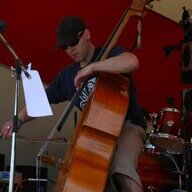
While I do agree that when you first pick up a bass, it seems like the E should be the 1st string… but, many method books for double bass will specify the string and fingerings for certain passages. Some composers will also specify what string you should play a passage on (for a certain timbre, etc.) Stringed instruments in the orchestra all denote their top strings as “1st” (a practice that’s been going on for a looooong time). While you may not need to refer to strings by their number in everyday usage, it does happen in notation every so often. Since the electric is descended from the double bass, it’s inherited this practice (imperfect or not).
Last edited:

I don't refer to the strings by number.
I refer by the tuning.
This. !00% unambiguous
"lower/Higher/up/down" always refers to pitch for me, as well.
I try to avoid "spatial" language when describing the execution of something on a bass.
Not necessarily. I have two B strings on my bass.This. !00% unambiguous

I find that people without musical training tend to think of lower as closer to the floor, so G is the lowest string, and playing lower on the neck means toward the floor.
Whereas people with musical training tend to think in terms of pitch, so E is the lowest string, and playing lower on the neck means playing lower in pitch.
This creates a lot of confusion when someone talks about lower or higher strings, because you don’t know which perspective they are coming from.
Whereas people with musical training tend to think in terms of pitch, so E is the lowest string, and playing lower on the neck means playing lower in pitch.
This creates a lot of confusion when someone talks about lower or higher strings, because you don’t know which perspective they are coming from.
Yeah, there's no real need. It's not that hard to figure out, and once you know it, you know it. It makes more sense to learn it than to try to mount some quixotic doomed-to-fail campaign to change it. Highest pitch is 1, like the apex of a pyramid.
I find that people without musical training tend to think of lower as closer to the floor, so G is the lowest string, and playing lower on the neck means toward the floor.
Whereas people with musical training tend to think in terms of pitch, so E is the lowest string, and playing lower on the neck means playing lower in pitch.
This creates a lot of confusion when someone talks about lower or higher strings, because you don’t know which perspective they are coming from.
That’s exactly the case. Almost all students I teach think the lowest sounding string on is the first when the just start.
But pitch is more important. That’s an easy rule. Highest pitch first. No need to change that or make it more complicated than it is. There are more important things to worry about.
in musical instruments makes sense to name and number things with musical logic. so that is the convention. you can like it or not, make sense to you or not, but that is how things are
high pitches go up the neck, low pitches go down the neck.
the ones who play the higher notes are the 1st violin, the 1st trumpet... so 1st string, 2nd string...
high pitches go up the neck, low pitches go down the neck.
the ones who play the higher notes are the 1st violin, the 1st trumpet... so 1st string, 2nd string...

I've been playing bass for about 30 years, initially self taught, but later had some lessons. Now what always confuses me is the convention to number the strings from high to low. Meaning that the G string is number one and E string is 4th string. This happens in the guitar world too, with the high E being called the first string. I've looked it up in english and in my native language, Dutch. And it's being taught the same regardless of language. For me, the lowest string has logically been the first string, and the highest string is the 4th (or 5th, or 6th) string.
Also, I've come across people who call playing up the neck (higher notes) playing down the neck. This is apparent in some instructions by teachers. Leading to confusing statements like: play down the neck toward the 12th fret and the notes will become higher.
I was wondering where this convention started, and what the logic behind it is, for the people that have been taught and are teaching this way?
I originally learned musical notes on a keyboard, where the notes from low to high are from left to right, just like our reading in western countries. For some reason I find it logical to see the bass (or guitar) that way. Left to right is low to high. And the low string is the first string, also because counting the notes goes from low to high in most instructional material. (for left handed players left and right reverse, but low to high is still the same)
Old lite tablature had the strings numbered in this way, according to several sources. According to tradition, that’s where the convention comes from.


