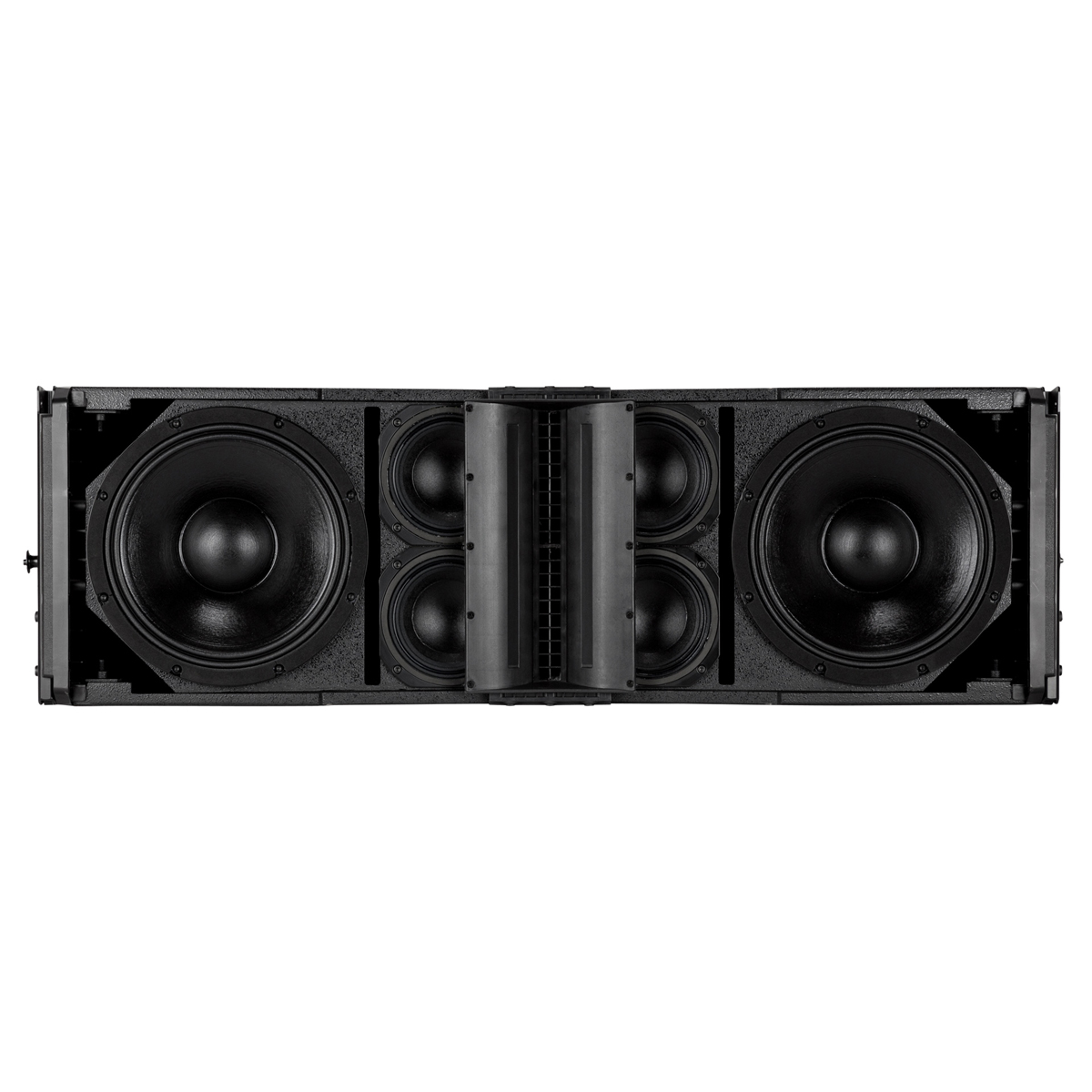
FWIW, I think the Genzler Bass Array is much more efficient way to achieve the same objective.
Nothing of great concern or impact, sound waves intersect all the time. As long as the path lengths and arrival times are coherent where the signal sums, there’s no negative impact.
A far more elegant solution without the LF penalties and much lower distortion in the upper midrange. This is an extreme example of evolution.
Alright, now I'm going to ask something I've always wanted to ask - why doesn't the little bar of tiny speakers in front of the big speaker cause problems? I mean, obviously it doesn't, but whenever I see one of those I go "there's something BLOCKING the speaker"
I take this as you recommending the cab?
My dream backline is a 4×15 cab with a Trace Elliot or Ashdown head with the goal bass tone being a Metallica/Iron Maiden/Motörhead mix
If I wanted validation, I'd ask for my parents' opinion.
It was nice seeing someone who seem to understand my point of view, that doesn't automatically mean that I will base my decision on that alone.
The more i read this thread, the more I wonder whether the cabinet was the problem, or rather the original drivers.
The aesthetics is part of it, both my guitarists play tube heads with 4x12s, making my 1x15 ashdown combo, (although a KILLER amp) looking puny in comparison.
Tone is also part of it; I've always preferred 15" driver amps (and apparently, so did Lemmy)
Finally it's the OCD part of my mind that say you're "supposed to" have 4 drivers in a "propper" cab (and I honestly can't stand the thought of assymetric mounted drivers, even if it isn't visible trough the grill cloth)
Alright, so, I'll talk about a few things here as someone who plays a similar genre of music - the drivers are definitely an issue. I don't actually have a Sunn 115BH, I have a Monolith 115BH - Monolith was a small, local company (I think a one-man operation) who did a lot of work "updating" Sunn products to more modern specifications. So I have that 115BH above but with a much more efficient modern driver in it, and it's made of higher quality wood with a few other tweaks that I don't remember. Monolith had a few threads here but the company went up in flames and the guy took the money and ran - I bought this cabinet used for like $200 last year.
A huge amount of those players' tones come from the way they play and sculpt things at the amp level, rather than at a cabinet level. As has been pointed out, all of their tones are quite different, but I assume you are looking for a grindy, slightly clanky, fuzzed-out metal kind of sound. This is fortunately very easy to get.
A 4x15 is going to look cool, but the trade-offs with modern stuff just aren't worth it, by which I mean you can get those same tones of those same players from a much smaller, lighter cabinet. I understand the aesthetics here as both of my guitarists also play tube amps with 4x12s, but unfortunately the initial responses you got are correct - there is a reason that nobody makes 4x15 bass cabinets anymore. A well-constructed 4x10 will get you good tone in an aesthetically comparable package, or of course you can follow in the footsteps of our ancestors and get an 8x10. If it were me, I would find an amp whose sound I am happy with and then try to find a cabinet that can authentically reproduce that sound. If you like Ashdown, great - they make some killer heads and an 8x10. Problem solved.