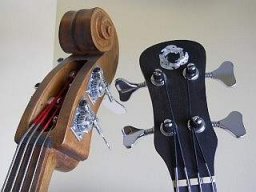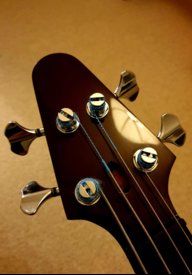
I've been mulling over my next build for a while, and figured if I start a thread then I might actually get on with it. I've built a few basses for myself now, and whilst they've all been playable, I always end up going back to my trusty mim p bass. My only issue with it is it's weight. I'm not getting any younger, and it's not getting any lighter! So I'm going to try and make a close as possible copy of it, particularly the neck which I love, but hopefully a lot lighter.
Last time I was at my timber dealer I picked up a couple of chunks of European Lime (tilia x europaea, not related to the citrous tree). This is closely related to what our cousins in the west refer to as "basswood"… same genus different species. The wood database tells me it's a little heavier than basswood (not good) but also quite a bit harder (good). This will be heavily chambered (when does heavily chambered become semi hollow?) so hopefully that will negate the extra weight.

I've got a couple of options for a top, leading contender is this nicely figured walnut I saved from becoming a kitchen door at work.

I also have some more walnut stashed away to use for the neck, possibly with some sycamore stringers, and I also have some carbon fibre tow which I've never used before so will give that a go.
The lime is not particularly handsome and there's a quite a few small knots so I may end up painting the back, to be decided later.
Last time I was at my timber dealer I picked up a couple of chunks of European Lime (tilia x europaea, not related to the citrous tree). This is closely related to what our cousins in the west refer to as "basswood"… same genus different species. The wood database tells me it's a little heavier than basswood (not good) but also quite a bit harder (good). This will be heavily chambered (when does heavily chambered become semi hollow?) so hopefully that will negate the extra weight.
I've got a couple of options for a top, leading contender is this nicely figured walnut I saved from becoming a kitchen door at work.
I also have some more walnut stashed away to use for the neck, possibly with some sycamore stringers, and I also have some carbon fibre tow which I've never used before so will give that a go.
The lime is not particularly handsome and there's a quite a few small knots so I may end up painting the back, to be decided later.