
• TalkBass has been independent since 1998. Add your voice.
    Create a free account to reply to discussions, view embedded media, and browse with fewer display ads.
    Join freeLog in
    Want zero display ads or expanded classifieds tools? Compare plans.

Tech 21 bass fly rig

I have had to return my first. Loose connections inside. They tried to repair it and there was no improvement. Finally the store stepped in and outright replaced it. A friend of mine got one and it was bad out of the box. These were both early units if that matters.

My biggest beef is that it can't take a hot signal from an active bass w/o distorting. Don't need the SansAmp part :-).
It starts to distort when an active bass runs hard into it with tone controls up. Despite what some say I do think cutting the volume at the bass does effect tone, dynamic range, and a certain raw feel. It gets to the point I don't need the SansAmp section. I mentioned it to TC21 and they took an attitude about it. I was not really impressed with them.

The more I look at the BFR- the more it seems a quick and easy item to take to practice but a pedal board is still needed for gigs. I love the lights on it though :-). It really cleaned up my pedal area and lightened my load. Did I say I like the lights?

I have not gone back to my SansAmp Paradriver yet - I would need set that up with an MXR Flanger. But at that point I would have all that I needed.

One thing I have tried that might work out is I have an MXR 10 band before the BFR. It has pre and post volume controls. I can lower the input signal at this point with something active and not have to drop signal at the bass.

 
I have had to return my first. Loose connections inside. They tried to repair it and there was no improvement. Finally the store stepped in and outright replaced it. A friend of mine got one and it was bad out of the box. These were both early units if that matters.

My biggest beef is that it can't take a hot signal from an active bass w/o distorting. Don't need the SansAmp part :).
It starts to distort when an active bass runs hard into it with tone controls up. Despite what some say I do think cutting the volume at the bass does effect tone, dynamic range, and a certain raw feel. It gets to the point I don't need the SansAmp section. I mentioned it to TC21 and they took an attitude about it. I was not really impressed with them.

The more I look at the BFR- the more it seems a quick and easy item to take to practice but a pedal board is still needed for gigs. I love the lights on it though :). It really cleaned up my pedal area and lightened my load. Did I say I like the lights?

I have not gone back to my SansAmp Paradriver yet - I would need set that up with an MXR Flanger. But at that point I would have all that I needed.

One thing I have tried that might work out is I have an MXR 10 band before the BFR. It has pre and post volume controls. I can lower the input signal at this point with something active and not have to drop signal at the bass.

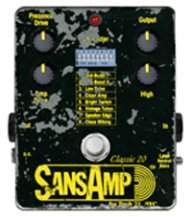
Weird. I've run an active, and a very hot passive bass into it without issue. I'll assume you tried the pad button... sounds like a defective one.

Still giggin' along with mine. Filling in with another band this weekend, looks like may have some use for the fuzz/octave/synthy stuff, so will experiment a bit.
 
I have had to return my first. Loose connections inside. They tried to repair it and there was no improvement. Finally the store stepped in and outright replaced it. A friend of mine got one and it was bad out of the box. These were both early units if that matters.

My biggest beef is that it can't take a hot signal from an active bass w/o distorting. Don't need the SansAmp part :).
It starts to distort when an active bass runs hard into it with tone controls up. Despite what some say I do think cutting the volume at the bass does effect tone, dynamic range, and a certain raw feel. It gets to the point I don't need the SansAmp section. I mentioned it to TC21 and they took an attitude about it. I was not really impressed with them.

The more I look at the BFR- the more it seems a quick and easy item to take to practice but a pedal board is still needed for gigs. I love the lights on it though :). It really cleaned up my pedal area and lightened my load. Did I say I like the lights?

I have not gone back to my SansAmp Paradriver yet - I would need set that up with an MXR Flanger. But at that point I would have all that I needed.

One thing I have tried that might work out is I have an MXR 10 band before the BFR. It has pre and post volume controls. I can lower the input signal at this point with something active and not have to drop signal at the bass.

Dealers aren't usually able to repair our units. On a new unit, they should just send you a replacement and send us back the faulty one for repair. We have had customers complain about the headroom and it's usually a case of having the headphone button depressed. To optimize the unit you should have all effects bypassed with the Pad disengaged and play your bass normally to see if there is any distortion. If there is, engage the Pad. It's not advisable to run an active bass with the tone controls up. The tone controls on an active bass are just an internal preamp which kind of defeats the purpose. That's fine if you are going direct to the board or want to make small adjustments but doubling a preamp into a preamp can be problematic on a number of fronts. There is the gain staging to consider and also with EQ there are phase issues as well.

Sorry man but lowering the volume of an active bass is the same as lowering the volume on a preamp like our Bass Driver DI or the channel on a mixer. It changes the level and nothing more. Any tonal or dynamic difference is due to the volume and the fletcher munson curve.

The Bass FlyRig was developed after numerous requests for a bass version of our guitar Fly Rig 5. The goal was for a lightweight, compact unit that could be used for "fly dates" or casual gigs for a quick and easy set up. It was never intended as a replacement for a big pedal board.
 
Sorry man but lowering the volume of an active bass is the same as lowering the volume on a preamp like our Bass Driver DI or the channel on a mixer. It changes the level and nothing more. Any tonal or dynamic difference is due to the volume and the fletcher munson curve.

This depends on the bass. If the volume control is after, or part of, the active circuit then you are correct. However some basses, particularly those with active/passive switching have the volume control before the preamp stage, where making adjustments affects the loading on the pickups and therefore the tone.
 
I run mine straight into the PA system, so it shouldn't be a problem.

Not a like-for-like comparison, the PA mixer is effectively a preamp able to boost the signal of low levels like mics up to where they need to be, but most power amps expect a hotter line level signal at the input. I don't know the answer to the question, but I would hazard a guess as 'probably'. The original VT had quite a range on the volume knob to allow for this, but this led some users to complain it was too touchy and difficult to control the volume when trying to keep it at unity gain. No idea if the BFR is like this or not though!
 
Does anyone know if the BFR can drive a power amp? The BDDI as well as the VT Bass both have enough juice to drive but it doesn't say in the manual if the BFR's output is enough to do so.

It would depend on the input requirements of the power amp. Driving a power amp is kind of a loaded question. On internet forums it means drive to full output which is the last thing you want to do with a SS amplifier. You can always switch to the headphone mode which should provide more than ample output.

This depends on the bass. If the volume control is after, or part of, the active circuit then you are correct. However some basses, particularly those with active/passive switching have the volume control before the preamp stage, where making adjustments affects the loading on the pickups and therefore the tone.

True, placing a passive volume control behind a circuit will mean you're impedance and tone will not remain constant. Not a good design for an effect or a preamp. Of course it also begs the question that if lowering your volume control = bad tone, what's the point of having a volume control. Either way, engaging the PAD and gain staging the pedal properly should work in most cases.
 
It would depend on the input requirements of the power amp. Driving a power amp is kind of a loaded question. On internet forums it means drive to full output which is the last thing you want to do with a SS amplifier. You can always switch to the headphone mode which should provide more than ample output.


True, placing a passive volume control behind a circuit will mean you're impedance and tone will not remain constant. Not a good design for an effect or a preamp. Of course it also begs the question that if lowering your volume control = bad tone, what's the point of having a volume control. Either way, engaging the PAD and gain staging the pedal properly should work in most cases.
The power amp I use is a Crown XLS1500 that is driving either a 410 or 210 depending on the venue. As I'd mentioned before I've been using a BDDI on a pedal board to send signal to the Crown and I'm hoping the BFR will replace that entire board. I get it in today so I'll try it with the headphone button engaged and not engaged and see what the difference in signal to the Crown does to the output. Hopefully one of those signals will be enough.
 
I'm considering picking up a BFR this weekend. I use minimal effects - tuner, compressor, sometimes a boost. I usually run a G-K MB-500 and a Neo 4x10.

Question, though - how well does the BFR tuner track a low B? I'm currently using an older PolyTune which tracks exceptionally well.
 
I used my new BFR this past weekend at a gig and it performed excellently. I used it as a preamp going into my Crown XLS 1500 power amp driving an SWR Goliath 410. The signal from the BFR with the headphone button engaged was enough to drive the power amp without issue so that was great to see. I also ran to the front of house but for some gigs I do the PA support isn't always great so it was good to see that it works just as well with my power amp set up.

I replaced a medium sized pedal board that has a BDDI on it with the BFR so I was curious as to the tone difference overall. I found that the BFR produced a great tone and I was able to go from deep thump to bright piano tone modern sounds very easily. I was using a Fender Jazz with Dunlop Steel strings so my tone was already bright and modern coming off my bass.

The compressor and chorus both worked excellent and I used them quite a bit through out the evening. The comp was fairly transparent and I didn't mind that it was just a one knob adjustment though if you like to control attack and threshold I wouldn't worry about it because it was never heavy handed. I pretty much left it on the whole time. The chorus is also well voiced and can go from just a touch to full on Duff Mckagen or Cure shimmery if you like that much chorus without messing up your low end or getting to mushy. I did set up the octave/fuzz using the Moog setup from the settings guide but never used it but it sounded good at sound check. I didn't care for the fuzz on the BFR on its own so I use it only with the Octa feature. For overdrive I use a Boss ODB going into the BFR so that I can have an over driven sound when I need it but still have a basic clean tone as well.

Overall I am very pleased with the BFR and it performs just like I hoped it would so it'll make my road gigs much better when I just bring a bass and pedal board to gigs and not my amp. Thanks Tech 21!
 
Thanks for the demo. I was almost going to buy this. I'll wait for the next version.

Not so fair test.
In this video bass plugged into BFR, then into Mooer, then into Zoom. Mention SansAmp section engaged. Inside BFR octaver goes before SansAmp section, and SansAmp has some natural speaker bass rolloff. So BFR octaver gets raw signal and lose some lows then, while others input speaker sim compressed sound and output full range.
Engage compressor on BFR and you get much better tracking. Put other octavers before and they will lose lows. Whole reversed experience ;-)
 
  • Like
Reactions: Marikk
I like the idea of this...and I take it would be the last thing on any chain...since from this it goes into the PA or monitor amp? So any other effect, such as a looper, would plug into this and then anything you've looped will get processed by the BFR. So can't really loop a low, clean bass-line, then switch on the octaver/fuzz and chorus for a solo over it...as it will also effect the loop.
 

Latest posts