• TalkBass has been independent since 1998. Add your voice.
    Create a free account to reply to discussions, view embedded media, and browse with fewer display ads.
    Join freeLog in
    Want zero display ads or expanded classifieds tools? Compare plans.

Tech advances in basses since the early days

Willis ramps & truss rod wheels.

The truss rod wheel tuning thingy. Best thing ever. No tiny cover screws to lose. No taking off pick guards. No removing neck. Sting in something sturdy and turn.

The only real true no-doubt-about-it advancement in bass design since the '50s Fenders, for me, is the easily accessible and adjustable truss rod wheel. Everything else is a matter of taste. In another recent thread we touched on the fact that the Mustang Bass is more popular than ever and it has probably surpassed the P bass in popularity if you only look at current, pro, indie bands. I'd say Hofners are a close second, especially in the studio.
Yep, the truss rod wheel is what immediately came to mind for me. I loved when Ernie Ball added this to the MusicMan line decades ago, as I thought it was a new innovation. It's a mystery to me why most basses don't include this simple, user-friendly design:
EB truss rod 1.jpg
EB truss rod 2.jpg


Then I remembered my 60's Eko violin bass was the first bass I recall that had this feature. Were they the first?
02-EKO-997.jpg
 
I'm not sure if this was already discussed but...what are your thoughts on the double-truss neck-through Rics? I've never had any issues with my 4003 and after 40 years, still plays great!
Leaving the Ric part out, double-truss rod is a good thing for basses with more than 5 strings, but from what I can tell, it's a differently-implemented variation on what banjos were doing for decades with their designs to maintain stability. And neck-thru design has been around since the solidbody began, I believe, but didn't catch on with manufacturers till they discovered that people were willing to pay extra :D
 
Yep, the truss rod wheel is what immediately came to mind for me. I loved when Ernie Ball added this to the MusicMan line decades ago, as I thought it was a new innovation. It's a mystery to me why most basses don't include this simple, user-friendly design:
View attachment 4358936 View attachment 4358937

Then I remembered my 60's Eko violin bass was the first bass I recall that had this feature. Were they the first?
View attachment 4358938
I don't know, but I had always thought they were around but musicians didn't like the look.
 
  • Like
Reactions: nixdad
Those are good topics, Jimmy. The only ones I would add are the bolt on / neck through “technology;” and also the implementation of dummy humcancelling coils.

Couple of comments from my experience.

The HipShot Xtender is indeed an excellent tech addition. They do have a couple of downsides (you never get something for nothing). First, though they work quite well, I am constantly unhappy with their pitch inaccuracies. And, I mention that aspect in the context of proper use / installation. Even when the tension in the string between the nut and the tuner is properly adjusted, my sense of pitch is just never really happy with the repeatability. The average listener probably doesn’t hear it; but, I do. Still, I do appreciate what the Xtender does; and every one of my 4 bangers has one. Great piece of kit, pitch issues notwithstanding. Also, I find that frequent ratcheting back and forth tends to kill my E strings a good bit sooner, due to induced metallurgical fatigue on the string core.

I do use active electronics; but, honestly I think we make too much out of them. The decision as to where the preamplifier stages should be physically located is somewhat arbitrary. I never use cables that are so long that cable impedance causes issues. I guess it is nice to have more control onboard; and I do use that. But, the whole thing seems 6 of one, half dozen of the other for most practical rigs.

Which brings me to the neck through vs bolt on tech. We started with bolt ons; neck through came along; and now we are pretty much back to bolt ons. I can hear differences. My neck through instruments are just much more even across the board and spectrum. OTOH, bolt ons have more punch. Musically speaking, I like each one for different reasons. But, there is a dark aspect to neck through constructions; which is that they make servicing the instrument to be either a nightmare or impossible as the instrument gets played hard, due to complexities of replacing finger boards or broken truss rods. On a bolt on instrument, one can “simply” replace the whole neck. On a neck through, it can be high drama. Alembic advertises that they use a sacrificial laminate for this reason. But, they very kindly replaced a broken truss on my Series I a few years back; and I know they were sweating bullets when it came to the actual procedure. Mike Tobias has gone nearly 100% bolt on. I’m fine with bolt on instruments. But it would be nice to figure out how to make neck through constructions more practically durable.

Finally, it is a simple fact that single coil pickups on dual pickup instruments have an undeniably desireable open sound quality. But, they can also create nightmares, particularly on stages with various lighting setups. And, one never knows when that will happen. Alembic pretty much solved that by using a dummy humcanceller in the mid 70’s; but for some reason, that solution has never caught on. Instead we just tend to get humcancelling pickups, which don’t sound quite as great. Pat Wilkins does install a similar circuit in some of his basses. But, we could use a lot more implementation in more of the popular onboard preamps.

Audere Audio did a dummy coil in the control cavity design that is awesome but it was discontinued because it never caught on. Devon is doing something similar by using an extra actual pickup that is away from the strings. Hope to see that catch on.

I guess most of us just stick with him canceling pickups because it’s simpler and the better ones sound great.
 
(NOTE: Yes, I have way too much time on my hands at the moment. I've been under the weather so don't be hatin'.)

As low tech as I can appear sometimes, I'm not all against tech. I'm glad it exists and I find a lot of it useful, and it makes me happy to see what may be coming along the horizon. So I'll give a little list of the stuff I think has been truly innovative and impactful to the bass world since the days when Fender, Danelectro, and Gibson were about it for bass choices, then I want to hear yours. Two requests, though...

1. No blatant product bashing.
2. Try to keep it specific to the instrument itself.
3. If you disagree with someone's choices (and you will), that's cool but don't be a jerk about it.

Anyway, here's my list:

---Roundwound, tapewound, and coated strings: DUH!!! Not a fan of tapes or coateds, but they were innovative when they came out.

---Added strings: People have been adding strings to instruments for centuries, but builders have to be creative with technology to build necks that can handle the tension and stay stable on some of these basses, especially since there seems to be no limit to the amount of strings some want.

---Active electronics: Not everyone likes them, and I tend not to use them so much anymore, but they are certainly innovative for their time, and that can't be denied.

---Advances in saddle technology: The bent plate works and works very well if you know how to finesse it, but I would like saddles that are a little less crude than the threaded saddles, and I want them mounted on bent plates. Good luck with that in today's market but a guy can dream...

---Hipshot Bass Xtender: I was a latecomer to them, but I love them. I find it crazy how the head of Hipshot was able to design something that you'd think has no right to work if you look at it, but it works incredibly well if you follow directions.

---Kahler Bass Whammy: Kind of a frivolous choice, I admit. Some folks love them, some folks think they're stupid. But they were the first one ever made that stays in tune, and though I don't want any more basses with them, I'm glad to have the one I have. And I've found (read: stolen) some cool uses for it that aren't just divebombs, though divebombs are fun.

---Pickups that convert string tones to synth/digital: Wish it was better than using a keyboard, but it's been improving since the early Roland synth guitars, and it opens bassists and guitarists up to the creative possibilities that were only possible with keyboards before.

Everything else that's happened, I tend to believe are variations on themes that came before, have dubious or unproven claims about what they do, or fall into the category of "Good idea on paper."

Feel free to add your own thoughts and nitpick mine, but don't make me come over there and straighten you kids out while I'm trying to play my banjo!

Cool thread, good list and comment adds. In addition to good sounding lights amps, Neo magnet speakers and ultralight cabs are great for us old farts.
 
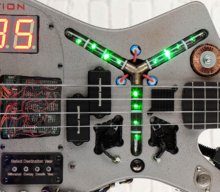
There are some of the higher tech considerations which never really became mainstream but were at least interesting. The two that jump to mind are the Torzal Twist basses, and Lightwave pickups.
View attachment 4358385

View attachment 4358384

Lightwave. I knew several guys that had them - some loved them, some hated them. Haven't heard about them for several years. Are they still around?
 
  • Like
Reactions: JimmyM
Not that don’t wish you well but I certainly have no complaints about you posting more often. I dig your posts…you had a lot to this forum.

Having said that, I still imagine you as a tiny black man based on your profile pic.

As far as the postcards I would say flatter radius and compound radius necks. Also, singlecut basses and lightweight tuners.
LOL, I'm glad I'm not the only one that thinks that. If JimmyM is anyone other than a tiny black man, I would be thoroughly disappointed :roflmao:
 
  • Like
Reactions: Billyzoom