
Enjoy the benefits of a premium membership!
Upgrade Account
-
TalkBass has been independent since 1998. Add your voice.
Create a free account to reply to discussions, view embedded media, and browse with fewer display ads.
Join free Log in
Want zero display ads or expanded classifieds tools? Compare plans.
You are using an out of date browser. It may not display this or other websites correctly.
You should upgrade or use an alternative browser.
You should upgrade or use an alternative browser.
The 10 Commandments of Gigging
- Thread starter Ralph Notoro
- Start date
More options
Who Replied?


Let me clarify that my experience is based on top40 variety wedding/corporate bands. We never play obscure songs. Top40 or nothing at all.Well that may depend on the setting and the audience.
I love it when a band pulls out an obscure tune or two--I might hear a song I don't normally hear--which is cool.

I agree with most of this except number 5. That only applies to cover players. If you play in a original band, you need to know your style and own it. If you try to cover too many different styles in your music you will lose people because they think you are "all over the place."
I'm on the fence about number 3 too. Audiences know what they like, but that still doesn't mean they know what's good. There are a lot of people out there that like some really popular music that sucks @$$ on any critical level.
I'm on the fence about number 3 too. Audiences know what they like, but that still doesn't mean they know what's good. There are a lot of people out there that like some really popular music that sucks @$$ on any critical level.
Well said and dbl up on # 10
Its not a party for you
Unless it IS a party for you. Bands do throw parties as an excuse to play and get faced with some friends.
I understand the point that if your are playing a venue, you are on someone else's time, even if you aren't getting paid (which happens a lot), so behave yourself. On the other side of that, some of the greatest musicians we know and love were high as a kite nearly all the time and still did more than any of us ever will.
But that's a personal thing. Bottom line is.....they like it. That's all that matters. I keep hearing that argument but if millions of people like something...in what way does it suck??? Would you really want the world to only listen to what YOU think is good music? But this is a whole 'nutha thread topic!I'm on the fence about number 3 too. Audiences know what they like, but that still doesn't mean they know what's good. There are a lot of people out there that like some really popular music that sucks @$$ on any critical level.

Were I to revise this list for *bassists*, I would add...
* Thou shalt not noodle before sets, after sets, between sets. THOU SHALT NOT NOODLE, as no one is there to see YOU.
* Know your drummer. Love your drummer. Respect the two and the four and never rush the drummer.
* Thou aret NOT the show - support the singer/guitarist/horn player even though he be a prig
* Mids are thy land of plenty; Turneth them up at will, but be careful of thy lows, lest you merely rumble.
* You have the least gear of nearly everyone; Assist your teammates with schleppege and loved you shall be.
* Resent no the girls the singer/guitar player geteth; There are girls who love bassists out there. Patience, my son.
* Thou shalt not noodle before sets, after sets, between sets. THOU SHALT NOT NOODLE, as no one is there to see YOU.
* Know your drummer. Love your drummer. Respect the two and the four and never rush the drummer.
* Thou aret NOT the show - support the singer/guitarist/horn player even though he be a prig
* Mids are thy land of plenty; Turneth them up at will, but be careful of thy lows, lest you merely rumble.
* You have the least gear of nearly everyone; Assist your teammates with schleppege and loved you shall be.
* Resent no the girls the singer/guitar player geteth; There are girls who love bassists out there. Patience, my son.

BurningSkies
CRAZY BALDHEAD
- Feb 20, 2005
- 27,956
- 20,350
- Disclosures
- Endorsing artist: Dingwall Guitars
Mostly good.  I agree with many of the points.
As someone who doesn't do much in the way of covers or corporate gigs, I don't really care to do a 'variety of styles' in the general sense. On the other hand, since I play in a reggae band, I can nail pretty much every style within that genre; 60's Ska, Rock Steady, 70's style roots, 70's roots/soul crossover, Dub, 80's dancehall, modern dancehall and even 3rd wave ska if needed. I can fake a Soca, Mento or even calypso if needed. You'll probably never hear me do disco, pop, rock, metal.
I agree that you should keep things moving, and often what seems like a few moments on stage sounds like 15 minutes to the audience. Bands need to get comfortable with reading the crowd. I play with some people who haven't been doing it forever and get thrown when you change up the 'set list' because you're losing the vibe in the crowd or you're on to something good and want to lay more of it down.
I'd particularly add: Play with your head up and your eyes on the crowd AND the other band members. There are SO many visual clues that people miss when they're locked in their own little world and staring at their fingers. Be prepared to shift your arrangements on stage if needed. I play with guys who sometimes seem to want to GET OUT of a song no matter if people are digging it or not. If the dancefloor has been slow and you FINALLY get people up and grooving to a song...PLAY IT MORE...then find another song that has the same feel or vibe.
Don't play all your songs in the same key or tempo. It gets boring REALLY fast for the audience. Don't play slow unless you know how to groove slow...it's a skill and otherwise you sound like you're tired and you have no energy. If you can't nail a slow groove that makes people still move, practice in private until you can.
Regularly and repeatedly introduce the band, not just the band name, but the people on stage. It makes people feel connected and you're more likely to get people to interact with you.
I agree with many of the points.As someone who doesn't do much in the way of covers or corporate gigs, I don't really care to do a 'variety of styles' in the general sense. On the other hand, since I play in a reggae band, I can nail pretty much every style within that genre; 60's Ska, Rock Steady, 70's style roots, 70's roots/soul crossover, Dub, 80's dancehall, modern dancehall and even 3rd wave ska if needed. I can fake a Soca, Mento or even calypso if needed. You'll probably never hear me do disco, pop, rock, metal.
I agree that you should keep things moving, and often what seems like a few moments on stage sounds like 15 minutes to the audience. Bands need to get comfortable with reading the crowd. I play with some people who haven't been doing it forever and get thrown when you change up the 'set list' because you're losing the vibe in the crowd or you're on to something good and want to lay more of it down.
I'd particularly add: Play with your head up and your eyes on the crowd AND the other band members. There are SO many visual clues that people miss when they're locked in their own little world and staring at their fingers. Be prepared to shift your arrangements on stage if needed. I play with guys who sometimes seem to want to GET OUT of a song no matter if people are digging it or not. If the dancefloor has been slow and you FINALLY get people up and grooving to a song...PLAY IT MORE...then find another song that has the same feel or vibe.
Don't play all your songs in the same key or tempo. It gets boring REALLY fast for the audience. Don't play slow unless you know how to groove slow...it's a skill and otherwise you sound like you're tired and you have no energy. If you can't nail a slow groove that makes people still move, practice in private until you can.
Regularly and repeatedly introduce the band, not just the band name, but the people on stage. It makes people feel connected and you're more likely to get people to interact with you.
It's a digression, but an important one, so I'll keep it short:But that's a personal thing. Bottom line is.....they like it. That's all that matters. I keep hearing that argument but if millions of people like something...in what way does it suck??? Would you really want the world to only listen to what YOU think is good music? But this is a whole 'nutha thread topic!
The top selling ice cream flavor is vanilla because everyone can agree on it. It's statistically safe because its bland. That does mean its good per say, just not flavorful enough to make some one dislike it. That's a pretty lazy way to get to number one. Music is the same way. 99.9% of top selling records aren't ground breaking or challenging, only that .1% sets a new path for everyone else to follow like lemmings. Then there is the stuff that will never be top selling records because they aren't safe or bland, they intentionally accept lower sales to have greater musical or lyrical depth.
As artists we have different goals, and different musical products to sell. You have to find the best way to sell your product. What applies to a top 40 cover band may not apply to a post grunge group, but they should also have different markets, and for either audience, the fundamentals apply.
There's a very real science to putting together a set list that will keep your audience's attention. Mixing it up is very important - different keys, tempos, and introductions can all bring the audience's focus back to the next song. You really need to think about what you say between songs, if anything. What you're saying should be directing the audience's attention, not just filling time.
If you're going to sell your project, this stuff can easily become as important as the music itself. Too many musicians say, 'What the heck, I'm playing some neat stuff, and I sound just fine', and leave it there. That's good, but if you need to make money doing it, you have a whole list of other things to deal with.
There's a very real science to putting together a set list that will keep your audience's attention. Mixing it up is very important - different keys, tempos, and introductions can all bring the audience's focus back to the next song. You really need to think about what you say between songs, if anything. What you're saying should be directing the audience's attention, not just filling time.
If you're going to sell your project, this stuff can easily become as important as the music itself. Too many musicians say, 'What the heck, I'm playing some neat stuff, and I sound just fine', and leave it there. That's good, but if you need to make money doing it, you have a whole list of other things to deal with.

It's a digression, but an important one, so I'll keep it short:
The top selling ice cream flavor is vanilla because everyone can agree on it. It's statistically safe because its bland. That does mean its good per say, just not flavorful enough to make some one dislike it. That's a pretty lazy way to get to number one. Music is the same way. 99.9% of top selling records aren't ground breaking or challenging, only that .1% sets a new path for everyone else to follow like lemmings. Then there is the stuff that will never be top selling records because they aren't safe or bland, they intentionally accept lower sales to have greater musical or lyrical depth.
Or...people like the taste of vanilla.

As in music, so too in ice cream. Vanilla's not bland; bland vanilla is bland. The problem isn't the vanilla; it's the blandness.

That's cool, and I did say it depends on setting/context.Let me clarify that my experience is based on top40 variety wedding/corporate bands. We never play obscure songs. Top40 or nothing at all.
My comments were also coming at it from the perspective of the audience as well, which I think you were trying to include--which is good.

Only thing you need to know:
1. Pee before the show starts.
1. Pee before the show starts.
Agree with most everything in the thread.
Very important for me is to remember the job aspect of a gig; be service oriented towards the arranger, the soundguy, the bartender, the guy who pays. Make their jobs easy and yours will be too, and chances of getting booked again gets better.
Look awake and interested, interact with the audience and with your band members. If you seem to have fun on stage the crowd will be happier too.
As to playing the music - practice some extra on intros, endings, breaks and signature licks - if those are tight you will sound so much better, the meat and potatoes inbetween those you can fake a bit if you have to.
Very important for me is to remember the job aspect of a gig; be service oriented towards the arranger, the soundguy, the bartender, the guy who pays. Make their jobs easy and yours will be too, and chances of getting booked again gets better.
Look awake and interested, interact with the audience and with your band members. If you seem to have fun on stage the crowd will be happier too.
As to playing the music - practice some extra on intros, endings, breaks and signature licks - if those are tight you will sound so much better, the meat and potatoes inbetween those you can fake a bit if you have to.
Last edited:
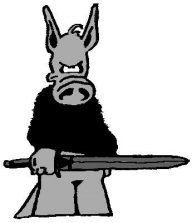
Revised for the ultra sensitive. : )
Especially those ultra-sensitive rules of the forum.
On #5, all I could think of was this...

I put it in a simple list. This took decades to compile. You can argue all you want. But they are the truth. You'll find that out sooner or later.
I agree with these 100%. I am going to print these out and post it on the wall next rehearsal.
HAHA! That is exactly what our lead singer says after the first set! Frankly, that particular band is so comfortable on stage that he and I do a bit of a Tom and Dick Smothers thing throughout the show. It never gets long winded, for obvious reasons, but it speaks to one thing not on the list:Anyway great list. I would add to the crowd interaction bit, a joke if I may- "We've received several requests but have decided to continue playing anyway."
11. Look like you are having a BLAST on stage. It is infectious.
Actually, my '55-'65 rock-pop band is very successful with the commentary. It's all part of the SHOW. That being said, we don't do bars, so it may be the venues we play that makes it popular. We do car shows, festivals, jamborees, etc. My "bar" band keeps that sort of stuff to a minimum, usually reserving it for when there is some reason to break, e.g. broken string or guitar switch.I'd say even really famous bands need to learn this one. I came for the music, not the commentary.

I like the part about befriending the staff.
Indeed, they are your co-workers.
Bartenders, door guys, lighting techs, maintenance crew, everyone.
They all help to achieve the same goal of putting on a great show for the audience.
If you order from the bar, tip the bartenders.
Shake hands with everyone before you exit the venue at the end of the night.
They will remember that.
Indeed, they are your co-workers.
Bartenders, door guys, lighting techs, maintenance crew, everyone.
They all help to achieve the same goal of putting on a great show for the audience.
If you order from the bar, tip the bartenders.
Shake hands with everyone before you exit the venue at the end of the night.
They will remember that.

My blues trio does almost all obscure tunes - we do some classic covers just to prove we can - but that is our calling card. It seems our audiences like the fact that they get to hear some great music that may sound familiar, but definately not routine. The good thing about obscure tunes is that virtually no one criticizes you for not playing the tune like Stevie Ray!Well that may depend on the setting and the audience.
I love it when a band pulls out an obscure tune or two--I might hear a song I don't normally hear--which is cool.
I might discover a song I like & that is new to me, etc.
A couple of years ago I was at a Blues Festival (As part of the audience)--and there were 8 bands--only two I really knew--and so a lot of the songs were obscure--but I bought some music that day, and have since bought some of the other music.
But this does make sense to consider your audience & context--and if you do play something obscure--don't overdo it.
Also one person's obscure is another's common song--and I have encountered that--songs I thought were common-someone else thought obscure--and vice versa.


