
Enjoy the benefits of a premium membership!
Upgrade Account
-
TalkBass has been independent since 1998. Add your voice.
Create a free account to reply to discussions, view embedded media, and browse with fewer display ads.
Join free Log in
Want zero display ads or expanded classifieds tools? Compare plans.
You are using an out of date browser. It may not display this or other websites correctly.
You should upgrade or use an alternative browser.
You should upgrade or use an alternative browser.
The Acoustic Club
- Thread starter The Owl
- Start date
More options
Who Replied?
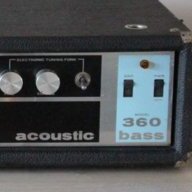
Acoustic 360/361 at Woodstock
Imagine that someone might still own this 360 without knowing it had be on that festival



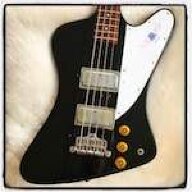
I'll keep a look out for one, but GC is a great used source to monitor as they ship cheap. I had mine shipped to my local GC store. This was mine:Now to find a 402 in the Northeast!
Can't stop thinking about my 360. First thing I want to try. Plug in the 360 with my P, then jumper the other input jack to the input of the 330. Plug the 360 into the return signal of the B channel of the 330. Nothing in the send signal of B. Assign EQ and master volume to the A channel, and reverb to the B channel (to bypass it). Then set the control of the 330 to A or A+B. I assume this should give me the basic layout to use the 360 as the B preamp channel of the 330, without running the signal through the 330 B preamp itself. Unless of course the controls of the channel is located before the FX loop, and this way B is always engaged. Only one way to find out I guess. The idea is to set channel A as a nice and fat bassy channel, and use the 360 to be able to blend the dirty and fuzzy tones into that when wanted.
I like the way you thinkCan't stop thinking about my 360. First thing I want to try. Plug in the 360 with my P, then jumper the other input jack to the input of the 330. Plug the 360 into the return signal of the B channel of the 330. Nothing in the send signal of B. Assign EQ and master volume to the A channel, and reverb to the B channel (to bypass it). Then set the control of the 330 to A or A+B. I assume this should give me the basic layout to use the 360 as the B preamp channel of the 330, without running the signal through the 330 B preamp itself. Unless of course the controls of the channel is located before the FX loop, and this way B is always engaged. Only one way to find out I guess. The idea is to set channel A as a nice and fat bassy channel, and use the 360 to be able to blend the dirty and fuzzy tones into that when wanted.

I assume this should give me the basic layout to use the 360 as the B preamp channel of the 330, without running the signal through the 330 B preamp itself. Unless of course the controls of the channel is located before the FX loop, and this way B is always engaged.
No, you've got it right. Combining & switching is all done on the sum amp board which is downstream of the back panel individual channel Preamp-In jacks.
No, you've got it right. Combining & switching is all done on the sum amp board which is downstream of the back panel individual channel Preamp-In jacks.
That's awesome, as expected from ACC
I guess this mean I need to buy another Acoustic?That's awesome, as expected from ACC


I guess this mean I need to buy another Acoustic?
When is that not the case?
Sounds like a key to the entrance to 'Jaco-Land'. Enjoy!Can't stop thinking about my 360. First thing I want to try. Plug in the 360 with my P, then jumper the other input jack to the input of the 330. Plug the 360 into the return signal of the B channel of the 330. Nothing in the send signal of B. Assign EQ and master volume to the A channel, and reverb to the B channel (to bypass it). Then set the control of the 330 to A or A+B. I assume this should give me the basic layout to use the 360 as the B preamp channel of the 330, without running the signal through the 330 B preamp itself. Unless of course the controls of the channel is located before the FX loop, and this way B is always engaged. Only one way to find out I guess. The idea is to set channel A as a nice and fat bassy channel, and use the 360 to be able to blend the dirty and fuzzy tones into that when wanted.
True dat. You be the one to tell the wife thenWhen is that not the case?


I use Acoustic B410C's, two of them, and had the B200H for years. It is one of the most powerful 200 watt amps I have ever used. I got rid of it because I actually wanted fewer tone controls. I now use a Hartke LH500 paired with the 2 Acoustic 410's. But, Acoustic is doing an amazing job of building quality equipment at prices that are very reasonable.
And I thought the SVT I played through in the 80s was devastating. Oh, man....
Last edited:

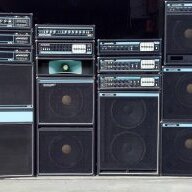
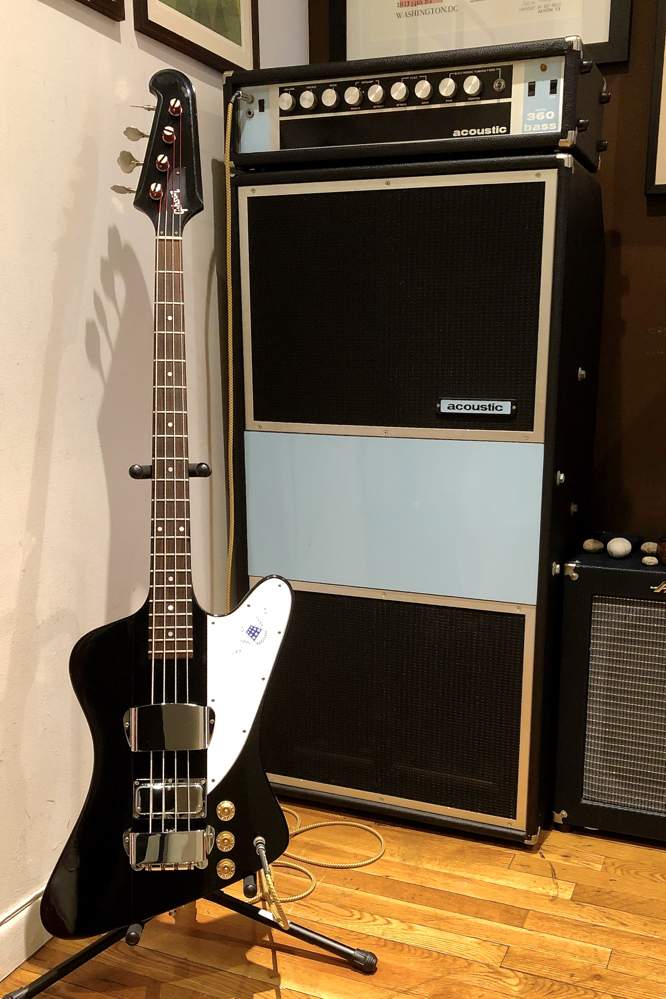
Nice rig!View attachment 3329878 And I thought the SVT I played through in the 80s was devastating. Oh, man....
What a gorgeous combination!View attachment 3329878 And I thought the SVT I played through in the 80s was devastating. Oh, man....
I'll bet they don't sound half-bad together, as well.


