• TalkBass has been independent since 1998. Add your voice.
    Create a free account to reply to discussions, view embedded media, and browse with fewer display ads.
    Join freeLog in
    Want zero display ads or expanded classifieds tools? Compare plans.

The Dispersion Issue

Never mind everyone, I have found the solution :)

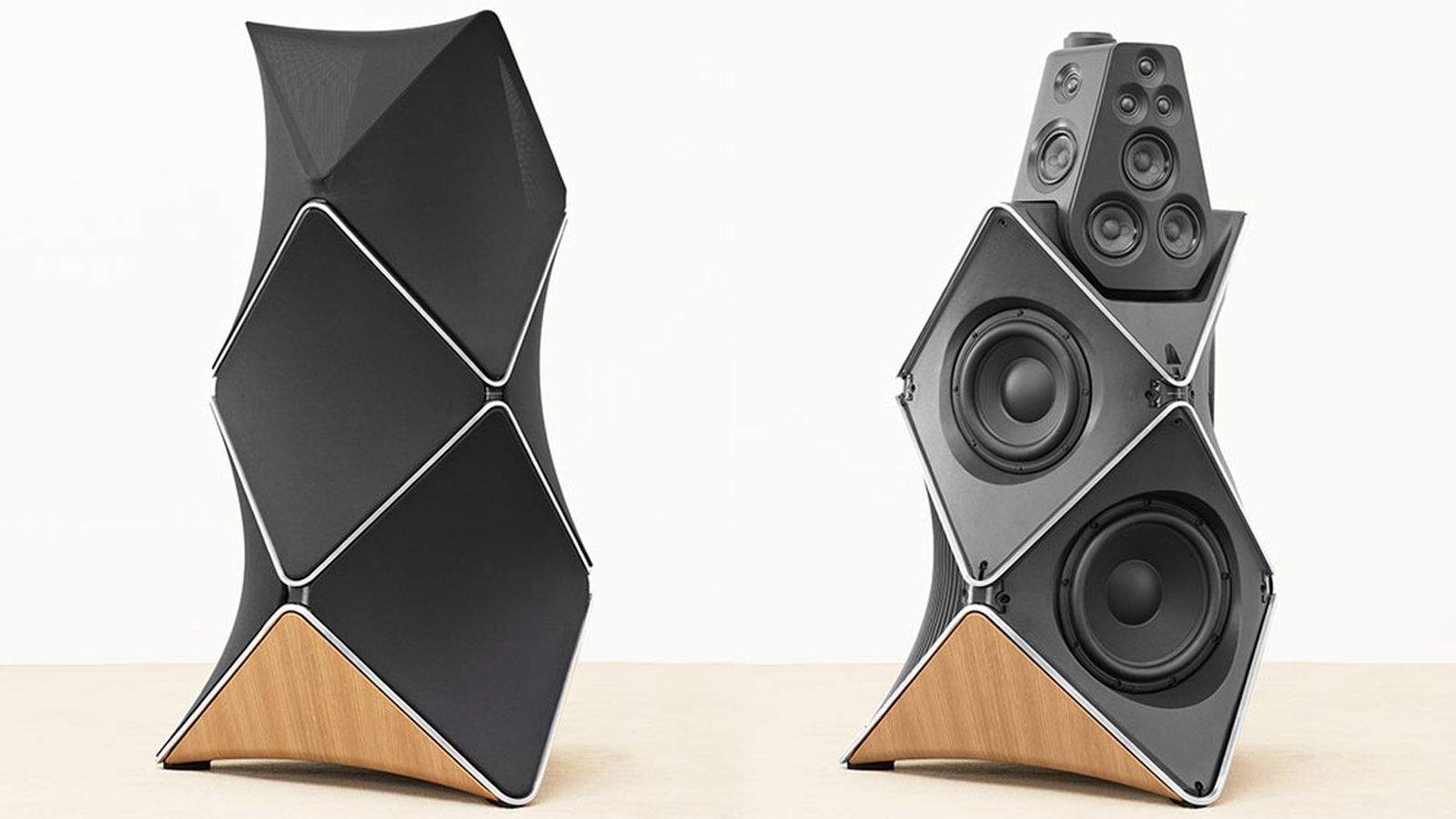
beolab90.jpg
 
OK. We need one of the designers/builders to make us a curved vertical array for bass!

If I my say, the GENZLER Amplification Bass Array12-3 design came out of many of these types of discussions. We studied the benefits and advantages of large scale audio system designs and how they can be translated into useable and practical bass products. As has been discussed by agedhorse and others on TB, vertical arrays and separately curved array clusters are really 2 design parameters with different goals.
It is certainly apparent that many cabinet builders are striving to advance overall bass cabinet design out of the previous norms, all of which benefits the player community and advancing the conversation on product design and usability.
 
Thanks for your post. So what type of cab config is popular among you DB'ers?
It's gonna be a con of worm when everyone chimes in.
I'm mostly playing 12"s. Either one or two. Sometimes I use a 15/6 up on top of a single 12. Occasionally I'll use my 410, but it's rarer and rarer as time goes on. I did just use a 610 tonight that was back lined and I really liked it.
 
Dispersion was never a issue really with the 8x10s I used. With bass I never had off axis inconsistencies.

I just needed a speaker that was loud enough and didn't fart out and the 8x10 always worked.

But I'd admit it had certain things about it a didn't always like soundwise. But it kept up and was reliable

My bigger problem really was finding a tube amp that didn't break on long haul travels.

And off axis response and ear bleeding peaks was huge problem guitar wise. I hated 4x12 guitar cabinets for always sounding different where you stood. But again only way to be loud enough.
 
If you are playing a gig with a dance floor you HAVE to get the tweeters above the dancers otherwise the high frequencies will be absorbed by the dancers and at the back of the room you will hear mostly low end.
+1. That's why PA cabs are usually pole mounted. You don't need a seven foot high cab, you need a two foot high cab on a five foot pole.
A curved vertical array is necessary only where the coverage pattern requires it.
+1, and it only requires it with a flown array, where the higher frequencies will pass over the heads of the audience close to the array unless the lower array elements are tilted down.
 
  • Like
Reactions: Ric5
If I my say, the GENZLER Amplification Bass Array12-3 design came out of many of these types of discussions. We studied the benefits and advantages of large scale audio system designs and how they can be translated into useable and practical bass products.


You use four 3" drivers in a vertical array, do all 4 drivers run full-range or did you put an additional lowpass on the most upper and lower of these four drivers to improve vertical dispersion? If not, this design will beam like crazy in the vertical plane, if it's not on ear level the player won't hear the mids/highs properly.
I've used a coaxial unit in my 210 to cover the whole range from 400hz -20khz which makes the cabinet a pointsource with very uniform dispersion.

 
The thing missing from this conversation is that if you go hear a random sampling of bands playing live, how often is the sound just ... bad?

IME at least 50%.

I dont see any point in making music if it doesnt sound good to the audience. Most of the time the bass is just mud.

The trend toward better dispersion should eventually help our collective batting average, especially as innovation continues around a better designed cab that also has great distinctive tone. The tone you get from an 810, 410, or good 212 can be really great when you stand in the right spot or mic it. I have not heard a mid loaded cab that gets that juicy richness plug-n-play. My fearless 115 is much more clean and clear which is not really the tone I go for, i prefer a tone with some earthy gritty punch, but the f115 DOES deliver amazing clarity all over the stage and audience.

My latest iteration is a pair of Aguilar DB210s stacked vertically. Not a lot of miles on it yet but so far it is fantastic. You lose some oomph/juice when you go vertical, but it gets so much more clear, cuts down on boom in a live room, and sounds good to everybody.

It will be great if/when companies like Aguilar that are so focussed on great tone also start incorporating some of these new concepts. A .5 aligned DB610 perhaps? Or a DB212 with a mid driver ...

I want to check out the Genzlers! And try a 3xDB112 stack.
 
  • Like
Reactions: GregC
You use four 3" drivers in a vertical array, do all 4 drivers run full-range or did you put an additional lowpass on the most upper and lower of these four drivers to improve vertical dispersion? If not, this design will beam like crazy in the vertical plane, if it's not on ear level the player won't hear the mids/highs properly.
I've used a coaxial unit in my 210 to cover the whole range from 400hz -20khz which makes the cabinet a pointsource with very uniform dispersion.
The array is too short and the element geometry too "imperfect" to "beam like crazy" over the bandwidth being used at for bass guitar. This sort of drivers and array configurations are used a lot in the pro audio world for >150Hz audio without such problems.

I appreciate that you feel that your way of doing things is the only right way, but in fact there are many valid ways to design and manufacture a speaker system for bass guitar and there are many very successful (and good sounding) examples out in the world doing just that in spite of what you happen to think.

If you feel so strongly that your designs are "the best" and that everybody else doesn't know what they are doing, I encourage you to bring your products to market and show the world you are right rather than telling the world they are all wrong.

 
The array is too short and the element geometry too "imperfect" to "beam like crazy" over the bandwidth being used at for bass guitar.

??? You should know better.
I've tried such arrangements myself and they beam.

I appreciate that you feel that your way of doing things is the only right way, but in fact there are many valid ways to design and manufacture a speaker system for bass guitar and there are many very successful (and good sounding) examples out in the world doing just that in spite of what you happen to think.
There are valid designs and some just don't work and only look interesting.

If you feel so strongly that your designs are "the best" and that everybody else doesn't know what they are doing, I encourage you to bring your products to market and show the world you are right rather than telling the world they are all wrong.


Did I say they are the best? It depends on what you're after, if you want a very accurate sound and mids that cut through then I haven't encountered anything better. And I really would want to bring my stuff into the world, it's not easy to start a company here.

And probably you can't take someones opinion, your comments are always written in such a way that you feel that you are the only one who's correct and there's no other valid answer.

I'm outta here, bye
 
Last edited:
Many of the rooms I play are smaller clubs where i don't run the bass through the PA, so stage volume vs. room volume, clarity and dispersion are important. I have a GK MB212-ii and it has x2 vertical but offset twelves, I try to point the amp towards the center of the room or audience. In addition I try a stay back a bit from walls and corners. There is almost always a fellow musician at the gig who can listen and let us know what needs to be adjusted. So far I get only compliments, so hopefully my setup and approach is working at these smaller joints.
 
Did I say they are the best? It depends on what you're after, if you want a very accurate sound and mids that cut through then I haven't encountered anything better.

What other cabs have you gigged, and in what kind of venues?

fwiw, as a musician, I'm interested in a sound that will reflect what I hear in my head, and that allows a meaningful conversation with the other musicians on stage. As an entertainer, I'm interested a sound that will get people involved in the musical conversation. Sometimes those overlap, other times they don't.

If I can't hear what I'm doing on stage, odds are it's not going to be happening in the house, though I've played long enough that I can make it work if I have to. But I'd rather not. If I've got FOH, then the only thing I need from my rig is to hear what I'm doing. If I don't have FOH, then I need my rig to get out into the room. And that's going to depend on a lot of factors.

fwiw, I've had great success with a number of different cabs, but most recently I find that Duke's Audio Kinesis cabs work in a wide variety of situations, and I'm about four gigs into using Mike Arnopol's MAS109 which is confounding me on how well it has worked in some brutally bad rooms. My preference is to have 3" paper cones because I like the way they present the mids, and Mike's porting has something going on with the way it handles lows. ymmv.
 
  • Like
Reactions: 5StringPocket
First of all---a post a ways back states that since lower bass is omnidirectional you should have one source for the lows and multiple for the highs. Nothing is further from the truth. Duke (Audiokinesis) has a subwoofer system that just received the highest award from The Absolute Sound (uber high end) Magazine. They say that it's a major step forward in subwoofer design. His (expensive) sub system uses five subwoofers placed in different parts of the room .Duke describes the goal as to decorrelate the bass. The bass hits room nodes from different angles (spatially and in the time domain). One of the biggest problems we bassists have is exciting room nodes and have a blanket of low end moosh obscurring the rest of the sound spectrum. What Duke's system does is spread it out in the spatial and time domains ----a net effect of this is MUCH less excitement of room resonances. Clearer bass---clearer upper range not obscurred by various boom.


It all comes down to your personal usage. Dispersion is really about your upper frequencies, but if you spend the majority of time standing right in front of your cab onstage, then dispersion is pretty much a zero issue. As, for the crowd, it's still pretty much a non issue because, well.... your'e standing right in front of the bloody cabinet acting like a human gobo, so no one is hearing much of your top end anyway. Same holds true for your bandmates hearing you well onstage, if you are standing right in front of your cab.

If you always have PA support, then once again, dispersion is a non issue for the crowd. They are going to be hearing most of the top end frequencies from the PA.

In a typical horn/tweeter loaded cab, they are most likely not crossing over to the horn until 3k or even 5k and you probably won't notice much high end loss off axis, as your typical horn is throwing 40+ degrees, or more, anyways. For me, it's not so much the top end, but the upper mids that become the critical factor for your bandmates hearing you well on stage. Good dispersion of those upper mids is so important which is why I'm not a fan of traditional 410 cabs. With their drivers in a side by side arrangement, your horizontal dispersion of the upper frequencies before the crossover point is reduced considerably, which is why you notice that the upper mids coming off the woofers only sound best right in front of the cab. This is one reason why using a dedicated mid driver has its advantages.

Wider dispersion is definitley a good thing, no doubt, but how important it is really has a lot to do with how you use your cabs on stage.

Have you checked out any of Mike Arnopol's cabs? I only heard a few examples in his living room but noticed right away they had uncanny off-axis capability.

A problem I've always has is being married to a "sweet spot" just to the side and within 4 feet of my cab. Further away I could hear the bass substantially drop off. Since my cabs were mentioned-----a design goal, and hopefully a strong suit of my cabs is accomplished with the merging of the front and rear sound waves---which cause decorrolation like with Duke's subs. There is much less excitement of room resonances and hence more clarity throughout the range. The recombination of these waves occurs about 3 to 4 feet in front of the cab. There is something going on that I can't explain scientifically, but can experientially. Off axis dispersion is dramatically improved and the volume dropoff at a distance is much lower . So---I can stand 15 feet away and not nearly as close to axis. So, as Roger said---you don't have to block the front mid and high output in order to hear yourself.

You use four 3" drivers in a vertical array, do all 4 drivers run full-range or did you put an additional lowpass on the most upper and lower of these four drivers to improve vertical dispersion? If not, this design will beam like crazy in the vertical plane, if it's not on ear level the player won't hear the mids/highs properly.
I've used a coaxial unit in my 210 to cover the whole range from 400hz -20khz which makes the cabinet a pointsource with very uniform dispersion.

I'm not entirely sure---but I think that I'm the first one that has used the 3" Faitals in a center stacked array. It's been a feature of the MAS26 (two 3's), MAS46, (three 3's and a tweet) And MAS66 (four 3's and a tweet) cabs for over two years. While I agree that they can beam in the vertical plane, in my instance, the geometry and function of my cabs helps with this. No none has ever commented on vertical beaming to me. But horizontal beaming really sucks.

Gotta get Duke in this discussion. He's world-class as far as understanding of dispersion as it relates to cabinet geometry and crossover design.
 
Last edited:
A problem I've always has is being married to a "sweet spot" just to the side and within 4 feet of my cab. Further away I could hear the bass substantially drop off. Since my cabs were mentioned-----a design goal, and hopefully a strong suit of my cabs is accomplished with the merging of the front and rear sound waves---which cause decorrolation like with Duke's subs. There is much less excitement of room resonances and hence more clarity throughout the range. The recombination of these waves occurs about 3 to 4 feet in front of the cab. There is something going on that I can't explain scientifically, but can experientially. Off axis dispersion is dramatically improved and the volume dropoff at a distance is much lower . So---I can stasnd 15 feet away and not nearly as close to axis. So, as Roger said---you don't have to block the front mid and high output in order to hear yourself.

Another thing I will mention is that my drummer (who I've been playing with for over 7 years now - hundreds of gigs) has heard all of my rigs - usually from the side which is pretty sub-optimal. At last Thursday's gig, which was the first time I'd used the MAS109 in that particular venue, he said he really liked the bass sound - that it felt really well supported without bloat or overdriving the room. And he's sitting nowhere near the front of it, and there is no FOH in this place (small restaurant). So whatever it is, it is working. The bigger surprise to me was a gig the previous week in a horribly boomy church (jazz jam, I'm the house bassist). The MAS109 is the first cab I've ever used that didn't struggle with big boom/bloat. I also got to sit in the back when other bass players sat in - no bloat out there either.

Whatever is going on, it is working for me. But rig performance depends on a lot of variables - the rooms, the player's technique and goals, etc.
 
First of all---a post a ways back states that since lower bass is omnidirectional you should have one source for the lows and multiple for the highs. Nothing is further from the truth. Duke (Audiokinesis) has a subwoofer system that just received the highest award from The Absolute Sound (uber high end) Magazine. They say that it's a major step forward in subwoofer design. His (expensive) sub system uses five subwoofers placed in different parts of the room .
Using multiple subs in home theater/hi-fi isn't new. You do it in rooms small enough that room modes and boundary effects dominate response. This is one source that explains why, but by no means is it the only one:
Serious Audio: Two Great Articles on Multiple Subwoofers by Dr. Earl Geddes

In large rooms the situation is exactly the opposite:
Invalid Link Removed

The article is about PA, but bass is bass.
 
I'll jump in about that statement about lower bass being omni directional.....it is indeed a false statement. While the lower in frequency you go, the dispersion does increase, our ears are too close together relative to those long wavelenghts to easily determine what direction it's comming from. That's were the myth started, people felt that since they couldn't determine its direction, it must be omni directional.

Other creatures like elephants and whales regularily use low frequencies to determine location as their ears are quite futher apart, and snakes can dectect low vibration direction along the entire lenght of thier body.
 
Last edited:
There is certainly a lot more technical acoustic discussion here than I can muster. From my perspective, I just try to empirically listen to what works.

First of all, almost all of my gigs now are using a pretty decent PA system, and the bass is primarily covered by the PA. Which is what it is; and that's what the crowd mainly hears.

Secondly, as far as rigs go, I have only played around with combing effects when using two of my cabs at a time. I have 2 - Berg AE212's and 1 - Berg HD112. I use different combinations, depending.

The combing I have been able to hear, walking around in large rooms, primarily affects the highs. If there is something going on with the lower mids and bass response, I haven't been able to distinguish. Since the lower mids and bass projection are primarily what contributes to band mix for my gigs, I have not gotten too terribly excited about the combing of the highs.

That said, what I do hear using two AE212 cabs is:
With the cabs placed side by side in a planar configuration, the highs definitely comb with interference mins and maxs as you walk around out in the house.

With the cabs stacked in vertical fashion, the combing is gone. However, there is just something about the bass response that I don't care for; but, I can't really put my finger on it.

With the cabs set side by side in a shallow V all combing is eliminated and there is a very positive reinforcement of all the sound I am looking for projecting uniformly around the house.


That is what I have been able to determine about dispersion for my gear. The result is that for bigger gigs when using both AE212's, I use the following setup:
Big Rig for Web.JPG
 
Many cabinets promoted around here claim that have some design aspect that all the other cab makers have missed.
Some are just re-using established principles in FOH, Pro Sound, but in a form factors that visually that doesn't upset the apple cart.

There are at least two goals, a musician needs to hear themselves. A musician want the audience to hear what the musicians wants them to hear.
There's many "traditional" bass cab designs that just aren't going to fill both roles.
These days with IEM, a bass player can hear themselves, and using cabs that disperse as well as good pro-sound cabs will let the audience hear better, anywhere in the club.

It's simple to measure. Every smart phone has a way to measure SPL. Laser distance finder are cheap and some phones have the ability to measure distance. These are handy tools that can measure dispersion of a cab. I think many 4x10 owners would be surprised by the big nulls at the corners of their cabs. It'd be a good way to show at 6ft bass player height, what a 4x3 line array is doing with the cabinet on the floor.

Makers are more interested in promoting their claims by not providing any measurement. I don't get it. Bass players shouldn't buy into this without proof. Surviving in the market isn't proof, that's marketing.

Best cabs at dispersion are from pro-sound where they actually publish charts on the dispersion patterns. Horizontal and vertical.
 
  • Like
Reactions: Pat C.
our ears are too close together relative to those long wavelenghts to easily determine what direction it's comming from.
That much is true, but not the rest. Any speaker is omni-directional when the baffle is well less than a wavelength across. The reason why you don't hear speakers producing 1000 hz omni-directionally is that a 1000 hz wavelength is only 1.1 feet. The reason why 100 hz is omni-directional is because a 100 hz wavelength is 11 feet. You could make a cab directional all the way to 40 hz, but the baffle would have to be 28 feet high and wide.
With the cabs stacked in vertical fashion, the combing is gone. However, there is just something about the bass response that I don't care for; but, I can't really put my finger on it.
Your probably just hear more of the mids and highs, so the lows seem to be lessened.

With the cabs set side by side in a shallow V all combing is eliminated and there is a very positive reinforcement of all the sound I am looking for projecting uniformly around the house.

The combing isn't eliminated, but it is moved to higher frequencies where its not as obvious.
 

Latest posts