• TalkBass has been independent since 1998. Add your voice.
    Create a free account to reply to discussions, view embedded media, and browse with fewer display ads.
    Join freeLog in
    Want zero display ads or expanded classifieds tools? Compare plans.

The Ken Smith Club, Part 2

That was not me playing, just a link that I had bookmarked a few months ago because I knew you would be coming here with this question. ;-)

I do play just like that though. In my dreams. :)

And yes, you will probably want to loosen the truss rod 1/4 turn or so.

Lol. Either way that’s good music.

My Smith has been inspiring me to take my practice more seriously over the time I’ve had it.
 
Isn't that true?

Proof that a good instrument gets one to put more into it.
Very true indeed. That is because the instrument is so exact and precise, and sounds so darn delicious when you play it well, yet it is so revealing of every subtle nuance of your technique. Like a high performance sports car, it forces you to play well because it won't hide your mistakes.
 
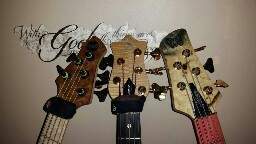
If you are referring to my 6-string pictured above, it is a Mahogany core with Flamed Maple center section, Imbuia top and back, Maple neck with Shedua stringers, and Ebony fretboard.
Pure tonal bliss.
2.jpg
 
Very true indeed. That is because the instrument is so exact and precise, and sounds so darn delicious when you play it well, yet it is so revealing of every subtle nuance of your technique. Like a high performance sports car, it forces you to play well because it won't hide your mistakes.
True again.

With my other basses, I often changed tone and pup settings between songs for the proper "feel". With the Smith, a fraction of an inch difference in position between nut and bridge, or even a slight change in attack angle (upright or flatter) is often enough to get the sound I'm after.

This has become something that is now a large part of my playing when going between verses and choruses.

Still tweeting the knobs for some songs, but doing much more with attack now.
 
This is a good one we're doing this week.

Lots of slash chords. And I've got a bad habit of playing the slash and bouncing to the root. The bass player on this recording doesn't do that, but when played in tandem with the vocal, it's dynamite.

 
Yes, that was a tough decision parting with this beauty but a customer called me up and true to his word 20 years ago, offered me 1st dibs on buying back this 1989 BT6 I sold him. Thank you Junior. The BSR6EG is going to a very good home. Enjoy Jason!


I've just been playing my 1991 BT5 this morning which is very similar to the bass in this video. I think the video recorded here proves emphatically that a 35" or longer scale is not required to have a really true and powerful B string.