And a link ???
or what would I search
Here's a paper on the subject:
Invalid Link Removed

TalkBass has been independent since 1998. Add your voice.
Create a free account to reply to discussions, view embedded media, and browse with fewer display ads.
Join free Log in
Want zero display ads or expanded classifieds tools? Compare plans.
And a link ???
or what would I search

Interesting. Thank youHere's a paper on the subject:
Invalid Link Removed

thanks for being of help !!! nextSorry, I don' t have a link to my textbooks from 40 years ago.
Try TI flats, though that's a bit of an investment without knowing if it'll fix the issue, they're very flexible and have more sustain than typical flats. Good luck!
@Almuzura
This doesn't happen with other notes, because the neck only has one pitch it will vibrate at. You can't change that pitch by changing strings or tuning, because it's a property of the neck itself. You can change that pitch by adding or subtracting weight from the headstock: adding weight will lower that pitch, subtracting weight will raise it. Fender basses all tend to go dead at the 7th fret on the G string, in standard tuning, because that's the resonant frequency of a 34" bass neck with a Fender headstock and four big Fender tuners on it.
This is one advantage of a headless bass: by subtracting the weight of the tuners and the weight and length of the headstock, the dead note is shifted so high that it's no longer a note anyone plays!

A neck actually has many frequencies where it resonates. The dead spot occurs when the fret of a note is at an anti node of a resonant mode. Practically speaking, there is typically one place where a bass has a dead spot, but that’s not a hard and fast rule.
Headless necks are not immune to this - they have a potentially bad dead spot at the end that a regular bass neck doesn’t - tgere aren’t frets at the end of a regular neck. I once picked up a Traveller bass at a GC. The open A string was by far the worst dead spot I’ve ever encountered on a bass - the neck would shake when you played that “note” - the note didn’t last long enough to perceive a pitch - it was just a dull thud.
Is this more on Fender designs? And why Jazz, but not Precision? Is it due to the neck difference, or body difference?

@Almuzura DO NOT SPEND $$$$ ON TI FLATS.
This will do nothing.
Changing strings does not move a dead spot. (Actually a dead note, as others have pointed out.)
@mike buzzetti Here's my best attempt at a layman's explanation:
Think of the ruler as your bass neck. The frequency it will vibrate at depends primarily on the length, but also on the weight of the tuners and the construction of the neck.
When the string vibrates at this frequency, the neck starts vibrating along with it -- just like when the snares on your drummer's snare drum vibrate when someone plays a certain note. ("Resonance.")
Then, since there's no free lunch in physics, the string stops vibrating, because it's used up its energy making the neck vibrate.
This doesn't happen with other notes, because the neck has a set pitch it will vibrate at. You can't change that pitch by changing strings or tuning, because it's a property of the neck itself. You can change that pitch by adding or subtracting weight from the headstock: adding weight will lower that pitch, subtracting weight will raise it. Fender basses all tend to go dead at the 7th fret on the G string, in standard tuning, because that's the resonant frequency of a 34" bass neck with a Fender headstock and four big Fender tuners on it.
This is one advantage of a headless bass: by subtracting the weight of the tuners and the weight and length of the headstock, the dead note is usually shifted so high that it's no longer a note anyone plays except in passing. (Usually well up above the 12th fret on the G string, IIRC.)
Edit to add: this explanation is mildly oversimplified! As micguy points out, and the paper he linked above illustrates very well, necks resonate at multiple frequencies and in multiple modes, and "The dead spot occurs when the fret of a note is at an anti node of a resonant mode."
However, the one that generally falls in the range of "musical notes people frequently play" is the one that frequently seems to pop up near D3/146 Hz.
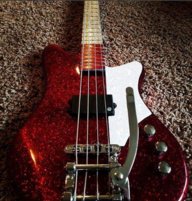
Dead spots are common and a real pain. Sometimes, adding some weight to the head can help tame a dead spot. Or maybe try some flats with different overall tension. Sometimes you just have to play around those dead areas or get a different bass.
You're correct, of course. I'm mildly oversimplifying for the sake of helping the layman understand what's happening, and to make it clear what will have an effect (changing the weight of the headstock) and what won't have an effect (changing strings). Fortunately, I'm within the edit window, so I've added a note to make this clear.
Thank You Sir ! !! very interesting read so far ! nice test setupHere's a paper on the subject:
Invalid Link Removed
would changing the nut out to some different material help with this? just curious.
I don't know that it's exclusively a Fender thing, really. It is interesting that some basses with a Fender design don't have a noticeable dead spot (all of mine for example) - wonder what parameters specifically cause the resonances to set up for dead spots (where very similar "Fender licensed" necks do not). "It's complicated"?I will investigate the videos later to learn more. I've known about this, just didn't understand it technically.
I asked because I don't own any Fender designs (therefore the bodies, necks, woods, and headstocks differ) and I don't have notable dead spot problems. A common denominator online seemed to be Fenders, but that could be confirmation bias.
Edit: Something when wrong with my quote.. but you know what I was replying to!

26390183[/URL], member: 286878"]Is this more on Fender designs? And why Jazz, but not Precision? Is it due to the neck difference, or body difference?
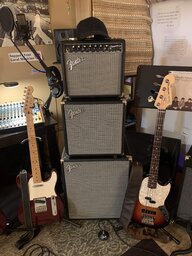

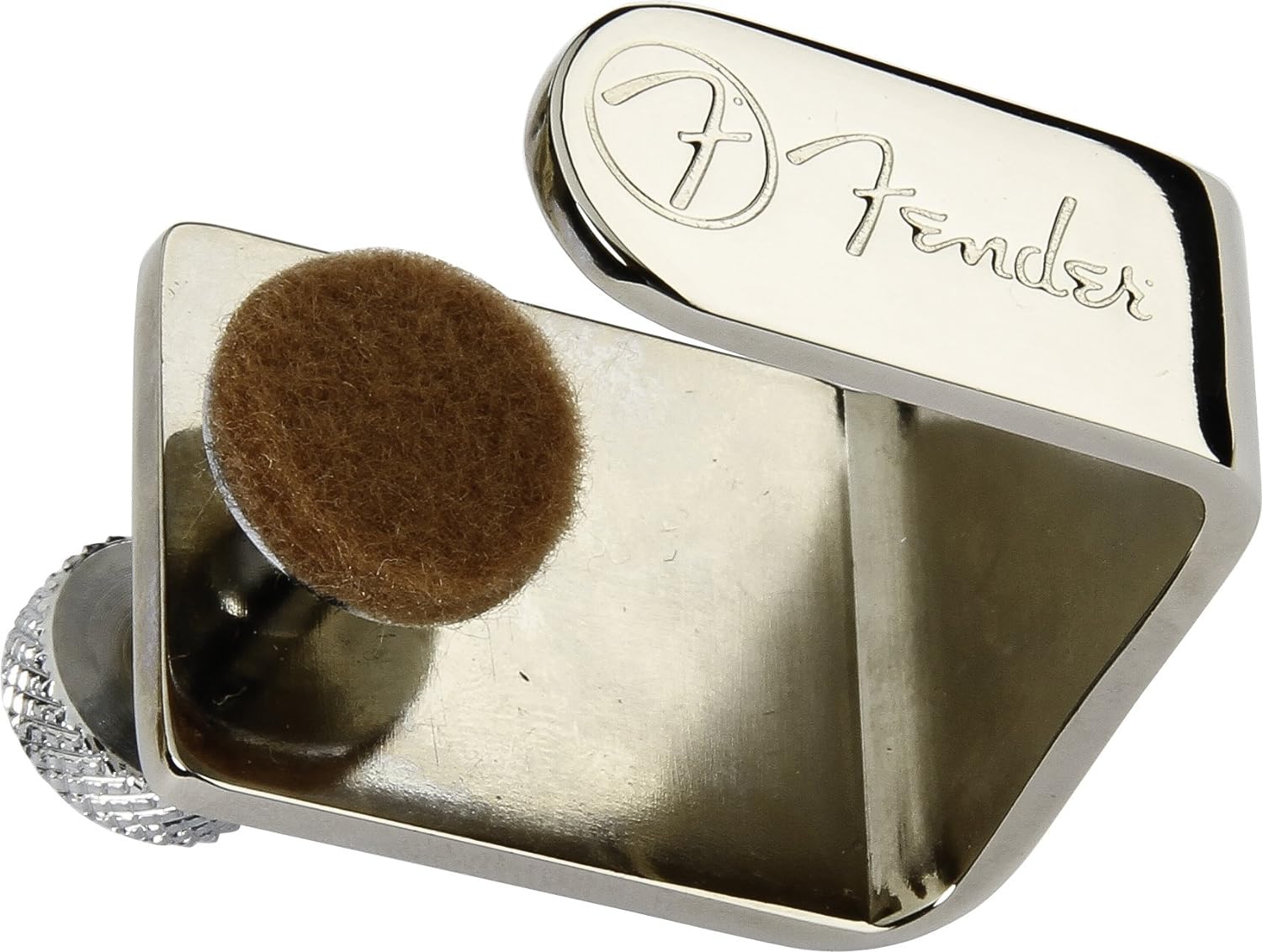
Glad you added that "(not all)" because neither my 1965 Jazz nor my 1982 Jazz have dead spots on their neck, though I have heard of many that do. A simple solution is to buy a Fender "Fat Finger" and attach it to the head stock. You often have to move it around to find the right spot, but it does eliminate those dead spots by adding enough mass to change the Resonant Frequency of the neck so it no longer produces that dead spot. They are a little over $20.Let me guess: jazz bass, right? Almost every jazz bass I’ve played or owned has had a faster decaying note right at that location. It seems to be inherent to the jazz bass design, and many (not all) seem to suffer from it to varying degrees. It’s the very first thing I look for when playing a jazz bass off the rack at a music store. As others have mentioned, flats do seem to make the problem more noticeable. Still, I love jazz basses, so unless the note dies faster than an anvil falling on a road runner, it’s all good.
Hello everybody,
yesterday I decided to re-string my bass guitar with flat wounds. I chose the Galli Jazz Flat. I was very excited about the sound and the feel but.. when I reached the D note on the 7th fret of the G string...dead! It has a pluck sound and then no sustain at all, the notes dies out in a second. I spend an hour yesterday trying to adjust the truss rod and the saddles height with no results. I thought I would let the string settle overnight but today I got at it again, messed with the truss road and string height again but in vain. But during all this fiddling, I noticed something very bizzarre, at least to me: the problem is not in the fret, the saddle, the truss rod. It's in the D pitch. In fact, I tuned down the string to F# and now the dead is on the 8th fret. Tuned it up to g# and the dead note is on the 6th fret. So I am starting to think this is an inherent flaw of the string itself. What do you guys think?