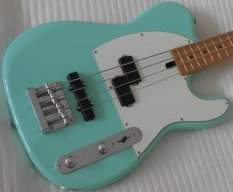
Looks like you can get to about the 22nd fret?
With the flattened neck joint, I assume reaching up to the 24th fret shouldn't be too difficult. But not my bass, so can't tell for sure.

TalkBass has been independent since 1998. Add your voice.
Create a free account to reply to discussions, view embedded media, and browse with fewer display ads.
Join free Log in
Want zero display ads or expanded classifieds tools? Compare plans.
Looks like you can get to about the 22nd fret?
I realised yesterday that the standard 5 string bridge on the Elwoods is the same bridge you'll find on some Harley Bentons.
Probably helps keeping the cost down. Don't get me wrong, it's not bad at all, it's sturdy and does the job, just that there's a difference in "prestige" (for lack of a better word) between HB and Maruszczyk.
No big deal, but it's still a cheap die cast bridge cost-wise and I'll probably go for a brass Hipshot for my next Maruszczyk.
I'm just looking at the cutaway. It's deceptive because there's two colors of paint there but if you look I cut away only goes to the 21st or 22nd fretWith the flattened neck joint, I assume reaching up to the 24th fret shouldn't be too difficult. But not my bass, so can't tell for sure.
I'm just looking at the cutaway. It's deceptive because there's two colors of paint there but if you look I cut away only goes to the 21st or 22nd fret

How do you know it is the same manufacturer? You could also change the perspective and say that Harley Bentons are actually equipped with pretty decent hardware.

I hate the bent plate bridge. It's an engineering afterthought. I understand that Leo Fender was very interested in keeping things cheap to make, but many manufacturers since then have upped the ante on Leo's designs yet kept that stupid bent metal bridge. It seems daft to put as much work as it takes for a craftsman to make a high quality bass and then put that cheap bridge on it.It's just a bridge. A lot of expensive basses just have a bent plate...
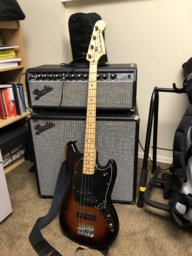
Yup, looks like the same one that Kiesel uses for many of their basses. I had two with those. Fwiw, it is locking, it is sturdy, and the parts are cheap if you have to replace anything. I did have to replace a couple screws that I had lost when I sold one of the basses, and I just bought a new bridge and used the parts I needed.I realised yesterday that the standard 5 string bridge on the Elwoods is the same bridge you'll find on some Harley Bentons.
Probably helps keeping the cost down. Don't get me wrong, it's not bad at all, it's sturdy and does the job, just that there's a difference in "prestige" (for lack of a better word) between HB and Maruszczyk.
No big deal, but it's still a cheap die cast bridge cost-wise and I'll probably go for a brass Hipshot for my next Maruszczyk.
Personally, I chose the Hipshot bridge made of steel, because Cary Nordstrand prefers steel and I wanted to try steel.I realised yesterday that the standard 5 string bridge on the Elwoods is the same bridge you'll find on some Harley Bentons.
Probably helps keeping the cost down. Don't get me wrong, it's not bad at all, it's sturdy and does the job, just that there's a difference in "prestige" (for lack of a better word) between HB and Maruszczyk.
No big deal, but it's still a cheap die cast bridge cost-wise and I'll probably go for a brass Hipshot for my next Maruszczyk.
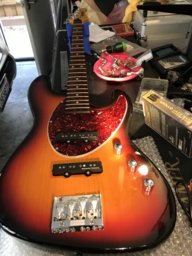
Do strings really stick out the end like that?!? Holy crap, that looks dangerous. And I thought ends of strings sticking out of old tuners was bad...For anyone with a headless Frog, if you've found that .130 B-strings tend to buzz on the nut due the the tight fit of the string retainer affecting the break angle (I suppose). Here is my patent-pending high tech solution. I can sell you one for $75 U.S. I call it a 'Black Zip Tie'. I hope no one else has thought of it. Anyway, no one has seen it, until I've pointed it out. Remove strings first before trying to cut the tie.
View attachment 4193405
I will see if I can find the link to the article that I read a few years ago. It was a question posed to top luthiers regarding bridges. Carey liked the tone of steel bridges best over bridges made from other materials.What did Carey say about steel bridges?
 I associate a thicker lower midrange with brass. And aluminum is "quicker" and more airy sounding to me. On our Nordy's, I like the bent plate steel bridges that Hipshot makes. They seem to have a really big and full low end, and sound more correct than the brass version. I also think the sound of them changed for the better when they made the back edge solid, instead of slotted for the quick string release setup. I guess all this means is that everything matters at least a little bit when considering the tone of our instruments."
Kitty's claws are a little scary, heh! I have to blame the sloppy technician for this one. They can be sheared pretty close to flush if desired. Not dangerous unless I sharpen them! On a tight stage, headless gives me a 4-5 inch shorter bat--makes it harder to whack the drummer when I'm pissed--let's call that a good thing. It may be fair to say that string retainers aren't the favorite part of a headless bass for most who have them--you get used to them.Do strings really stick out the end like that?!? Holy crap, that looks dangerous. And I thought ends of strings sticking out of old tuners was bad...
And aluminum is "quicker" and more airy sounding to me.
I wouldn't go that far, but any differences may be in the 'heard on recordings but not live' category. I went with the 2 piece brass ETS bridge (longer and heavier than one piece aluminum) because I thought it might lend something to the tone based on my experience with Warwick 2-piece brass bridges. But these are little matters, just for tinkerers to natter about on forums. Everything matters a little and eventually it adds up to a different sounding bass, even with identical pickups and strings. Those who don't care need not read the whimsical speculations of amateurs like me.Anyone who says stuff like that is full of it.