
Enjoy the benefits of a premium membership!
Upgrade Account
-
TalkBass has been independent since 1998. Add your voice.
Create a free account to reply to discussions, view embedded media, and browse with fewer display ads.
Join free Log in
Want zero display ads or expanded classifieds tools? Compare plans.
You are using an out of date browser. It may not display this or other websites correctly.
You should upgrade or use an alternative browser.
You should upgrade or use an alternative browser.
The Pedals Photogenic
- Thread starter Spectrum
- Start date
More options
Who Replied?

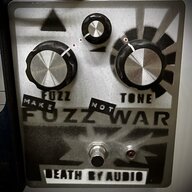

are OTO machines pedals? Fx:/
I’ve got a BIM and a BAM. I do like the look. A BOUM is probably in my future.

Last week or so, I sold this pedal to my main pedal collector friend, who is an accomplished guitarist.
Tim sounds good with bass, but it is subtle; it makes you work to find the sweet spots. With guitar, however, it is nearly one big sweet spot and tends to sound glorious, even when not driving a tube amp. A worthy, early innovation in the transparent overdrive genre, Tim is that good.
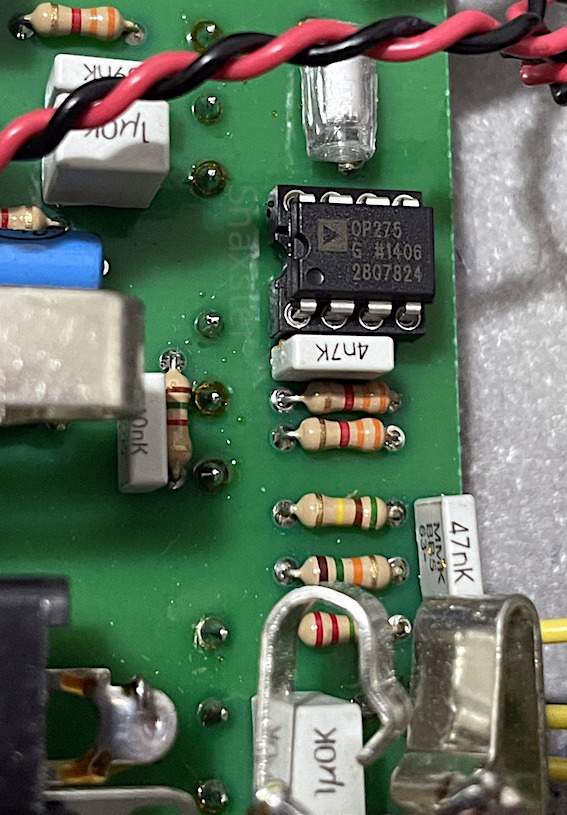
This is a later one. Originally it had a 4559D op-amp as is usual, but now has an OP275. Several years ago I read a credible account about rolling op-amps in Tim that cited OP275 as what Cochrane was using in his personal Tim at the time.
Tim by Paul Cochrane
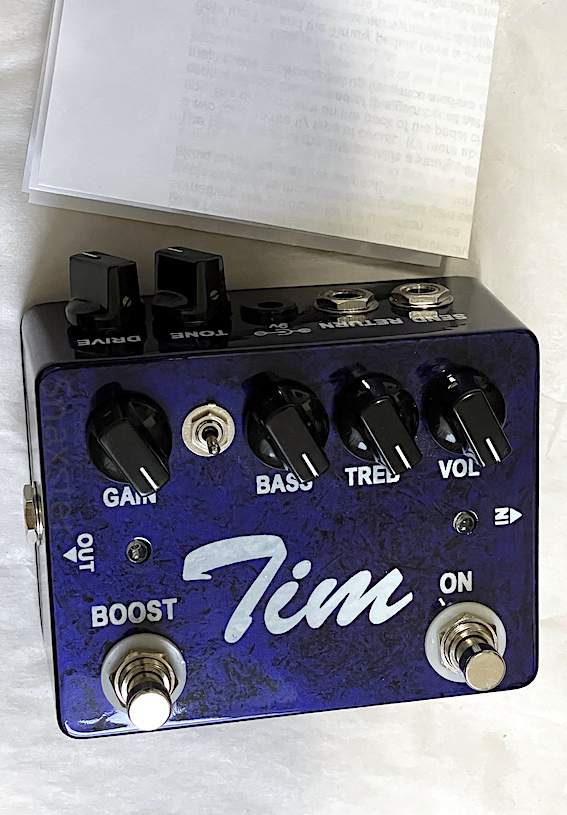
Tim sounds good with bass, but it is subtle; it makes you work to find the sweet spots. With guitar, however, it is nearly one big sweet spot and tends to sound glorious, even when not driving a tube amp. A worthy, early innovation in the transparent overdrive genre, Tim is that good.
This is a later one. Originally it had a 4559D op-amp as is usual, but now has an OP275. Several years ago I read a credible account about rolling op-amps in Tim that cited OP275 as what Cochrane was using in his personal Tim at the time.
Tim by Paul Cochrane
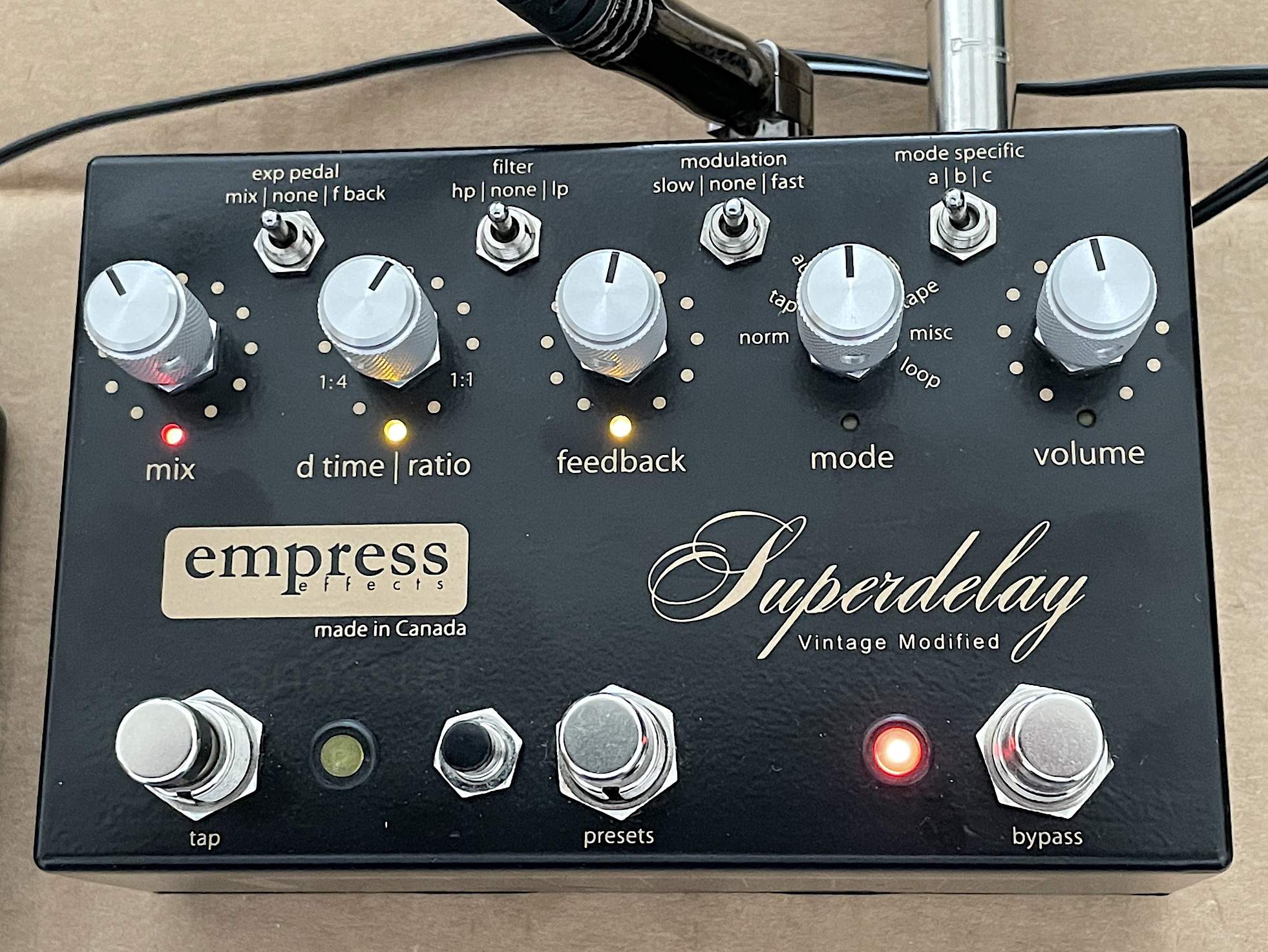
About six years after Vintage Modified Superdelay (VMSD) was released, its successor Echosystem is the same size yet is a good 16 times as powerful and has better audio fundamentals. Don’t care. I own both. There is just something about this pedal’s sound.
Maybe it’s that it doesn't have an analog dry audio path; that it’s all digital before final D/A conversion. I mentioned this before on TB.
As I played this pedal the other day I was impressed anew, especially hearing my handful of old presets. Such a sweet sound. I think VMSD remains my favorite reverse delay pedal, for both its sound and playability. Also, in person its operation is simple, it feels solid, and it is quite classy looking.
Vintage Modified Superdelay by Empress Effects
Maybe it’s that it doesn't have an analog dry audio path; that it’s all digital before final D/A conversion. I mentioned this before on TB.
As I played this pedal the other day I was impressed anew, especially hearing my handful of old presets. Such a sweet sound. I think VMSD remains my favorite reverse delay pedal, for both its sound and playability. Also, in person its operation is simple, it feels solid, and it is quite classy looking.
Vintage Modified Superdelay by Empress Effects



- Feb 16, 2008
- 21,240
- 23,636
- Disclosures
- John K Custom Basses
These are a couple BYOC kits that I built. Triangle Large Beaver (Big Muff) and a Silver Pony II (Klone).
Always been curious by this one.
It's excellent!

Compared to many, my board is quite pedestrian...
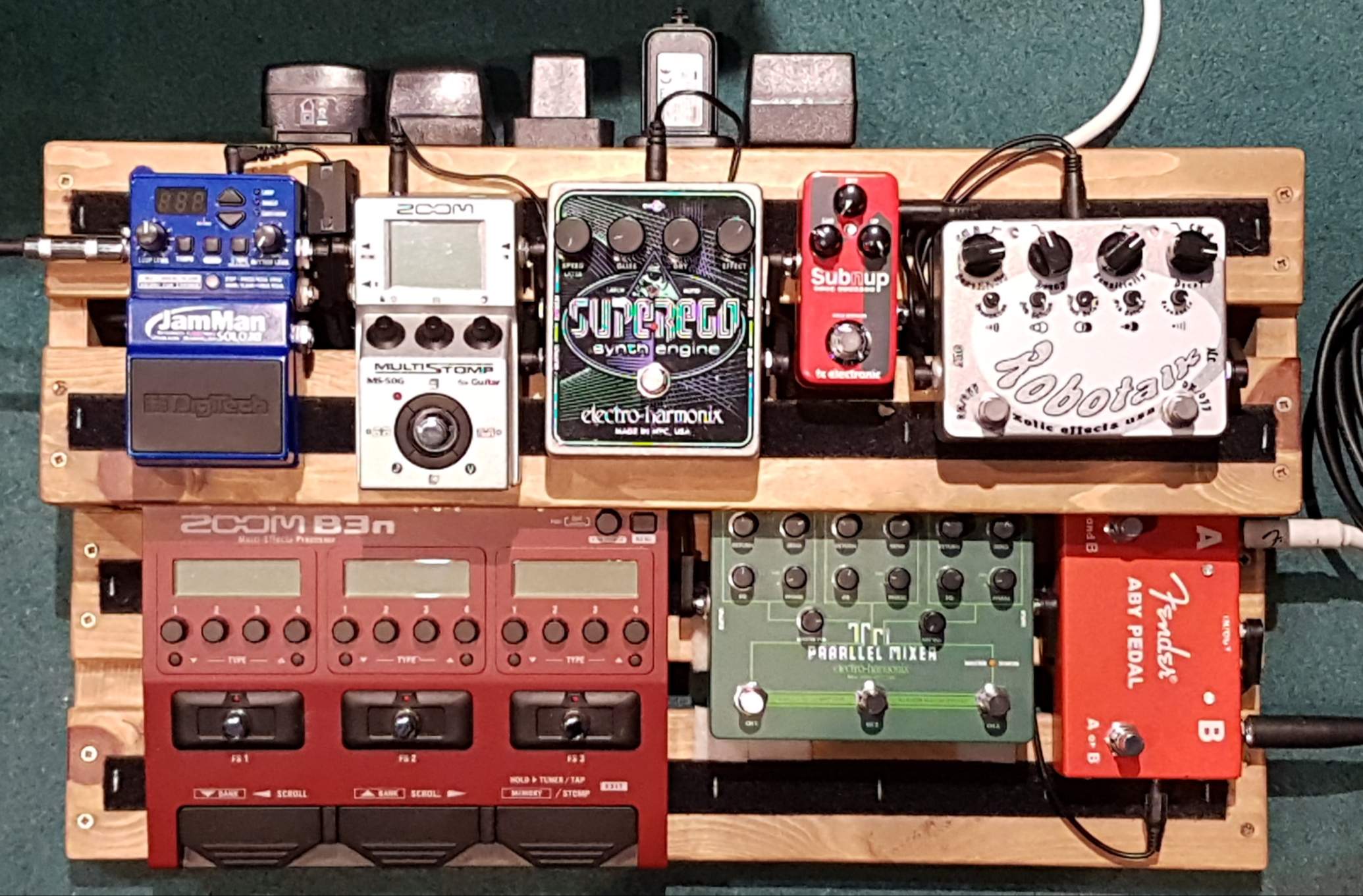
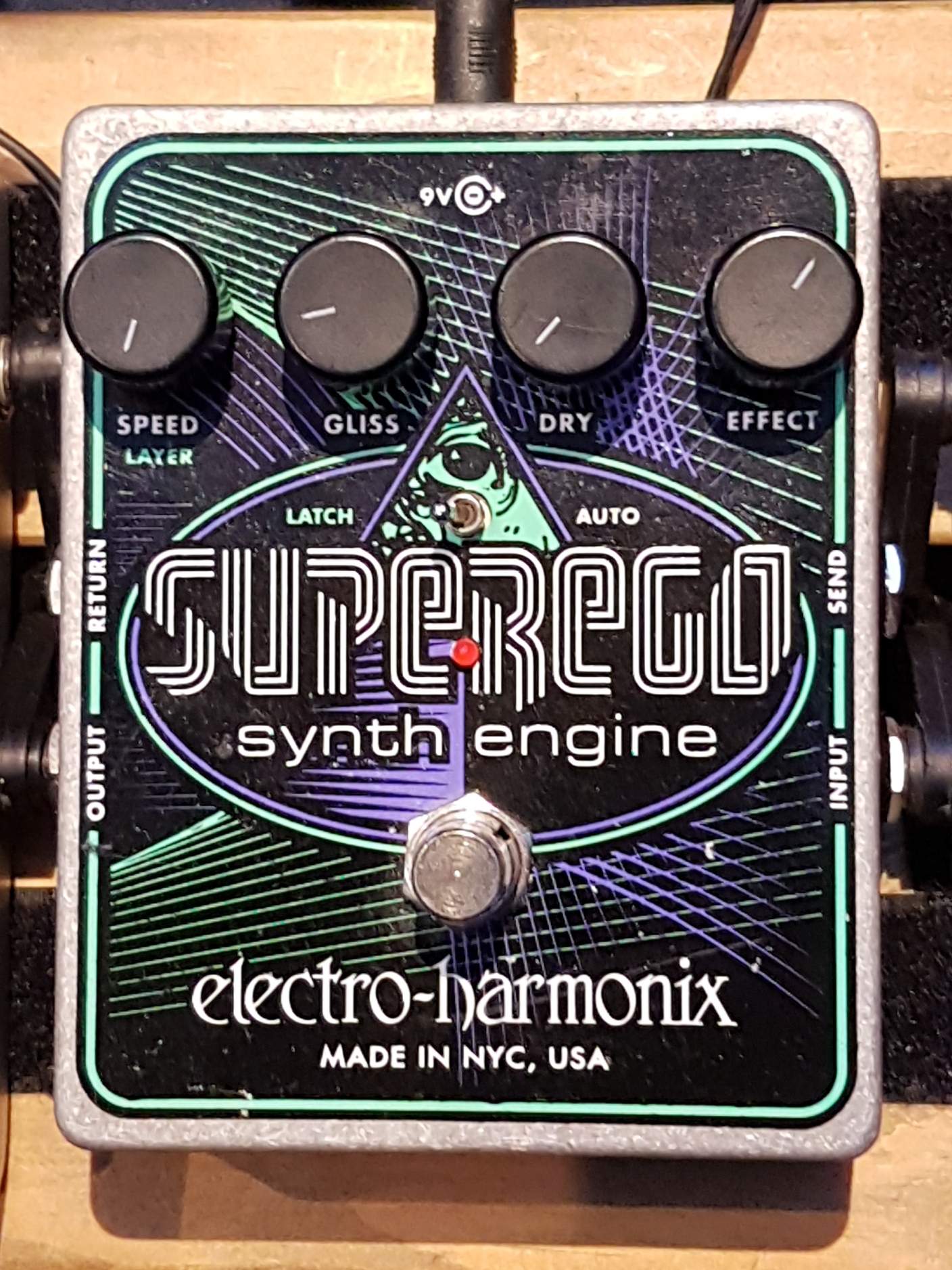
but I really like the graphics on the SuperEgo...
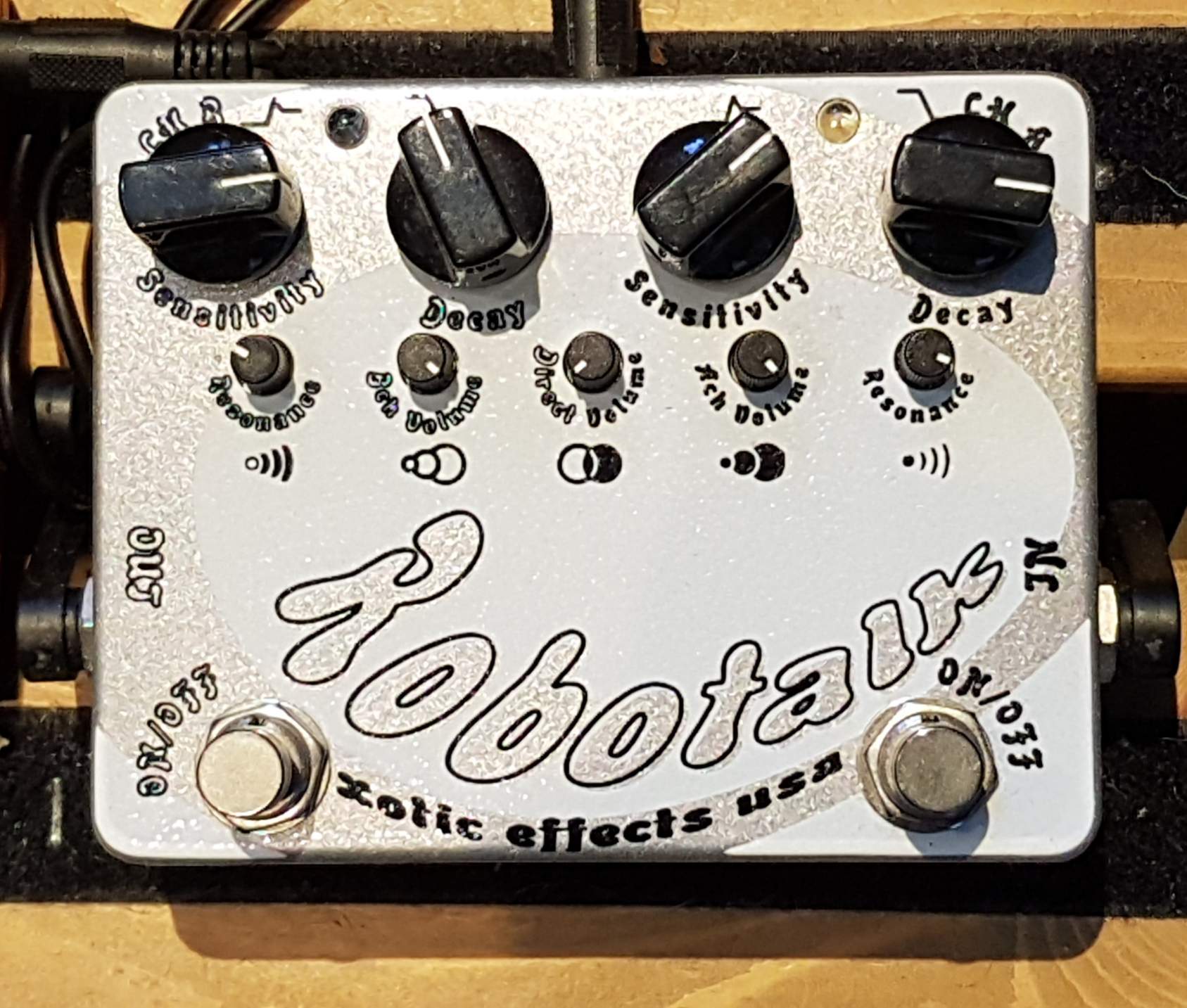
...and the Robotalk II also looks very cool...
but I really like the graphics on the SuperEgo...
...and the Robotalk II also looks very cool...




I don’t recall if I’ve already posted this, but i dig the aesthetics of this one.
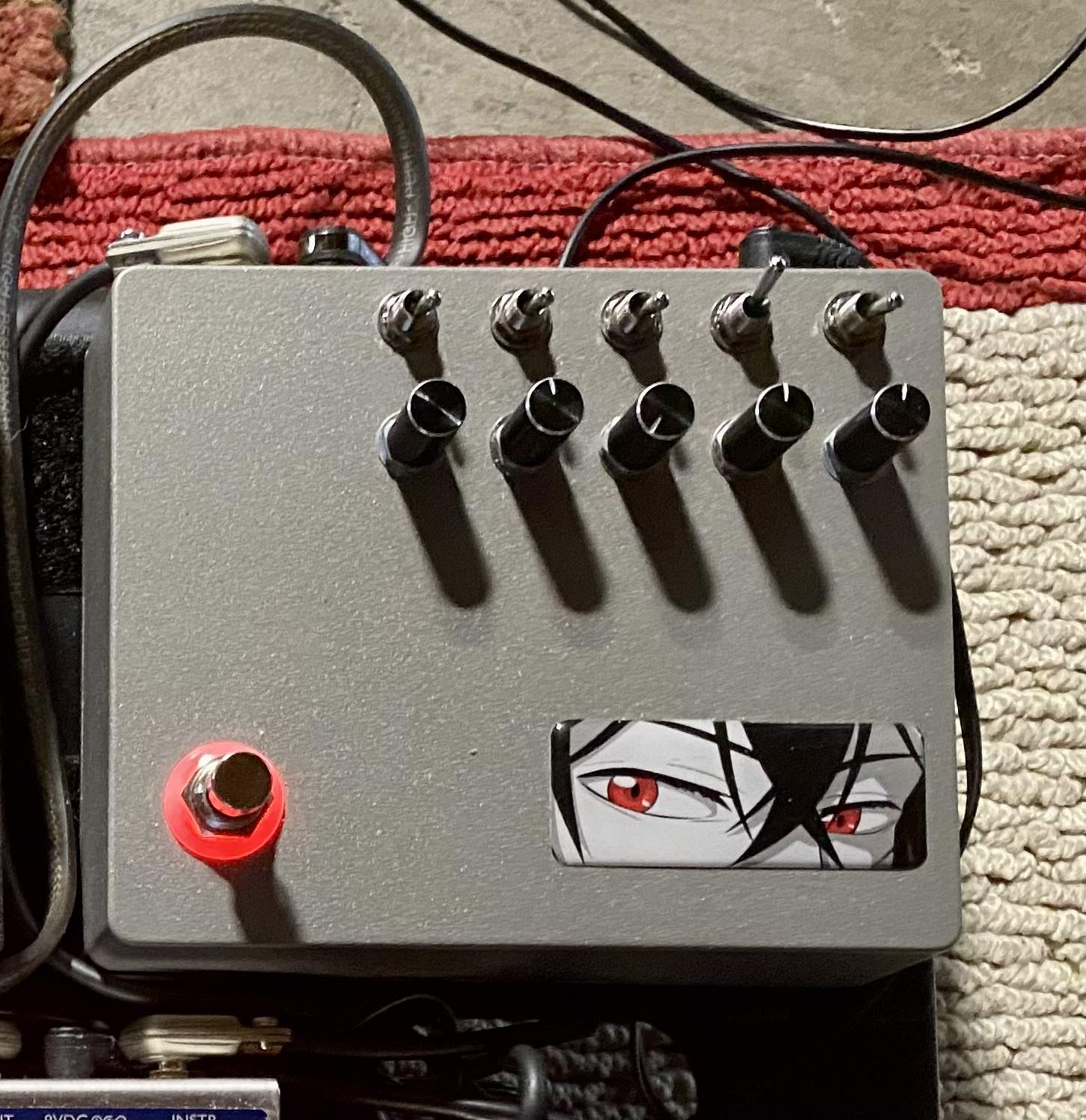
Looks like some kind of primordial jelly-fish!
A mini-review and comparison with the photo:
In my post of Randy's Revenge in this thread, I sang its praises. As of today it continues to earn my respect. My recent acquisition of Feber practically demanded that I compare the two pedals directly. So that's what I did.
Tested with bass guitar, the results were unsurprising. Randy's Revenge is per Fairfield Circuitry "all analogue". Feber is at least mostly not analog, being based on the Spin FV-1 chip. Whether because of that difference and/or any other, the audible difference between the two pedals was distinct, and while playing it was palpable.
The functionality of Randy's Revenge largely is a subset of that of Feber. Comparing them with apparently equivalent settings ("apparently" since I can't know whether, for example, the Mix control of each is linear or what kind of mixing it is doing), the frequency response of Randy's Revenge went both lower (deep fundamental) and higher (present, tactile highs), but did not sound scooped. Feber tended to sound tubby and feel distant by comparison. This was truest when the modulator was at audio rates (for classic ring modulation) rather than at LFO rates (for tremolo).
So basically, to my taste Randy's Revenge simply sounded better than Feber.
For tremolo Randy's Revenge sounded "purer" wherein I heard only amplitude being modulated; whereas at the equivalent settings Feber seemed to be doing some slight frequency modulation, so its tremolo always hinted at harmonic tremolo.
But that's where the comparison ended. Feber's 'single sideband' and feedback functions ranged into sonic territory where Randy's Revenge just can't go. Especially the low sideband, fully wet or mixed, was revelational for bell timbres, played with chords or single notes, cleaning up the high inharmonic stuff as it did. Really cool.
At LFO rates, Feber's feedback gets into phasing that can list to flanging-like "tubular" phasing. I was reminded of the mighty Haible Tau "Pipe" Phaser, which I own as a eurorack module. Impressive.
Feber by Pladask Elektrisk
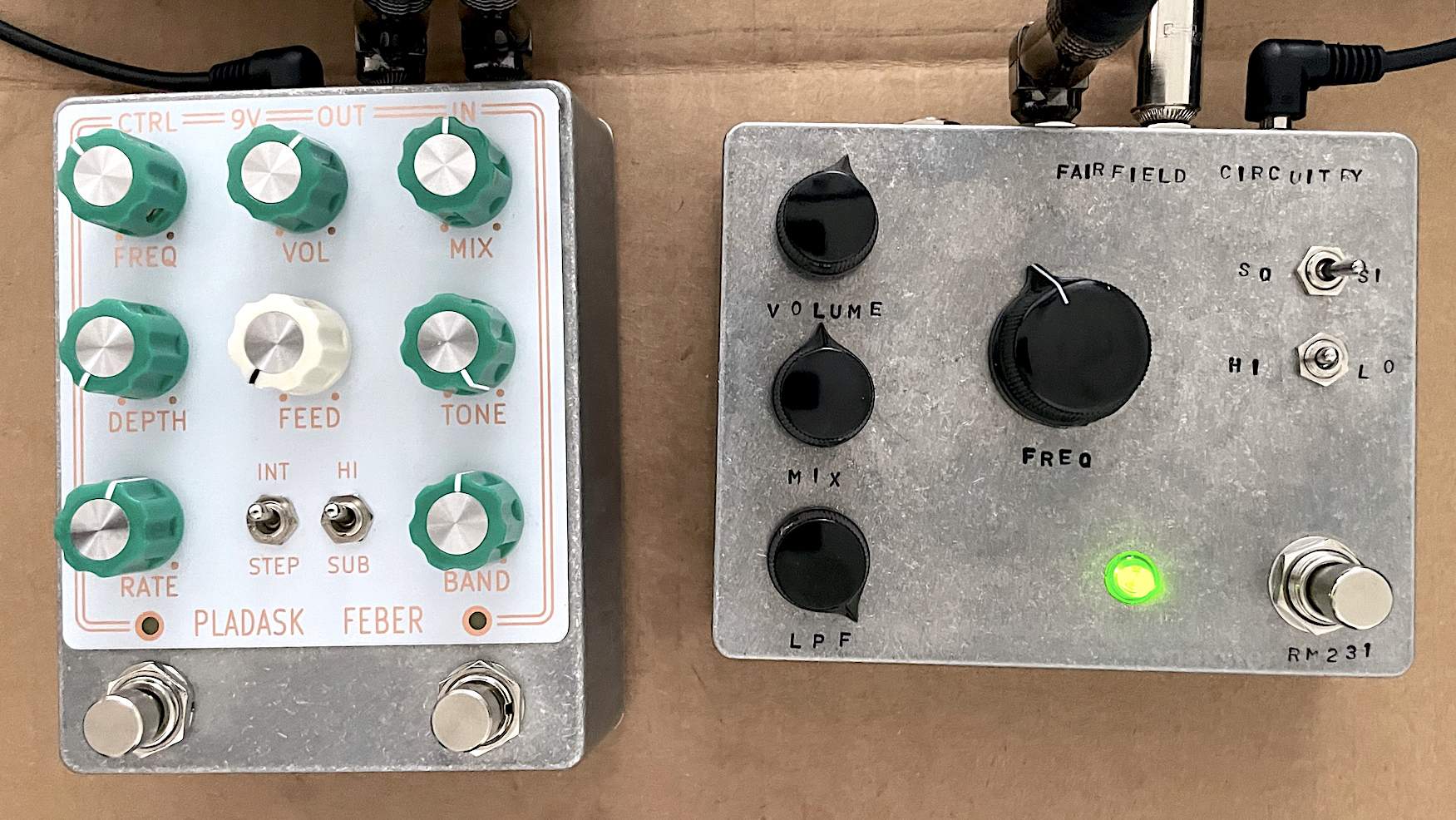
In my post of Randy's Revenge in this thread, I sang its praises. As of today it continues to earn my respect. My recent acquisition of Feber practically demanded that I compare the two pedals directly. So that's what I did.
Tested with bass guitar, the results were unsurprising. Randy's Revenge is per Fairfield Circuitry "all analogue". Feber is at least mostly not analog, being based on the Spin FV-1 chip. Whether because of that difference and/or any other, the audible difference between the two pedals was distinct, and while playing it was palpable.
The functionality of Randy's Revenge largely is a subset of that of Feber. Comparing them with apparently equivalent settings ("apparently" since I can't know whether, for example, the Mix control of each is linear or what kind of mixing it is doing), the frequency response of Randy's Revenge went both lower (deep fundamental) and higher (present, tactile highs), but did not sound scooped. Feber tended to sound tubby and feel distant by comparison. This was truest when the modulator was at audio rates (for classic ring modulation) rather than at LFO rates (for tremolo).
So basically, to my taste Randy's Revenge simply sounded better than Feber.
For tremolo Randy's Revenge sounded "purer" wherein I heard only amplitude being modulated; whereas at the equivalent settings Feber seemed to be doing some slight frequency modulation, so its tremolo always hinted at harmonic tremolo.
But that's where the comparison ended. Feber's 'single sideband' and feedback functions ranged into sonic territory where Randy's Revenge just can't go. Especially the low sideband, fully wet or mixed, was revelational for bell timbres, played with chords or single notes, cleaning up the high inharmonic stuff as it did. Really cool.
At LFO rates, Feber's feedback gets into phasing that can list to flanging-like "tubular" phasing. I was reminded of the mighty Haible Tau "Pipe" Phaser, which I own as a eurorack module. Impressive.
Feber by Pladask Elektrisk


