• TalkBass has been independent since 1998. Add your voice.
    Create a free account to reply to discussions, view embedded media, and browse with fewer display ads.
    Join freeLog in
    Want zero display ads or expanded classifieds tools? Compare plans.

The Valenti Megathread Part IV

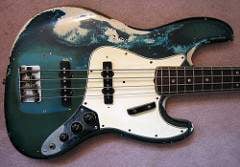
Picked up this PJ in a trade. Has a down-sized body and 33" scale which is nice change from the standard 34" but not quite as cramped as the 32" (...like my Kubicki Ex Factor). In some regards, it remainds me of the Fender Stu Hamm Urge model.

Finding properly sized (winding length) string sets has been somewhat problematic as the taper transition needs to be ~35.5" ballend > B string post to keep the full-thickness wraps from hitting the post. BSO is investigating options.

Valenti.jpg
 
Picked up this PJ in a trade. Has a down-sized body and 33" scale which is nice change from the standard 34" but not quite as cramped as the 32" (...like my Kubicki Ex Factor). In some regards, it remainds me of the Fender Stu Hamm Urge model.

Finding properly sized (winding length) string sets has been somewhat problematic as the taper transition needs to be ~35.5" ballend > B string post to keep the full-thickness wraps from hitting the post. BSO is investigating options.

View attachment 1066087
That used to be mine! A great bass, had no problem with chromes and TI jazz rounds. I think that bass is killer, I've just committed to 6 strings.
 
That used to be mine! A great bass, had no problem with chromes and TI jazz rounds. I think that bass is killer, I've just committed to 6 strings.

I'll take the string suggestions into consideration. IIRC, this started out with EMG pups & pre but, as respectable as they are, I can't imagine them going head-to-head with the existing Nordys and Sadowsky pre.

Riis
 
I'll take the string suggestions into consideration. IIRC, this started out with EMG pups & pre but, as respectable as they are, I can't imagine them going head-to-head with the existing Nordys and Sadowsky pre.

Riis

I got the bass with the current pickups. I had the EMG stuff but never tried putting them back in it sounded so good. You'll notice the P isn't installed the right way. The lower section should cover BEA and the two should be DG but again sounded so good I didn't mess with it.
 
I got the bass with the current pickups. I had the EMG stuff but never tried putting them back in it sounded so good. You'll notice the P isn't installed the right way. The lower section should cover BEA and the two should be DG but again sounded so good I didn't mess with it.

Now you've done it...you kicked my OCD in high gear. I won't be able to sleep and be up at 2 AM looking for my PH screwdrivers.

Riis
 
  • Like
Reactions: peterpalmieri
Legend has it the bass doesn't have standard PJ spacing but rather a unique Victor Wooten spacing. Spend the night trying to do that math and account for the 33" scale

Spinning the blend in either direction yields some not-too-typical results, not the "boom" > "thin" one associates with conventional dual pick-up configurations.

Riis
 
  • Like
Reactions: peterpalmieri
I wanted mine as a modern take on a 1966 jazz so I wanted it traditional to the time period. And yes, I know they didn't have PJ's in the 60's, but I wanted the traditional look of that era P bass.
 
Last edited:
img_0168-jpg.jpg


Must be a Nino thing. Here's mine which is on the way.


My old PJ5 originally had EMGs the nordy installation was done after market not by Nino. He did get the bass back and heard it set up that way but it wasn't his doing. Generally the lower section cover the EA and the upper DG so it seems natural for the lower to cover BEA on a 5 but there is no rule. That being said you have here a reverse P the lower section is closer to the bridge while the upper half of the pickup is closer to the neck, opposite of a Fender P. With your configuration the A string is really the only string that the magnets are in a true fender location where my former bass the A was the only one out of place. If that makes sense.

That being said if it sounds good that is all that matters. The thought behind reversing the P is to tighten up the lower strings and fatten up the upper ones.