
I celebrate every person's right to believe whatever they want to. That doesn't mean that there's necessarily a shred of truth in it. But hey OP, you do you!

TalkBass has been independent since 1998. Add your voice.
Create a free account to reply to discussions, view embedded media, and browse with fewer display ads.
Join free Log in
Want zero display ads or expanded classifieds tools? Compare plans.
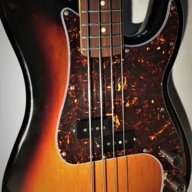
I celebrate every person's right to believe whatever they want to. That doesn't mean that there's necessarily a shred of truth in it. But hey OP, you do you!
 !
!
 And no dead spots on this bass.



IIRC those tuners had a power switch.I don't know about the scientific or physics properties of metal pickup and bridge covers, but I do believe that you'll run out your tuner's battery if you keep a cord plugged into the input.
the covers add weight which means the weight distribution of the bass changes to eliminate the famous dead spots on G string
I actually understand the Physics of dead spots - I have a degree in that field.

 !
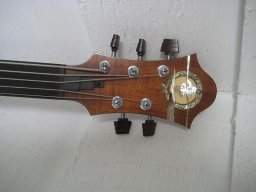
!
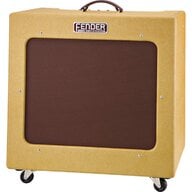

Not on that tuner, no. They have an on/off button and will work without a cable plugged in. It's safe to keep the cable in it.but I do believe that you'll run out your tuner's battery if you keep a cord plugged into the input.

the pickup cover being made from steel helps spread the magnetic field of the pickup to even the volume

Ampeg's Isovent was the best speaker design ever and the only true way to transport your pedals is in the original boxes.
I actually understand the Physics of dead spots - I have a degree in that field. Unfortunately, what you're describing is not how it works. Mass distribution on the neck or the headstock, that has an effect, but adding covers on the body, nope.

Pickup cover means I can't play over the pickup...oh poop.
Pickup cover is to shield the pickup from external (e.g., radio signals).





I just believe in me, Yoko, and me, and that's realityI don’t believe in dead spots…




