

Enjoy the benefits of a premium membership!
Upgrade Account
-
TalkBass has been independent since 1998. Add your voice.
Create a free account to reply to discussions, view embedded media, and browse with fewer display ads.
Join free Log in
Want zero display ads or expanded classifieds tools? Compare plans.
You are using an out of date browser. It may not display this or other websites correctly.
You should upgrade or use an alternative browser.
You should upgrade or use an alternative browser.
Things we didn't know or do in the 60's and 70's
- Thread starter Paulabass
- Start date
More options
Who Replied?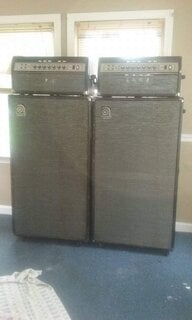
During the 60's:
We ALL used amps with two prong plugs and polarity switches and knew how to set the polarity switch so we didn't get shocks when we sang.
We all used curly Q cords, why? Because they were cool.
We all used flat wound strings, why? Because their weren't any or very few round wounds and all basses came standard with flatwounds.
We all played either Fender Precision's or Gibson EB-0's.
We all used either Fender Bassman's, Fender Dual Showman's or Ampeg B-15's or for those of us who were very young or poor: Silvertone Twin Twelves.
We never used monitors, why? Because we never heard of them!
We all learned to tune by using overtones if we could just get one string correct. Are you in tune? "Yes I was just playing to the radio before I came." "OK, give me an A"
During the 70's:
We all grew our hair down to our ahem... butts.
We all bought SVT's or Acoustic 360's and became just as obnoxiously loud as the guitar players.
We ditched the EB-0's but kept playing the P basses
Started using monitors,
We gave our Bassman's to the guitar players.
All switched to round wounds just to PO the guitar players.
Still kept setting our polarity switches correctly.
We all started trying to "make it"
All of here survived.
We ALL used amps with two prong plugs and polarity switches and knew how to set the polarity switch so we didn't get shocks when we sang.
We all used curly Q cords, why? Because they were cool.
We all used flat wound strings, why? Because their weren't any or very few round wounds and all basses came standard with flatwounds.
We all played either Fender Precision's or Gibson EB-0's.
We all used either Fender Bassman's, Fender Dual Showman's or Ampeg B-15's or for those of us who were very young or poor: Silvertone Twin Twelves.
We never used monitors, why? Because we never heard of them!
We all learned to tune by using overtones if we could just get one string correct. Are you in tune? "Yes I was just playing to the radio before I came." "OK, give me an A"
During the 70's:
We all grew our hair down to our ahem... butts.
We all bought SVT's or Acoustic 360's and became just as obnoxiously loud as the guitar players
.We ditched the EB-0's but kept playing the P basses
Started using monitors,
We gave our Bassman's to the guitar players.
All switched to round wounds just to PO the guitar players.
Still kept setting our polarity switches correctly.
We all started trying to "make it"
All of here survived.

All of here survived.
In no small measure that's mainly due to the polarity switch.

Pretty sure that never happened in any of the infinite multiverses.And the drummers played at sensible volume levels.
Here's a partial list of things that didn't exist, or if they did exist were rarely in use when I started playing in bands in high school in 1970:
Round wound strings (Rotosound round wounds were being made but were not widely available)
Aftermarket pickups and parts, other than custom made ones
Electronic tuners (other than Conn Strobotuner)
Multi-string basses (other than the Fender V, Hagstrom 8-string or other "specialty" instruments)
I never knew about gig bags until around 1977, even though I'm sure they were around
Small rigs that had enough volume without distortion to use in a band setting
Bass-specific effect pedals (they started to gradually appear later in the 70's)
I'm sure I'm leaving out a lot, but that's what I remember off the top of my head.
Round wound strings (Rotosound round wounds were being made but were not widely available)
Aftermarket pickups and parts, other than custom made ones
Electronic tuners (other than Conn Strobotuner)
Multi-string basses (other than the Fender V, Hagstrom 8-string or other "specialty" instruments)
I never knew about gig bags until around 1977, even though I'm sure they were around
Small rigs that had enough volume without distortion to use in a band setting
Bass-specific effect pedals (they started to gradually appear later in the 70's)
I'm sure I'm leaving out a lot, but that's what I remember off the top of my head.
In no small measure that's mainly due to the polarity switch.
That's why I included polarity switches
.
I would say the biggest difference is the digital tuner....I was probably out of tune for the first 15 years I played.

If we did so many things wrong, how come we made the best music of the century?
The answer is embedded in your post. The focus was on music and not on the gear. And there was no Talkbass to waste your time on

Now go and get back to your daily exercises!
How about having to reverse polarity on the amps, cause you were getting shocked on touching the mics, that got you charged and ready to Rock n Roll.
It was very simple to set the switch right, the way of least hum, if you couldn't hear any hum both ways, you would unplug your bass, turn the volume down so it hum wasn't really loud and then switch it back and forth, again whichever way had the least hum was the correct position, you would sometimes get little tingles from a mic or worse if the moron who set the PA up didn't bother to check for correct polarity though. It became a habit of mine to touch the mic and a tuner on my bass lightly with fingers from the same hand just in case, that way if there was a problem no current would go through the heart. I can only remember having a problem once and it was because the cap in the standby switch in my SVT had evidentially shorted, I got that fixed in a hurry
.
The PA was for vocals.
We did not carry backups of anything, except maybe fuses.
and we didn't have monitors 'til late 70s.
Early 70s just had a Vocal Smasher. Them got VTs (Voive o' the Theatre) late 70s when those came out and the VM became our monitors.

I was the guy that worked on all of the electronics , cord repairs amp repairs and the only guy in the band to carry 4 extra amp power cords. Never did a gig where someone would unplug their amp at home and forget the power cord !Yes on the soldering iron! It used to be easy to repair cables back then, too, because they weren't all shrink wrapped inside. They were built with the thought that you might need to get in there and fix them one day.
Those were the worst cords ever always needed soldering and I always had one in my gear boxOk, I even hated these back then. See "soldering iron" above.
I lucked out my number came up and I was ready to go in the Navy and become a radar technician . But they started cutting back on the troops and I missed being taken when my number missed by one !Yeah, the draft number alone should be enough to squash a lot of back-in-the-good-old-days reminiscing.
And they weighed a ton !Yea, and the question “which model P Bass should I buy” didn’t make any sense....there was only one.
Yeah and for 200 bucks you could buy a used Fender P or JazzThere was no vintage basses. We called them used basses.
1. I never knew that strings needed to be changed until broken.
2. I thought that the heavier the "Big Bertha" stacks that were our PA, the better the sound.
3. Sheilded cable?...
There is some truth to Number 2. The purpose of a cabinet for a dynamic loudspeaker is, among other things, to hold the loudspeaker securely so the speaker can transfer energy from its vibrating cone into the air, thus creating sound waves. Any energy from the cone that might be expended making the cabinet itself vibrate will be subtracted from what is available to make actual sound. Cabinet resonances will, of course, also affect the quality of the sound. So the denser and more massive the loudspeaker cabinet, the less it will vibrate and the more energy across the audio spectrum will be available to do what the cabinet was made to do.
Modern techniques have been developed to stiffen cabinet walls using certain internal bracing techniques and by applying stress to the various sides / components of the cabinet (aircraft bracing). This makes it possible to make efficient cabinets that don't vibrate, and that don't weigh a ton either. But your basic idea, especially for bass cabs and subs, is essentially correct.
For our rental system's bass horns, we used internally braced 3/4" marine grade plywood with an outside layer of Formica laminate for increased mass and stiffness. Heavy. Yes. Very heavy. But once a client heard them, it was game over. This was the price we were willing to pay to compete. The modern techniques will get you pretty close, I think, so that is a good thing. But depending on the specifics of your particular system, you were essentially right.
Last edited:
And cocaine was considered good for you and the creative process...
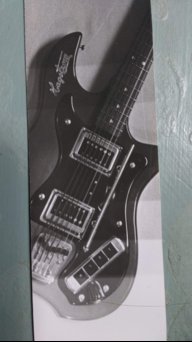
Nice Hohner BassAnd cocaine was considered good for you and the creative process...


