

Enjoy the benefits of a premium membership!
Upgrade Account
-
TalkBass has been independent since 1998. Add your voice.
Create a free account to reply to discussions, view embedded media, and browse with fewer display ads.
Join free Log in
Want zero display ads or expanded classifieds tools? Compare plans.
You are using an out of date browser. It may not display this or other websites correctly.
You should upgrade or use an alternative browser.
You should upgrade or use an alternative browser.
Things You Don't See Anymore Part 3
- Thread starter Richland123
- Start date
More options
Who Replied?
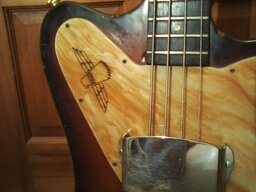
That's cool! Never saw one B4.
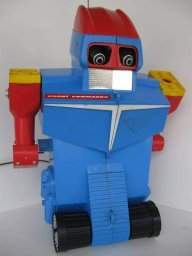
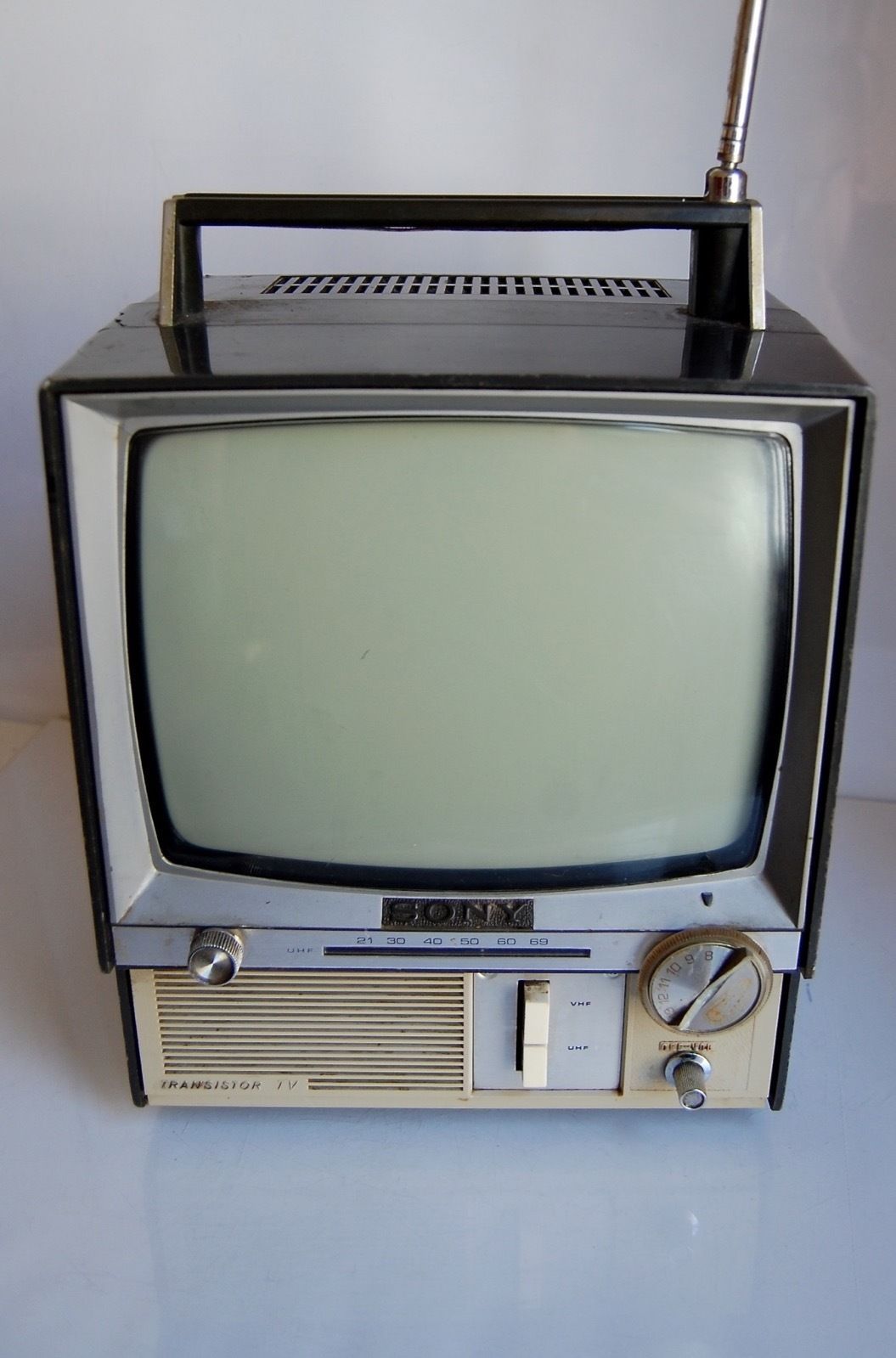

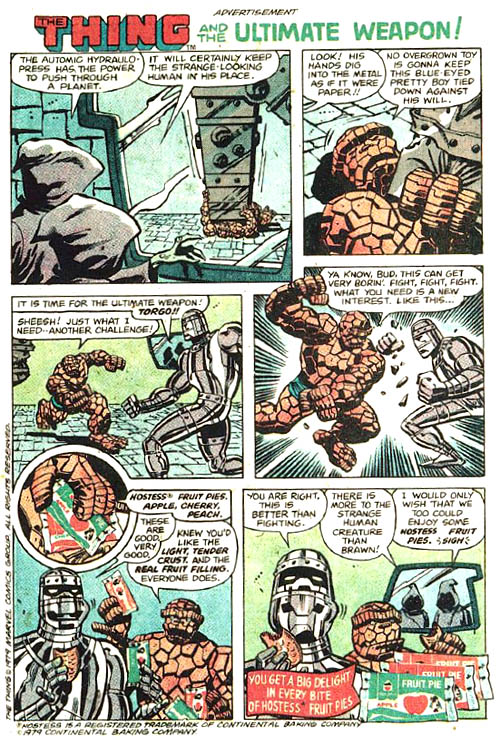
I always loved these Hostess ads when they paired them with Marvel comics. 
I remember using a similar disk pack in a Control Data disk drive that was about the size of an apartment sized kitchen stove back in the days when I worked for General Electric Medical Systems testing and troubleshooting circuit boards.
You placed the 300 megabyte disk pack in the drive, and removed the transparent cover from the pack, and closed the drive lid before spinning it up.
Last edited:
I remember touring University Of Victoria computer center once circa 1977, and they had about 8 of those 'Stoves'I remember using a similar disk pack in a Control Data disk drive that was about the size of an apartment sized kitchen stove back in the days when I worked for General Electric Medical Systems testing and troubleshooting circuit boards.
You placed the disk pack in the drive, and then removed the transparent blue cover from the pack, and closed the drive lid before spinning it up.
View attachment 5467105
View attachment 5467111

Our high school was a few blocks away but I had to visit the campus every week to find an available punch desk to encode my FORTRAN homework. Luckily, they had one in pretty much every building!
(this would be a typical tiny FORTRAN program, we would have to wait a week for our class batch to get run- then we would find out if it ran or not...)
We also had tape drives.
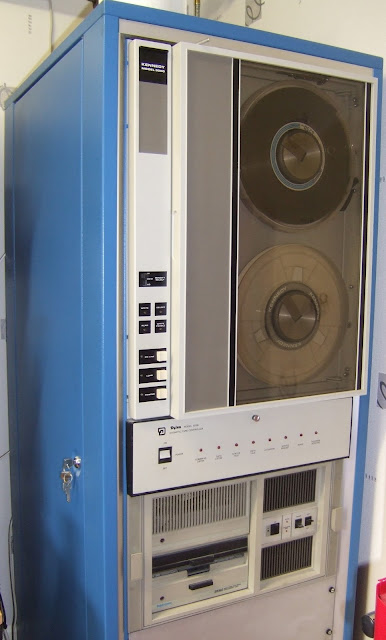
There is an 8 inch floppy disk drive in this rack as well.
There is an 8 inch floppy disk drive in this rack as well.
I remember touring University Of Victoria computer center once circa 1977, and they had about 8 of those 'Stoves'
Our high school was a few blocks away but I had to visit the campus every week to find an available punch desk to encode my FORTRAN homework. Luckily, they had one in pretty much every building!
View attachment 5467121
(this would be a typical tiny FORTRAN program, we would have to wait a week for our class batch to get run- then we would find out if it ran or not...)
I see the command lines have been written on the stack of cards.
The toy oxygen mask would probably be a huge red flag today.

When I got my EE we had to write our programs then book time on the College Lab Main Frame to see if it compiled and ran. If not more changes then back to the lab. Sometimes the only free slot time open was after midnight!I remember using a similar disk pack in a Control Data disk drive that was about the size of an apartment sized kitchen stove back in the days when I worked for General Electric Medical Systems testing and troubleshooting circuit boards.
You placed the disk pack in the drive, and then removed the transparent cover from the pack, and closed the drive lid before spinning it up.
View attachment 5467105
View attachment 5467111
Tired of that I bought one of the 1st home IBM computers and it had a 33mHz CPU, 4M Ram and a “huge” 340 MB HD. I had to make payments on $2600 purchase! I upgraded it and I used it for about 5 years. Win 1.0 came on 2 floppy discs!
Yeah, I bought an IBM PS-2 when they first came out, (before Windows existed). I paid a LOT for that thing.
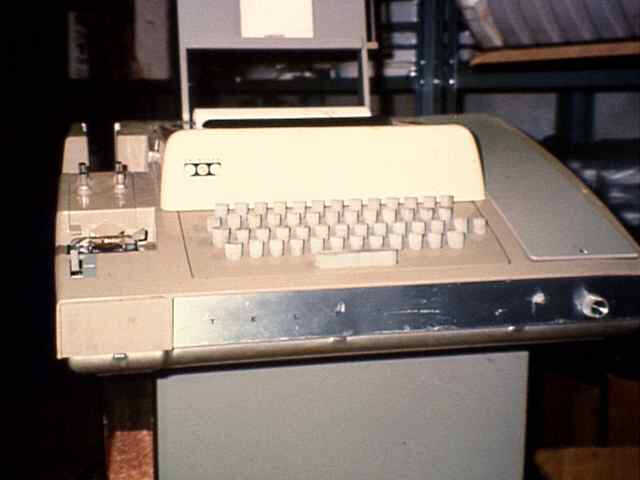
At GE we had Data General Eclipse, and Digital Equipment Corporation pdp8e machines as well. The pdps did not have video. You operated it with a tty. That means any output from the computer was printed out on paper fed through the console that contained the keyboard.
Edited to add a photo of a Teletype Corporation ASR-33 and a Digital Equipment Corporation pdp8e.
The ttys we used were the KSR-33 which did not have the paper tape reader on the left-hand side that the one in the photo has.
This was the user interface to the pdp8e computer. No video display.
To boot the pdp you set address switches on the front panel of the computer and loaded a series of binary addresses to command the machine to read from the disk.

Here is the DECpack CARTRIDGE DISK SYSTEM for DEC computers:
The drive:
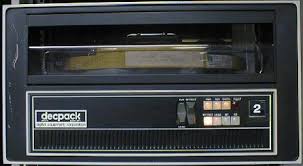
The 2.4 megabyte disk cartridge:

https://lastin.dti.supsi.ch/VET/disks/RK05/decpdp11decpackrk05.pdf
At GE we had Data General Eclipse, and Digital Equipment Corporation pdp8e machines as well. The pdps did not have video. You operated it with a tty. That means any output from the computer was printed out on paper fed through the console that contained the keyboard.
Edited to add a photo of a Teletype Corporation ASR-33 and a Digital Equipment Corporation pdp8e.
The ttys we used were the KSR-33 which did not have the paper tape reader on the left-hand side that the one in the photo has.
This was the user interface to the pdp8e computer. No video display.
To boot the pdp you set address switches on the front panel of the computer and loaded a series of binary addresses to command the machine to read from the disk.
Here is the DECpack CARTRIDGE DISK SYSTEM for DEC computers:
The drive:
The 2.4 megabyte disk cartridge:
https://lastin.dti.supsi.ch/VET/disks/RK05/decpdp11decpackrk05.pdf
Last edited:

I'm liking all these old-school computer-related posts because I like origins and because I think it's just cool. I don't actually understand any of it!

Me too also.I'm liking all these old-school computer-related posts because I like origins and because I think it's just cool. I don't actually understand any of it!


I heard something that the idea of those cards came from knitting punch cards in the 1700s?I remember touring University Of Victoria computer center once circa 1977, and they had about 8 of those 'Stoves'
Our high school was a few blocks away but I had to visit the campus every week to find an available punch desk to encode my FORTRAN homework. Luckily, they had one in pretty much every building!
View attachment 5467121
(this would be a typical tiny FORTRAN program, we would have to wait a week for our class batch to get run- then we would find out if it ran or not...)
I heard something that the idea of those cards came from knitting punch cards in the 1700s?
In 1725 Basile Bouchon developed a method to control a loom that used a roll of paper with holes in it that caused needles in the loom to be lifted or to remain lowered. The paper roll in a player piano is a similar concept. This may be the first example of industrial automation. Later, Joseph Marie Jacquard designed a knitting machine that used a "chain of cards" which was ostensibly a variant of the Buchon method. This became known as the "Jacquard Loom".
Buchon and Jacquard's work had an influence on Charles Babbage.
Many years ago I worked as an independent contractor on a project that an individual (who retired as an engineer at Teletype Corporation, and who also helped found Extel Corporation where he developed the first dot-matrix printer and the earliest ink jet printers) did as something to occupy himself in retirement. Walter J Zenner had over 100 patents to his name, and also did work for the US Navy during WW II regarding reverse engineering Nazi cryptography machines for which he recieved some commendations. He lived on a gigantic estate on a lake near me. He was a very interesting person. He paid me very well, but I should have paid him for the education I received working as his assistant.
The object of the project was to design a device to punch holes in paper tape at a high rate of speed. This project started out as a blank slate except that it had to fit in a defined space, and had to be driven by a belt (like a tape recorder would use) running at a defined speed.
The design was licensed to Western Union for use in the telegram business to replace a device that they found to be unreliable.
Punched tape is a form of data storage that looks like this:
At GE we had equipment that used punched tape to operate automated circuit board test equipment as well as the more modern computer controlled equipment I described in an earlier post above.
There may still be old automated machine tools in use that use punched tape to control the machining process.
Here is an interesting YT video about punched tape:
Last edited:
In 1725 Basile Bouchon developed a method to control a loom that used a roll of paper with holes in it that caused needles in the loom to be lifted or to remain lowered. The paper roll in a player piano is a similar concept. This may be the first example of industrial automation. Later, Joseph Marie Jacquard designed a knitting machine that used a "chain of cards" which was ostensibly a variant of the Buchon method. This became known as the "Jacquard Loom".
Buchon and Jacquard's work had an influence on Charles Babbage.
Many years ago I worked as an independent contractor on a project that an individual (who retired as an engineer at Teletype Corporation, and who also helped found Extel Corporation where he developed the first dot-matrix printer and the earliest ink jet printers) did as something to occupy himself in retirement. Walter J Zenner had over 100 patents to his name, and also did work for the US Navy during WW II regarding reverse engineering Nazi cryptography machines for which he recieved some commendations. He lived on a gigantic estate on a lake near me. He was a very interesting person. He paid me very well, but I should have paid him for the education I received working as his assistant.
The object of the project was to design a device to punch holes in paper tape at a high rate of speed. This project started out as a blank slate except that it had to fit in a defined space, and had to be driven by a belt (like a tape recorder would use) running at a defined speed.
The design was licensed to Western Union for use in the telegram business to replace a device that they found to be unreliable.
Punched tape is a form of data storage that looks like this:
View attachment 5468103
At GE we had equipment that used punched tape to operate automated circuit board test equipment as well as the more modern computer controlled equipment I described in an earlier post above.
There may still be old automated machine tools in use that use punched tape to control the machining process.
Here is an interesting YT video about punched tape:
I was wondering since you said it took you a week to see if your code would compile. How would you find the errors?
If I recall correctly, all of our code basically was aiming for some kind of printout... (there was no other output available to us!)
If we embedded some 'debug' printing every few lines, we could see where the program left off (or alternately, went into an accidental loop...) I think that if we were optimisitic and didn't have it printing something every few lines, the only clue we got was "something went wrong - no printout FOR YOU"... Our class batch was once a week for a semester and I remember carting around some pretty hefty card stacks (one line of code per card, barring some fancy card-spanning stuff) but for the life of me I cannot remember what any of those programs were supposed to do. And 45 years of coding on and off have Invalid Link Removed anyway !
If we embedded some 'debug' printing every few lines, we could see where the program left off (or alternately, went into an accidental loop...) I think that if we were optimisitic and didn't have it printing something every few lines, the only clue we got was "something went wrong - no printout FOR YOU"...
Our class batch was once a week for a semester and I remember carting around some pretty hefty card stacks (one line of code per card, barring some fancy card-spanning stuff) but for the life of me I cannot remember what any of those programs were supposed to do. And 45 years of coding on and off have Invalid Link Removed anyway !