• TalkBass has been independent since 1998. Add your voice.
    Create a free account to reply to discussions, view embedded media, and browse with fewer display ads.
    Join freeLog in
    Want zero display ads or expanded classifieds tools? Compare plans.

This is what a "Dead Spot" sounds like

Am I crazy or do I hear some sort of undertone there, almost like a harmonic? It's almost like the string is vibrating counter to the note being played and canceling it a bit. I've never really noticed a dead spot before, thanks for the example.

I really can't see myself sweating it though. But at least now if I hear something weird on one of my recordings I now know what I could look for.
 
Funny. I always took the attitude that the instrument comes with four strings, so by god I'm gonna use all of them. As it happens, I've been lucky with dead spots: I've got one of those Allparts necks on my J, and there's a little falloff on the G at the 6th fret, but it's not nasty like Dan's example.
 
Am I crazy or do I hear some sort of undertone there, almost like a harmonic? It's almost like the string is vibrating counter to the note being played and canceling it a bit. I've never really noticed a dead spot before, thanks for the example.

I really can't see myself sweating it though. But at least now if I hear something weird on one of my recordings I now know what I could look for.

It sounds like a harmonic because the fundamental dies out. The neck, at that point, is absorbing the energy of that particular fundamental frequency. The same pitch, played at the 11th fret of the D string, does not exhibit that same trait.
 
btw, i didn't say they had zero impact in the real world, just to clarify. i just said i couldn't give a rat's ass about a dead spot. still don't, either.

I didn't mean to misquote you, but saying you "don't give a rat's ass" made me infer that you sort played your basses ignoring whether or not there were any so-called dead spots. That's how I do it too, because frankly very few of the notes I play need to last much longer than the initial attack. However if it was a REALLY bad dead spot I think it would no longer be possible for me to "not give a rat's ass" hence my comment about "zero impact".
 
I wonder if a shim would change a dead spot on a bass with a bolt on neck. And what about shims made of different materials ... wood, plastic, metal, etc ...

IME, a shim will not change a dead spot at all.
i've heard people say that slightly loosening the neck screws (1/8 turn CCW) in order to 'decouple' the neck works, but i tried that method and it didn't work either. others hae said that steel machine screw inserts/neck bolts work, but i've tried that and it didn't work either. sometimes a truss rod adjustment can help, since it can change the neck's resonance by 'tuning' the rod to a different frequency, but i've found that the only real solution is to add a small amount of mass (weight) to the to solve it.
 
I didn't mean to misquote you, but saying you "don't give a rat's ass" made me infer that you sort played your basses ignoring whether or not there were any so-called dead spots. That's how I do it too, because frankly very few of the notes I play need to last much longer than the initial attack. However if it was a REALLY bad dead spot I think it would no longer be possible for me to "not give a rat's ass" hence my comment about "zero impact".
well let's put it this way...if i had my druthers, i'd rather not have a dead spot than have one, but it's never caused me to hate an otherwise good bass.
 
The cause is a rather long boring story. The short version is that deadspots are an unfortunate part of basses with a bolt-on neck. The vast majority of Fenders have them, you just gotta know what to listen for.

The best method to determine if your bass has a deadspot is to play every note on the G string. Listen closely. See if any of them respond like the audio clip I posted above. They are typically between frets 5 and 9.

As for correcting them - that's a challenge. Some folks have good results by adding mass to the headstock. This will "shift" the deadspot to a different frequency (note). Best case scenario, it is shifted between two notes (like between C# and D) and thus won't have much impact. More than likely it will simply shift to a fret above or below.

The best thing has already been done back in the 70's by your very own Fender, Gene Fields did this to a Fender bass:

Invalid Link Removed

Read it all through before you care to comment. REMOVING headstock mass was the most efficient one. I e headless. Period. End Of Discussion.
 
I'd rather deal with a deadspot than go headless, personally.

I find headless basses a bit "characterless" in sound, probably because they have no resonance issues in the low register! Removing the headstock shifts the issues to the high register (raises the frequency the neck vibrates at). Not dogging Steinies, I've gigged a couple and they're nice, but I think they sound a bit... I dunno... sterile? You almost need the flaws of the tone that come from the neck flexing a bit to get that "classic" sound.
 
IME, a shim will not change a dead spot at all.
i've heard people say that slightly loosening the neck screws (1/8 turn CCW) in order to 'decouple' the neck works, but i tried that method and it didn't work either. others hae said that steel machine screw inserts/neck bolts work, but i've tried that and it didn't work either. sometimes a truss rod adjustment can help, since it can change the neck's resonance by 'tuning' the rod to a different frequency, but i've found that the only real solution is to add a small amount of mass (weight) to the to solve it.

More Data:

I just discovered my Ursa SX has a dead spot (not so bad as to ruin the bass but far from perfect too!) Now this is a bass that I just put inserts on. I never noticed the dead spot before. Clearly the inserts made the dead spot WORSE!

The interesting thing is that I can "test" the dead spot by pushing the headstock against something solid (I was using a pile of books) If you do that the dead spot completely goes away at it's normal location (5th fret on G). You can not only hear but FEEL the difference in the neck as there is a neck vibration that goes away with the dead spot when you press the headstock. And when the dead spot is gone you can't seem to find it moved anywhere.

So if the inserts made the DS "worse" what if I loosen them? So I did. And Lo the DS got much better. But the down side was that this ALSO deadened the tone of ALL the strings that the inserts had just brightened up. So that isn't so hot. (I was thinking about putting a rubber "shim" under the neck joint)

I added a small lead weight to the head stock with the neck tightened back up and it didn't seem to move the DS at all.

Then I put a piece of rubber under the G string at the nut to "decouple" it from the end of the neck The DS improved slightly but now the open string sounded dull. And anyway it was a dumb idea because the DS is at the 5th fret and hence the nut doesn't enter in!

But I tell you guys, pressing the end of the headstock against something REALLY kills the DS! I suddenly can see the benefit of the weird "flying buttress" designs! Still it seems there ought to be SOME kind of gadget one could clamp on the headstock that would kill the DS the way jamming the HS into wall etc. does!
 
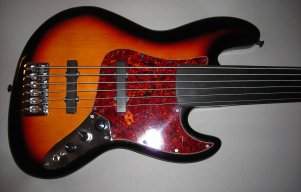
Arrgh...playing at church late this afternoon...hellacious dead spot on my 5-string fretless at the 5th-7th frets on the G string, right when I wanted those notes to ring. Thought for a second as someone suggested above that EQ could have aggravated the problem. No time to adjust...played them for the next refrain higher up on the D...problem solved.

That said, since I've been on a kick listening to STP in the car lately, am pretty sure I can hear Robert DeLeo steering clear of potential dead spots by playing higher notes on the lower strings...or at least that's what I have to do when playing his lines on the Fender Jazz at home.
 
More Data:


But I tell you guys, pressing the end of the headstock against something REALLY kills the DS! I suddenly can see the benefit of the weird "flying buttress" designs! Still it seems there ought to be SOME kind of gadget one could clamp on the headstock that would kill the DS the way jamming the HS into wall etc. does!

I found my bass has a dead spot at a place I don't visit that often (8th fret G string), and if I just lay the headstock against anything (not even pressing), it goes away. My bass may be a candidate for a headstock weight of some sort. If I find I need D#/Eb much, I'll look into it. Not a big issue ATM.