
It's Dave Hill from Slade!
The bangs need to be about 3 inches higher on the forehead.

TalkBass has been independent since 1998. Add your voice.
Create a free account to reply to discussions, view embedded media, and browse with fewer display ads.
Join free Log in
Want zero display ads or expanded classifieds tools? Compare plans.
It's Dave Hill from Slade!

I did prefer the Thunderbird, largely because it had a more full and bigger sound, which is my tonal goal.I setup a YouTube channel to compare a cheap Chinese bass that was turned into a husk and then had all the parts upgraded (still a sub $200 bass) to my Epi IV. I'd love to get some impressions about the tone difference (not the playing part, I already know I suck and I have a t-shirt saying that). I think the Tbird has a more full sound and more thump at the real low end. Both basses have La Bella 750-N black tapewounds and were recorded with identical settings (neck pickup only and zero tone). Please excuse the "jazz notes" as all the recordings were one pass. Three different styles just so I could get a reference. I have no ear, so your thoughts would be greatly welcome.
https://www.youtube.com/channel/UCTxj6NlaacJgTWSVt4C0ncQ

Someone at Gibson (or somewhere) has some 'splaining to do!
I installed strap locks on the new bird tonight. Compare and contrast the strap pins I removed.
View attachment 4671140
Top is the front strap pin, the bottom is the rear strap pin.
Another view
View attachment 4671141
Note that the screw for the front strap pin is shorter.
Is it the "Gibson parts bin" problem or do others have the same configuration?
It messes with my sense of symmetry to have different strap buttons and different size screws.

Thanks. I'll email him. I just emailed the guy who made my pickup rings to ask what he uses.Carlo used double sided tape on his Cataldo builds, but I don't recall what kind he used.

Someone at Gibson (or somewhere) has some 'splaining to do!
I installed strap locks on the new bird tonight. Compare and contrast the strap pins I removed.
View attachment 4671140
Top is the front strap pin, the bottom is the rear strap pin.
Another view
View attachment 4671141
Note that the screw for the front strap pin is shorter.
Is it the "Gibson parts bin" problem or do others have the same configuration?
It messes with my sense of symmetry to have different strap buttons and different size screws.
I'll just leave this right here.Isn't there a watermelon pill to help with that?
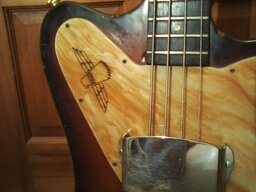
A pill the size of a watermelon might be a bit difficult to swallow.Isn't there a watermelon pill to help with that?

Who said you swallow it ?A pill the size of a watermelon might be a bit difficult to swallow.


I have a DI on the board. Problem solved. I haven't recorded with it. If I did, probably a kick drum mic like a D12 or D112 or whatever those are called. Maybe a stout ribbon. I haven't thought about it. Recording is another time I go DI.


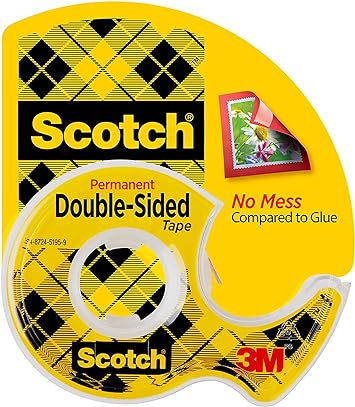
Carlo used double sided tape on his Cataldo builds, but I don't recall what kind he used.
Thanks. I'll email him. I just emailed the guy who made my pickup rings to ask what he uses.
Both screws were tight and appeared to be drilled appropriately. (Ahem) I am wondering if others have seen the same thing.Function over form. That screw for that front strap pin seems suspect.
I could get into an ahem here. But you don't want that thang slipping out on you.
Your problem is you're looking at it from Newtonian physics, which is not a thing so much anymore. If you apply some unknown law from Quantum Mechanics the screws could be the same. Then again, according to Kant, all we know is how we perceive or experience a thing. Either way I'd say you have a lot of problems to sort through.Someone at Gibson (or somewhere) has some 'splaining to do!
I installed strap locks on the new bird tonight. Compare and contrast the strap pins I removed.
View attachment 4671140
Top is the front strap pin, the bottom is the rear strap pin.
Another view
View attachment 4671141
Note that the screw for the front strap pin is shorter.
Is it the "Gibson parts bin" problem or do others have the same configuration?
It messes with my sense of symmetry to have different strap buttons and different size screws.
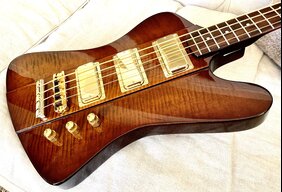
Both screws were tight and appeared to be drilled appropriately. (Ahem) I am wondering if others have seen the same thing.
From an engineering perspective, I think both were tight and more than sufficient to support the bass. My question is: why? Why have two different strap buttons and two different size screws?
Sounds entirely plausible.I’m sure there’s a perfectly logical answer, pick one…
Mechanical Engineering answer - Gibson obviously uses the smaller and lighter screw at the neck strap pin location to reduce the weight that could contribute to neck dive.
Manufacturing Engineering answer - it’s all about cost son. That smaller screw is 1/4 of one cent less to purchase and takes up 1/10 less space in the parts bin. The drill bit costs less as well and since the hole isn’t as deep Gibson can complete the strap pin drilling operation 5% faster. After 10,000 basses made we save enough money on that screw to build an entire bass.
Civil Engineering answer - there’s a bridge involved! Don’t use the same small screw the neck pin uses, increase the safety factor of the bridge screw by 50%.
Electrical and Chemical Engineering answer - what’s a screw?
Gibson line workers answer - whoa dude, look at this small screw somebody put in my parts bin. Who am I to question management! Let the white collars eat this shist!
Gibson line manager answer - shut up and put the damn screw in!
Gibson QA inspector answer - what, you expect me to disassemble every bass that comes across my desk just to see if they used the right screws, your nutz!
Fender marketing manager - damn, have you guys seen that sweet Tbird NR Gibson just put out! Our only hope in hell is that Gibby will mess something up in production, probably something simple like a screw. With set necks, no control plates three point bridges and ultra light Hipshot tuners they don’t use nearly as many screws as we do, so they’re probably not as good at it.
TalkBass GenPop forum - the larger heavier screw at the bridge aids in sustain much like a high mass bridge, and the smaller screw at the neck reduces the amount of tone wood that needs to be removed.
You engineers are all alike. Cost, supply and availability, application, mechanical suitability, tooling, ease during production.....I’m sure there’s a perfectly logical answer, pick one…
Mechanical Engineering answer - Gibson obviously uses the smaller and lighter screw at the neck strap pin location to reduce the weight that could contribute to neck dive.
Manufacturing Engineering answer - it’s all about cost son. That smaller screw is 1/4 of one cent less to purchase and takes up 1/10 less space in the parts bin. The drill bit costs less as well and since the hole isn’t as deep Gibson can complete the strap pin drilling operation 5% faster. After 10,000 basses made we save enough money on that screw to build an entire bass.
Civil Engineering answer - there’s a bridge involved! Don’t use the same small screw the neck pin uses, increase the safety factor of the bridge screw by 50%.
Electrical and Chemical Engineering answer - what’s a screw?
Gibson line workers answer - whoa dude, look at this small screw somebody put in my parts bin. Who am I to question management! Let the white collars eat this shist!
Gibson line manager answer - shut up and put the damn screw in!
Gibson QA inspector answer - what, you expect me to disassemble every bass that comes across my desk just to see if they used the right screws, your nutz!
Fender marketing manager - damn, have you guys seen that sweet Tbird NR Gibson just put out! Our only hope in hell is that Gibby will mess something up in production, probably something simple like a screw. With set necks, no control plates three point bridges and ultra light Hipshot tuners they don’t use nearly as many screws as we do, so they’re probably not as good at it.
TalkBass GenPop forum - the larger heavier screw at the bridge aids in sustain much like a high mass bridge, and the smaller screw at the neck reduces the amount of tone wood that needs to be removed.


